
Winter initiation season tragedy: 35 young lives lost
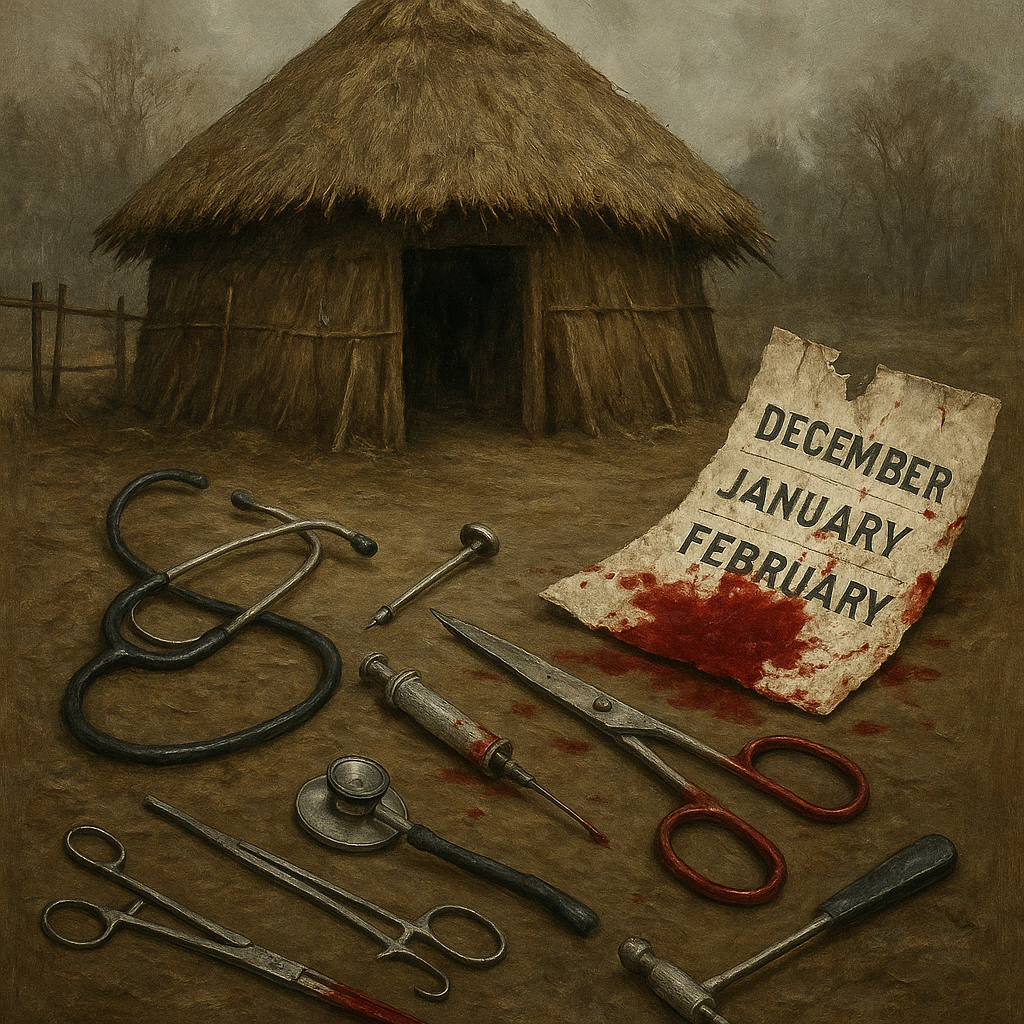
South Africa's 2026 winter initiation season sees 35 deaths, 75 hospitalized, and 58 illegal schools. A crisis of culture, safety, and criminal exploitation.
In South Africa, young men are dying during traditional initiation ceremonies because criminals exploit these sacred practices. Illegal schools, lacking medical care and safe conditions, cause deaths from infections and dehydration. This crisis has led to many fatalities and hospitalizations, with police arresting individuals for offenses like abduction. Officials are trying to shut down these dangerous operations and save lives.
Why are young men dying during initiation in South Africa?
Young men are dying during South African initiation ceremonies due to criminal exploitation of traditional practices. Unregulated, illegal initiation schools operate underground, lacking proper medical care, hygiene, and safe conditions. This results in fatalities from infections, dehydration, and other complications, with criminal elements exploiting cultural frameworks for profit.
Get Cape Town news in your inbox
Stay updated with the latest stories from the Mother City.
A Devastating Human Toll Demands Urgent Action
The winter initiation period of 2026 has plunged South Africa into profound mourning, with 35 young men losing their lives and 75 survivors fighting for recovery in hospital wards across the nation. These casualties stem from traditional circumcision ceremonies that have spiraled dangerously beyond community control. Velenkosini Hlabisa, who oversees Cooperative Governance and Traditional Affairs, has brought chilling clarity to the situation by exposing 58 underground initiation schools currently operating throughout the country. This revelation exposes how thoroughly criminal elements have penetrated one of Africa's most revered cultural institutions.
Law enforcement agencies have mobilized resources at unprecedented levels to confront this emergency. Investigators have compiled 150 separate criminal dockets, leading to 40 individuals facing prosecution for offenses ranging from physical assault to organized abduction. The documented dozen cases of kidnapping expose particularly sinister dimensions of this crisis, showing how predators exploit cultural frameworks to seize vulnerable youths for profit. What once represented communal passage into adulthood now serves as cover for racketeering, with families discovering their sons have disappeared into unregulated bush camps where survival remains uncertain.
Rescue missions have achieved meaningful though incomplete victories. Officials have shuttered 42 of the identified illegal academies, pulling 180 young men from environments where death or permanent injury loomed imminent. These extractions, while saving lives, simultaneously illuminate the scale of parallel infrastructure that unauthorized operators have constructed. Hundreds of boys had already entered these shadow networks, suggesting demand for legitimate alternatives far exceeds safe supply.
Ancient Roots in Modern Turmoil
Male initiation practices among South Africa's Nguni peoples - Zulu, Xhosa, Swazi, and Ndebele communities - stretch across uncounted generations, representing continuity with ancestors who shaped the region's cultural landscape long before colonial borders. The transformation from childhood to manhood traditionally unfolds through weeks of seclusion in wilderness settings, combining surgical modification with rigorous physical testing and intensive mentorship in adult responsibilities. Participants learn sexual ethics, ancestral obligations, and communal duties through structured hardship designed to forge resilient character.
The social stakes of this transition historically reached into every dimension of mature life. Men who bypassed circumcision faced exclusion from marriage negotiations, barred from elder councils, and cut off from communication with lineage ancestors. The ritual operated as triple transformation: biological modification, psychological restructuring, and social certification binding individual growth to collective welfare through proven mechanisms of challenge and revelation.
Contemporary governance confronts this heritage within constitutional frameworks that simultaneously protect cultural expression and individual rights. The 1996 Constitution's recognition of customary law affirmed traditional leadership and practices, yet embedded protections for life, dignity, and bodily integrity that sometimes clash with unregulated traditional procedures. This tension between collective heritage and personal safety defines policy challenges that no jurisdiction has fully resolved.
Laws on Paper Versus Reality on the Ground
Governing legislation emerged from extended deliberation attempting mortality reduction without cultural destruction. The Customary Initiation Act mandates school registration, practitioner certification, health screening, and surgical safety standards including sterile instruments and emergency medical access. Provincial Initiation Coordinating Committees hold monitoring authority and authorization power over legitimate operations.
Determined criminal adaptation has consistently outpaced these protective frameworks. Illegal operators exploit multiple systemic openings: parental attraction to lower fees, transportation of children to remote rural zones beyond oversight reach, seasonal clustering that overwhelms monitoring capacity, and community silence protecting traditional figures despite suspected misconduct. The 58 identified illegal establishments likely indicate merely visible portion of actual underground activity.
Illegal operations concentrate where enforcement coordination weakens across provincial boundaries. Eastern Cape, historically suffering highest mortality, continues experiencing acute crises, while Limpopo, Mpumalanga, and KwaZulu-Natal show expanding problems. Winter climatic conditions amplify dangers - hypothermia, respiratory infection, and fluid loss compound surgical risks when shelters prove inadequate in mountainous or forested terrain.
The Medical Fallout and Strained Healthcare
Hospitalized survivors present injury patterns reflecting comprehensive safety breakdowns. Blood poisoning from contaminated tools, uncontrolled bleeding, tissue death requiring limb removal, and critical dehydration dominate admission records. Psychological wounds - including trauma from abusive treatment and witnessing companions perish - receive insufficient attention amid emergency focus on physical survival.
Rural healthcare facilities predictably buckle under seasonal initiation burdens. Emergency departments redirect resources toward ritual-related complications, displacing routine care capacity. Extended hospitalization costs for infected wounds and reconstructive procedures following failed circumcisions accumulate within provincial budgets, representing regulatory failure's hidden financial dimensions rarely calculated in policy evaluation.
Medical anthropologists identify emerging "hybrid" practitioners lacking both traditional authorization and clinical credentials. These individuals combine superficial cultural familiarity with reckless surgical experimentation. Urban-raised initiates prove especially vulnerable - families maintaining ancestral rural connections yet lacking community networks to verify practitioner legitimacy fall prey to convincing impostors.
When Families Become Unwitting Accomplices
Minister Hlabisa's direct criticism of parental negligence confronts dynamics often shielded by cultural diplomacy. Financial pressures push some households toward cheaper illegal options, while others hand children to distant relatives or intermediaries without confirming destination specifics. Monetary intermediation transforming initiation arrangements - "agents" arranging transport and placement for commission - has dissolved traditional community accountability structures.
Urbanization and labor migration have shattered extended family networks historically safeguarding initiates. Metropolitan parents often lack direct relationships with rural traditional leaders who could secure legitimate placement. Information gaps prevent verification: registration papers can be counterfeited, and verbal promises from distant relatives prove worthless when enforcement disappears.
Enforcement Against Institutional Resistance
Forty arrests during 2026 operations, though substantial, represent limited penetration against identified criminal infrastructure. Prosecution encounters evidentiary barriers: initiates and families routinely refuse testimony fearing community exclusion or ancestral punishment. Traditional leaders may reject state intervention as cultural violation, complicating local cooperation essential for intelligence development.
Provincial Initiation Coordinating Committees show uneven capability. Eastern Cape's developed infrastructure, forged through generations of mortality crises, contrasts with newer systems in provinces where initiation was historically less central or differently organized. Resource inequality affects technological adoption - GPS school tracking, digital health monitoring, and rapid communication systems remain patchily deployed.
Cross-departmental coordination presents ongoing obstacles. COGTA's cultural mandate intersects with Health's medical authority, Education's schooling responsibilities, and police criminal enforcement, yet unified command structures remain underdeveloped. The winter season's compressed intensity amplifies coordination pressures, with illegal operators exploiting institutional response delays.
Lessons From Neighboring Nations
South Africa's crisis, severe as it stands, mirrors broader southern African patterns demanding regional context. Botswana has achieved notable mortality reduction through centralized traditional leadership cooperation and mandatory health worker presence at all surgical sites. Lesotho's mountainous terrain presents access challenges comparable to South African rural areas, yet smaller scale permits more concentrated oversight.
Mozambique and Zimbabwe experience similar illegal school proliferation, frequently with cross-border operator movement exploiting enforcement gaps. The Limpopo River basin particularly enables mobile criminal networks establishing temporary camps in minimally watched border zones. Regional registration harmonization and information sharing remain undeveloped despite obvious necessity.
Kenya's alternative approach deserves examination: medicalized circumcision programs for HIV prevention have gained substantial cultural acceptance, demonstrating that traditional legitimacy can transfer to modified procedures when community leadership actively supports change. South African policy has hesitated toward similar explicit clinical alternative promotion, fearing cultural erosion accusations.
Pathways Toward Sustainable Reform
The 2026 season's trajectory indicates that enforcement-centered strategies, however necessary, cannot alone address underlying demand for affordable, accessible legitimate initiation. Registered school capacity expansion, potentially through partnerships between government and compliant traditional authorities, could narrow price gaps driving illegal market growth. Mobile health units providing pre-circumcision screening and post-surgical monitoring might address rural access barriers without fixed infrastructure investment.
Digital verification systems - SMS registration confirmation, biometric practitioner identification - could enable parental verification currently impossible through physical document inspection. Community monitoring networks recruiting respected elders as safety ambassadors might reconstruct traditional accountability mechanisms eroded by commercialization and migration.
Ultimately, durable resolution requires honest engagement with initiation's evolving social purposes. For numerous contemporary families, the ritual persists not merely as ancestral duty but as identity affirmation within pluralistic society. Policy recognizing this motivational complexity - neither idealizing tradition nor pathologizing cultural commitment - offers the most promising foundation for collaborative mortality reduction.
Why are young men dying during initiation in South Africa?
Young men are dying during South African initiation ceremonies due to criminal exploitation of traditional practices. Unregulated, illegal initiation schools operate underground, lacking proper medical care, hygiene, and safe conditions. This results in fatalities from infections, dehydration, and other complications, with criminal elements exploiting cultural frameworks for profit.
What is the human toll of the 2026 winter initiation season?
As of the 2026 winter initiation period, 35 young men have lost their lives and 75 survivors are hospitalized across South Africa. Officials have identified 58 underground initiation schools, and law enforcement has opened 150 criminal dockets, leading to 40 individuals being prosecuted for offenses including abduction.
What are the historical roots of male initiation practices in South Africa?
Male initiation practices among South Africa's Nguni peoples (Zulu, Xhosa, Swazi, and Ndebele) are ancient traditions spanning generations. They traditionally involve weeks of seclusion, surgical modification, physical testing, and mentorship to prepare young men for adulthood, teaching sexual ethics, ancestral obligations, and communal duties. Historically, bypassing this ritual led to social exclusion.
What laws are in place to regulate initiation ceremonies?
The Customary Initiation Act mandates school registration, practitioner certification, health screening, and surgical safety standards, including sterile instruments and emergency medical access. Provincial Initiation Coordinating Committees are responsible for monitoring and authorizing legitimate operations. However, criminal operations often circumvent these laws.
What are the medical consequences for survivors of illegal initiation schools?
Hospitalized survivors often suffer from severe injuries such as blood poisoning from contaminated tools, uncontrolled bleeding, tissue death requiring limb removal, and critical dehydration. These incidents strain rural healthcare facilities, which redirect resources to treat initiation-related complications, displacing routine care and incurring significant costs.
Why do families sometimes use illegal initiation schools?
Families may unknowingly or knowingly send their children to illegal schools due to financial pressures, as these options are often cheaper. Urbanization and labor migration have also fragmented extended family networks, making it difficult for parents to verify the legitimacy of practitioners or schools. Criminal 'agents' exploit these vulnerabilities, arranging transport and placement for commission, further eroding traditional accountability.

Sizwe Dlamini is a Cape Town-based journalist who chronicles the city’s evolving food scene, from boeka picnics in the Bo-Kaap to seafood braais in Khayelitsha. Raised on the slopes of Table Mountain, he still starts every morning with a walk to the kramat in Constantia before heading out to discover whose grandmother is dishing up the best smoorsnoek that day.
View all articles →