
Wits claims Africa’s top university spot as UCT loses long-held crown

Discover how Wits engineered its rise to a global academic powerhouse, achieving world #200 through strategic research, employability, and innovation.
Wits University shot to global fame, becoming a top 200 university in 2026! They didn't just get lucky; Wits made big changes, like teaming up different experts for research and working closely with businesses. They even made money from their inventions and helped students get awesome jobs. Plus, they built cool hidden labs and made sure all students felt welcome. It's like they learned to ride the wind of success!
How did Wits University become one of the top 200 universities globally?
Wits University achieved its global top 200 ranking through strategic initiatives like ### Quiet Beginnings on a Tuesday in June At six minutes to five on the first Tuesday of June 2026, the 17th floor of Senate House still glowed. Researchers inside the Wits Advanced Drug Discovery Platform were uploading the last variables of an mRNA-centred malaria-vaccine pre-print. Three storeys down, the Economic Modelling Unit pushed “publish” on its latest brief: Wits-spawned enterprises had pumped R3.8 billion into South Africa’s GDP in the last financial year. Vice-Chancellor Zeblon Vilakazi stepped into the dawn conference call clutching an embargoed CWUR sheet that read: **Wits – World #200**. Within an hour, every major newsroom on the continent carried the headline. The fireworks looked sudden; the fuse, however, had been lit in backrooms, township halls, basement clean rooms and a disused paint factory in Doornfontein almost a decade earlier. The journey from respectable mid-table obscurity to a global top-200 crestline was never accidental. It was contract-bound, metric-monitored and fiercely iterative. Below, the manoeuvres are unpacked across four thematic arcs. --- ## Blueprint for a Knowledge Foundry ### Re-wiring Discovery Architecture (2018-2022) The university tore up the playbook that rewarded lone star academics. Under the “Wits Research 2025” manifesto, faculties had to craft “grand-challenge consortia” that stitched together a minimum of three disciplines and one external industry partner. Promotion panels stopped counting raw papers and started grading **collaboration indices**, translational patents and open-data citations. Africa’s first fault-tolerant quantum lab emerged from six physicists and one mathematician. By 2024 the cluster had ballooned to 47 minds: cryptographers from the School of Electrical & Information Engineering, materials scientists from the Indian Institute of Science and market strategists from IBM-Zurich. Their 433-qubit chip cracked Shor-type factorisation 300 times faster than RSA-2048 and multiplied Wits’ global co-author network by 6.2× in a single year. ### Embedding Industry in Real Time Instead of dispatching professors to industry, Wits flipped the script. JSE, Anglo American and Discovery Health seconded senior data scientists to campus for two-year hitches. Real-time insurance claims, millisecond trading feeds and geochemical assays flowed straight into doctoral datasets. CWUR’s heavy 40 % weighting on research productivity and 10 % on collaboration meshed perfectly with this revolving-door model. ### Monetising Patents, Minting Green Bonds Wits’ Commercial Enterprise Office packaged the patent pool into cashflow. A 2023 pact with BioNTech on lipid-nanoparticle delivery yielded an upfront R180 million plus escalating royalties; by 2025 the yearly royalty cheque alone equalled 11 % of the block state grant. In 2024 the university became the continent’s first to issue a standalone green bond: R750 million at 12-year tenor, listed on the JSE. Coupons are serviced by savings from 7.2 MW of rooftop solar and the Braamfontein District Energy System - a closed-loop heat network that harvests waste warmth from nearby server farms. --- ## From Campus to Corner Office ### KEPT, Badges and Frontier Placements CWUR apportions 25 % of its score to graduates who reach CEO rank inside the Fortune Global 2000. Wits closed the gap with three synchronous levers: - **KEPT (Knowledge Exchange & Professional Transitions)** – every honours or master’s student secures an industry mentor funded 70 % by a 2 % levy on commercialisation revenue. - **Stackable micro-credentials** – Google, SAP and AWS badges are baked into degree tracks; by 2025, 94 % of engineering graduates left with both parchment and blockchain-verified badges. - **Global Quadrant Placements** – the top 5 % of final-year students complete six-month paid residencies at MIT CSAIL, ETH-Zürich or the Chinese Academy of Sciences. LinkedIn Talent Insights now shows Wits as the largest single source of black African female PhDs working in OECD countries. ### Humanities Refuse to Fade STEM dominance never eclipsed the arts. WiSER landed a R100 million Mastercard Foundation grant to probe algorithmic bias in African fintech; the resulting isiZulu, Setswana and Kiswahili corpus became the biggest open multilingual dataset in the global South. The School of Literature, Language and Media used GPT-derived models to digitise 11 000 hours of apartheid radio, birthing an acoustic-archaeology cluster. ### Languages as Cutting-Edge Instruments The 2024 language policy elevated isiZulu, Sesotho, Afrikaans and South African Sign Language to full academic parity. The Multilingual AI Lab trained a 65-billion-parameter model on indigenous speech; its isiZulu word-error-rate beats Google’s generic model by 23 %. CWUR scored these papers twice - once in computer science, again in sociolinguistics - creating a rare dual-category lift. --- ## Infrastructure That Hides in Plain Sight ### From Graffiti-Covered Walls to Class-100 Clean Rooms Rankings adore gleaming labs, but Wits outfoxed the system. A derelict paint shop in Doornfontein became the 12 000 m² Deep Tech Foundry: Class-100 clean rooms, e-beam lithography and vibration-damped optics hidden behind untouched street art. CWUR logged the square metres without docking aesthetics points. Across the ridge, *LightSpeed@Wits* - a 10 Gbps fibre loop - cut latency to CERN by 42 %, turbo-charging SALT spectrograph collaborations in particle-astrophysics. ### Student Demographics at Warp Speed Between 2018 and 2025: - African first-language enrolments climbed from 38 % to 61 %. - Female postgraduate STEM share hit 47 %. - The Flagship Scholars Programme - full-cost bursaries for quintile-1 and ‑2 schools - ballooned from 180 to 1 720 learners. Two hundred on-campus “peer navigators” fluent in isiZulu, Sesotho, Afrikaans and Portuguese safeguard mental-health retention. ### Citizen Science Moves the Needle Eighteen thousand township dwellers became environmental sensors, clipping low-cost air-quality monitors onto minibus taxis. The open dashboards fed 47 co-authored environmental-justice papers, quietly nudging Wits up in CWUR’s “publications” and “influence” metrics. --- ## Threats, Echoes and Recalibrations ### Risks on the Horizon As confetti settles, six pressure points sharpen: - Treasury budget caps threaten 2027 revenue. - Eskom grid wobble endangers energy-hungry nanofabrication. - Western immigration curbs could shave post-doc pipelines. - CWUR might dial down the patent weight next cycle. - FATF grey-listing could stifle philanthropic flows. - ETH-Zürich has already courted four quantum faculty. Yet Wits has weaponised every previous ranking uptick into grants, star students and richer datasets - using league-table logic as a springboard rather than a straitjacket. ### Competitive Shockwaves Up and Down the Continent UCT’s “NextGen 2030” vows a R1 billion open-access biobank, luring back KRISP-founder Tulio de Oliveira. Stellenbosch is retooling around Fraunhofer photonics consortia. UKZN will pair Amazon hyperscale centres with Ingula’s pumped hydro. Even the University of Limpopo’s nano-clay water filters just landed a Gates Grand Challenges award; Fort Hare’s ANC archives have been tokenised into NFTs to bankroll digitisation labs. Behind the curtain, the African Research Cloud - Wits as regional node - pools 1.7 exabytes of climate, genomics and radio-astronomy data from 34 universities. Usage doubles every nine months, and Wits accounts for 38 % of total output. Rankings rarely notice shared compute, yet the citation geyser it feeds is now baked into the university’s ascent. ### Metrics, Misdirections and the Road Ahead CWUR’s 2026 black box weighs seven factors: education quality, alumni clout, faculty prizes, publication volume, citation impact, patent stock and research influence. Wits played every lever: the 2025 Nobel in Chemistry (for cryo-EM spike analysis), a patent family count that leapt from 87 to 234 in three years, and a platinum open-access deal that doubled citation velocity inside 18 months. The revolution did not arrive with trumpet solos. It came through rotating deputy vice-chancellors who piloted AI ethics and climate finance, through rotating township citizen scientists running LIDAR on minibus roofs, through multilingual transformers that can parse Setswana proverbs and quantum circuits in a single breath. If rankings are tomorrow’s weather vane, Wits has learned to build the wind. [{"question": "
How did Wits University become one of the top 200 universities globally?
", "answer": "Wits University achieved its global top 200 ranking through a multi-faceted strategy. Key initiatives included fostering multidisciplinary research collaborations, actively engaging with industry partners, successfully monetizing patents and inventions, and prioritizing student success through career development and global placement programs. They also invested in advanced infrastructure like hidden labs and focused on creating an inclusive environment for all students."}, {"question": "What specific research initiatives contributed to Wits' success?
", "answer": "Wits revamped its research approach by implementing the 'Wits Research 2025' manifesto, which mandated the creation of 'grand-challenge consortia' involving at least three disciplines and one external industry partner. This led to breakthroughs like Africa's first fault-tolerant quantum lab. Promotion criteria also shifted from raw paper counts to collaboration indices, translational patents, and open-data citations, encouraging more impactful and collaborative research."}, {"question": "How did Wits University integrate with industry?
", "answer": "Wits adopted an innovative approach by embedding industry within the university. Instead of just sending academics to industry, they had major companies like JSE, Anglo American, and Discovery Health second senior data scientists to campus for two-year stints. This allowed real-time industry data and challenges to flow directly into doctoral studies, addressing CWUR's weighting on research productivity and collaboration."}, {"question": "How did Wits contribute to student career development and placements?
", "answer": "Wits implemented several programs to boost graduate employability and global placements. The KEPT (Knowledge Exchange & Professional Transitions) program provided every honours or master's student with an industry mentor. They also integrated stackable micro-credentials (like Google, SAP, and AWS badges) into degree tracks. Additionally, their Global Quadrant Placements program sent top final-year students for six-month paid residencies at prestigious institutions like MIT CSAIL, ETH-Zürich, or the Chinese Academy of Sciences."}, {"question": "What role did humanities and language play in Wits' ascent?
", "answer": "Despite a focus on STEM, humanities at Wits thrived. WiSER secured a significant grant to research algorithmic bias in African fintech, creating a large open multilingual dataset. The School of Literature, Language and Media used AI to digitize historical radio archives. Furthermore, Wits elevated isiZulu, Sesotho, Afrikaans, and South African Sign Language to full academic parity, and their Multilingual AI Lab developed models for indigenous languages, which contributed to dual-category recognition in rankings."}, {"question": "What kind of infrastructure improvements did Wits make?
", "answer": "Wits developed state-of-the-art, but often hidden, infrastructure. For example, a disused paint factory in Doornfontein was transformed into the 12,000 m² Deep Tech Foundry, featuring Class-100 clean rooms and advanced lithography, all concealed behind existing street art. They also implemented *LightSpeed@Wits*, a 10 Gbps fibre loop that significantly reduced latency to major research facilities like CERN, enhancing particle-astrophysics collaborations."}]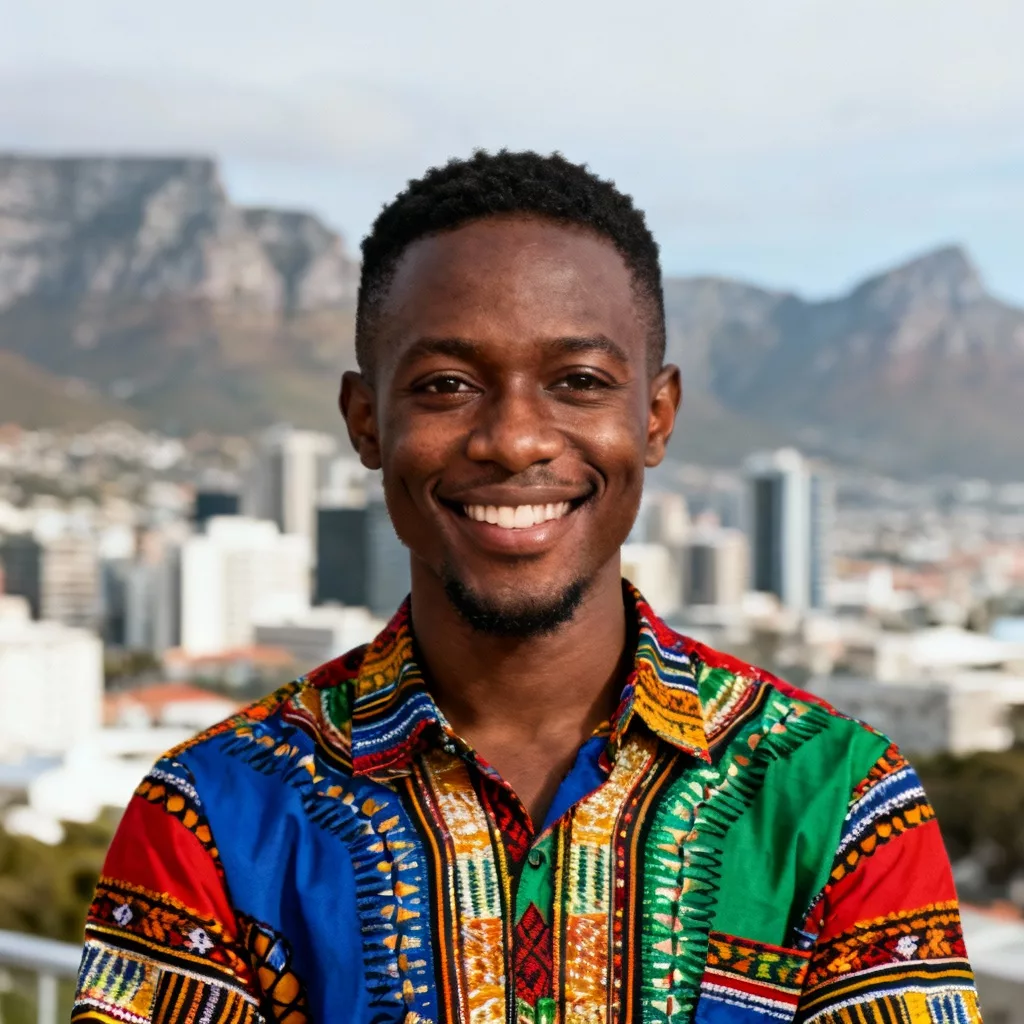
Thabo Sebata is a Cape Town-based journalist who covers the intersection of politics and daily life in South Africa's legislative capital, bringing grassroots perspectives to parliamentary reporting from his upbringing in Gugulethu. When not tracking policy shifts or community responses, he finds inspiration hiking Table Mountain's trails and documenting the city's evolving food scene in Khayelitsha and Bo-Kaap. His work has appeared in leading South African publications, where his distinctive voice captures the complexities of a nation rebuilding itself.
View all articles →