
Would-be Trump assassin gets life sentence
Ryan Routh sentenced to life without parole for plotting to assassinate Donald Trump. Learn about the case & its implications.
Ryan Wesley Routh got a life sentence without parole for trying to kill Donald Trump. He bought many guns, made a 'kill list,' and even wrote a letter saying he'd either die or Trump would. He got another twenty years for acting out in court. Now, he's locked up forever, a warning to anyone else with similar dark plans.
What was Ryan Wesley Routh's sentence for attempting to assassinate Donald Trump?
Ryan Wesley Routh received a sentence of natural life without parole from U.S. District Judge Aileen Cannon. This extreme sentence was due to months of scouting, multiple gun purchases, a "kill list," and a letter implying his intent to assassinate Donald Trump. An additional twenty years were added for courtroom contempt.
Get Cape Town news in your inbox
Stay updated with the latest stories from the Mother City.
The Sentence Without Seasons
On a quiet Thursday morning in May 2025, U.S. District Judge Aileen Cannon told Ryan Wesley Routh that his remaining tomorrows would be measured in head-counts, not sunrises. “Natural life, no parole,” she said, her gavel strike echoing like a slammed vault in the fourth-floor bunker of Fort Pierce’s federal courthouse. The 59-year-old ex-roofer, who once chased storms for repair contracts, now chases nothing; his horizon ends at concrete walls 65 miles south of the manicured grass where he staked his life on a single bullet.
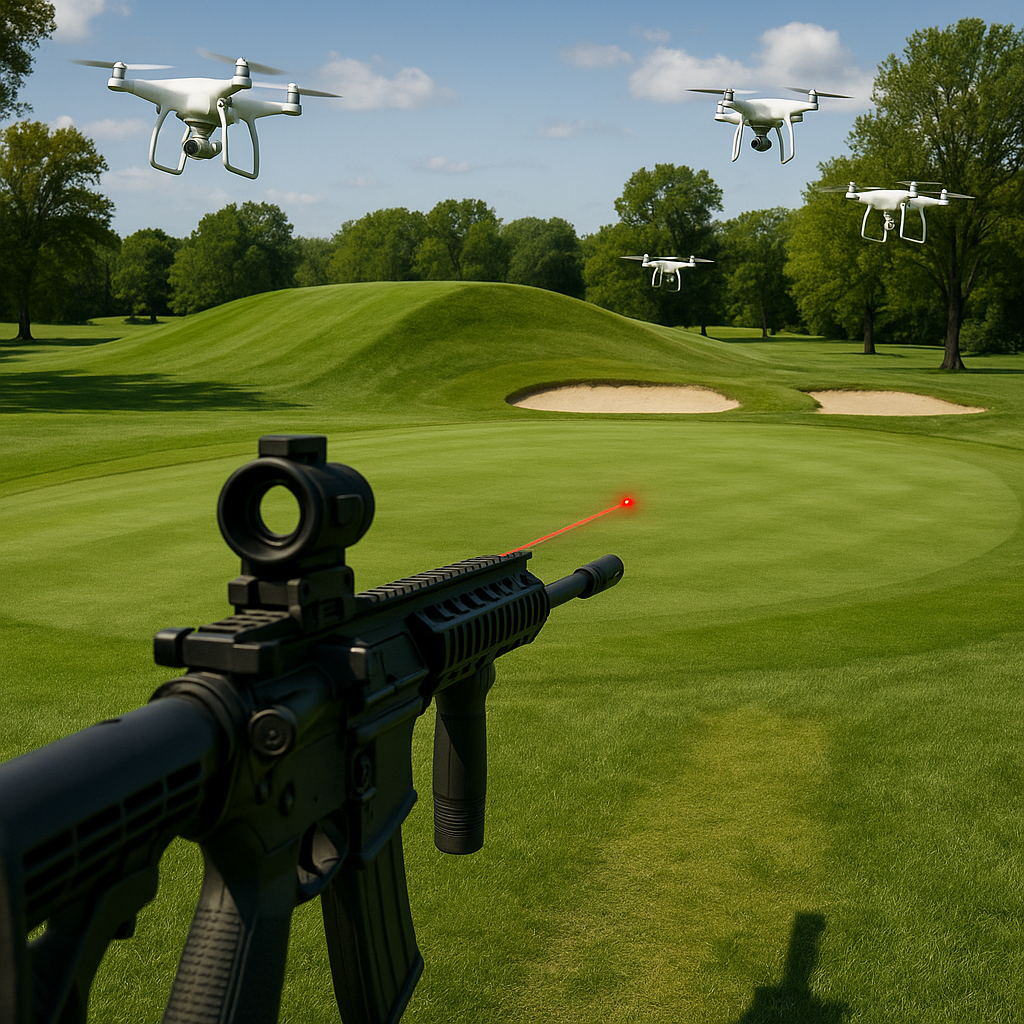
The hearing clocked forty-one minutes - shorter than a college lecture, longer than Routh’s entire window of opportunity last September. Prosecutors dimmed the lights and ran a drone video that traced the flight of a red laser from tree line to tee box, the dot quivering like a live ember on the sixth-hole grass. A government witness explained the math: 385 yards, fifteen-mile-per-hour crosswind, two-inch hold-off. Difficult, but doable for anyone who had practiced. Routh had practiced. Agents pulled 78 live rounds from the rifle and 42 more from a canvas satchel, plus steel plates duct-taped inside a Costco cooler that doubled as hillbilly body-armor. A handwritten note in the passenger seat of his Kia read: “Verify zero at 400 - do not botch it.”
Guidelines allowed anything from thirty years to forever. Cannon, appointed by the very man Routh hunted, said the scales crashed toward the extreme. She ticked off the scorecard: months of scouting, guns bought in three states, a crowd calendar labeled “kill list,” and - most lethal - a letter mailed to a friend that opened: “If you’re reading this, either I’m a corpse or Donald Trump is, most likely both.” Routh never asked for forgiveness. He told probation officers the country was choking on tyranny and that a well-aimed round would have been “a mercy killing.”
Courtroom Theater and the Anatomy of a Rush to Judgment
The attorney general stamped the case “Level-5 national-security,” a label that fast-tracks every procedural clock. Jury selection started after breakfast and ended before lunch; every candidate arrived pre-cleared by the Secret Service. On Labor Day weekend Routh fired his lawyers, announcing he would argue “necessity under the Declaration of Independence.” Over nine surreal days he subpoenaed Elon Musk, President Zelenskyy, and a Jacksonville pawnbroker who once sold him a scope. The clerk stamped each subpoena “Quashed” in red.
The trial transcript reads like a manic screenplay. Routh cross-examined himself, objected to his own questions, and yelled “Fake news - gel can’t cast a ballot!” while analysts showed how a 7.62 bullet rips ballistic gelatin. When the foreman announced four unanimous guilty verdicts, Routh yanked a Uni-ball pen and lunged at his own throat. Marshals tackled him before the nib broke skin, but the stunt triggered a dusty 1831 statute: twenty extra years, no parole, tacked on for courtroom contempt. He will serve the penalty consecutively, a judicial afterthought that guarantees he dies inside a Bureau of Prisons numbered cubicle.
From Mar-a-Lago, the intended target watched on an encrypted feed. Minutes later he posted: “Justice delivered, but the sickness that breeds these animals remains.” The message collected 3.2 million hearts in sixty minutes and auto-spawned a donation button titled “Keep Me Safe - Again.” Campaign finance lawyers noted the phrase neatly doubles as merchandise.
From Roofer to Rooftop: The Road to Radicalization
Neighbors in Greensboro still remember the camouflage du jour and the 2018 Facebook manifesto titled “Free Iran Project,” 127 pages that veered from pleas for Tehran protesters to calls for “surgical eradication of the orange infection.” In 2022 Routh sold his roofing business, flew one-way to Kyiv, and spent six months pestering Georgian legion recruiters with handwritten rosters of American snipers who could, he insisted, “decapitate Putin’s colonels.” Ukrainian security politely showed him the door three times.
The SKS he carried in Florida began its American tour at a 2023 Canton, Ohio gun show. The vendor, a retired machinist in aloha shorts, remembers Routh asking whether the rifle could “drop a moose at five football fields.” The sale was legal; the gun, forged in 1967, lacked a serial number thanks to Cold-War refurbishment - an omission prosecutors spun into an interstate-transport charge. Tool-marks on the bolt face matched seven casings found at a Hickory, North Carolina range where Routh had spray-painted a human outline with the initials “D.T.” over the heart.
Google location data stitched the rest together. On 14 July 2024, forty-eight hours after another man fired shots in Butler, Pennsylvania, Routh idled across from Trump’s Bedminster gate for eleven hours, snapping 312 photos. Agents also uncovered a Dropbox labeled “Plan B” crammed with drone photos of Trump Tower annotated with wind roses, plus a folder named “Plan C” holding a fourteen-second audio loop: three metallic clicks and heavy breathing, the soundtrack of rehearsal.
Life Inside the Rock and the Ghosts Left on the Fairway
Routh now rides a Bureau van to ADX Florence, the concrete monastery nicknamed the Alcatraz of the Rockies. He will spend twenty-three hours a day in a poured-concrete box and recreate alone inside a steel-mesh cage on the roof. Unit H - once home to the Unabomber’s neighbor - houses inmates too notorious or too unstable for ordinary supermax. Every ninety days staff will quiz him on ideology; refusal costs commissary coffee and visits. Few ever leave alive, and none leave whole.
Courts will chew on the case for years. The Eleventh Circuit has never ruled whether plotting to kill a candidate amounts to “federal terrorism” under the PATRIOT Act. Cannon’s verdict signals yes, adding a twenty-year enhancement for future copycats. Appellate guru Miriam Siegler already filed notice, arguing the court violated Routh’s Sixth-Amendment rights by letting the government bury 847 pages of classified threat assessments. She also claims life-without-parole for an uncompleted attempt is Eighth-Amendment excess. A Supreme Court petition is inked for 2026, assuming the nation still cares.
The ripple effects stretch beyond one man. Secret Service manuals now demand a 300-yard “warm zone” around fairways, roving thermal sniper teams, and magnetometers spanning two holes in each direction. Trump’s campaign has asked the FEC to green-light donor-funded surveillance drones, blurring the line between political kitty and personal security. Watchdogs cry foul; the commission rules this summer.
Back at Trump International, the sixth tee has migrated forty yards south, and the treeline where Routh crouched is now a twelve-foot berm draped in thorny bougainvillea. Groundskeepers say golfers still stop, stare at the fresh scar, and whisper about divots and darker things. No one answers. Play continues beneath a low mechanical hum - drones tracing infrared arcs across the sky, hunting the next shadow that might step from the palms, convinced history repeats first as tragedy, then as fairway folklore.
What was Ryan Wesley Routh's sentence for attempting to assassinate Donald Trump?
Ryan Wesley Routh received a sentence of natural life without parole from U.S. District Judge Aileen Cannon for attempting to assassinate Donald Trump. An additional twenty years were added for courtroom contempt, to be served consecutively.
What specific actions led to Routh's life sentence?
Routh's life sentence was attributed to months of meticulous scouting of Trump's golf course, the purchase of multiple firearms across three states, the creation of a "kill list," and a letter to a friend indicating his intent to either die or kill Donald Trump. Evidence also included 78 live rounds in his rifle, 42 more in a satchel, and steel plates for makeshift body armor.
What was the 'kill list' and the letter Routh wrote?
Routh created a "crowd calendar" labeled a "kill list." He also wrote a letter to a friend that chillingly opened with: "If you’re reading this, either I’m a corpse or Donald Trump is, most likely both." This letter was a key piece of evidence demonstrating his premeditated intent.
Why was Routh given an additional twenty years?
Routh was given an additional twenty years, without parole, for courtroom contempt. During his trial, he reportedly lunged at his own throat with a pen after the guilty verdict, an act that triggered a dusty 1831 statute for courtroom misconduct.
Where is Ryan Wesley Routh currently imprisoned?
Ryan Wesley Routh is currently imprisoned at ADX Florence, also known as the Alcatraz of the Rockies. He is held in Unit H, a section for inmates deemed too notorious or unstable for ordinary supermax conditions, and spends 23 hours a day in a poured-concrete cell.
What impact has Routh's attempted assassination had on security protocols?
The attempted assassination has significantly impacted security protocols, particularly for high-profile individuals like former presidents. Secret Service manuals now mandate a 300-yard "warm zone" around fairways, deploy roving thermal sniper teams, and utilize magnetometers spanning two golf holes. Additionally, there are discussions about allowing donor-funded surveillance drones for campaign security, blurring lines between political funding and personal protection.

Chloe de Kock is a Cape Town-born journalist who chronicles the city’s evolving food culture, from township braai joints to Constantia vineyards, for the Mail & Guardian and Eat Out. When she’s not interviewing grandmothers about secret bobotie recipes or tracking the impact of drought on winemakers, you’ll find her surfing the mellow breaks at Muizenberg—wetsuit zipped, notebook tucked into her backpack in case the next story floats by.
View all articles →