
Zanele Muholi opens landmark Cape Town exhibition at Southern Guild
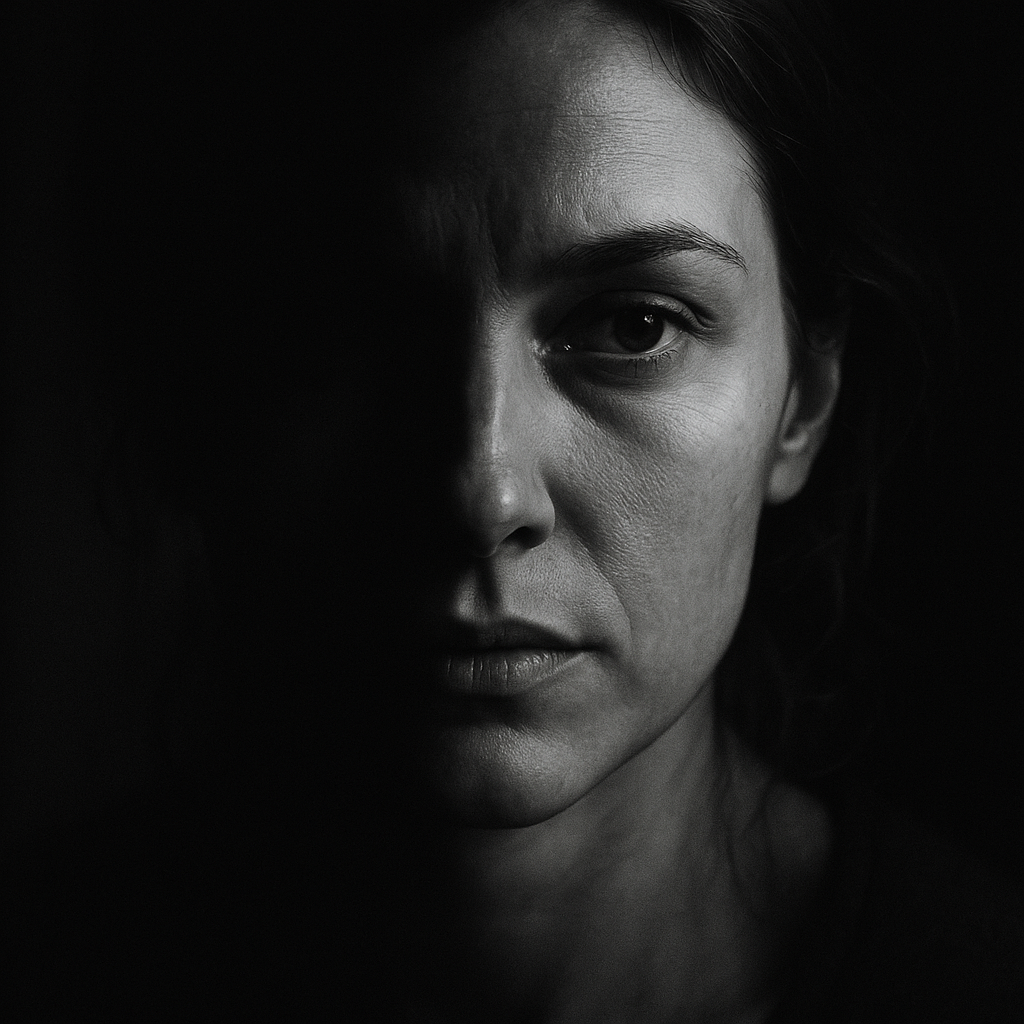
Zanele Muholi's Kanye Nawe exhibition at Southern Guild, Cape Town, offers a powerful homecoming, showcasing two decades of Black queer life.
Zanele Muholi's "Kanye Nawe" is a special art show in Cape Town. It shows 20 years of their amazing photos, sculptures, and videos about Black queer life. The show is like a living storybook, celebrating identity, struggles, and memories. It includes famous works like "Faces and Phases" and "Somnyama Ngonyama," making sure these important stories are seen and remembered for a long time.
What is Zanele Muholi's "Kanye Nawe" exhibition about?
"Kanye Nawe" is Zanele Muholi's landmark solo exhibition in Cape Town, South Africa. It's a living archive showcasing two decades of their photographic, sculptural, and video work, focusing on Black queer life. The exhibition explores themes of identity, struggle, celebration, and memory, including the internationally acclaimed "Faces and Phases" and "Somnyama Ngonyama" series.
Get Cape Town news in your inbox
Stay updated with the latest stories from the Mother City.
A Monumental Return to Native Soil
Zanele Muholi's landmark solo exhibition Kanye Nawe ('Alongside You') has opened its doors at Southern Guild in Cape Town's V&A Waterfront, marking a watershed moment for South African cultural discourse. After years of international acclaim, one of today's most vital visual activists finally presents a complete vision in the very landscape that forged their artistic consciousness. Unlike the fragmented glimpses offered by touring shows at overseas institutions, this comprehensive installation roots itself deeply in local terrain. Running until 10 September 2026 with free admission, the exhibition elevates the Silo District gallery beyond conventional exhibition space - Muholi characterizes it as a living archive, pulsing with twenty years of testimony, jubilation, and unwavering assertion of presence.
Southern Guild's commitment of its entire venue to Kanye Nawe acknowledges what Muholi's practice has earned through persistent excellence. The spatial design embodies the exhibition's intellectual preoccupations: visitors traverse linked environments where photography, sculpture, and video exchange meaning across temporal divides. Difficult Love (2020), Muholi's collaborative documentary with Peter Gabriel, grounds one strand of this experience. This award-winning film scrutinizes violence, creative expression, and endurance within South Africa's Black LGBTQIA+ populations, supplying narrative foundation for the visual works encircling it.
Rather than following strict chronology, Muholi has arranged encounters that implode temporal distance. Early pieces from Only Half the Picture - which investigated hate crimes targeting Black lesbians - might rest beside freshly cast bronze sculptures, compelling viewers to recognize that documented struggles from 2003 retain immediate relevance. This organizational method reveals Muholi's conception of their practice: not sequential advancement but sedimentary accumulation, every initiative enriching and interrogating its predecessors.
Faces and Phases: The Archive as Defiance
- Faces and Phases* anchors the exhibition's conceptual framework. What originated in 2006 as a deliberately circumscribed response to erasure and brutality facing Black LGBTQIA+ South Africans has grown into an internationally significant collection spanning numerous continents. The Cape Town display incorporates works created in London, Porto, Los Angeles, Salvador, São Paulo, Panama City, and Venice - evidence of the series' geographic spread alongside its unwavering methodological integrity.
Each Faces and Phases portrait deploys what might be termed calculated closeness. Muholi's methodology repudiates the exploitative tendencies of conventional documentary practice, instead nurturing cooperative bonds with sitters that stretch across years and occasionally decades. The resulting photographs - chiefly monochromatic, rigorously composed, unwaveringly present - reject the victim iconography that typically dominates visual depictions of marginalized groups. Subjects confront the lens with openness that seems cultivated rather than presumed, the developed confidence between artist and participant radiating from each frame.
The project's longevity itself advances political argument. By sustaining Faces and Phases across two decades, Muholi has constructed something without precedent: a sustained examination of Black queer existence embracing aging, transition, festivity, and bereavement. The series now holds portraits of individuals who have passed away, its archival purpose explicitly becoming commemorative. This aspect carries heightened intensity in Kanye Nawe, as Muholi has indicated the exhibition memorializes personal losses to HIV/AIDS - a catastrophe that persists in disproportionately devastating Black queer populations worldwide despite its relative absence from dominant conversation.
Somnyama Ngonyama: Self-Portraiture and Visual Resistance
In Somnyama Ngonyama, Muholi stages themselves utilizing discovered materials and household items: mattress coils, laundry clips, rubber gloves, cowrie shells. These implements summon histories of Black labor, African commerce networks, and gendered domestic space while simultaneously forging fresh visual languages for Black queer corporeality. Critical response has characterized these images as simultaneously aggressive and exposed, their unmediated address to spectators demanding acknowledgment while recognizing the toll of such exposure.
The series' title warrants particular examination. "Somnyama Ngonyama" renders from isiZulu as "Hail the Dark Lioness," invoking both traditions of praise poetry and specifically feminine power. The lioness allusion contests masculinist structures of African political opposition while simultaneously occupying space within them; the darkness proclaimed transforms from mark of shame into wellspring of fortitude. Within exhibition context, these pieces establish essential conversation with Faces and Phases's collective portraiture, illustrating how Muholi's activist methodology embraces both documentary testimony and self-directed image production.
Bronze Transformations and Material Memory
- Kanye Nawe* significantly advances Muholi's practice through its foregrounding of bronze sculpture. This expansion into dimensional form signals both technical evolution and conceptual intensification. The sculptures render familiar thematic investments - lineage, tenacity, vulnerability, shelter - into physical endurance, their metallic surfaces capturing and redirecting illumination distinctively from photographic paper or electronic displays.
Bronze selection carries specific significance. Historically, this medium has served memorial purposes, conserving authoritative historical narratives through civic monuments. Muholi's utilization of this tradition for Black queer subjects constitutes purposeful appropriation, seizing position within sculptural canons that have methodically excluded such embodiments. The works also engage South African artisanal traditions, particularly those connected to lost-wax casting, forging material links between contemporary practice and inherited wisdom.
Several Kanye Nawe sculptures directly evoke Somnyama Ngonyama photographic arrangements, establishing overt continuity across materials. This translation from photographic surface to sculptural mass literalizes Muholi's persistent engagement with dimensionality - rejecting the flattening of Black queer existence into surface representation, demanding complete bodily substantiality. The bronze works' durability also addresses practical considerations that have shaped Muholi's methodology: photographic collections' susceptibility to destruction, suppression, or disregard, and the ambition to create enduring monuments to populations historically refused such honor.
Converging Anniversaries and Collective Memory
The July 2026 opening situates Kanye Nawe within extraordinarily concentrated historical moment. Muholi has explicitly linked the exhibition to multiple commemorations: their own birth month; two decades of Faces and Phases; two decades since South Africa's Civil Union Act (which sanctioned same-sex marriage); the seventieth anniversary of the 1956 Women's March to Pretoria; the fiftieth anniversary of the 1976 Soweto Uprising; and thirty years of South African democracy.
This accumulation of temporal markers generates exhibition context transcending individual artistic biography. The Women's March anniversary especially resonates with Muholi's practice, which has consistently centered gendered aspects of Black queer experience frequently marginalized within LGBTQIA+ advocacy. The 1956 march's iconic standing in South African national consciousness - embodied in the anthem "Wathint'Abafazi, Wathint'Imbokodo" ("When You Strike a Woman, You Strike a Rock") - supplies historical scaffolding for comprehending contemporary opposition to gender-based violence that Muholi's work chronicles.
Similarly, the Soweto Uprising anniversary connects to generational aspects of Faces and Phases. Numerous series participants entered existence after 1976, their lives molded by the democratic transformation the uprising helped generate. Yet Muholi's work persistently illustrates how formal political reform insufficiently realizes social change - ongoing hate crimes, economic marginalization, and cultural stigma expose the chasm between constitutional commitment and material conditions.
Pedagogical Visions and Community Recognition
Throughout exhibition documentation and pronouncements, Muholi underscores educational dimensions of their methodology. "Art is a form of education," they maintain, articulating aesthetic encounter as transformative learning. This instructional orientation materializes in Kanye Nawe's accessibility - complimentary entry, central Cape Town positioning, diverse media inviting varied engagement modes.
The exhibition's educational operation functions on numerous levels. For spectators unfamiliar with Black queer South African existence, the comprehensive presentation offers initiation that declines exoticization through its stress on particularity and dignity. For those within portrayed communities, the exhibition supplies affirmation and collective preservation. For every viewer, the encounter with Muholi's sustained concentration demonstrates what deliberate observation achieves - the gradual, ethical, devoted practice of witness that converts perception into obligation.
This pedagogical aspect connects to Muholi's institutional position as founder of Inkanyiso, the platform for queer visual activism established in 2009. The organization's instructional mission - cultivating emerging photographers, recording community occasions, constructing alternative media spaces - extends exhibition influence beyond gallery boundaries. Kanye Nawe thus represents both apex and extension, bringing international acknowledgment home while sustaining commitments to indigenous knowledge generation.
Muholi's Cape Town return follows years of major institutional presentations worldwide. The 2026 Hasselblad Award, announced shortly preceding Kanye Nawe's debut, confirms their standing within photography's most elevated circles - previous honorees include Henri Cartier-Bresson, Irving Penn, and Nan Goldin. This worldwide acknowledgment generates complex conditions for homecoming exhibition, raising questions regarding how work developed within specific South African circumstances travels and returns.
Muholi has navigated this terrain with characteristic directness. Their declaration emphasizing appreciation "to share this work with my people" asserts local audience priority despite international triumph. The exhibition's complimentary admission and extended duration further materialize this dedication. Yet the work's placement in V&A Waterfront's Silo District - converted from industrial infrastructure to luxury development - also registers gentrification pressures affecting Cape Town's historically Black and working-class neighborhoods. This location embodies precisely the development dynamics displacing numerous communities Muholi documents, generating productive friction between exhibition substance and container.
- Kanye Nawe* ultimately presents itself as summons rather than closure. The title's "Alongside You" proposes lateral relationship among artist, subject, and spectator - refusing hierarchical arrangements positioning documentarian above community or artwork above audience. In returning two decades of practice home, Muholi creates occasion for collective engagement with what has been rendered visible, what stays concealed, and what tomorrows might be envisioned from this accumulated archive of presence.
[{"question": "
What is Zanele Muholi's \"Kanye Nawe\" exhibition about?
", "answer": "\"Kanye Nawe\" (meaning 'Alongside You') is Zanele Muholi's landmark solo exhibition in Cape Town, South Africa. It showcases two decades of their photographic, sculptural, and video work, primarily focusing on Black queer life. The exhibition acts as a living archive, celebrating identity, struggles, and memories, and includes renowned series such as \"Faces and Phases\" and \"Somnyama Ngonyama.\" It aims to present a complete vision of Muholi's work in their home country, unlike fragmented international shows."}, {"question": "Where is the \"Kanye Nawe\" exhibition located and what are its key features?
", "answer": "The \"Kanye Nawe\" exhibition is held at Southern Guild in Cape Town's V&A Waterfront. It runs until September 10, 2026, and offers free admission. The exhibition is designed as a living archive, integrating photography, sculpture, and video. It includes Muholi's collaborative documentary \"Difficult Love\" (2020) and presents works non-chronologically to highlight the ongoing relevance of documented struggles. Southern Guild has dedicated its entire venue to this monumental show."}, {"question": "What is the significance of the \"Faces and Phases\" series within the exhibition?
", "answer": "\"Faces and Phases\" is a central component of \"Kanye Nawe,\" originating in 2006 as a response to the erasure and brutality faced by Black LGBTQIA+ South Africans. This internationally significant collection features portraits from various continents, characterized by their 'calculated closeness' and cooperative bonds between Muholi and the sitters. The series rejects victim iconography and has evolved into a commemorative archive, documenting aging, transition, festivity, bereavement, and memorializing those lost, including to HIV/AIDS."}, {"question": "What does the \"Somnyama Ngonyama\" series represent?
", "answer": "The \"Somnyama Ngonyama\" series, which translates to \"Hail the Dark Lioness\" in isiZulu, consists of self-portraits where Muholi utilizes everyday objects like mattress coils and laundry clips. These items evoke histories of Black labor, African commerce, and domestic spaces. The series aims to forge new visual languages for Black queer corporeality, transforming 'darkness' from a mark of shame into a source of fortitude. It establishes a dialogue with the collective portraiture of \"Faces and Phases,\" demonstrating Muholi's activist approach through self-directed image production."}, {"question": "How do the bronze sculptures contribute to the exhibition?
", "answer": "The inclusion of bronze sculptures in \"Kanye Nawe\" marks a significant evolution in Muholi's practice, expanding into dimensional form. These sculptures render themes like lineage, tenacity, and vulnerability into physical endurance. By using bronze, a medium historically used for memorializing authoritative narratives, Muholi purposefully appropriates it for Black queer subjects, challenging traditional sculptural canons. The durability of bronze also addresses the vulnerability of photographic collections, aiming to create enduring monuments for populations historically denied such honor."}, {"question": "What is the broader cultural and historical context of \"Kanye Nawe\"?
", "answer": "The \"Kanye Nawe\" exhibition opens at a historically significant moment, coinciding with several anniversaries: Muholi's birth month, two decades of \"Faces and Phases,\" 20 years since South Africa's Civil Union Act, the 70th anniversary of the 1956 Women's March to Pretoria, the 50th anniversary of the 1976 Soweto Uprising, and 30 years of South African democracy. This confluence of events highlights the exhibition's role in connecting artistic expression with crucial socio-political milestones and ongoing struggles for justice and recognition in South Africa and beyond. Muholi also emphasizes the educational dimension of their work, making art a transformative learning experience.", "additional_info": "Zanele Muholi is a South African visual activist working in photography, video, and installation. Their work primarily documents and celebrates the lives of Black lesbian, gay, bisexual, transgender, queer, and intersex individuals, focusing on issues of identity, human rights, and representation. Muholi is the co-founder of the Forum for the Empowerment of Women (FEW) and Inkanyiso, a non-profit organization for visual arts and media advocacy. They have received numerous awards, including the 2026 Hasselblad Award, one of the most prestigious photography prizes globally."}]
Isabella Schmidt is a Cape Town journalist who chronicles the city’s evolving food culture, from Bo-Kaap spice merchants to Khayelitsha microbreweries. Raised hiking the trails that link Table Mountain to the Cape Flats, she brings the flavours and voices of her hometown to global readers with equal parts rigour and heart.
View all articles →