
Zeekoevlei to Calvinia: Nature Connect’s 25-year journey continues
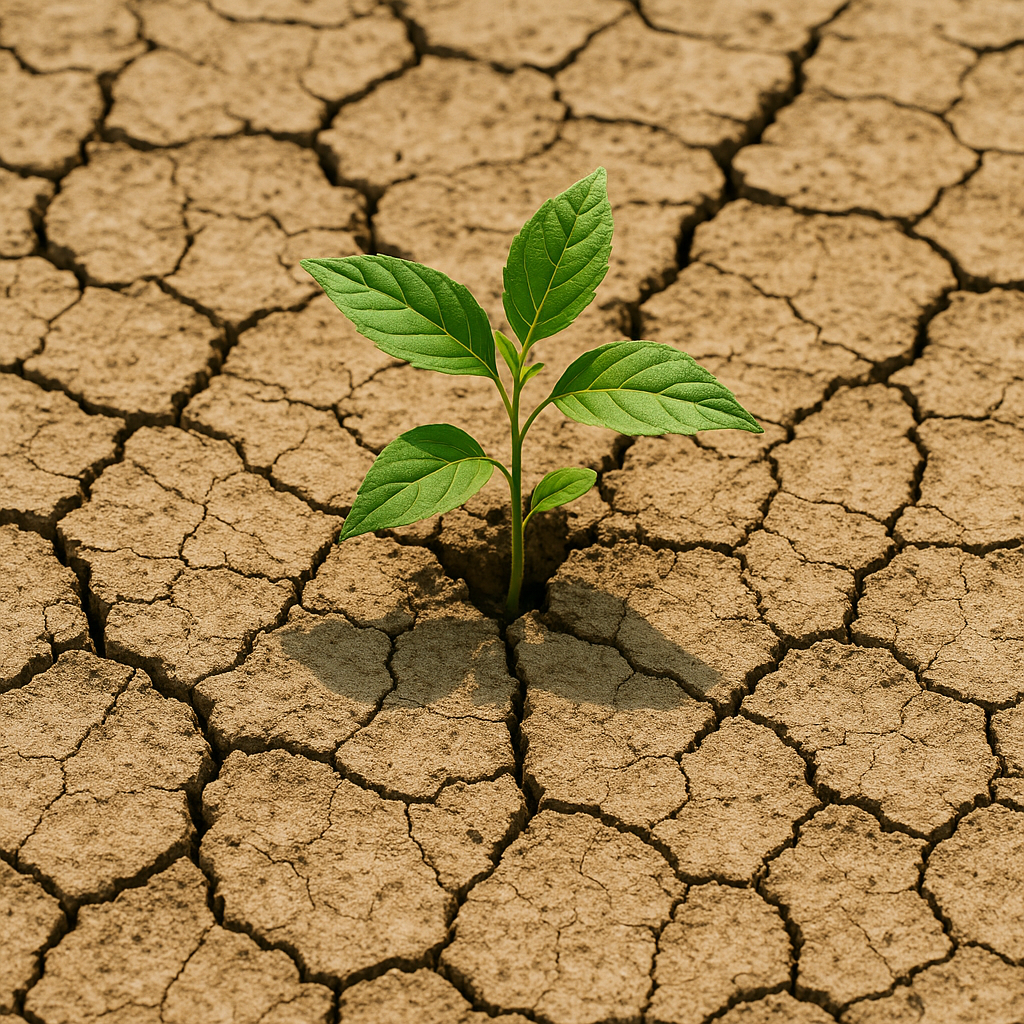
Nature Connect transforms youth into climate-proof professionals through innovative programs, fostering ecological resilience & social justice.
Nature Connect is a South African group started in 1999 that turns curious kids into environmental pros. They offer fun, hands-on learning outside, not just in classrooms. This helps young people get jobs and even start their own businesses in nature work, making sure our planet and its people both thrive.
What is Nature Connect?
Nature Connect is a South African organization established in 1999 that transforms curious children into environmental professionals. They achieve this by providing practical, hands-on ecological experiences and structured training programs, creating a pipeline from early environmental literacy to professional employment and entrepreneurship in conservation and natural resource management.
Get Cape Town news in your inbox
Stay updated with the latest stories from the Mother City.
Learning Beyond Classroom Walls
On a rugged hillside overlooking Hout Bay, thirty-two eleven-year-olds arrange themselves among granite outcrops while their guide, Noxolo Mthembu, lifts a length of kelp toward the morning sun. She challenges them to estimate how many commercial applications this unassuming brown seaweed might generate. The responses flood in immediately: plant food, ice-cream stabiliser, compostable packaging material. The count eventually exceeds twenty distinct possibilities. This encounter forms part of Nature Connect's "Eco-Explorers" initiative, yet it also represents the opening chapter of a journey that may culminate in a salaried environmental position ten years down the line.
Since its establishment in 1999, this organisation has orchestrated thousands of comparable experiences across every province in the nation. Their selection of locations follows a strict protocol: no site sits more than thirty kilometres from the participating school. This deliberate proximity ensures that young people encounter ecological systems not as remote, untouchable wilderness, but as integrated components of their immediate surroundings - assets that demand care, attention, and understanding.
The pedagogical approach rejects the conventional field trip model of passive observation. Learners handle specimens, debate solutions to hypothetical scenarios, and document findings using smartphone applications. These digital records accumulate into longitudinal datasets that researchers at partner universities mine for patterns in childhood environmental literacy. What began as modest weekend excursions has evolved into a sophisticated pipeline that transforms casual curiosity into professional expertise.
The Calvinia Breakthrough
The Hantam Mountains rise in terracotta waves northeast of Ceres, their folded geology capturing precious moisture above the Karoo settlement of Calvinia. During 2021, municipal authorities confronted intersecting emergencies: exotic wattle species had colonised the river supplying seventy percent of municipal water, while nearly seven in ten local young people found themselves without work.
Nature Connect proposed an integrated response. Their "Green Corps" initiative brought fourteen unemployed residents aged eighteen to twenty-nine into a structured two-year engagement. Participants received monthly living allowances, pursued nationally recognised Natural Resource Management credentials at NQF Level 5, and assumed direct responsibility for twelve hundred hectares of catchment area. Funding flowed from multiple streams: sixty percent from the Department of Forestry, Fisheries and Environment's Jobs Fund, twenty-five percent from the local Commonage User Association, and fifteen percent from a Dutch impact investment vehicle.
The weekly rhythm divided practical restoration from skill-building. Four days involved manual clearing of invasive stands, spring mapping, gully rehabilitation, and meticulous documentation via a cloud-based monitoring platform developed by Stellenbosch computer science undergraduates. The fifth day unfolded in Calvinia's sole air-conditioned public facility - the municipal library - where participants studied quantitative literacy, unmanned aerial vehicle operation, and small business development.
Within eighteen months, these crews had reclaimed eight kilometres of upstream channel, increasing dry-season base flow by more than one-tenth. National journalists overlooked this achievement, yet fourteen comparable Karoo municipalities have since requested implementation guidance. The Calvinia template demonstrates how environmental restoration and economic inclusion can reinforce rather than compete with each other.
Transforming Urban Infrastructure into Living Classrooms
Cape Town's northern suburbs harbour over four hundred and eighty artificial ponds - storm-water control structures that most inhabitants ignore completely. Nature Connect recognised untapped potential in these engineered basins, treating them as "stepping-stone" habitats that could stitch fragmented ecosystems together.
A 2016 collaboration with the City's Water and Sanitation Directorate converted ten of these ponds into biodiversity demonstration sites. Schoolchildren from adjacent neighbourhoods propagate indigenous aquatic species - Cape pondweed and waterblommetjie - in repurposed dairy containers, later transplanting these seedlings to establish marginal vegetation. This restored fringe habitat supports breeding populations of the Western Leopard Toad, a threatened amphibian confined to this corner of the planet.
The educational value extends beyond ecology. Participants monitor water chemistry, tracking acidity and nitrate concentrations, while recording tadpole survival rates. These measurements feed directly into municipal pollution-response systems, giving learners genuine influence over infrastructure management. When these students later apply for Nature Connect's Youth Conservation Leadership Programme at sixteen, they arrive with forty documented volunteer hours and testimonials from city officials - credentials that distinguish them in highly selective admission processes.
The pond initiative illustrates how existing grey infrastructure can accommodate green functions without additional capital expenditure. Municipal engineers report that vegetation-established basins require less sediment removal than conventional alternatives, generating operational savings that justify expanded replication.
Building Qualifications Through Modular Progression
Nature Connect's training architecture accommodates interrupted educational trajectories. A teenager who abandoned formal schooling can nonetheless accumulate portable credentials through stacked, sequential engagements.
Young adults enter Green Corps internships, committing two thousand hours toward NQF Level 5 completion. Graduates carry endorsements from both CapeNature and the South African National Biodiversity Institute. The summit involves paid Professional Field Officer Apprenticeships - three-year engagements co-hosted by SANParks or private reserves, culminating in NQF Level 7 Advanced Diplomas through the Southern African Wildlife College.
This modular construction serves practical purposes. Credits transfer across institutions; someone exiting after Level 3 can still pursue game lodge employment or municipal education positions. The design acknowledges that rural participants face unpredictable interruptions - family emergencies, transport failures, seasonal agricultural demands - without penalising them for circumstances beyond their control.
Deliberate Inclusion and Women's Economic Power
Women constitute sixty percent of Nature Connect beneficiaries, a proportion maintained through explicit structural choices. All residential programmes provide menstrual products without charge. Green Corps admission requires no secondary school completion, removing a barrier that disproportionately affects young women in patriarchal households. Every partnership agreement incorporates zero-tolerance harassment provisions with enforceable consequences.
A 2020 experiment in the Kouebokkeveld deployed all-female mechanical clearing teams. Within eighteen months, these crews had removed forty-two hectares of pine plantation, liberating two hundred hectares of remnant snow protea to regenerate naturally. Three participants subsequently launched independent fire-management enterprises, hiring equipment to wine estates that lost access to inexpensive male migrant labour during pandemic border closures.
This progression - from participant to entrepreneur - exemplifies Nature Connect's economic development philosophy. Conservation skills become marketable services; environmental knowledge translates into household income. The organisation tracks not merely training completion but financial independence, measuring success through remittance flows and business formation rather than certificate accumulation alone.
Innovating for Carbon Markets and Financial Sustainability
South African carbon trading mechanisms reward above-ground tree establishment, yet these frameworks largely disregard fynbos ecosystems that sequester substantial carbon below the surface. Nature Connect addressed this oversight through partnership with the University of Cape Town's Plant Conservation Unit.
Their collaborative development - the "carbon-stick" - consists of fifty-centimetre biodegradable rods infused with indigenous seed and mycorrhizal fungi. Inserted into degraded renosterveld, these devices absorb winter rainfall, expanding gradually to release their biological payload. Early monitoring indicates fourfold increases in native herbaceous cover within twenty-four months.
Pending voluntary carbon market certification, each restored hectare could generate 1.8 tonnes of carbon dioxide equivalent credits. At prevailing prices of fourteen dollars per tonne, a thousand-hectare initiative might finance forty-five Green Corps positions for a decade. This prospect matters enormously: programme sustainability without perpetual donor dependency.
The carbon-stick represents technological appropriate to context - simple enough for local manufacture, sophisticated enough to attract premium pricing. It embodies Nature Connect's conviction that ecological restoration must generate returns that secure its own continuation.
Open-Source Operations and Data Democracy
The organisation's technical infrastructure avoids proprietary dependencies. Field teams capture observations using Open Data Kit on refurbished mobile devices. A Cape Town cooperative hosts PostgreSQL databases containing 1.2 million georeferenced records. The "iNATURE" Flutter application pushes daily micro-learning to seven thousand eight hundred users, reinforcing concepts through spaced repetition.
Machine learning algorithms scan incoming data for anomalies - unexpected declines in river invertebrate communities, for instance - automatically dispatching WhatsApp notifications to nearest response teams. These same repositories inform an annual "Red List Lite" publication that municipal officials wield when advocating ecological infrastructure allocations.
This technological stack serves dual purposes. Operationally, it coordinates dispersed activities across vast territories. Politically, it democratises environmental information, preventing capture by specialist gatekeepers. The Creative Commons licensing of all datasets ensures that competitors and collaborators alike can build upon Nature Connect's groundwork.
Food Security Through Buffer Zone Management
When Philippi Horticultural Area farmers surrendered nine hundred hectares to informal settlement expansion in 2019, Nature Connect negotiated alternative arrangements with Human Settlements officials. Thirty-metre vegetated buffers now line the Kuils River, cultivated by youth crews who harvest edible bulrushes and Cape water chestnuts.
These species perform ecological filtration while yielding marketable produce. Surplus sells to proximate supermarkets, with revenues recycling into transport allowances for subsequent cohorts. Over two years, this intervention has produced eighteen tonnes of food while reducing river nitrate loading by more than one-third.
The Philippi model triangulates conservation, nutrition, and livelihood generation within constrained urban space. It disputes the assumption that environmental protection and human settlement expansion must conflict, demonstrating instead their potential for mutual reinforcement.
Measuring Human Transformation
Conventional conservation metrics - species protected, hectares rehabilitated - fail to capture Nature Connect's distinctive contribution. Their Theory of Change prioritises human development indicators: three-quarters of Green Corps alumni secure permanent employment within eighteen months of graduation; more than two-thirds send money to rural households; female participants delay first childbirth by four years compared to matched peers; and over four-fifths participate in local elections, doubling typical youth turnout.
Nelson Mandela University independently audits these claims, publishing findings under open access arrangements. This transparency permits external benchmarking and methodological criticism, strengthening credibility through vulnerability.
The metric selection signals ideological commitment. Nature Connect treats conservation as means rather than end - valuable insofar as it cultivates capable, employed, politically engaged citizens who happen to possess ecological expertise.
Three Futures for 2049
Dr Anthony Roberts, chief executive since 2015, sketches divergent trajectories for the organisation's coming quarter-century. The "Million-Hectare Mosaic" envisions urban micro-reserves, rural connectivity corridors, and private conservancies stewarded by one hundred thousand qualified young professionals, financed through carbon markets, biodiversity subsidies, and municipal incentives. This scenario delivers both ecological functionality and social equity.
"Climate Churn" depicts biome shift under warming conditions, with Nature Connect reconstituting as a seed enterprise supplying fifty million climate-adapted plants for mining rehabilitation and infrastructure offset. "Precariat Fire Brigades" describes app-assembled gig workers paid per invasive tree, landscapes maintained through fragmented, unskilled intervention.
Roberts maintains that only the first trajectory satisfies dual criteria of ecological resilience and social justice. The alternatives represent organisational drift or sectoral decline. The approaching five years will determine which path South African society selects for its youth-nature compact - whether environmental work becomes dignified profession or desperate survival strategy.
[{"question": "What is Nature Connect?", "answer": "Nature Connect is a South African organization, established in 1999, dedicated to transforming curious young people into environmental professionals. They achieve this by offering hands-on, outdoor learning experiences and structured training programs, helping individuals secure jobs and even start businesses in conservation and natural resource management. Their mission is to ensure that both our planet and its people thrive."}, {"question": "How does Nature Connect achieve its mission of turning children into environmental professionals?", "answer": "Nature Connect uses a multi-faceted approach. They start with early environmental education through initiatives like 'Eco-Explorers,' where children engage in practical, hands-on learning experiences in local ecological systems. This progresses to structured training programs like 'Green Corps' for unemployed youth, offering nationally recognized credentials and practical work experience in restoration. They also provide professional apprenticeships, leading to advanced diplomas, ensuring a clear pathway from curiosity to professional expertise and employment."}, {"question": "What are some examples of Nature Connect's innovative projects?", "answer": "Nature Connect has several innovative projects. One example is the 'Calvinia Breakthrough,' where they addressed water scarcity and unemployment by training local youth in invasive species removal, restoring river channels, and providing them with accredited qualifications. Another is transforming urban stormwater ponds in Cape Town into biodiversity demonstration sites, where schoolchildren propagate indigenous species and monitor water quality. They also developed the 'carbon-stick' for fynbos restoration, which aims to generate carbon credits for sustainable funding."}, {"question": "How does Nature Connect ensure inclusivity and empower women in its programs?", "answer": "Nature Connect has explicit structural choices to ensure inclusivity and empower women. Women constitute 60% of their beneficiaries. They remove barriers by not requiring secondary school completion for Green Corps admission and provide menstrual products in residential programs. All partnership agreements include zero-tolerance harassment provisions. They also promote women's economic power, exemplified by an all-female mechanical clearing team in Kouebokkeveld, where participants later launched independent fire-management enterprises."}, {"question": "How is Nature Connect addressing financial sustainability and future challenges?", "answer": "Nature Connect is innovating for financial sustainability by exploring carbon markets, particularly for fynbos ecosystems which are often overlooked. Their 'carbon-stick' initiative is designed to generate carbon credits, potentially funding Green Corps positions for a decade without perpetual donor dependency. CEO Dr. Anthony Roberts envisions a 'Million-Hectare Mosaic' for 2049, where qualified young professionals steward ecological corridors, financed through diverse mechanisms including carbon markets, biodiversity subsidies, and municipal incentives, ensuring both ecological functionality and social equity."}, {"question": "What is Nature Connect's approach to technology and data?", "answer": "Nature Connect embraces open-source technology and data democracy. They use Open Data Kit for field observations and host PostgreSQL databases with millions of georeferenced records. Their 'iNATURE' Flutter application provides daily micro-learning. Machine learning algorithms analyze data for anomalies, sending WhatsApp notifications to response teams. All datasets are licensed under Creative Commons, ensuring that environmental information is accessible and preventing its capture by specialist gatekeepers, promoting collaboration and transparency."}]

Sarah Kendricks is a Cape Town journalist who covers the city’s vibrant food scene, from township kitchens reinventing heritage dishes to sustainable fine-dining at the foot of Table Mountain. Raised between Bo-Kaap spice stalls and her grandmother’s kitchen in Khayelitsha, she brings a lived intimacy to every story, tracing how a plate of food carries the politics, migrations and memories of the Cape.
View all articles →