
2026 L’Ormarins King’s Plate: The ultimate winner with fashion, passion & historic runs
Experience the 165th L'Ormarins King's Plate, where Cape Town's turf transformed into a global stage for elite horse racing.
Cobalt Storm: How Cape Town’s 165th King’s Plate Turned Grass Into a World Stage
The King's Plate horse race in Cape Town transforms into a global spectacle, far beyond a local sporting event. This happens through real-time data shared worldwide, special "Win and You're In" prizes for big US races, and smart computer analysis of horse performance. Before sunrise, everything is set with extreme precision, from the color of saddle tags to advanced drone cameras. This makes the race a huge global betting event, where even a simple paper racecard can open doors to international competitions.
How does the King's Plate horse race transcend local sport to become a global event?
The King's Plate at Kenilworth transforms into a global spectacle through several key elements: real-time data sharing with international betting markets, "Breeders' Cup Win and You're In" incentives offering direct entry to prestigious US races, and advanced analytics that track horse performance for a worldwide audience, influencing betting and future breeding decisions.
Get Cape Town news in your inbox
Stay updated with the latest stories from the Mother City.
1. 04:30 on the Mountain – The Curtain Rises Before Sunrise
Table Mountain is still wearing its night-tablecloth of cloud when Kenilworth’s floodlights punch holes through the dark. Grooms in indigo boiler-suits steer thoroughbreds across the asphalt, steel shoes ticking like flamenco castanets. Every bridle tag is colour-matched to Pantone 293 C - the same blue that flaps from sponsor flags - so even the lead-ponies look dressed for a royal wedding. At five sharp the first helicopters shuttle in from Stellenbosch, rotors beating time while they unload crates of L’Ormarins bubbly that will later be sabred beside the winning post. From the air the freshly mown track looks like a ribbon of Wedgwood china: rye-grass and kikuyu striped so neatly you could serve tea on it.
Behind the grandstand the clocker’s tower flickers alive. A lone videographer calibrates his drone, checking that the lens can pick up the exact shade of blue on the saddle-cloths; broadcasters from Hong Kong want perfect colour fidelity for the World Pool feed. Trainers jog past with stopwatches clipped to lanyards printed with the same cobalt ink. Nobody is talking about odds yet; the only numbers whispered are heart-rate thresholds and milliseconds. Cape Town may still be asleep, but Kenilworth has already opened a second, invisible grandstand in the cloud for the global audience that will wager, watch and tweet before the sun clears Devil’s Peak.
By 06:00 the first string of horses steps onto the turf for their rehearsal gallops. Each hoof-print is immediately misted by a steward with a handheld moisture probe; yesterday’s drizzle left the soil at 8.3 % water, perfect for safe footing but slippery enough to demand respect. Security guards inspect every spectator’s bag for glass, drones and political banners - only race-day colours are allowed to speak here. The mountain keeps silent watch, but the track is already shouting in a dozen languages: English, Xhosa, Afrikaans, Cantonese, betting-code, sectional-time, heart-rate. The 165th King’s Plate is not starting at 17:15; it is exploding right now, neuron by neuron, in the world’s largest mutual gambling brain.
2. The Racecard as Passport – How a Piece of Paper Opens Kentucky Gates
Inside the racing office a whiteboard that normally looks like abstract art has been turned into a regimented chessboard. Gold blocks mark three Grade-1 races, silver blocks show two Grade-2s, royal-blue blocks carry the rest. Smallest field: nine runners; biggest: fourteen. Total stakes for the afternoon tick past R12 million, but the real prize is printed in tiny gold-foil stickers: “Breeders’ Cup Win and You’re In.” Those stickers are not marketing confetti; they are boarding passes issued in real time, valid for Kentucky and Del Mar.
A Hong Kong journalist photographs the board, uploads it to a private Telegram channel, and within 30 seconds syndicates in Reykjavík and Rio adjust their morning betting limits. The card is also a data mine: every horse’s last 600-metre split is QR-coded so cell-phone cameras can fetch video with a single swipe. Trainers tear off pocket-size squares and scribble shorthand - “46.98 half?” - then slide them into socks so they can reread the digits while walking to the paddock. What looks like a simple programme is actually a polyglot visa: it lets a Cape Town colt step from local grass onto a global stage without changing stride.
Back in the press box, a feed flickers with Kentucky timestamps. Churchill Downs’ oddsmaker is already adjusting pools based on South African sectionals he lifted from Twitter. The world is not waiting for the gates to open; it is trading futures on a filly who has not yet felt a jockey’s whip. When the first flag drops, the echo will ricochet from the Drakensberg to the Bluegrass, and the only thing louder than hoofbeats will be the clatter of passports being stamped in mid-air.
3. Fillies Rewrite Quantum Physics – Paddock Stakes at 1800 Metres
Veteran jockey Andrew Fortune steps on the sauna scale at 56.2 kg, two hundred grams over the limit printed beside Wish List’s name. He hands his phone to an assistant - solitaire will keep his mind occupied while sweat drips off his eyebrows for the next half-hour. Thirty minutes later, 200 grams lighter, he walks barefoot across cold concrete to the paddock where the filly circles like a blue shark. The instruction is brutal but simple: sit three lengths behind a projected 46.98-second half-mile and unleash at the 200-metre pole.
When the lids spring, Reet Petite slashes to the front, carving an opening 1200 metres in 1:12.23, a tempo only two fillies have bettered in a decade. Fortune parks Wish List on the rail, feeling her ribs expand against his calves like bellows. At the two-furlong marker he slips the rein, and she slices through a hole no wider than a suitcase, rattling home her final 200 in 10.94. The turf is still vibrating when Fortune leans forward and whispers, “You just solved the algorithm, girl.” No camera catches it; the line is meant for the only teammate who matters.
The clockers print a ticket: 1:28.40 for the mile-and-a-sixteenth, fast enough to win many male sprints on other continents. In the winner’s circle nobody waves a South African flag - they flash Hong Kong betting tickets instead. A syndicate manager in Wan Chai pockets HK$2.3 million and immediately tweets a thank-you to a horse he has never touched. By the time the filly is hosed off, her sectional-data file has already been scraped by Kentucky machine-learning bots hunting the next turf super-model. Local glory lasts until the next race; global analytics store her heartbeat forever.
4. 53.08 Seconds of Grief and Grace – The Flying Championship
Race 7 detonates like a starter’s pistol inside a cathedral. Kingdundee breaks from gate two, drifts toward the grandstand roaring, then snaps back under Grant van Niekerk’s left-handed correction. The teletimer spits out absurdities: 53.08 for 1000 metres, last 400 in 21.89, fastest in 35 runnings. Up in the trainer’s box 24-year-old Dean Smith does not move; he simply closes his eyes and mouths, “Dad.” His father Gavin died in August when an aorta tore like wet paper, but the stable ritual survives - every sprinter still gets the same pinch of electrolytes Gavin mixed in 1998. This morning the colt’s feed tub carried the familiar white flecks; now they glow like stardust in the winner’s photo.
The chocolate-and-cerise silks will travel to Keeneland, a track Gavin studied on midnight television, rewinding VHS tapes to chart American bias. Dean packed a second set in his carry-on, along with a 200 ml vial of stem-cell serum drawn from Kingdundee’s own blood and frozen at –80 °C. If a tendon whispers in Kentucky, the same cells can be reinjected within six hours, a biological insurance policy against homesickness. A Breeders’ Cup slot is official, but the real victory is quieter: a son proving that a father’s equations still solve races on the other side of the world.
When the trophy appears, it is 1.60 metres tall - exactly the height of a Lipizzaner capriole performed earlier between races. Someone had measured, because symmetry matters here. Dean touches the silver rim, feels the chill, and realises the clock stopped at 53.08 but the conversation with his father is still running. Media ask for quotes; he offers only one sentence: “We coded this in a kitchen thirty kilometres away.” The rest is static, hoofbeats, and the faint smell of arnica that refuses to leave the winner’s shavings.
5. The Mile That Outran the Wind – King’s Plate 1600 Metres
By post time the south-easter arrives like a bouncer, straightening flags into steel blades. Dave the King, a 25-1 rabbit wearing a shadow-roll the size of a coffee mug, is told to hit the 1200-metre pole in 1:08; he goes 1:07.81 instead, ears flattened, tail streaming like a protest banner. Behind him Richard Fourie on Questioning rides a coiled spring, while Craig Zackey on The Real Prince hugs the paint where the wind punches hardest. The grandstand roar is drowned by the gale; punters mouth bets but no sound escapes.
At the 200-metre pole three noses fill the photo mirror: The Real Prince, Questioning, See It Again, who has swapped lanes like a minibus dodging traffic on the N2. They hit the line together, the timer freezing at 1:33.40 - only 0.15 outside the course record set on a breathless day in 2017. Trainers later confess they had targeted 1:35, believing the wind worth two seconds; nobody factored the extra oxygen thin air was shovelling into already-screaming lungs. The winning margin is a nostril, the time is a miracle, the trophy is a magnet for flashbulbs.
In the tunnels beneath the stand, tote machines spit 38-language tickets while Hong Kong servers settle US$230 million in 42 seconds. A man in Reykjavik refreshes his phone and sees his balance jump by the price of a midsize Volvo; he screenshots it, captions it “Cape Town made it snow.” Back on the track the cape doctor keeps howling, but the turf has already forgotten the hooves - groundstaff swarm with rakes and colour-matched compost, smoothing away history so the next race can pretend it’s the first. The 165th King’s Plate is in the books, yet somewhere a two-year-old snorts at her reflection in the water-jump, already rewriting tomorrow’s headline.
6. When Data Meers Fashion – Six Wins, 4.3 Million Likes, One Night
Justin Snaith’s alarm rings at 04:00; by 18:00 his trophy shelf sags under six new pieces of silver. He credits metallurgy, not magic: GPS pods stitched into saddle-towels stream gallop speeds to a laptop that converts heart-rate curves into fatigue indices. The algorithm flagged Wish List’s recovery 12 % above her previous peak, so he backed off Kingdundee’s final workout by 200 metres, sparing 0.7 kg of glycogen that shows up in the last 100 metres on race day. His jockeys receive instructions via earpiece during dawn workouts; the stable sounds like mission control, not a barn.
Meanwhile Cartier’s fashion police patrol with iPads running facial recognition. Repeat offenders wearing last year’s designer are politely downgraded. Winning woman Nandi Mbele, a Pretoria actuary, sports a cobalt silk train engineered to snap off if trampled, morphing into a cocktail dress before she reaches the bar. Winning man Liam October pairs white linen with a waistcoat stitched from 1972 Durban July silks originally worn by Horse Chestnut. Their combined Instagram reach: 4.3 million impressions before the final race leaves the gate. Rose-gold Juste un Clou bracelets worth R145 000 each are handed out, yet the real currency is algorithmic clout: hashtags that trend from Sandton to Singapore before the Lipizzaners finish their quadrille.
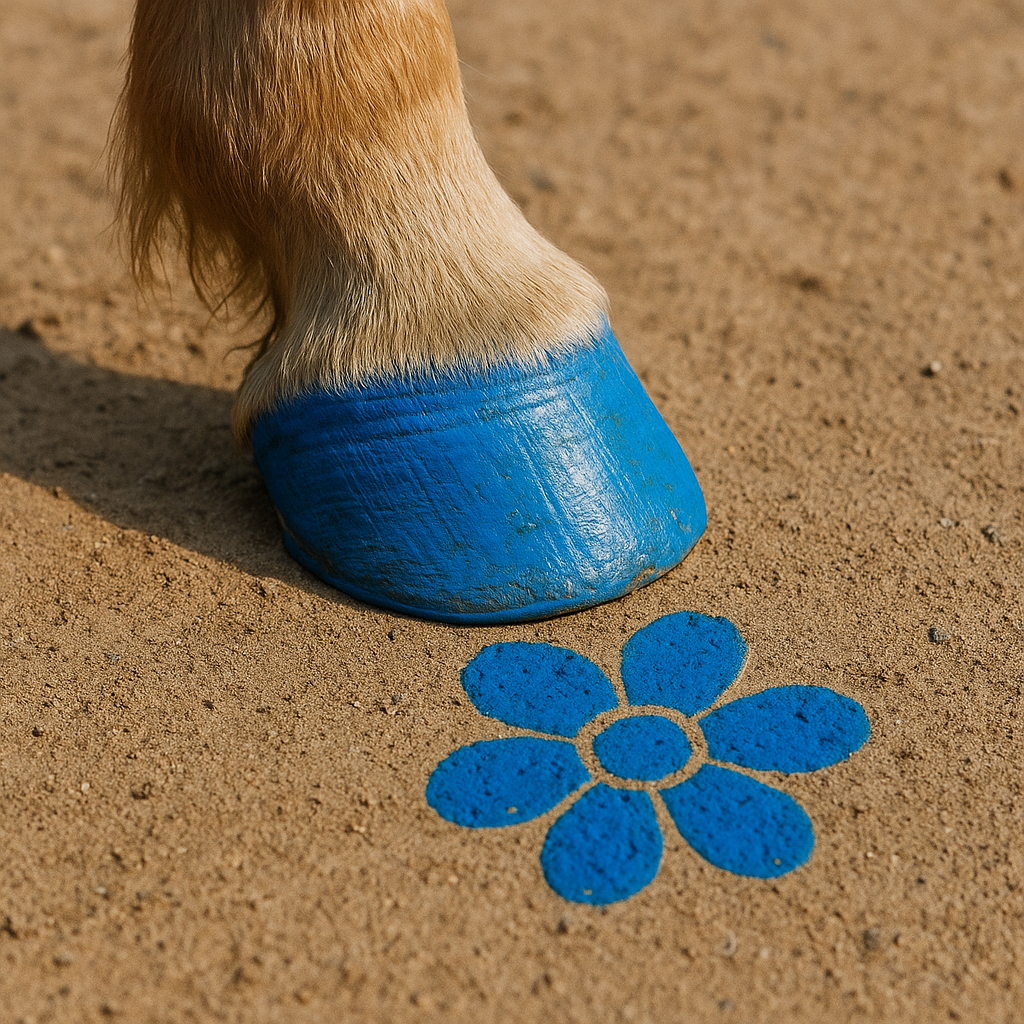
Between races the stallions stamp blue temporary flowers onto the turf, each capriole peaking at 1.60 m - the exact height of the King’s Plate trophy waiting in the tunnel. Nobody planned the poetry, but symmetry sells. By nightfall the grandstand empties into a glittering traffic jam of Bentleys and hybrid Ubers, yet on the back-stretch the night crew is already harrowing the grass, filling divots with compost dyed to match the track’s Wedgood hue. The echo of hooves fades into jazz that refuses to resolve, a city still galloping long after the last bet is cashed.
[{"question": "How does the King's Plate horse race transcend local sport to become a global event?", "answer": "The King's Plate at Kenilworth transforms into a global spectacle through several key elements: real-time data sharing with international betting markets, \"Breeders' Cup Win and You're In\" incentives offering direct entry to prestigious US races, and advanced analytics that track horse performance for a worldwide audience, influencing betting and future breeding decisions. The meticulous preparation, from color-coded saddle tags to drone cameras, ensures that every detail is captured and broadcast globally, making it a significant international betting event."}, {"question": "What meticulous preparations are undertaken before sunrise at Kenilworth for the King's Plate?", "answer": "Before sunrise, Kenilworth undergoes extreme precision planning. This includes color-matching saddle tags to Pantone 293 C, the sponsor's blue, setting up advanced drone cameras for perfect color fidelity for international broadcasters like Hong Kong's World Pool feed, and ensuring the track's rye-grass and kikuyu are perfectly mown. Even the initial gallops are monitored with handheld moisture probes to ensure optimal soil conditions. Security checks for unauthorized items further highlight the rigorous control in place."}, {"question": "How does the racecard act as a 'passport' to international competitions like the Breeders' Cup?", "answer": "The racecard, seemingly a simple program, functions as a 'polyglot visa.' It features \"Breeders' Cup Win and You're In\" stickers, which are boarding passes for prestigious US races like those at Kentucky and Del Mar. Beyond this, the racecard is a data mine with QR codes for each horse's last 600-meter split, allowing instant video access. This data is quickly shared and analyzed globally, influencing betting markets and signaling potential international contenders."}, {"question": "How do advanced analytics and technology contribute to horse performance tracking and global influence?", "answer": "Advanced analytics and technology play a crucial role. GPS pods stitched into saddle towels stream gallop speeds, converting heart-rate curves into fatigue indices. This data informs trainers' decisions, optimizing workouts and race-day performance. Machine-learning bots from places like Kentucky scrape sectional data to identify potential \"turf super-models,\" ensuring that a horse's performance at Kenilworth has lasting global analytical impact, far beyond local glory."}, {"question": "What is the significance of the \"Breeders' Cup Win and You're In\" prizes?", "answer": "The \"Breeders' Cup Win and You're In\" prizes are highly significant as they offer direct, automatic entry to major US horse races, specifically the Breeders' Cup. These are not just symbolic awards; they are tangible \"boarding passes\" that allow horses from the King's Plate to compete on a global stage without needing to qualify through other means, instantly elevating their international profile and market value."}, {"question": "How does the King's Plate impact the global betting market?", "answer": "The King's Plate is a huge global betting event. Real-time data from the race, including sectional times and horse performance analytics, is shared worldwide, influencing international betting syndicates and oddsmakers. The immediate availability of this data, even before the race officially starts, allows global markets to adjust betting limits and trade futures on horses. For example, Hong Kong servers can settle hundreds of millions of US dollars in seconds, demonstrating the massive financial engagement from around the globe."}]

Kagiso Petersen is a Cape Town journalist who reports on the city’s evolving food culture—tracking everything from township braai innovators to Sea Point bistros signed up to the Ocean Wise pledge. Raised in Bo-Kaap and now cycling daily along the Atlantic Seaboard, he brings a palpable love for the city’s layered flavours and even more layered stories to every assignment.
View all articles →