
Bafana & Banyana unveil new jersey ahead of 2026 FIFA World Cup
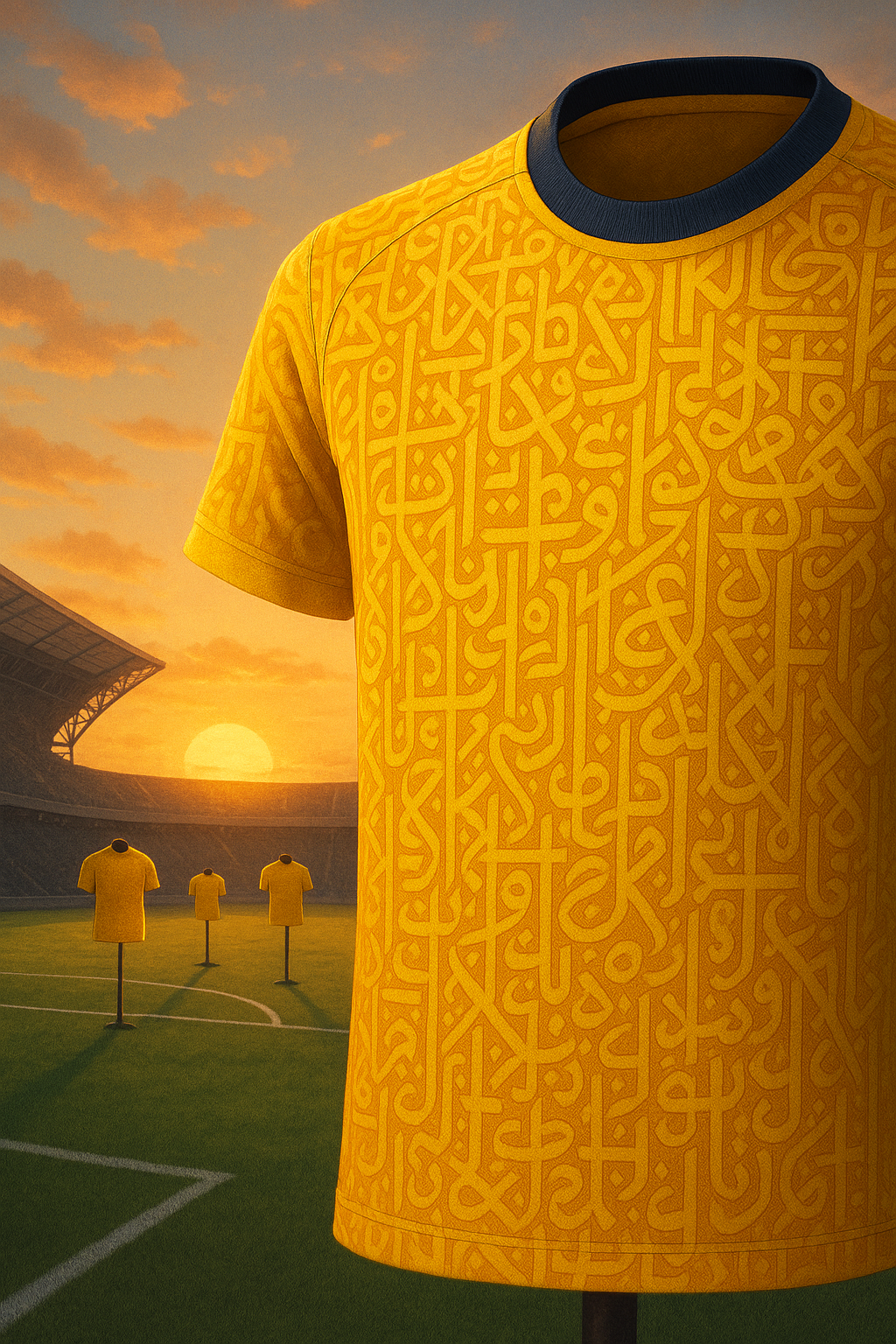
Unveiling South Africa's 2026-27 national jersey: a story woven with 12 languages, cutting-edge tech & a tribute to heritage.
This new South African soccer jersey is a real showstopper! It's bright yellow with amazing patterns that show off the country's twelve languages, making it a truly unique piece of art. Not only does it look cool, but it's also super comfy and helps players stay cool during games. Plus, it's made from recycled ocean plastic, which is awesome for the planet. The jersey even hides secret messages and GPS spots, telling a rich story about South Africa with every stitch.
What is unique about the 2027 South African national team jersey?
The 2027 South African national team jersey features a "Voice Map" design with twelve interlocking symbols representing the country's official languages. It also incorporates CLIMACOOL+ technology for enhanced breathability, is made from recycled ocean plastic, and includes hidden details like Morse code for "UBUNTU" and GPS coordinates to Soccer City.
Get Cape Town news in your inbox
Stay updated with the latest stories from the Mother City.
1. Dawn over Orlando: When Fabric Knows More Words Than a Dictionary
A naartjie-orange sunrise crawls across Orlando Stadium’s hollow stands, but the terraces feel alive, as if yesterday’s cheers never left. At midfield, mannequins model the 2026-27 home jersey; its neon yellow blazes against a mint-green collar, humming like a live wire. Before anyone utters a slogan, the kit is already narrating a story that began on 11 June 2010, the afternoon Siphiwe Tshabalala rocketed the Jabulani past Mexico and 85 000 vuvuzelas detonated in unison. The shirt he wore kept the country’s languages literally up his neck - eleven slim bars stitched inside the collar. Sixteen years later, the roster has grown to twelve tongues and the bars have burst free, rippling across the chest like sonic rings still racing from that strike.
Adidas designers call the visual “Voice Map”. From a metre it looks like salt-and-pepper noise; move closer and the noise sharpens into twelve inter-locking symbols: the rising stem of a Sesotho “l”, the bowl of a siSwati “k”, the cross-bar of an Afrikaans “t”. Lasers carved every glyph into the yarn at life-size, then dye-sublimation locked them a hair beneath the surface so turf-burns can’t erode them. Players claim they feel the ridges slip over their shoulder blades - suddenly multilingual skin.
Colour anoraks chased the sun even harder. Sample swatches for 2010 borrowed their exact lemon from the Nelson Mandela Children’s Fund logo; the 2026 batch ratchets saturation seven clicks brighter and nudges the Pantone three steps toward tangerine so that under cold-white LEDs it still pops like a minibus tail-light on the N1. The green travelled further: designers photographed three hundred Kirstenbosch leaves, averaged the pixels, and landed on “fynbos leaf”, a tone that looks almost black in the tunnel then detonates into life under midday sun - botanical holography hiding in cloth.
2. From Lab to Township: Engineering That Breathes and Gives Back
Under the artwork lies the new CLIMACOOL+ chassis - marathon tech Adidas has never before transplanted straight into football. Yarns along the under-arm gusset and lower-back scoop twist 18 % elastane for stretch, while chest panels revert to feather-weight nylon that wicks sweat faster than a Karoo wind. A Pretoria High-Performance rig scanned 42 national-squad athletes and revealed that local players run 1.3 °C hotter through the traps than Europeans; mesh vents widened two millimetres and tilted eleven degrees rearward so air slips along sprint posture. Even the famous three stripes are 0.4 mm exhaust slits: heat escapes, producing the faint whistle you hear when a winger torches the line.
The same morning the jersey drops, thirty trucks roll out of Cape Town harbour, each loaded with 2 000 “community packs”. Inside waits one adult shirt, fifteen youth replicas, a solar-rechargeable ball and a QR syllabus translated into all twelve official languages. SAFA promises that every goal scored in those donated strips - whether in a Saldanha Bay boys’ league or a Bushbuckridge girls’ final - will update live on a public dashboard titled “12 Voices, One Goal”. By late November the count tops 18 000 goals; each triggers an R50 adidas credit for pitch repairs, turning celebrations into maintenance money.
Banyana Banyana captain Refiloe Jane refused a straight-tube women’s cut. Pattern graders added twin waist darts and shortened the front hem 22 mm to curb ride-up during headers. A bonded crew-neck replaced the folded seam so braided hair never snags. SportScene says 62 % of buyers are now teenage girls picking up their first football shirt - retail dubs the surge “the Banyana bump”. Heritage sells better when it fits properly.
3. Hidden Codes, Clean Oceans and the Song of the Vuvuzela
Flip the left hem and a tiny Table Mountain silhouette appears - its outline dotted in Morse that spells “UBUNTU” . Lift the back collar for a throw-in and micro-text lists the 2010 starting XI plus the three subs, a private museum viewable only in motion. The jock-tag carries GPS coordinates to Soccer City, 26.1975° S, 28.0602° E, reminding debutants where their story formally begins. Even the sonic past gets sampled: producer Sun-El Musician pitch-bent the vuvuzela’s B-flat drone into a major-pentatonic scale, folded in twelve hand-clap rhythms and released the six-minute anthem “Jersey 12”. At Maponya Mall fans danced on a pressure-floor that synced LED pulses to heartbeats, lights converging into the kit’s outline; within hours #Jersey12 owned Twitter trends from Cassper Nyovest to the sports minister.
Retail, too, grew an extra layer. Alongside authentic, replica and kids versions sits the “Conscious Kit”, knit from 97 % ocean plastic recovered off KwaZulu-Natal by The Litterboom Project plus 3 % Namaqua merino for winter breathability. Each shirt’s swing-tag states exactly how many bottle-caps are reborn in the fibres - eighteen on average - so every purchase is a miniature beach clean-up. A discreet green cuff replaces the standard white, a badge of eco-pride now coveted in township five-a-side games.
NFC intelligence hides under the badge. Tap any phone and “The Township Atlas” AR map pops open, pointing to the nearest public field with kick-off times, flood-light status and safety ratings for women. One month post-launch fans scanned 400 000 times, creating heat-maps SAFA will pitch to treasury for rural flood-light funding ahead of the 2027 Women’s World Cup bid. Data beats begging bowls.
4. Future Kick-offs: Debut Dates, Living Badges and the Mama Medal
First whistle in the new look comes 5 December 2026 when Banyana Banyana contest the COSAFA Women’s final against Zambia, a fixture already hyped as “Jersey 12 v Copper Queens”. Bafana Bafana follow 9 January 2027 in the Afcon opener versus Senegal. Coaches demanded the shirts arrive unwashed; they want dye to age naturally through sweat and summer storms, forging a living folklore of colour shifts visible only to the squad who earned them.
Rumour mills speak of adidas Futurecraft testing a “living badge”: micro e-ink that can flip between Protea and Springbok depending on which national team steps onto turf. If IFAB clears it, South Africa could debut one cross-code jersey for football, rugby and netball by 2028 - a textile echo of 1995 unity, this time sewn rather than momentary.
Back in the customisation queue, the hottest print is not a player’s surname but “Mama” . A Pretoria engineer summed it up: “My mother walked 5 km to watch 2010 through a shop-window because we had no TV. This is her medal.” Whether that polyester mirror hangs in Rustenburg platinum hostels, Muizenberg surf cafés or London diaspora pubs, it keeps refracting new fragments of identity: a Xhosa click, a classroom latitude, a sailor’s recycled wave. Twelve languages, one relentless roar - and the shirt hasn’t even lost its first tackle yet.
What is the 2027 Yellow Thunder jersey?
This is the new South African soccer jersey for 2027. It's bright yellow with unique patterns representing the country's twelve official languages. It's designed for comfort and cooling, made from recycled ocean plastic, and contains hidden messages and GPS coordinates.
What makes the design of the jersey unique?
The jersey features a "Voice Map" design where twelve interlocking symbols, each representing one of South Africa's official languages, ripple across the chest. These symbols were laser-carved into the yarn and dye-sublimated to ensure durability. The colors are also specifically chosen: a bright tangerine-like yellow and a "fynbos leaf" green for the collar, which appears almost black indoors but brightens under sunlight.
How does the jersey enhance player performance and comfort?
The jersey incorporates new CLIMACOOL+ technology, previously used in marathon tech, designed to keep players cool. It uses a blend of elastane for stretch and lightweight nylon for wicking sweat. Specific mesh vents and even the three stripes are designed as exhaust slits, allowing heat to escape, especially tailored to local players who run hotter.
What social and environmental initiatives are associated with the jersey?
Each jersey is made from recycled ocean plastic, with swing tags indicating how many bottle caps were repurposed (around eighteen per shirt). For every jersey sold, "community packs" containing an adult shirt, fifteen youth replicas, a solar-rechargeable ball, and a QR syllabus are distributed. Goals scored in these donated strips contribute R50 adidas credit for pitch repairs via a public dashboard called "12 Voices, One Goal."
What hidden features and technology does the jersey include?
The jersey has several hidden elements: a Morse code silhouette of Table Mountain spelling "UBUNTU" on the left hem, micro-text listing the 2010 starting XI under the collar, and GPS coordinates to Soccer City on the jock-tag. It also includes NFC intelligence under the badge, which, when tapped, opens "The Township Atlas" AR map to show nearby public fields and their details.
When will the new jersey debut, and what are some future possibilities?
Banyana Banyana will debut the jersey on December 5, 2026, in the COSAFA Women’s final, followed by Bafana Bafana on January 9, 2027, in the Afcon opener. There are rumors of Adidas testing a "living badge" with micro e-ink that could switch between national team emblems (Protea/Springbok), potentially allowing one cross-code jersey for football, rugby, and netball by 2028. A popular customization option is printing "Mama" instead of a player's name.

Kagiso Petersen is a Cape Town journalist who reports on the city’s evolving food culture—tracking everything from township braai innovators to Sea Point bistros signed up to the Ocean Wise pledge. Raised in Bo-Kaap and now cycling daily along the Atlantic Seaboard, he brings a palpable love for the city’s layered flavours and even more layered stories to every assignment.
View all articles →