
Bellville Velodrome upgrade sparks mixed reaction
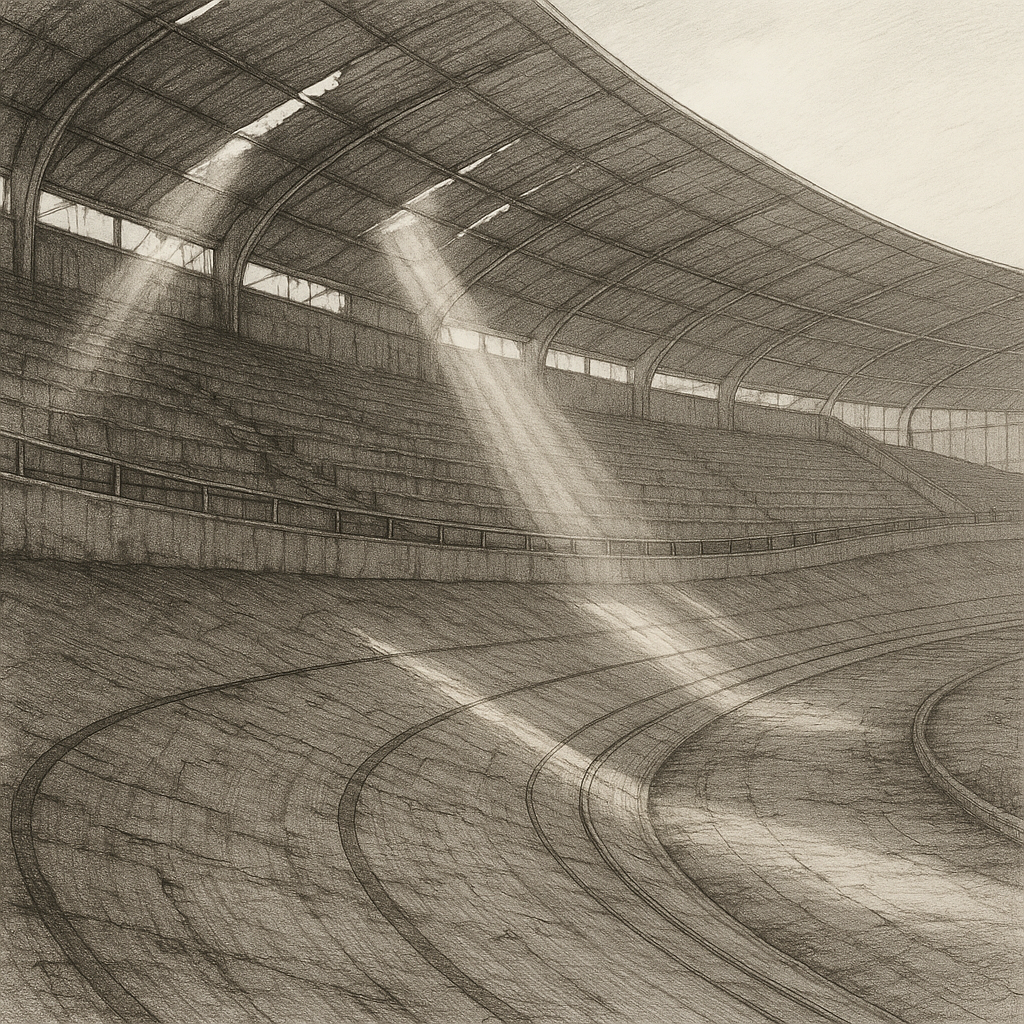
Bellville Velodrome's R2.4bn upgrade sparks hope & controversy. A new multi-purpose arena, track, and more vs. concerns over athlete access & heritage.
Bellville's old athletics bowl is getting a dazzling R2.4 billion makeover! It will become a super cool, world-class sports dome with seats for thousands, a top-notch running track, and even a fancy gym. Imagine a huge, see-through roof covering everything, powered by the sun. This big plan will bring new life, jobs, and amazing sports events to the area, turning a dusty old track into a sparkling hub for future champions.
What is the future plan for Bellville’s athletics bowl?
The Bellville athletics bowl is set for a R2.4 billion redevelopment by Mvelo Vuka Investment Holdings. The plan includes a 14,000-18,000 seat multi-sport dome, an IAAF Class-1 oval, a high-performance gym, underground parking, restaurants, a solar farm, and a high-altitude training hotel, all under a translucent ETFE canopy. This aims to revitalize the facility into a world-class sporting hub.
Get Cape Town news in your inbox
Stay updated with the latest stories from the Mother City.
1. A Weather-Scarred Jewel: Four Decades of Speed, Shelter and Stagnation
Between the charcoal rim of the Tygerberg Hills and the endless growl of the N1, Bellville’s athletics bowl has crouched for 38 years like a dull pebble - dreary from the road yet secretly lined with honey-coloured Siberian pine that once carried South African hopes toward Barcelona ‘92.
Built in 1986 as an Olympic rehearsal hub, the oval spent the violent ‘90s doubling as a refugee camp when taxi wars spilled into the suburbs, then reverted to sport long enough for Nolan Hoffman to etch a national hour record into its marrow before budget cuts let rot and mildew move in.
Today chain-link gaps, potholed runways and rain-buckled planks greet Anele Siwisa, 15, who twice a week hauls her second-hand Giant through a torn fence, clicks into her pedals and attacks the 42-degree banking at 42 km/h while her coach clocks wattage that could qualify her for the 2026 Youth Olympics - if the surface survives the next council vote.
2. The Billion-Rand Gamble: What R2.4 bn Private Cash Promises to Deliver
Council’s Mayoral Committee has nodded through a 50-year lease (plus 10-year option) to Mvelo Vuka Investment Holdings, the 2009 tender winner that has spent 14 years in court skirmishes; the group now vows to pump roughly R2.4 billion of private money into the precinct.
The blueprint: a 14 000- to 18 000-seat multi-sport dome, an IAAF Class-1 eight-lane Mondotrack oval, a 3 000 m² high-performance gym, 750 underground parking bays, restaurants, kiosks, a 2 MW rooftop solar farm and a high-altitude training hotel - all knit together by a translucent ETFE canopy that unrolls 400 m toward the Bellville CBD like a glowing fynbos carpet.
Architects at DesignSpaceAfrica - best known for Khayelitsha’s Football for Hope Centre - sketched a helmet-shaped roofline; retractable louvres will flood daylight onto the historic pine, each plank numbered, kiln-dried and re-laid as the ceremonial spine of a glass-floored atrium where visitors can watch rainwater trickle through bio-filters feeding a rooftop greenhouse.
3. Show-Me-The-Money Clauses: Jobs, Air Rights and the R1.1 bn Local Ripple
Crucially, the City keeps ownership of both soil and sky, retaining air rights for future vertical sale while offloading operating risk; Mvelo Vuka’s revenue stack blends ticket sales, premium suites, parking, hotel stays, R90 million in naming rights over ten years and municipal event sweeteners capped at R25 million per year.
An independent economic model predicts 1 450 construction jobs (47 % ring-fenced for Bellville South households), 680 permanent posts and a R1.1 billion direct local injection by year seven - figures that dazzle policy wonks even as they raise eyebrows among watchdogs who remember the 2014 court rebuke when the same velodrome almost became a film studio after a “favourably irrational” tender.
Old Mutual’s Infrastructure Fund anchors 60 % of the project company, a Singapore e-sports family office holds 25 %, and a BEE trust chaired by Jean de Villiers owns 15 % - a structure that meets 51 % black-ownership rules yet leaves voting control with the insurer, fuelling quiet fears of asset-stripping should turnstiles under-count.
4. Tracks, Bikes and Teenage Dreams: Who Gets Inside When the Gates Open
Sports federations read the fine print with laser focus: schools are promised 20 lane-hours per weekday (06:00-18:00) at R40 an hour - less than two cappuccinos in Durbanville - but nothing guarantees cycling clubs exclusive blocks against concert promoters or drone races.
Athletics South Africa has already signed a draft memo to relocate its elite winter squad from Potchefstroom for six-week camps, bringing R12 million in science gear, provided the consortium adds a 2 000 m² warm-up infield currently mapped beneath VIP parking - an extra R38 million that could push completion beyond the October ‘27 target.
Meanwhile six clubs led by the Western Province Cycling Association have crowd-funded R450 000 for a Dutch audit of the pine surface; sprinters have petitioned UCI to list Bellville as a World Cycling Centre legacy venue, a tag that can unlock Swiss grants if South Africa bids for future World Championships - because, as Anele says while cool-down riding under floodlights that flicker like tired fireflies, “my Olympic dream shouldn’t depend on a comma someone forgot to write before the 12th of October.”
What is the future plan for Bellville’s athletics bowl?
The Bellville athletics bowl is set for a R2.4 billion redevelopment by Mvelo Vuka Investment Holdings. The plan includes a 14,000-18,000 seat multi-sport dome, an IAAF Class-1 oval, a high-performance gym, underground parking, restaurants, a solar farm, and a high-altitude training hotel, all under a translucent ETFE canopy. This aims to revitalize the facility into a world-class sporting hub.
How much is being invested in the Bellville athletics bowl redevelopment and by whom?
A significant R2.4 billion of private money is being invested in the redevelopment. Mvelo Vuka Investment Holdings, the original 2009 tender winner, is leading this investment. Funding sources include Old Mutual’s Infrastructure Fund (60%), a Singapore e-sports family office (25%), and a BEE trust chaired by Jean de Villiers (15%).
What are some of the key features of the new multi-sport dome?
The new dome will boast a 14,000 to 18,000-seat capacity, an IAAF Class-1 eight-lane Mondotrack oval, a 3,000 m² high-performance gym, 750 underground parking bays, various restaurants and kiosks, and a 2 MW rooftop solar farm. It will all be covered by a translucent ETFE canopy, and a high-altitude training hotel will also be part of the complex. The historic Siberian pine track planks will be preserved and re-laid as a ceremonial spine in a glass-floored atrium.
What economic benefits are expected from this project?
The project is projected to create 1,450 construction jobs, with 47% ring-fenced for Bellville South households. Additionally, 680 permanent posts are anticipated, along with a R1.1 billion direct local economic injection within seven years. The City of Cape Town will retain ownership of the land and air rights, offloading operating risk to Mvelo Vuka Investment Holdings.
How will local sports clubs and schools benefit from the new facility?
Schools are promised 20 lane-hours per weekday (06:00-18:00) at an affordable rate of R40 per hour. Athletics South Africa has also signed a draft memo to relocate its elite winter squad for six-week camps, potentially bringing R12 million in science gear, provided a 2,000 m² warm-up infield is added to the plans. There's also a push for Bellville to be listed as a World Cycling Centre legacy venue by UCI, which could unlock Swiss grants for future World Championships.
What is the history of the Bellville athletics bowl?
Built in 1986 as an Olympic rehearsal hub, the Bellville athletics bowl has a rich history. It served as a refugee camp during the 1990s taxi wars and later saw Nolan Hoffman set a national hour record. However, budget cuts led to its decline. Despite its current state of disrepair, it has been a training ground for aspiring athletes like Anele Siwisa, highlighting its enduring significance to the local sporting community.

Zola Naidoo is a Cape Town journalist who chronicles the city’s shifting politics and the lived realities behind the headlines. A weekend trail-runner on Table Mountain’s lower contour paths, she still swops stories in her grandmother’s District Six kitchen every Sunday, grounding her reporting in the cadences of the Cape.
View all articles →