
Boks and All Blacks take their rivalry stateside with historic Baltimore showdown
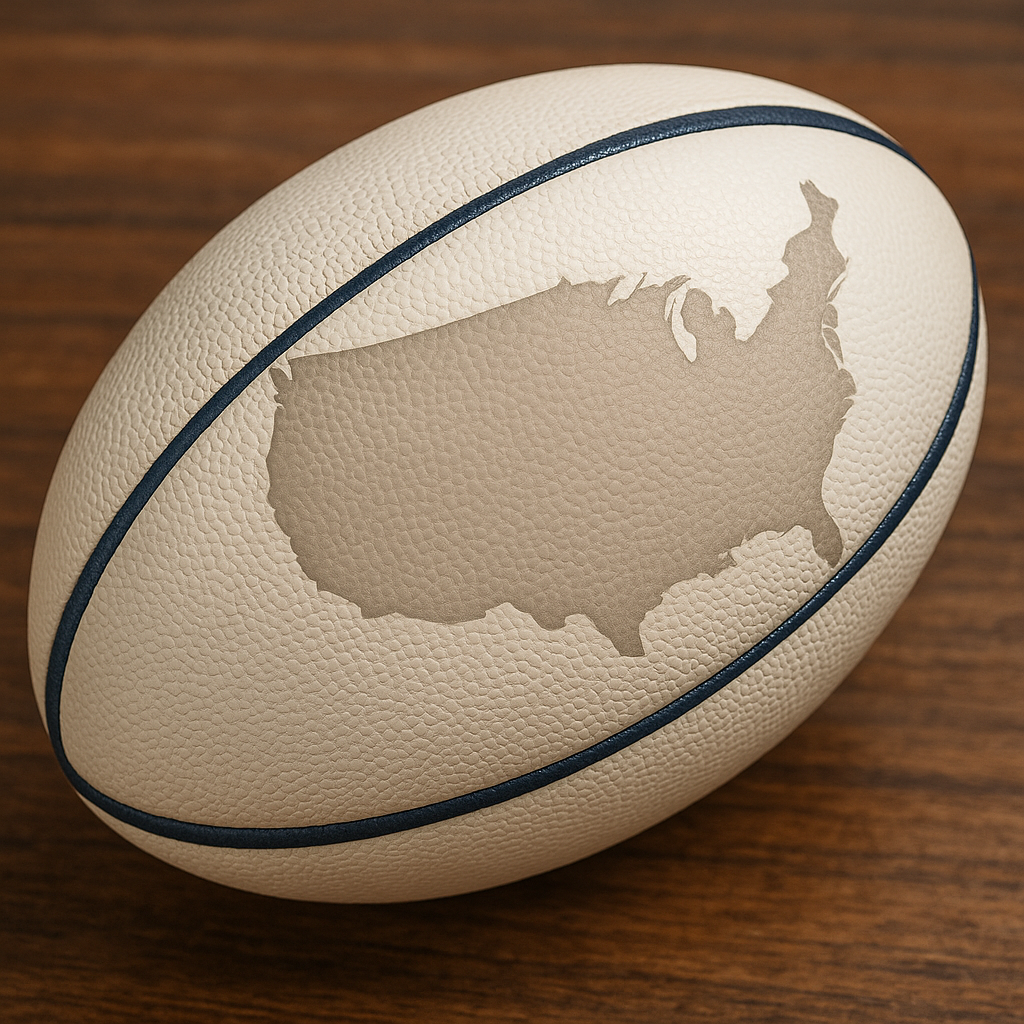
Springboks vs. All Blacks in Baltimore: 2026's colossal rugby clash and America's quiet rugby awakening. A historic rivalry on US soil.
Get ready for a massive rugby showdown in 2026! Two legendary teams, the Springboks and All Blacks, are storming Baltimore for the first time ever in the USA. This isn't just any game; it's a huge, high-stakes battle that will help rugby grow in America. World Rugby hopes this epic match will get everyone excited, maybe even leading to a World Cup here one day!
Why is the 2026 rugby match between the Springboks and All Blacks in Baltimore significant?
The 2026 rugby match in Baltimore is significant because it marks the first time these two rugby titans, the Springboks and All Blacks, will play on U.S. ground. It's the decisive rubber match of a four-Test series, with World Rugby ranking points at stake, ensuring both teams bring their full strength. This high-profile game is a strategic move by World Rugby to expand rugby's footprint in the U.S., aiming for a future World Cup bid.
Get Cape Town news in your inbox
Stay updated with the latest stories from the Mother City.
A Century-Old Grudge Lands in Charm City
The middle of September 2026 will feel like an earthquake inside M&T Bank Stadium - except the tremors will come from 71,000 voices learning to pronounce “Kolbe” and “Retallick.” Baltimore, famous for crab-shell orange and Lamar Jackson’s flick-of-the-wrist touchdowns, will swap its usual purple pulse for a green-and-gold haka and a rainbow-nation anthem. The Springboks and All Blacks have never played on U.S. ground, and this is no glorified warm-up; it is the rubber match of a four-Test saga that decides bragging rights for the next four-year cycle.
Forget exhibition fluff: World Rugby ranking points hang in the balance, which means both sides will land with their full arsenals - no resting stars, no junior developmental sides. The contest is the climax of a globetrotting series that began in Auckland and will end on American turf, turning Baltimore into rugby’s temporary capital for one Saturday night.
City tourism boards already speak of the weekend in quasi-Super-Bowl language: hotel blocks sold at 92 %, restaurant reservations coded “Bok” or “Fern,” and a projected eight-figure economic jolt. The Ravens’ stadium crew, battle-hardened by Beyoncé and mid-season soccer swaps, will convert the field from gridiron hash marks to rugby’s unbroken rectangle in under 14 hours. Expect ESPN’s College GameDay-style set built inside the National Aquarium, complete with dolphins photobombing the analyst desk.
Roots That Pre-Date the Forward Pass
New Zealand and South Africa first collided in 1921 - before the NFL even staged a title tilt - and the feud has since generated 105 chapter, three ejections, alleged hotel food sabotage, and a 3-0 sweep that still stings in Pretoria. The All Blacks own the overall count, but the Springboks own the freshest scar: a 32-12 ambush in the 2019 World Cup final that left Kiwi fans staring into their flat whites at 6 a.m.
Geography explains part of the dominance. Both nations are ribboned with rural pitches where the biggest, boldest kids grow up with oval balls instead of soccer spikes. Culture supplies the rest. In New Zealand, rugby is stitched into the national origin story; the 1905 “Originals” invented the All Blacks mystique before the country even signed the Treaty of Westminster. Across the Indian Ocean, the sport once served as apartheid’s cudgel, then became Mandela’s glue; every carry carries historical freight.
When the whistle blows, decades of social undercurrents squeeze into an 80-minute pressure cooker. The collisions are so precise that broadcasters super-slow-mo at 200 frames per second just to prove that millimetres - of boot lace, of sweat - decide momentum. Fans don’t merely watch; they inherit a feud older than the Super Bowl, complete with songs, scars, and conspiracy theories about late-night room-service curry.
Why Maryland Beat Vegas, Chicago, and L.A.
World Rugby’s “USA 2031/33” blueprint treats the republic like a new continent: secure beachheads, win hearts, then stage the biggest invasion of all - a World Cup. Baltimore leapt off the spreadsheet because its stadium keeps natural grass, its downtown is walkable, and its rail corridor funnels 15 million people within a two-hour train ride. Add a $2 million state grant earmarked for 60 public-school rugby programs, and Charm City became irresistible.
The Ravens’ front office sweetened the bid with receipts: a 2016 Ireland-New Zealand thriller in Chicago poured $172 million into the Windy City; transpose that formula to the I-95 corridor, lace it with ESPN’s fresh $140 million rugby-rights deal, and Baltimore suddenly projects a $220 million jackpot. Stadium president Sashi Brown - former NBA deal-maker - promised World Rugby a turnkey operation: locker rooms already branded, Wi-Fi already stress-tested by 75,000 tweeting teens at a Taylor Swift gig.
Maryland politicians relish the optics: a global sport parachuting into a majority-Black city, funding youth clinics in neighborhoods that never see soccer’s World Cup tour buses. If the experiment works, Baltimore becomes the prototype for every NFL city curious about summer revenue without the concussion headlines. Fail, and rugby retreats back to the niche corner labeled “obscure Olympic medal.”
The Invisible Giant Already Growing Underfoot
Rugby’s domestic economy has ballooned 14 % a year since 2018 - faster than MLS, NASCAR, even the NHL. College rosters now list 125,000 registered players, streaming apps serve union on demand from Roku to TikTok, and Major League Rugby just inked a Spanish-language pact with TelevisaUnivision. Private-equity giant Silver Lake pegs the league’s combined franchise value at $475 million, seduced by an average viewer age of 28 - baseball, by contrast, is hemorrhaging anyone under 50.
Yet the missing ingredient has always been a marquee moment that doesn’t feel like an expat picnic. Past U.S. stops featured second-string Barbarians or jet-lagged Six-Nations squads still digesting trans-Atlantic muffins. Baltimore’s clash arrives pre-loaded with century-old mythology and a guarantee both teams will be at full strength - World Rugby rankings treat the fixture exactly like a November Test in London or Johannesburg. Translation: casual fans will witness the fastest, heaviest, most cohesive version of union ever staged on American sod.
Add the lure of limited-edition merch - Under Armour plans jerseys infused with micro-capsules of Old Bay seasoning that burst on high-fives - and even the tailgaters who came for the beer tents stay for the 40-meter intercept tries. If just 5 % of the crowd downloads a rugby app on the ride home, the sport’s U.S. footprint doubles overnight.
Inside the Traveling Armada
The 2026 caravan borrows its rhythm from the British & Irish Lions: mid-week matches against local selects, school clinics in Soweto and Khayelitsha, then a trans-continental sprint that lands the squads at Andrews Air Force Base on Tuesday before kickoff. Ravens indoor facility in Owings Mills morphs into rugby’s Area 51 - 40-metre altitude tents, cryo-chambers that dip to minus-120 Celsius, and 3.6 tonnes of imported biltong and Manuka-honey energy gels.
South Africa’s delegation requisitions 500 extra seats for the Navy Band - yes, they travel - because their halftime blast of “Shosholoza” has become a post-try talisman. New Zealand counters with a 40-strong haka troupe cherry-picked from Baltimore’s own Māori expat enclave, ensuring the war dance echoes with authentic genealogy rather than tourist-show choreography. Players bunk at the Marriott Waterfront, practice closed-doors scrums inside the Naval Academy’s rugby field house, then retreat to film sessions where every Raven’s blitz package is scanned for metaphors about line-speed defense.
Logistics read like a Pentagon op: GPS-tracked luggage, biometric meal plans, even portable goal-post pads calibrated to NFL dimensions but wrapped in tournament livery. The objective is to normalize the spectacle for Americans while preserving every sacred nuance for the die-hards who flew 8,000 miles to sing in Afrikaans and te reo Māori on the same concourse.
Stars, Tactics, and the Law Book Rewrite
By 2026, Siya Kolisi should be nearing his 100th cap, galloping as a blindsider who doubles as living proof that Achilles tendons can be rebuilt stronger. Opposite him, Ardie Savea may wear number 8, tasked with defusing South Africa’s 6-2 bench - eight forwards on the pine, a strategy that turned England’s scrum into origami last World Cup. The undercard features Cheslin Kolbe’s heir, Canan Moodie, a 6'3" wing who clocks 10.4 seconds in track spikes and vertical-leaps 38 inches - Julio Jones with a step colder than a January Chesapeake breeze.
New Zealand’s answer is teen pivot Taha Kemara, already anointed “Baby Carter” by the same Canterbury scouts who spotted Richie McCaw pumping gas in 1998. Law tweaks for 2026 include 90-second conversion clocks, orange-card bunker reviews, and a “50-22 plus” rule that gifts both line-out feed and an extra sub for kicks that bounce into touch inside the 22. The changes reward South Africa’s sky-scraping box-kicks but also fertilize New Zealand’s counter-attack ethos, where full-back Shaun Stevenson averages 18 metres per carry.
Scrums will decide the night. U.S. crowds adore trench warfare - think Ravens goal-line stands - and the set-piece offers rugby’s closest analogue. Springbok coach Frans Steyn (yes, the 2007 hero has traded inside centre for clipboard) wants compatriot referee Jaco Peyper, whose deliberate cadence lets 1,800 kg of beef coil like a trap spring. All Blacks boss Leon MacDonald prefers Kiwi whistler Ben O’Keeffe, quicker to police crooked feeds and reward ball movement. Expect neutral arbiter Karl Dickson, but every collapsed scrum will feel like Civil-War artillery echoing off the upper deck.
The Weekend That Could Change Everything
City models forecast 45,000 out-of-state visitors, a 92 % hotel sell-through, and restaurant stunt menus: smoked-brisket bunny chow at Lexington Market, haka-themed noodles in Federal Hill, and a pit-beef monument dubbed “The Siya Stack” stacked eight inches tall with a South African flag toothpick. Even dormant Natty Boh returns as “Natty Boh-Bok,” label redesigned with a springbok sporting a handlebar moustache.
ESPN’s 90-minute pre-game will lean on celebrity converts: Jason Momoa (high-school prop), Jalen Hurts (Oklahoma-drill junkie who studies Kolisi tackle reels), and Megan Rapinoe, whose twin Rachael once trialed for USA Sevens. TikTok will air a vertical broadcast gamified by polls - every scrum penalty triggers an AR filter that lets viewers sprout All-Blacks fern tattoos or Springbok antlers. If the upper deck chants louder for Kolbe than for Jackson, rugby will have infiltrated America’s last fortress of sporting indifference.
No one expects instant revolution; the scoreboard resets to 0-0 in 2027. But somewhere on the Light Rail home, a 10-year-old will mimic Moodie’s goose-step, and that ghost of motion - more than any economic report - signals new empire rising.
What is the significance of the 2026 rugby match in Baltimore?
The 2026 rugby match between the Springboks and All Blacks in Baltimore is highly significant as it marks the first time these two legendary teams will play on U.S. soil. It is the decisive rubber match of a four-Test series, with crucial World Rugby ranking points on the line, guaranteeing both teams will field their strongest players. This event is a strategic move by World Rugby to boost rugby's popularity in the U.S., potentially paving the way for a future Rugby World Cup in America.
Why was Baltimore chosen to host this high-profile match?
Baltimore was selected over other major U.S. cities like Vegas, Chicago, and Los Angeles for several reasons. Key factors include M&T Bank Stadium's natural grass field, a walkable downtown area, and excellent rail access that connects 15 million people within a two-hour train ride. Additionally, a $2 million state grant was allocated to fund 60 public-school rugby programs, making Charm City an irresistible choice for World Rugby's expansion plans. The Ravens' front office also showcased the potential economic impact, citing a previous match in Chicago that generated $172 million, projecting an even larger jackpot for Baltimore.
What is the historical rivalry between the Springboks and All Blacks?
The rivalry between New Zealand's All Blacks and South Africa's Springboks is one of the most storied in sports, dating back to their first clash in 1921. This century-old feud has spanned 105 matches, marked by intense competition, dramatic moments, and deep cultural significance in both nations. The All Blacks generally hold the overall advantage in wins, but the Springboks delivered a memorable 32-12 victory in the 2019 World Cup final. This rivalry is deeply ingrained in the national identities of both countries, with rugby often serving as a cultural touchstone.
What economic impact is expected from the Baltimore match?
The 2026 rugby match is projected to deliver a substantial economic boost to Baltimore, with city tourism boards anticipating an 'eight-figure economic jolt.' Forecasts include 45,000 out-of-state visitors, a 92% hotel sell-through rate, and a surge in restaurant reservations and local spending. The event is expected to generate a projected $220 million jackpot, drawing comparisons to the economic impact of a Super Bowl. Local businesses are preparing with special menus and merchandise, and the city is ready to host a global sporting spectacle.
How will the M&T Bank Stadium be transformed for rugby?
M&T Bank Stadium, typically home to the NFL's Baltimore Ravens, will undergo a rapid transformation to accommodate the rugby match. The stadium crew, experienced with converting the field for various events, will convert the gridiron hash marks to rugby's unbroken rectangle in under 14 hours. The facility will also be equipped to handle the specific needs of the rugby teams, including specialized locker rooms and Wi-Fi infrastructure. Expect a vibrant atmosphere with ESPN's College GameDay-style set potentially built inside the National Aquarium.
What are some of the tactical and player highlights expected for the 2026 match?
The match is expected to feature rugby's elite talent. For the Springboks, Siya Kolisi, approaching his 100th cap, is anticipated to be a key player, embodying resilience and leadership. The team might employ their formidable 6-2 bench strategy (eight forwards on the bench) to dominate scrums. New Zealand's All Blacks could feature dynamic players like Ardie Savea at number 8 and emerging talent Taha Kemara, dubbed "Baby Carter." The match will also showcase new law tweaks for 2026, including 90-second conversion clocks and an orange-card bunker review system, which will influence tactics and add to the excitement. Scrums are predicted to be a decisive element, providing intense trench warfare that American crowds are likely to appreciate.

Emma Botha is a Cape Town-based journalist who chronicles the city’s shifting social-justice landscape for the Mail & Guardian, tracing stories from Parliament floor to Khayelitsha kitchen tables. Born and raised on the slopes of Devil’s Peak, she still hikes Lion’s Head before deadline days to remind herself why the mountain and the Mother City will always be her compass.
View all articles →