
Cape Town CBD public toilet project surpasses one million users
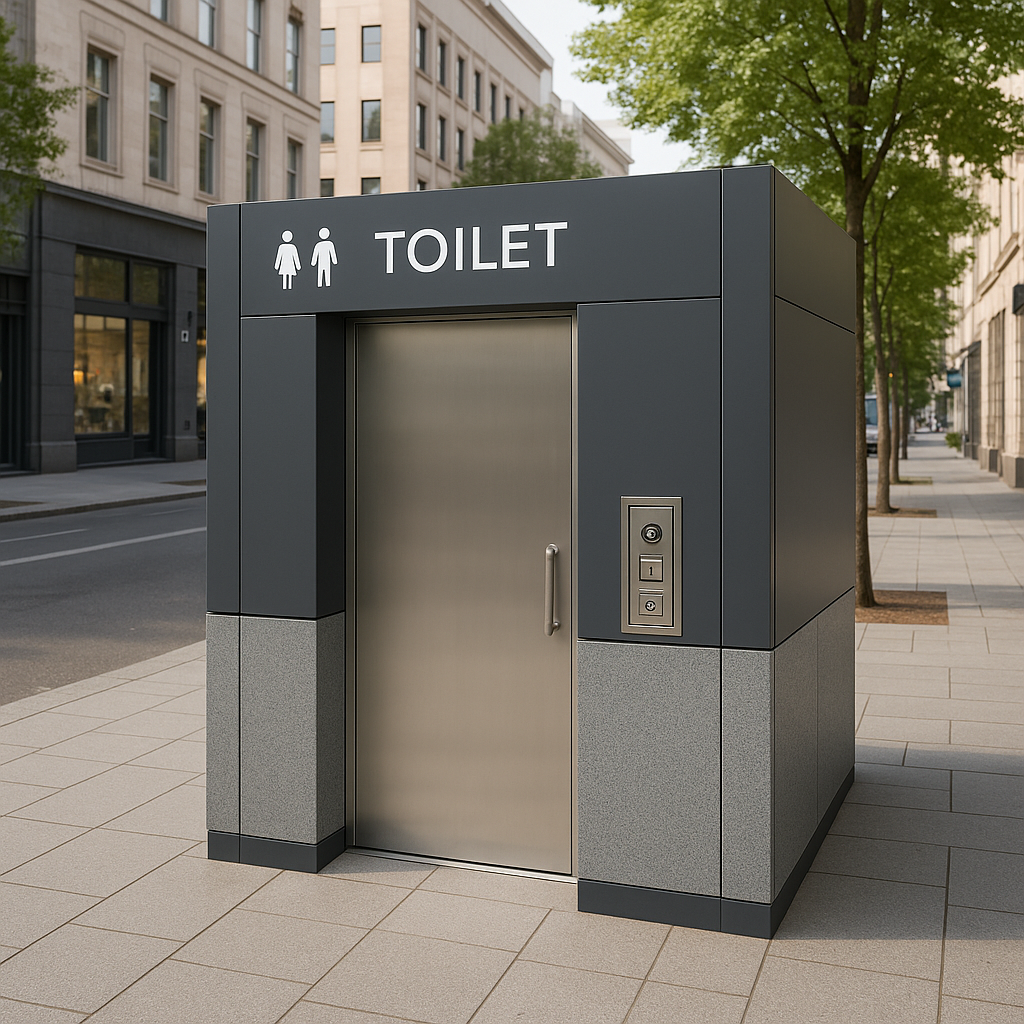
Cape Town's sanitation revolution: From mobile toilets to a million flushes, discover how smart tech & social impact redefine public hygiene.
Cape Town changed city toilets with cool new "Portal" loos. These toilets use tiny sips of water and run on sun power. They're easy to move and clean, helping save water and keep the city tidy. These smart toilets even create jobs and make the city feel safer for everyone, turning waste into good things for the community.
How did Cape Town's "Portal" toilets innovate urban sanitation?
Cape Town's "Portal" toilets, introduced in 2022, innovated urban sanitation by using Danish-engineered vacuum pans that consume only 400 ml per flush, powered by solar energy. These self-deodorizing units, featuring compact 1200-liter waste cassettes, are easily swapped by a biodiesel-fueled vehicle, eliminating the need for extensive plumbing and reducing water usage significantly.
Get Cape Town news in your inbox
Stay updated with the latest stories from the Mother City.
1. The Dawn of the “Portal”
Just after sunrise on a February morning in 2022, a flat-bed truck dropped a squat, graffiti-proof steel cabin on the traffic island where Adderley Street kisses Bureau Lane. Two workers in lime-green bibs chained the 1,1-ton box to a storm-drain grate, flicked open the door and drove off. At 07:15 Nosisi, a security guard heading to her early shift, slipped a R2 coin into the slot, stepped inside and re-emerged three minutes later grinning at her phone: “Guys, the new loo smells like lemon!” By sunset the infrared counter had clicked past 1 800 visits. The City’s Twitter account had not even posted the news yet, but the Cape Town Central City Improvement District (CCID) already knew the pilot had detonated something far bigger than a trial toilet.
Within seven days the steel cabin - nicknamed “Portal” by the first caretakers - had become the CBD’s most gossiped-about amenity. Taxi-drivers folded it into their route updates, baristas used it as a landmark and backpackers added it to hostel check-in instructions. The CCID team, expecting a slow 30-day crawl to 500 uses, watched the tally rocket past 12 000 in the first month. More importantly, puddles of grey-water and tell-tale faecal smears on the adjacent kerb vanished. A single porcelain pan had halted a daily tide of waste that previously required an entire vacuum truck and four municipal cleaners.
2. Engineering That Fits in a Parking Bay
Open the door and you are greeted by a Danish-engineered vacuum pan that gulps just 400 ml per flush - nine-tenths less than the standard 9-litre cistern. A 12-volt deep-cycle battery, fed by a 40-watt solar sliver on the roof, powers the flush, the LED ceiling and the hands-free tap that spurts a six-second grey-water rinse. The ceiling itself is coated with titanium dioxide; under the LEDs it breaks down odour molecules on contact, turning the cubicle into a self-deodorising capsule.
Beneath the pan sits a 1 200-litre cassette that is swapped every second day. A Toyota Hiace, fuelled by a 30 % biodiesel blend brewed from Waterfront chip-fryer oil, tows a custom trailer. The exchange ritual lasts four minutes - roughly the time needed to foam a cappuccino across the road at Truth Coffee. No digging, no plumbing, no shutting lanes: the Portal is infrastructure that behaves like pop-up retail.
3. Jobs, Dignity and a Notebook of Tiny Miracles
Every caretaker is recruited from a homeless shelter or psychiatric step-down facility. Applicants enter a 21-day paid boot-camp: haz-mat drills, plumbing basics, de-escalation tactics and data logging on a shock-proof Android. They then rotate through two six-hour shifts, never later than 23:00, earning 75 % above the national minimum wage plus UIF - often the first formal contribution of their lives. Since launch, 63 caretakers have cycled through; nine have graduated to permanent posts with Solid Waste, SAPS campus security and a five-star hotel’s laundry division.
Inside each cabin, tucked into a zip-lock bag, hangs a dog-eared exercise book labelled “Small Victories”. Entry 14 March 2025: “Lungi collected her ID and wept.” Entry 2 May: “Returned a wedding ring to a trembling groom.” Entry 27 December: “34 people queued, burst into song during Minstrel Parade - TikTok video hits 2,3 million.” The infrared counter can tabulate flushes; it cannot measure the sigh of a diabetic hawker who no longer soils himself waiting for a taxi-rank toilet, or the teenage mother who changes her baby on the drop-down shelf without catching side-eye.
Crime data fill another column. SAPS reports a 17 % drop in petty theft within a 50 m halo of the Adderley and Barrack Street units since installation. Complaints about shop-front urination plummeted from 92 per quarter in 2021 to 11 in the first quarter of 2026. Tour guides now flag the loos on WhatsApp maps as “safe stops”, nudging foot-traffic - and curio sales - at neighbouring stalls. The Portal is sanitation doubling as micro-policing: no CCTV, just flesh-and-blood “eyes on the street” who know users by first name.
4. Data, Dollars and the Next Million Flushes
At 02:00 each night the hinge-sensor uploads the previous 24 hours of “events” (door closed + 30 kg for 45 seconds) to a Google Cloud dashboard. Analysts spotted three predictable peaks - 08:10, 13:20, 17:50 - matching commuter, lunch and after-work rushes. A stealth 03:00 spike on Fridays led them to nightclub dishwashers on Barrack Street. When heat-maps showed women avoiding the Longmarket unit after 20:00, the team installed motion-triggered floodlights and rostered a female attendant nicknamed “Mama G”. Overnight female usage after dark jumped 42 %.
Cost accountants ran the tape: capital depreciation, biodiesel, consumables, labour, insurance - R3,84 per flush, cheaper than the R5,20 the City once spent dispatching a vacuum truck to hose faeces off the pavement. Over two years the network has diverted 267 tonnes of raw waste from gutters and storm-drains, keeping 1,8 kg of nitrogen and 0,7 kg of phosphate out of Table Bay daily - the fertiliser equivalent of 1 400 households emptying a bucket into the ocean.
Full cassettes travel 18 km to Athlone waste-water works where an anaerobic digester turns the sludge into 42 m³ of biogas daily - enough to run the plant’s sludge dryers for two hours. UV-treated effluent is discharged into the Black River at standards stricter than the 2022 Green Drop limits; a side-stream is carted back to the CBD for street cleaning, closing a 42 % local reuse loop.
Replication is already under way. eThekwini has ordered six units but swapped solar roofs for micro wind turbines to beat monsoonal cloud. Johannesburg is piloting a urine-diversion model that feeds a struvite reactor, fertilising rooftop veg gardens in Hillbrow. Nairobi’s Mathare slum built a plywood knock-off at one-tenth the price yet kept the same 0,4-litre vacuum flush, proving the concept scales down as smoothly as up.
Cape Town’s next chapter is “Portal Plus”: women-only clusters with shower stalls, hair-wash troughs and lockable lockers that double as postal addresses for grant applications. A modular biodiesel-powered laundromat - 30 kg per cycle - will spin interview shirts clean. Funding is stitched together from 48 % City coffers (money once frittered on chemical toilet hire), 32 % corporate CSI (Shoprite, Naspers, AWS) and 20 % a green bond listed on the JSE, tradeable from R100 upwards.
The million-flush counter clicked over last month. The next target is ten million, then a hundred. Each press of the stainless-steel button is a miniature public triumph - proof that when NGO agility, business-improvement levies and municipal muscle are lashed to one performance-based contract, the global south can spin human waste into jobs, data, coastal protection and, most valuable of all, everyday dignity.
[{"question": "
What are Cape Town's \"Portal\" toilets and how do they work?
\nCape Town's \"Portal\" toilets are innovative, self-contained sanitation units designed to address urban sanitation challenges. They utilize Danish-engineered vacuum pans that require only 400 ml of water per flush, significantly less than standard toilets. Each unit is powered by a 40-watt solar panel, providing energy for flushing, LED lighting, and a hands-free tap. They are also self-deodorizing, using titanium dioxide on the ceiling to break down odor molecules. Waste is collected in a 1200-liter cassette that is easily swapped out every other day by a biodiesel-fueled vehicle, eliminating the need for traditional plumbing and extensive infrastructure.
\n","answer": ""},{"question": "How did the \"Portal\" toilets impact water conservation and waste management in Cape Town?
\nThe \"Portal\" toilets have had a significant positive impact on water conservation and waste management. By using only 400 ml per flush, they drastically reduce water consumption compared to conventional toilets. In terms of waste, the network has diverted 267 tonnes of raw waste from gutters and storm-drains over two years, preventing 1.8 kg of nitrogen and 0.7 kg of phosphate from entering Table Bay daily. The collected waste is transported to the Athlone waste-water works, where an anaerobic digester converts the sludge into 42 m³ of biogas daily, which powers the plant's sludge dryers. UV-treated effluent is then discharged at high standards or reused for street cleaning, contributing to a 42% local reuse loop.
\n","answer": ""},{"question": "What social and economic benefits have the \"Portal\" toilets brought to Cape Town?
\nThe \"Portal\" toilets have created numerous social and economic benefits. They generate employment by recruiting caretakers from homeless shelters or psychiatric step-down facilities, providing them with training, above-minimum wage salaries, and formal employment contributions. This has led to 63 caretakers cycling through the program, with some graduating to permanent posts. The presence of these toilets and their caretakers has also improved safety, leading to a 17% drop in petty theft within their vicinity and a significant reduction in public urination complaints. They also enhance dignity for users, particularly vulnerable populations, by providing clean and safe sanitation facilities.
\n","answer": ""},{"question": "How is data used to optimize the operation of the \"Portal\" toilets?
\nEach \"Portal\" toilet is equipped with a hinge-sensor that uploads daily usage data (door closed + 30 kg for 45 seconds) to a Google Cloud dashboard every night at 2:00 AM. This data allows analysts to identify peak usage times, such as commuter rushes, lunch breaks, and after-work hours. These insights help in optimizing maintenance schedules and attendant rostering. For example, when heat-maps showed women avoiding a particular unit after 8:00 PM, motion-triggered floodlights and a female attendant were introduced, resulting in a 42% increase in female usage during those hours. This data-driven approach ensures efficient and responsive service delivery.
\n","answer": ""},{"question": "What are the future plans and replication efforts for the \"Portal\" toilet initiative?
\nCape Town's future plans include \"Portal Plus\" clusters, which will offer women-only facilities with shower stalls, hair-wash troughs, and lockable lockers that can serve as postal addresses for grant applications. A modular biodiesel-powered laundromat is also envisioned. The initiative is being replicated in other cities; eThekwini is implementing units with micro wind turbines, Johannesburg is piloting a urine-diversion model for rooftop gardens, and Nairobi's Mathare slum has built a low-cost plywood version. This demonstrates the scalability and adaptability of the \"Portal\" concept to various contexts, both in terms of technology and cost.
\n","answer": ""},{"question": "How is the \"Portal\" initiative funded and what is its long-term vision?
\nThe \"Portal\" initiative is funded through a combination of sources: 48% from City coffers (repurposing funds previously spent on chemical toilet rentals), 32% from corporate social investment (CSI) by companies like Shoprite, Naspers, and AWS, and 20% from a green bond listed on the JSE, which is accessible to investors from R100 upwards. The long-term vision is to expand the network significantly, aiming for ten million and then a hundred million flushes. The project demonstrates a successful model where NGO agility, business-improvement levies, and municipal resources collaborate through performance-based contracts to transform human waste into jobs, data, coastal protection, and enhanced dignity for communities, particularly in the global south.
\n","answer": ""}]
Lerato Mokena is a Cape Town-based journalist who covers the city’s vibrant arts and culture scene with a focus on emerging voices from Khayelitsha to the Bo-Kaap. Born and raised at the foot of Table Mountain, she brings an insider’s eye to how creativity shapes—and is shaped by—South Africa’s complex social landscape. When she’s not chasing stories, Lerato can be found surfing Muizenberg’s gentle waves or debating politics over rooibos in her grandmother’s Gugulethu kitchen.
View all articles →