
Cape Town tests smart signs to slow drivers, City rules out AI
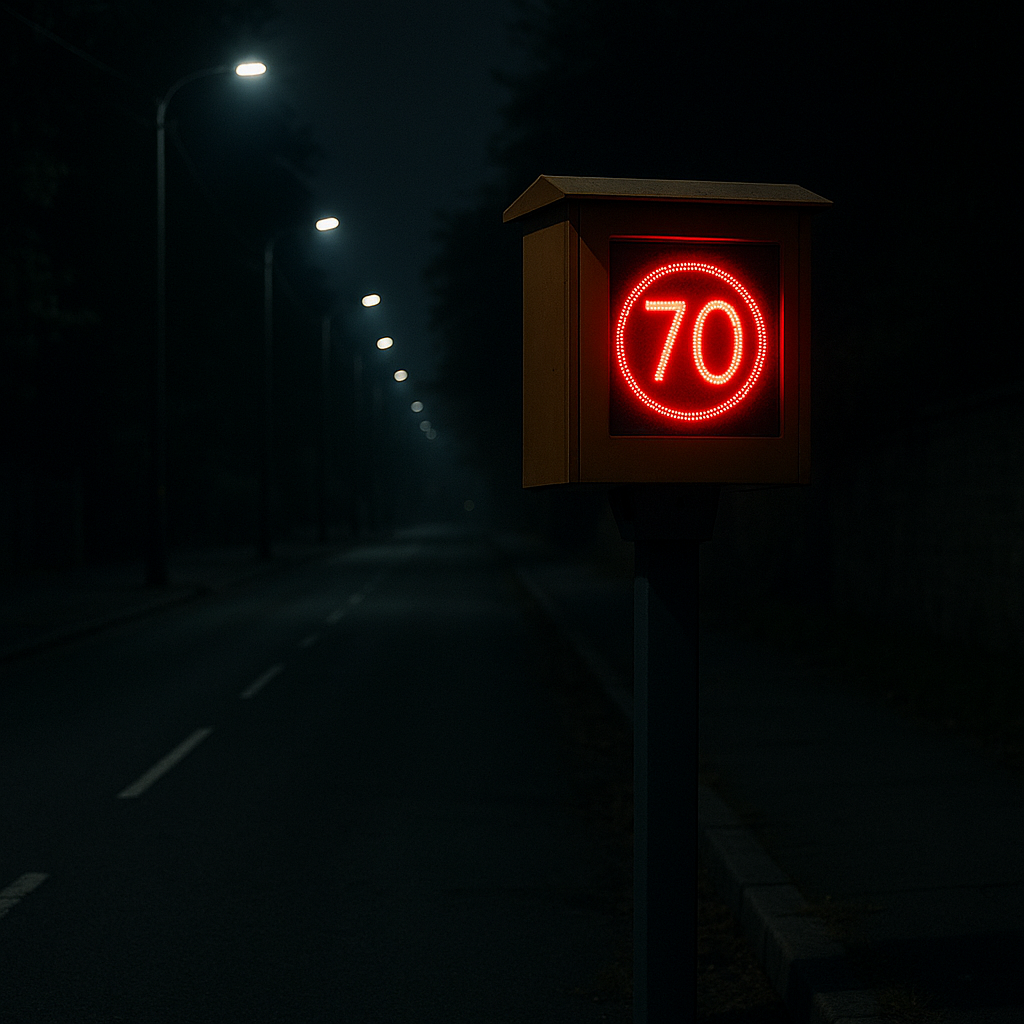
Cape Town's LED speed displays use real-time feedback to reduce speeding and save lives without issuing tickets. Learn how.
Cape Town is using cool LED signs that show drivers their speed. If you go too fast, the numbers turn red, making you slow down on your own. This clever trick has made roads safer and helps the city save money and the environment. It's like a gentle nudge saying, 'Hey, slow down!'
What is Cape Town's ticket-free speed revolution?
Cape Town's ticket-free speed revolution involves LED panels displaying real-time speed feedback to drivers. These "calming aids" flash red for speeding, encouraging self-correction without fines. This innovative approach has significantly reduced average speeds, improved road safety, and offers a cost-effective, environmentally friendly alternative to traditional speed enforcement methods.
Get Cape Town news in your inbox
Stay updated with the latest stories from the Mother City.
1. A Silent Flash on the Atlantic Edge
Dawn spills over the Atlantic, and Sea Point’s High Level Road already glints with salt and sunrise. A second, colder gleam cuts through the glare: a shoebox-sized LED panel bolted to an existing pole. It wakes the instant tyres disturb its radar cone. Stay under 60 km/h and the digits glow polite, almost friendly. Nudge past 66 km/h and the same numbers switch to arterial red - no camera flare, no cop step-out, nothing but your own statistic reflected back in colour we’re wired to treat as danger. Psychologists call the trick “instant feedback”; traffic planners call it gold. Within 200 m most right feet ease off, the tiny flare of brake lights counted like pulses on a patient monitor.
No sirens, no fines, no bureaucratic envelopes - just a mirror made of photons. The device is legally a “calming aid,” not an enforcer, so the only penalty is the small, hot clutch of shame in the sternum. In that brief self-confrontation lies a whole new philosophy of city streets: change behaviour by revealing it, not punishing it.
The city’s data loggers treat every deceleration as a micro-victory. Each flicker of red digits followed by a soft brake light is logged, time-stamped, and relayed to a cloud bucket labelled “nudge_success.” By the end of the first quarter the corridor had quietly shed five kilometres per hour off its average speed, a margin that epidemiologists greet the way cardiologists greet a five-point drop in systolic blood pressure.
2. Blank Faces First, Then the Reveal
Before the LEDs ever lit up, sceptics wanted numbers, not slogans. July 2023: contractors mount the first two units but keep the lamps dark for a fortnight. Hidden pneumatic tubes slurp up 1.2 million velocity samples. Result: 67 km/h mean, 42 % scoff-law share. At 05:00 on day fifteen, an engineer taps a laptop in a nearby fire station. The boards wake; within four weeks the average sinks to 62 km/h and the violator share to 29 %. If a camera had stood there, infringement paperwork would have plunged by a quarter - yet not a single ticket was issued.
The trial design was lifted from clinical drug studies: baseline, intervention, control, audit. Traffic officers call it “dark-screen therapy.” Residents simply felt the change under their suspensions: fewer tail-gatings, fewer staccato horn blasts, fewer dogs yanked back from the shoulder.
Statisticians insist the drop is real, not regression-to-the-mean: winter school holidays, rain patterns and even load-shedding stages were regressed out. What remains is pure behavioural elasticity, measurable in kilometres per hour and, ultimately, in lives.
3. Kilometres That Buy Survival Odds
AAA Foundation crash-biologists draw a brutal curve: hit a pedestrian at 50 km/h and death risk is one in five; at 60 km/h it rockets to four in five. Each single km/h you trim from the traffic flow cuts fatal incidents by roughly five percent. Do the sums for High Level Road: the measured five km/h dip equals one statistical life saved every fourteen months along that 1.8 km strip. Multiply by ten arterials, then by a national roll-out, and the humble LED becomes a vaccine-level intervention.
Children at nearby Mozart Primary now practise “cross-and-look” drills that feel less like roulette. Paramedics stationed two blocks away record fewer midnight trauma calls involving skull fractures. Insurance loss-adjusters whisper about rebate talks for motorists who garage inside the “calm corridors.”
City budgeteers love the maths: a life-year in South Africa is valued at roughly R4.7 million by the Treasury; every prevented fatality therefore repays the cost of forty signs. The ledger glows brighter than the red digits themselves.
4. Brains Behind the Rectangle
Open the back box and you meet a ruggedised Raspberry Pi Compute Module 4 hugging an LTE modem. Every half-second it ships anonymised speed buckets, vibration metrics and ambient temperature to the City’s OpenXC end-point. Engineers watch the story unfold on a Grafana map layered with clinics, schools and historic crash dots. If drivers habituate - literature says they start to after nine weeks - palette rules can flip or the trigger threshold can drop 3 km/h, all pushed over-the-air on a Sunday at 2 a.m.
Capex? R68 k per unit, half the bill for a speed hump that merely bruises chassis and spikes CO₂ through brake-and-accelerate cycles. Running draw: 18 W, low enough for a 30 W solar panel and a 40 Ah lithium-iron-phosphate pack to shrug off stage-6 blackouts. Annual carbon saving: 350 kg, the same as planting eight Cape ash trees. The city now files the figure under “behavioural nudge offsets” in its greenhouse-gas inventory, the first item of its kind in Africa.
Firmware coders speak of the signs as “nodes,” not “signs.” Each pole is destined to sprout mm-wave radar and LoRaWAN antennas, turning a humble lamp standard into a curb-side octopus that counts axles, weighs trucks, and listens for smart-cycle beacons ahead of Cape Town’s planned e-bike share. Evolution, over-the-air, one firmware drip at a time.
5. Citizens Who Queue for Their Own Street Mirrors
Within days of Sea Point’s launch ward councillors’ WhatsApp lines pinged non-stop: “We need one outside Mozart Primary!” “Put it on Victoria before the Glen bend!” The online request form crashed twice under 312 submissions in October alone. Engineers responded with a live queue scored by crash history (40 %), pedestrian density (25 %), speed scatter (20 %) and nearness to old-age homes or crèches (15 %). A public dashboard lets residents watch their street climb or tumble - democracy turned spectator sport.
Property agents now flaunt “within sight of digital calmer” as a premium bullet; buyers will pay an extra four percent for the promise of “visible governance.” Baristas in Observatory swear that dwell time in parking bays rose eleven percent once a sign went live; slower eyes spot pop-up craft markets and new espresso joints. Even minibus-taxi associations lobby for units outside ranks, arguing that tempered speeds protect queue marshals and improve boarding order - an alliance between City Hall and an industry more often cast as its nemesis.
Gaborone imported the hardware but missed the context, dropping identical panels onto 100 km/h dual carriageways. Speeds nudged down just two km/h; drivers shrugged at what they called “decorative numbers.” Cape Town’s new policy, gazetted February 2024, writes in a 25 % pre-install violation floor and may become the SADC template - proof that copy-paste without calibration is the fastest route to expensive street jewellery.
6. After Dark, Amber, and Other Futures
April 2024 will see four Victoria Road signs flick from white digits by day to amber after dusk, exploiting the Purkinje effect - human retinas read amber as brighter when the light is low. Early simulator runs at Stellenbosch show an extra two km/h night-time drop, crucial in a metropolis where fifty-eight percent of pedestrian deaths happen between sunset and sunrise. If the palette swap proves robust, an over-the-air fleet update will roll at the next quiet midnight, reminding citizens that even a passive road slab can evolve like smartphone software.
Meanwhile the open data portal, updated every five minutes, offers anonymised histograms under Creative Commons. Civic coders built a Telegram bot that pings residents when the 85th percentile velocity stays ten percent above the limit for seventy-two hours straight - an early-warning of neighbourhood decay or absentee traffic cops. Insurers quietly scrape the feed, adjusting risk pools and, soon, premiums. Privacy activists counter that aggregates still expose shift patterns; the City has pledged differential-privacy noise within six months, trading a sliver of accuracy for ethical armour.
And further downstream? The same pole will host edge AI cameras, ready to flag WhatsApping drivers or seat-belt gymnasts once Parliament passes the long-stalled AARTO amendments. Until then, footage sits encrypted, write-protected, labelled “Future Possible.” Traffic chief Kevin Jacobs keeps the key in a locked cabinet whose label doubles as a city-wide promise: the gentlest glow can cast the longest shadow - measured in kilometres per hour, in tonnes of carbon, in lives.
What is Cape Town's ticket-free speed revolution?
Cape Town's ticket-free speed revolution involves LED panels displaying real-time speed feedback to drivers. These "calming aids" flash red for speeding, encouraging self-correction without fines. This innovative approach has significantly reduced average speeds, improved road safety, and offers a cost-effective, environmentally friendly alternative to traditional speed enforcement methods.
How do the LED speed signs work?
The LED speed signs use radar to detect a vehicle's speed. If the driver is within the speed limit, the digits glow politely. If the driver exceeds a certain threshold (e.g., 66 km/h in a 60 km/h zone), the numbers instantly switch to red, providing instant visual feedback. This encourages drivers to self-correct and slow down without the need for fines or direct police intervention.
What are the benefits of this ticket-free approach?
The benefits are multi-faceted: improved road safety through reduced average speeds, significant cost savings for the city (compared to traditional enforcement), and environmental benefits due to lower CO2 emissions from smoother traffic flow. The system also fosters a new philosophy of behavioral change through self-correction rather than punishment, leading to fewer accidents and fatalities.
How effective has this system been?
Initial trials in areas like Sea Point’s High Level Road showed a significant reduction in average speeds, with one corridor shedding five kilometers per hour off its average speed in the first quarter. The percentage of drivers exceeding the speed limit also dropped considerably without issuing a single ticket. This behavioral change is statistically proven and has directly led to a projected saving of one statistical life every fourteen months along the tested strip.
What technology powers these speed signs?
The signs are powered by robust technology, including a Raspberry Pi Compute Module 4 with an LTE modem, which sends anonymized speed data, vibration metrics, and ambient temperature to the City’s OpenXC end-point. They operate on low power (18W), making them suitable for solar power and resilient to power outages. The system is designed for over-the-air updates, allowing for dynamic adjustments like changing color palettes or trigger thresholds.
How does Cape Town plan to evolve this system?
Cape Town plans to enhance the signs with features like dynamic color changes (e.g., amber after dusk for better visibility), which have shown to improve nighttime speed reduction. Future iterations will include mm-wave radar and LoRaWAN antennas to count axles, weigh trucks, and interact with smart-cycle beacons. The city also maintains an open data portal for civic engagement and is exploring edge AI cameras for future enforcement, all while prioritizing data privacy.

Oliver Daniels is a Cape Town journalist who chronicles the intersection of food, migration and identity in South Africa's kitchens—from wood-fired Gugulethu braai spots to Constantia vineyards. Born and raised on the slopes of Devil’s Peak, he still starts each week with a dawn walk across Table Mountain to catch the first Atlantic light before filing copy.
View all articles →