
Cape Town’s R14.4m CCTV expansion reaches 85% completion
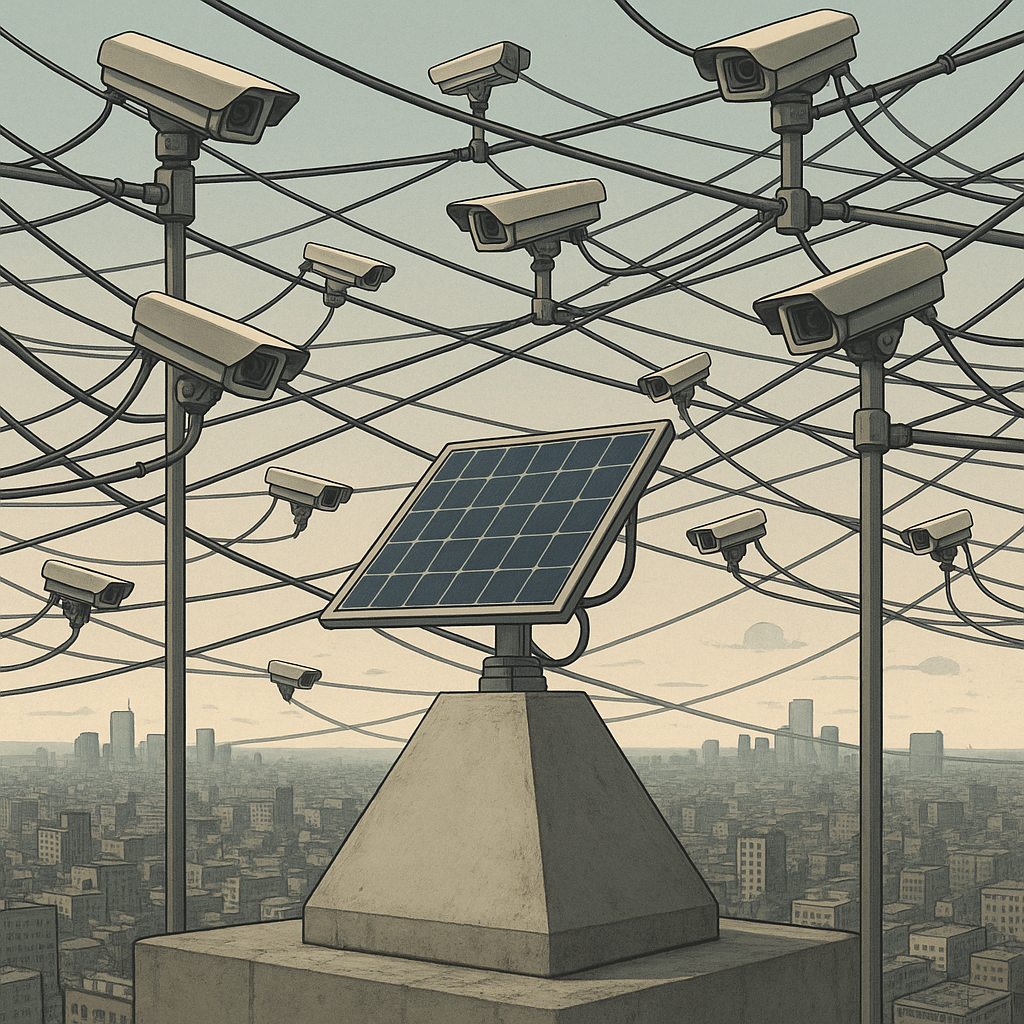
Cape Town's advanced surveillance system, from 1990s monitors to 1,200+ cameras, uses neural nets and AI to secure diverse neighborhoods.
Cape Town's surveillance system has become a high-tech marvel! Starting with just four cameras in 1997, it now boasts 1,200 lenses that can spot license plates even in tough conditions. This R14.4 million project isn't just about security; it adds Wi-Fi, checks air quality, and can even hear gunshots. The city has truly transformed into a watchful, smart metropolis.
How has Cape Town's surveillance system evolved?
Cape Town's surveillance system has evolved from four cameras in 1997 to a 1,200-camera network that can identify license plates at high speeds in various conditions. This R14.4 million project enhances security in diverse areas, including townships, and integrates advanced features like Wi-Fi, air quality monitoring, and gunshot detection.
Get Cape Town news in your inbox
Stay updated with the latest stories from the Mother City.
From Parade Poles to 4K Neurons
In 1997, four fuzzy CCTV eyes watched over Grand Parade; today, a 1 200-lens neural lattice can tag a plate at 120 km/h through a sandstorm, making the Mother City the most optically threaded metropolis on the continent.
The current budget slice - R14.4 million, 85 % spent - adds only 158 new eyes, but the real story is where the light lands: eight patches that used to be bandwidth wastelands.
Langa’s BB Section, Beacon Valley’s looping crescents, Brown’s Farm footpath maze, Macassar’s dunefields, Morningstar smallholdings, Durbanville wine warehouses, Electric City’s recycling belt and Malibu Village’s RDP roofs now share crystal-grade footage with the V&A Waterfront and Parliament’s gates.
By overlaying risk onto fibre, the City turns every camera post into a 24-hour data lighthouse that also beams Wi-Fi, sniffs air quality and, in pilot zones, listens for gunshots.
Inside the 42-Person Choreography
The Metro Police Strategic Surveillance Unit - 42 specialists split into field, fibre, code and evidence pods - runs a playbook tighter than a Swiss watch.
A suburb lands on the build list either because a councillor spends ward allocation or because the Safety Directorate’s quarterly “heat ledger” ranks it high on SAPS dockets, ambulance calls, fire-response lag and by-law gripes.
Once flagged, engineers spend three weeks “ground-truthing”: they strap on 360-degree backpacks, log sight-lines Google never saw, measure curb heights for pole stability and note which shacks burn paraffin at 3 a.m. - a cue that thermal fire-watch is needed.
Only after the human pass does an AI “synthetic patrol” trace 14 000 virtual pedestrian paths through a digital twin, selecting the twelve poles that give 92 % ground coverage with no blind spot larger than nine square metres.
Ten days later the steel is upright, fibre is fused the next week and the first live frame usually flickers before the liaison officer finishes folding the community pamphlets.
The hardware basket is deliberately mixed: a bargain Tiandy starlight dome - salt-spray proof - can sit beside a home-grown Axxon cube packing NVIDIA Jetson chips for on-board face match.
Quarterly lots of 30–40 units are benchmarked so no vendor can chain the City to yesterday’s sensor; the patchwork forces the in-house Video Management System to normalise seven CODECs in real time.
That middleware, nicknamed “SnoekVMS” after the elusive local fish, was quietly posted on GitHub last year so other municipalities can slip the same net.
Power, Privacy and the Concrete Tetrahedron
Township streets that suffer 4½-hour “load-reduction” blackouts stay alive thanks to a Cape Town invention: the “Pyramid” battery.
Cast as a 1.2 kWh lithium-iron-phosphate block inside a vandal-proof concrete tetrahedron, the unit doubles as the pole’s foundation - too heavy to steal, too awkward to roll, its sloped faces shrug off rain and graffiti.
One Pyramid keeps four lenses, one licence-plate reader and a Wi-Fi hotspot breathing for six hours; a 120 W flexi-panel on the pole refills the tank in under three hours, even through winter cloud.
Data leaves the city only in cipher: every frame is locked with a dual-key system - half held by the City, half by the National Prosecuting Authority - so neither can watch alone.
The 2023 scandal in which private guards sold CBD footage to debt collectors triggered the architecture; now, without both keys, a file is math mush.
Retention is tiered: CBD streams evaporate to cold cloud after 30 days, township feeds after seven, unless an AI or human marker freezes the 30-minute buffer for five years.
An annual “surveillance heat map” released to civil-rights groups lists which algorithms ran where, how many false positives were flushed and how often SAPS knocked for data; the 2025 edition logged 1.8 million automated searches, later purging 0.3 % as unconstitutional.
Arrests, Algorithms and the Infrared Cat-and-Mouse
January 2026’s ledger - 3 078 events, 52 collars, 42 SAPS data requests - looks modest until zoomed.
Nyanga, still the country’s murder capital, generated a quarter of all requests, yet most CCTV-assisted arrests were for drug possession, not homicide, hinting that lenses deter more than they solve.
In Beacon Valley, a facial ping led officers to a 14-year-old bagging tik; the same cluster later tied a plate to parcel thefts 28 km away in Durbanville, stitching opposite worlds into one evidentiary canvas.
Residents game the gaze with entrepreneurial flair.
Langa locals run WhatsApp “camera watch” groups, circling suspects on live screenshots and forwarding to patrol vans before a crime is complete.
Macassar backyard mechanics have mapped the 30-degree blind cone beneath domes and schedule engine swaps in that shadow, forcing fortnightly PTZ recalibrations.
Electric City scrap hunters go further: a DStv-remote infrared laser aimed at the CMOS sensor blooms the feed white for twelve seconds - long enough to hacksaw a catalytic converter - prompting the SSU to train a net that auto-switches to thermal backup within 400 milliseconds.
Next year’s frontier is bandwidth wilderness.
Along the 22 km N2 spine between Khayelitsha and Sir Lowry’s Pass, fibre is fantasy; the team will piggyback on Eskom’s ageing copper earth-wire, injecting VDSL modems every 600 m to knit a 200 Mbps daisy-chain - good enough for 1080p and a triumph of bricolage.
In the Deep South, baboon-sabotaged overhead cables will be bypassed by hijacking LoRaWAN soil-moisture towers in vineyards, turning irrigation networks into covert camera backbones.
Between Wetton and Rondebosch, NIMBY ratepayers balk at 12 m lattice masts, so “treetop mesh” routers - epoxy-hardened, bark-brown, solar-fed - will hide inside mature oaks for 1 Gbps symmetrical links.
International predators circle.
Elbit wants to marry Cape Town’s feeds to Hermes 900 drones for cross-border tracking; ZTE offers R1.8 billion over ten years for exclusive fibre-and-camera rights, a deal that would mortgage the city’s data arteries.
So far, localisation politics prevails: every pole is welded in Maitland, every Pyramid battery assembled in Blackheath, every trench dug by SMMEs whose wages flow straight back into the watched neighbourhoods.
Academics mine the same river of light: Stellenbosch counts potholes from video vibration; UCT correlates pedestrian gait with temperature, finding that every degree above 28 °C raises the odds of public violence by 4 % - intel that triggers extra patrols on forecasted scorchers.
What started as four analogue eyes on the Parade has evolved into a living optic organism - digesting crime, commerce, politics and inequality in real time.
Each new lens is a neuron, each metre of fibre an axon, and the city is slowly growing peripheral vision - still brittle, still skewed by poverty, yet unmistakably awake.
[{"question": "
What is the current scale of Cape Town's surveillance system?
\nCape Town's surveillance system has expanded significantly from just four cameras in 1997 to a vast network of 1,200 cameras today. This makes it the most optically threaded metropolis on the African continent.
\n","answer": ""},{"question": "What advanced capabilities does the surveillance system possess?
\nBeyond basic security, the system is highly advanced. It can identify license plates at speeds up to 120 km/h even in challenging conditions like sandstorms. It also offers Wi-Fi connectivity, monitors air quality, and in pilot zones, can detect gunshots.
\n","answer": ""},{"question": "How are new camera locations determined and installed?
\nNew camera locations are chosen based on either ward allocation by a councillor or the Safety Directorate's 'heat ledger,' which ranks areas by SAPS dockets, ambulance calls, fire-response lag, and by-law complaints. Once an area is flagged, engineers conduct a three-week 'ground-truthing' process, followed by an AI 'synthetic patrol' that simulates 14,000 virtual pedestrian paths to select optimal pole placements for 92% ground coverage with no blind spot larger than nine square meters. Installation of steel, fiber, and live frames typically occurs within ten days.
\n","answer": ""},{"question": "How does Cape Town address power outages in its surveillance system?
\nTo combat 'load-reduction' blackouts, Cape Town uses a custom-designed 'Pyramid' battery. This 1.2 kWh lithium-iron-phosphate unit is encased in a vandal-proof concrete tetrahedron that also serves as the pole's foundation. It's designed to be too heavy to steal and too awkward to roll, and its sloped faces are resistant to rain and graffiti. One Pyramid can power four cameras, a license plate reader, and a Wi-Fi hotspot for six hours, and is recharged by a 120 W flexi-panel on the pole in under three hours, even in cloudy weather.
\n","answer": ""},{"question": "What measures are in place to ensure data privacy and security?
\nData privacy is a high priority. Every frame is locked with a dual-key system, with half of the key held by the City and the other half by the National Prosecuting Authority, preventing either entity from viewing footage independently. Retention policies are tiered: CBD streams are deleted after 30 days, and township feeds after seven, unless an AI or human marker flags a 30-minute buffer for five years. An annual 'surveillance heat map' is released to civil-rights groups, detailing algorithm usage, false positives, and data requests from SAPS.
\n","answer": ""},{"question": "How do residents interact with or counter the surveillance system?
\nResidents have developed various ways to interact with the system. In Langa, locals use WhatsApp groups to share live screenshots from cameras and alert patrol vans to suspects. In Macassar, backyard mechanics have mapped the 30-degree blind cone beneath domes for their work. Scrap hunters in Electric City even use DStv-remote infrared lasers to temporarily blind CMOS sensors, prompting the Strategic Surveillance Unit to implement thermal backup systems that activate within 400 milliseconds.
\n","answer": ""}]
Aiden Abrahams is a Cape Town-based journalist who chronicles the city’s shifting political landscape for the Weekend Argus and Daily Maverick. Whether tracking parliamentary debates or tracing the legacy of District Six through his family’s own displacement, he roots every story in the voices that braid the Peninsula’s many cultures. Off deadline you’ll find him pacing the Sea Point promenade, debating Kaapse klopse rhythms with anyone who’ll listen.
View all articles →