
City patrols reshape safety picture on major highways
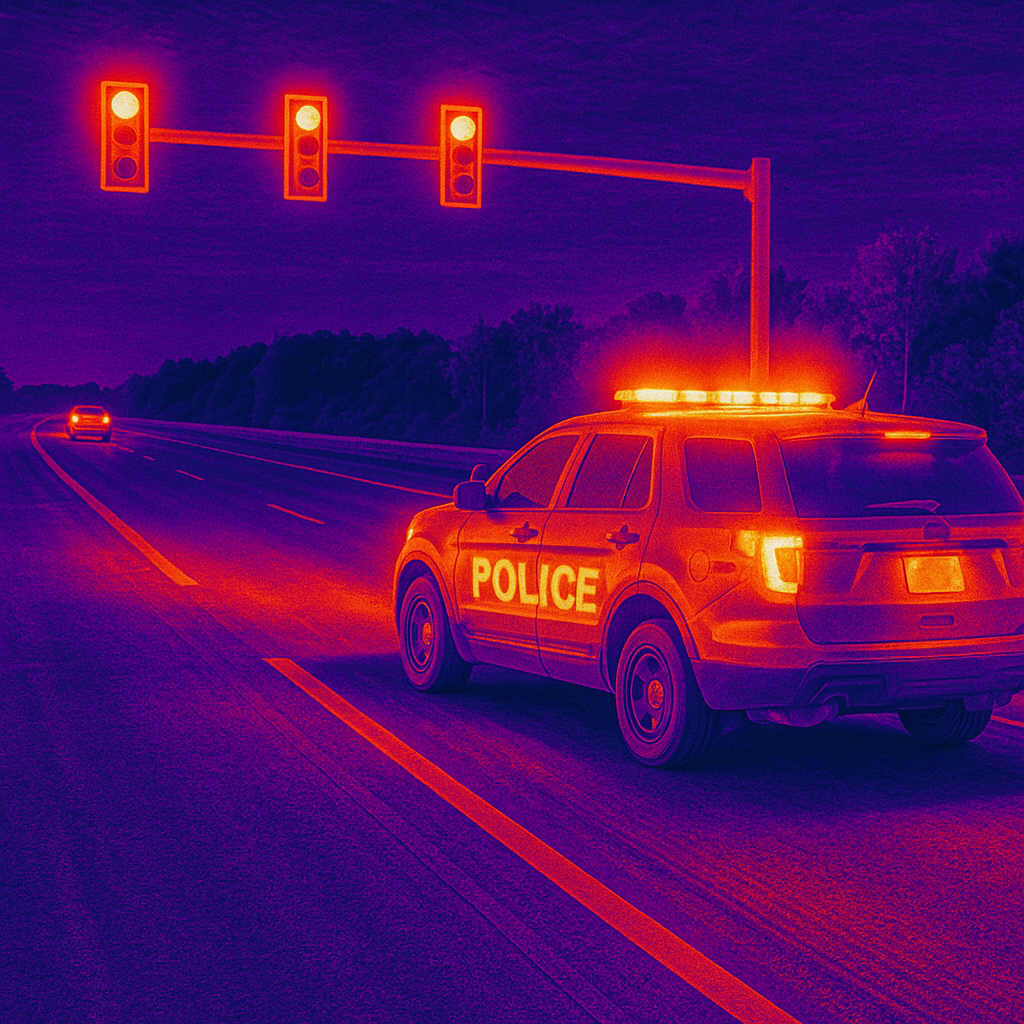
Cape Town's innovative policing combines visible patrols, advanced tech, and infrastructure changes to drastically cut highway crime and improve safety.
Cape Town is using something called Dawn Code to make its highways safer. It's a smart system that mixes what police see with what computers predict. They use info from Waze, cameras, and even gun sensors to stop bad stuff from happening. This helps lower crime and makes sure help gets to accidents super fast. It's like the city is always watching and learning to keep everyone safe on the roads.
What is Dawn Code in Cape Town?
Dawn Code is Cape Town's innovative, data-driven system that integrates police observations with predictive code to enhance highway safety. It utilizes real-time data from sources like Waze, CCTV, and ShotSpotter to identify and mitigate risks, significantly reducing crime and improving incident response on its motorways.
Get Cape Town news in your inbox
Stay updated with the latest stories from the Mother City.
1. The Living Laboratory beneath the Helderberg Glow
Long before the sun lifts itself over the Helderberg escarpment, the city’s pulse is already synthetic. Infrared eyes swivel atop the R300, licence-plate logic boots inside a concrete bunker in Goodwood, and a matte-black SQ5 idles beneath the N2 bridge at Borcherds Quarry, its turbo ticking like a stopwatch counting down to launch. The experiment is simple in theory: bolt together what cops can see and what code can predict, then watch the danger curve flatten.
Between July 2025 and January 2026 the emergency hotline logged 8 552 motorway events - one every forty minutes. Strip away the boring ledger of 1 847 burst tyres, 1 203 empty tanks and 423 cooked radiators and you are left with the thin residue that scares insurers: 86 verified crimes, 148 cuffs snapped, nine bullets fired, three stone-throwing ambushes, and a kidnapping aborted when a patrol drone pinned a Honda Jazz that had boxed a ride-hailing Toyota on the Airport Approach. Every bullet-point is a moment when two-ton metal almost rewrote a family’s future, but didn’t.
The hypothesis now governs breakfast-route choices, radio traffic bulletins and midnight detours. A Durbanville mother checks a real-time heat map before she buckles her toddler; an Uber driver keeps the 021 480 7700 sticker on his windscreen because last month a Ghost Squad silhouette answered in ninety seconds. The numbers are small enough for a single slide, yet large enough to nudge an entire city’s risk thermostat.
2. From Blue-Light Ballet to Border-Grade Barriers
After the 2019 festive-season massacre - twelve bodies in thirteen kilometres - City Hall stopped believing that rotating blue lights could disinfect 189 kilometres of asphalt. Engineers and criminologists built a digital twin instead: every on-ramp geotagged, every footpath sliced through bushland redrawn as a red vector. Three live feeds - Waze panic-pings, CCTV motion flags and ShotSpotter gun-claps - irrigate a risk model that refreshes every thirty seconds. When the math spots a motionless car, no hazards, plus two heat blobs in the grass, it spits a colour-coded threat card to the nearest interceptor.
Human chemistry still bends the forecast. On 8 January the model shrugged at a “vehicle trouble” alert on the N1/N7 split, but the arriving constable clocked the driver’s pupils fluttering at 120 bpm. A pat-down yielded a Beretta 92FS with its serial laser-scarred off; ballistics tied the piece to four violent home-invasion sprees across Kraaifontein and Durbanville. One arrest, four crime series collapsed, algorithm weightings recalibrated. The episode is now a syllabus staple: machine vision saw a breakdown, human vision saw pre-assault adrenaline, together they deleted a crime wave.
Concrete soon caught up with code. Cable barriers migrated from centre median to outer shoulder, shrinking the emergency bay to 1.2 metres - too slim to swing a door wide. Where the N2 skims Khayelitsha and Mitchells Plain, three-metre palisade fencing rises with spinning Y-arms borrowed from Arizona’s border, salt-wind galvanised for Cape storms. Graffiti crews have already christened the upgrade: “Welcome to the Autobahn, kaapse styl.” Even roar-reducing polycarbonate panels serve double duty; the same screens that drop road noise by eleven decibels break the sight-lines muggers need to time a dash across traffic. Near Lentegeur pedestrian breaches have fallen from seventeen a night to zero since the panels went up.
3. Ghost Squad: Race-Track Tactics at Taxi-Choke Speed
Officially the Freeway High-Speed Interdiction Unit, the Ghost Squad has morphed into a tactical racing team. Officers are head-hunted from endurance-racing clubs, trained at Killarney Raceway to “make contact at speed”: parallel a target at 160 km/h, match tyre harmonics on the intercom, then nudge the rear quarter into a controlled spin onto the runoff. They average one such ballet every nine days; dash-cam footage is dissected frame-by-frame the way soccer coaches study corners.
Boots hide a quick-access vault: a PepperBall carbine for less-lethal final warnings and a tourniquet kit, because seventy percent of gunshot victims bleed out before grid-locked ambulances arrive. Vehicles are leased Audi SQ5s running ethanol-blend that keeps turbos four degrees cooler during 200 km/h chases. The unit’s quiet heroics, however, are microscopic. The most frequent dispatch code is “MECH-01”, mechanical failure. Patrol boots carry a lithium jump-pack, universal coolant hose and five litres of 95-octane - enough to push eighty-seven percent of stranded commuters to the next off-ramp.
Data harvested from each roadside rescue revealed that the 400-metre climb of Sir Lowry’s Pass triggers thirty-four percent of overheat stalls. The fix: a temporary water-mist station every December, F1-pit style. Cost per cooled vehicle: eighteen cents. Recovery-time congestion: down twenty-two percent. Fuel theft from idling trucks has been re-engineered into urban legend. Metro Police hand out self-locking aerospace fuel caps that open only when an RFID fob sits within thirty centimetres. A Stellenbosch start-up moulds the valves from ocean-harvested PET; 14 000 caps later, not a single successful siphon has been reported.
4. Pop-Up Tunnels, Weather Weapons and the Unseen Social Contract
Even call-takers have gamified fear. Agents no longer open with “What is your emergency?” - a trigger for panic and waffle. Instead they ask: “Tell me what you can see in one breath.” The constraint forces crisp visual packets: “White Ford Ranger half-on-bridge hazards-off two males prising plate.” Nine seconds, location plus threat, forty-two seconds shaved off dispatch time. Arrestees leave the roadside wearing a QR-coded docket wrist-tag; body-cam footage auto-uploads to an encrypted vault, voice-to-text drafts the statement, giving prosecutors a trial-ready bundle inside thirty-six hours. Early returns from Bellville Regional Court show guilty pleas up nineteen percent when the satchel is used.
Weather itself has been weaponised. A Doppler pod atop the Portside skyscraper streams rain intensity to variable speed gantries; when the model predicts 2.5 mm of water at 80 km/h, the posted limit drops to 90 km/h five minutes before the first drop. During winter 2025 loss-of-control crashes on the elevated N2 near Hospital Bend fell from eleven a month to three.
The final frontier is flesh and blood. School holidays send children shortcutting across the N2 to the beach; taxi strikes push protestors onto the carriageway. The City retaliates with “pop-up fauna corridors” - aluminium tunnels clad in neon graffiti, human-wide but car-narrow. Overhead boom lights ignite when sensors detect shoulder footfall, turning the passage into a landing-strip visible 300 metres away. During the December 2025 demo 1 876 people used the tunnel in ten days; injuries dropped to zero; only a goat named Gerald tried an illegal entry and became a Twitter celebrity.
Behind every graph is a commuter whose mental map has been redrawn. A trucker jokes that his new locking cap is the best romance he’s ever had - no arguments, no leaks. An Uber driver keeps the emergency sticker because blue lights once answered in ninety seconds. The freeway experiment is not a victory lap; it is a perpetual A-B test conducted at 100 km/h, asking the question city planners whisper only in corridors: how thin can you shave risk before the social contract finally sticks? For now, the cameras keep panning, the sodium glow keeps vigil, and the next call is already holding - another flat, another heartbeat at 120 bpm, another datapoint waiting to be born under the N2 night.
[{"question": "
What is Dawn Code?
", "answer": "Dawn Code is Cape Town's innovative, data-driven system that integrates police observations with predictive code to enhance highway safety. It utilizes real-time data from sources like Waze, CCTV, and ShotSpotter to identify and mitigate risks, significantly reducing crime and improving incident response on its motorways."}, {"question": "What kind of data does Dawn Code use?
", "answer": "Dawn Code integrates various data sources, including real-time information from Waze panic-pings, CCTV motion flags, and ShotSpotter gun-clap sensors. It also incorporates traditional police observations and incident reports. This rich dataset allows the system to build a comprehensive understanding of potential threats and incidents on the highways."}, {"question": "How has Dawn Code impacted crime and safety on Cape Town's highways?
", "answer": "Dawn Code has significantly reduced crime and improved safety. For example, between July 2025 and January 2026, the system helped address 86 verified crimes, leading to 148 arrests. Incident response times have improved, and specific interventions like cable barriers, reinforced fencing, and even weather-aware speed limits have drastically reduced various types of incidents, from stone-throwing ambushes to loss-of-control crashes."}, {"question": "What is the 'Ghost Squad'?
", "answer": "The Ghost Squad, officially known as the Freeway High-Speed Interdiction Unit, is a specialized tactical team trained in advanced driving techniques for high-speed pursuits. They are equipped with advanced vehicles (Audi SQ5s), less-lethal weapons like PepperBall carbines, and critical medical supplies. Beyond interdiction, they also provide roadside assistance for mechanical failures, often equipped with jump-packs, coolant, and emergency fuel."}, {"question": "How does Cape Town use technology to address specific road hazards?
", "answer": "Cape Town employs various technological solutions. For instance, temporary water-mist stations are deployed on Sir Lowry's Pass during December to prevent overheating. Fuel theft from trucks is combated with self-locking RFID-enabled fuel caps. Doppler radar atop skyscrapers informs variable speed limits based on rain intensity, and 'pop-up fauna corridors' (illuminated tunnels) guide pedestrians safely across highways, especially during school holidays."}, {"question": "How has incident reporting and prosecution been improved by Dawn Code?
", "answer": "Call-takers use a streamlined questioning approach ('Tell me what you can see in one breath') to get critical information quickly, shaving valuable seconds off dispatch times. Arrestees are given QR-coded wrist-tags, and body-cam footage automatically uploads to an encrypted vault. Voice-to-text technology drafts statements, creating trial-ready bundles for prosecutors within 36 hours, which has led to a reported 19% increase in guilty pleas in Bellville Regional Court."}]
Aiden Abrahams is a Cape Town-based journalist who chronicles the city’s shifting political landscape for the Weekend Argus and Daily Maverick. Whether tracking parliamentary debates or tracing the legacy of District Six through his family’s own displacement, he roots every story in the voices that braid the Peninsula’s many cultures. Off deadline you’ll find him pacing the Sea Point promenade, debating Kaapse klopse rhythms with anyone who’ll listen.
View all articles →