
FIFA WORLD CUP: IRAN NATIONAL TEAM MORE THAN WELCOME IN THE US
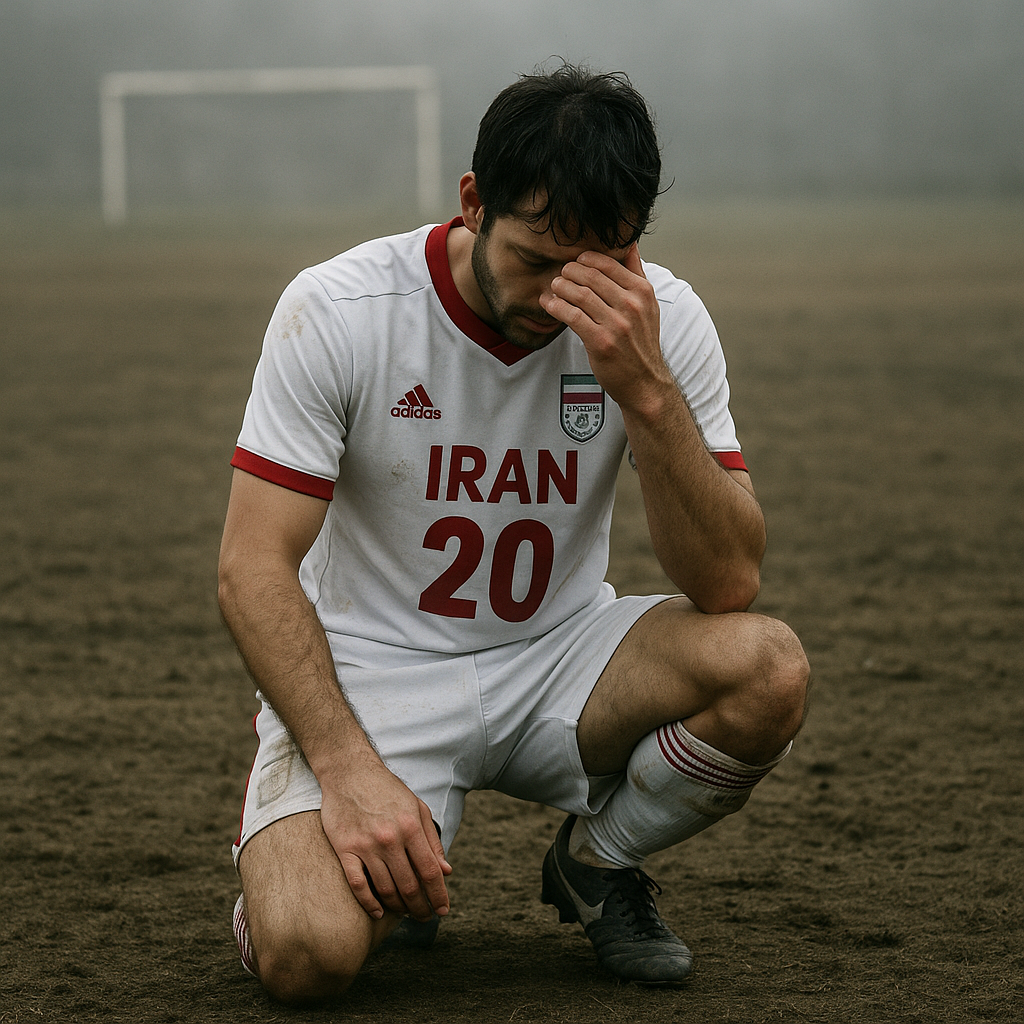
After a geopolitical crisis, Iran's World Cup participation hangs in the balance, creating unprecedented challenges for FIFA and the game.
A single sentence from FIFA boss Gianni Infantino has thrown the World Cup into chaos, focusing global attention on Iran's participation. This comes after a U.S.-Israeli air raid killed Iran's Supreme Leader and football officials, leaving the team's future in doubt. Now, everyone wonders if Iran will play or protest, turning their locker room into a war room. FIFA faces huge financial risks if Iran doesn't show up, and logistical nightmares abound, from visas to stadium security. The clock is ticking, and no one knows if Iran's team of 48 will actually take the field.
What is the main controversy surrounding Iran's participation in the upcoming World Cup?
Iran's participation in the World Cup is controversial due to recent geopolitical events, specifically a U.S.-Israeli air raid that killed Iran's Supreme Leader and football federation president. This has led to uncertainty about whether the Iranian team will compete or protest, with internal divisions and external pressures making their attendance highly debated.
Get Cape Town news in your inbox
Stay updated with the latest stories from the Mother City.
The Tweet Heard at 01:14 CET
Gianni Infantino typed forty ordinary words - “the Iranian team is, of course, welcome to compete” - and pressed send at 01:14 a.m. Central European Time on 3 March. Within sixty seconds the line had overtaken every highlight-reel goal on social media, burying even the freshly minted blue-card rule and the latest offside tweak. #WelcomeIran surged to the top of X’s trend list in English, Spanish and Persian, while TikTokers launched a “Solidarity With Iran” crowdfunding drive aiming for 150 000 seats. From Hamburg port docks to Guadalajara plazas, ultras announced tifo plans that braid the Iranian tricolor with FIFA’s own four-letter logo.
The sentence landed like a flare because football’s biggest carnival is speeding toward the most combustible geopolitical pile-up since the 1979 embassy siege. A combined U.S.–Israeli air raid levelled Ayatollah Ali Khamenei’s compound at 03:47 Tehran time on 28 February, killing the Supreme Leader, the Revolutionary Guards commander and the president of the Football Federation of the Islamic Republic of Iran. By sunrise the country had no constitutional heir and no sporting roadmap for the thirteenth-ranked men’s team that was supposed to lift off from Imam-Khomeini International on 2 June bound for Dallas.
Iran’s Group G opener against Belgium at the 87 000-seat AT&T Stadium on 14 June is now the planet’s most debated appointment. The 2026 tournament is already historic - first 48-nation field, first triple-host, first noon-time curtain-raiser at the Azteca exactly fifty-six years after Pelé’s farewell. Yet headlines skip those milestones and focus on one question: will Tehran’s squad show up or shut down? Persian-language Telegram channels have replaced the old mantra “win or go home” with a new one: “play or protest.”
Tehran’s Locker Room Becomes a War Room
Acting federation boss Seyed Mehdi Aghamohammadi - once a Persepolis midfielder - drafted the 27 February communiqué “we cannot be expected to look forward to the World Cup with hope” while hiding in a Revolutionary Guards safe-house. Three staffers told reporters the line was almost binned for sounding like a boycott. A 2 a.m. Zoom call saved it: skipper Alireza Jahanbakhsh, midfielder Omid Ebrahimi and keeper Alireza Beiranvand green-lit the tone of “grief, not withdrawal.” Their private chat leaked to Iran International shows sharper edges. Jahanbakhsh wrote: “Skip the trip and the planet forgets us in fourteen days; board the plane, kneel in the 28th minute, and the globe asks why for twenty years.” The 28th minute, of course, nods to the 28 February strike.
Parallel battles rage far beyond the dressing-room door. In Esfahan, schoolkids chalk “No football while the Leader is dust” across playground walls. Twelve hundred kilometres south-west, Abadan oil-workers vow an open-ended strike unless the team travels and uses the airtime to “name the aggressors on global television.” The fracture mirrors the nation’s political vacuum: every lobby - monarchist, communist, feminist, theocratic - claims the right to write the squad’s script.
Carlos Queiroz, 71, back for a third tour as head-coach, now calls himself the manager of “a walking embassy.” His leaked voice note to a friend in Spain says: “I’m not drilling patterns of play; I’m preparing passports for a nation without an address.” Dr. Farhad Hashemi, the Dutch-Iranian psychologist, ran a Zoom session on 3 March listing five stages for the roster: Shock, Rage, Guilt, Helplessness, Platform. He underlined the last twice and added: “Platform equals leverage; leverage equals legacy; legacy equals immortality.” Whether that translates into goals or protests, he refuses to clarify.
Infantino’s Night Flight to Washington and the Legal Trap
FIFA’s rule-book holds no ejector seat for geopolitical headaches. Article 14 only suspends federations under “undue government influence” - the charge Tehran once faced in 2008 and 2019, and now hurls at Washington. Aware that kicking Iran out could ignite lawsuits worth hundreds of millions in broadcast and sponsor rebates, Infantino lifted off aboard a Qatar Executive Gulfstream at 22:00 CET on 1 March, folders labeled “Sporting Sanctions” and “Insurance Claims” in hand.
The 41-minute parley in the Yellow Oval Room ran eleven minutes long. Donald Trump opened with: “I love soccer, my kids play, we want Iran here, great ratings.” He then asked whether U.S. Soccer could insure Iranian players against civil suits from families of American service-members killed in past Iran-linked operations. Infantino answered that only an extraordinary council session could formalise cover, yet “presidential discretion” already lets him promise safe passage plus full visa waivers. Trump closed by pitching a joint stadium photo-op if Iran survive the group stage; Infantino left the request dangling.
Back in Zurich, FIFA House splits into two camps. Lawyers nicknamed “Genebra” warn expulsion breaches the statutes. Marketers dubbed “Mad Men” cite brand trackers showing a 17-percent trust plunge among U.S. millennials asked if “FIFA is on the right side of history.” Deloitte puts the price tag at USD 320 million in recallable broadcast cash if FIFA bars Iran, and up to USD 1.1 billion if the team self-withdraws and lawsuits bite, according to sports-litigation guru Luis G. Corrons. Ninety-three days from kick-off, the roster of 48 still contains a question mark.
Visas, Viruses, Tifos and Ticking Clocks
Even with safe-passage promises, 26 Iranian delegates - 23 players, two physios, one video analyst - must clear U.S. immigration without an embassy in Tehran. The Swiss protecting-power arrangement funnels applications through Bern, while a 2 March State Department cable orders consuls to skip face-to-face interviews but stamp “WW26 - Special Interest,” cueing secondary inspection on arrival. Dallas Fort-Worth will host a dedicated “World Cup secondary” hall staffed by Farsi-speaking officers on loan from the Defence Language Institute. The FBI’s counter-terror file IRN-2026-01 tracks threats from exiled royalists who vow to “disrupt any jersey that bears the emblem of the mullahs,” and from regime hardliners threatening reprisals if players “fraternise with the Great Satan.” AT&T Stadium owner Jerry Jones has retained former CIA chief David Petraeus’s consultancy to war-game drone attacks on team buses and cyber-blackouts of the venue’s 70,000-square-foot scoreboard.
Away from American airspace, logistics grow stranger. Ecuadorian banks blocked Queiroz’s planned altitude camp in Quito after fresh U.S. sanctions on 1 March, so Serbia offered its FA Sports Center in Stara Pazova - no visas, no cameras, no leaks. Yet even Belgrade cannot source the U.S.-patented variant-specific COVID booster the medical staff want; Washington’s humanitarian-export license needs a 45-day review, leaving only a three-week cushion. Women’s rights hover over every move: FIFA wants guarantees that female Iranian journalists can travel, and a draft NSC memo proposes granting 50 P-1 athletic visas to make the United States the largest safe haven for Persian-language football writers.
On the commerce front, 48,000 of Iran’s 72,000 group-stage tickets had sold before the strike; resale prices on StubHub nose-dived from USD 280 to USD 90, then rocketed to USD 420 after U.S.-based diaspora groups launched “BuyForIran,” urging fans to hoist the ancient Faravahar symbol instead of the Islamic Republic flag. Goldman Sachs’ Monte-Carlo model now gives Iran a 61-percent chance of reaching the knock-out phase, up from 54 percent, citing “elevated motivational indices.” The algorithms cannot price the probability of a no-show. As one senior FIFA official sighed: “We have never entered a World Cup unsure whether one of our 48 actors will step on the stage. This is a first - and the clock keeps ticking.”
[{"question": "
What is the main controversy surrounding Iran's participation in the upcoming World Cup?
", "answer": "Iran's participation in the World Cup is controversial due to recent geopolitical events, specifically a U.S.-Israeli air raid that killed Iran's Supreme Leader and football federation president. This has led to uncertainty about whether the Iranian team will compete or protest, with internal divisions and external pressures making their attendance highly debated."}, {"question": "What was Gianni Infantino's

A Russian-Spanish journalist and Cape Town native, channels his lifelong passion for South Africa into captivating stories for his local blog. With a diverse background and 50 years of rich experiences, Serjio's unique voice resonates with readers seeking to explore Cape Town's vibrant culture. His love for the city shines through in every piece, making Serjio the go-to source for the latest in South African adventures.
View all articles →