
Helderberg infrastructure upgrades gain momentum
Strand residents join a virtual meeting to explore R-billion infrastructure upgrades: drone fly-throughs, GIS maps, and pipe CCTV.
Cape Town is fixing its old water pipes and plants with super cool new tech. They're using special glass-fiber socks to mend leaky sewers without digging up streets and drilling under rivers to protect fish. They’re also building new pump stations and making wastewater so clean it can be sold, turning old problems into smart, green solutions for everyone.
What innovative solutions are being implemented to upgrade Cape Town's aging water infrastructure?
Cape Town is re-wiring its hidden water city using trenchless technology to repair major sewers with glass-fibre liners, employing horizontal directional drilling for river crossings to protect ecosystems, and building advanced pump stations and wastewater treatment works. These solutions prioritize sustainability, efficiency, and community benefits, aiming for long-term resilience.
Get Cape Town news in your inbox
Stay updated with the latest stories from the Mother City.
The 50-Year-Old Artery Gets a Second Heart
On a storm-lashed Tuesday, laptops flickered to life in 250 Strand homes. Instead of the usual council slide-deck and polite questions, the Microsoft Teams lobby opened on to a live, colour-coded engineering cockpit. Drone footage swooped through the canopy of oaks, then dived underground, turning the Trappies Bulk Sewer into a neon artery on every screen. The pipe is 2.3 km of 900 mm asbestos-cement laid in 1973, an era when Strand’s entire head-count was smaller than today’s crowd at a high-school rugby derby. Back then 22 000 residents used the line; 68 000 bodies now flush, shower and rinse into the same tunnel every sunrise.
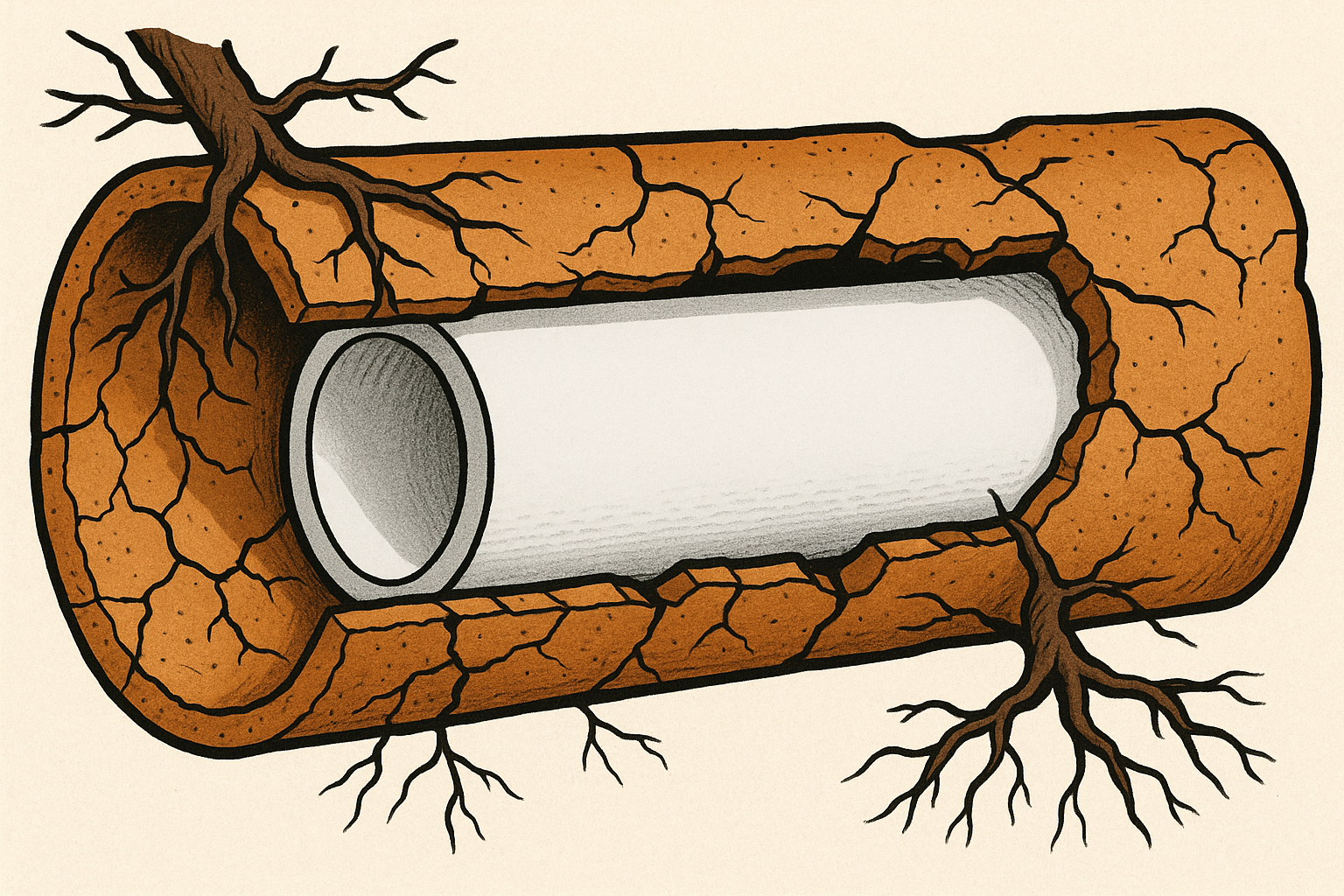
Closed-circuit crawlers have mapped every scar: 147 fractures, 33 root braids and a 12 m hollow where the bottom has simply vanished, turning the pipeline into an illegal soaker hose beneath Broadway Street. Replacement would mean tearing up the CBD, so engineers will slipstream a bespoke glass-fibre sock drenched in vinyl-ester resin, inflate it like a birthday balloon, then bake it with 90 °C steam. When the resin sets, the old tube will cradle a brand-new “egg” rated for a century of service while surrendering only six percent of its carrying capacity - vital in a town where every litre per second is already spoken for. Price tag: R190 million, completion meter already ticking at 17 %.
The pipe-within-a-pipe trick matters beyond Strand. The liner technology is South-African-sourced, so every kilometre of weave supports local textile mills and resin formulators. Carbon accountants calculate the operation will save 1 200 t of embedded CO₂ compared with open-trench reconstruction - roughly the footprint of 260 return flights to Johannesburg. Residents watched the percentage climb in real time, a silent reminder that thrift and climate math now share the same dashboard.
Boring Under the Galaxias: A River Crossing With No Wet Feet
The most nail-biting 130 m of the job runs directly beneath the Lourens River, one of the last urban refuges for the palm-sized, endangered Cape galaxias fish. Conventional wisdom demanded a cofferdam and a two-season river diversion - an ecological gamble the team refused. Instead they fired up a mini-HDD rig that chewed a 7 m-deep arc under the riverbed, steering by magnetic beacons until the bit popped out 2.4 m from its target - engineers call it a “hole-in-one” at 160 bar pressure. A 560 mm HDPE sleeve was then yanked back through the hole; inside that sleeve the glass-fibre liner will be winched and cured, never once breaking the surface water.
Mud matters as much as fish. Drilling slurry circulates through a closed-loop recycling plant where shale shakers and centrifuges claw out rock chips before the bentonite is flocculated and sent back down the hole. Seventy percent of the original volume is reused, shrinking the waste pile and keeping haul trucks off Sir Lowry’s Pass during rush hour. A Go-Pro clip of the drill head surfacing on the far bank drew a spontaneous emoji-storm in the chat window - proof that civil engineering can still deliver blockbuster moments.
The river crossing is more than a neat trick; it is a template. Climate modellers predict heavier winter pulses, so any future pipe that needs to kiss a watercourse will copy the HDD playbook. Biodiversity officers have already pencilled the same rig for two upcoming crossings near Somerset Mall, shaving six months off a conventional timeline and sparing another patch of indigenous riparion forest.
The Super-Stack That Swallows Peak Flow
While Trappies soaks in resin, its twin - the 1978 Gordon’s Bay Pump Station - prepares for retirement. The new R277 million facility swaps two clattering dry-well pumps for a single submersible “super-stack” rated at 600 ℓ/s, enough to empty an Olympic pool in forty minutes. Variable-frequency drives let operators dial back to 90 ℓ/s on a quiet winter night or punch full throttle when December tourists hit flush in unison, flattening the hydraulic surge that normally rattles valves all the way back to the Library intersection.
Power failsafe sits on a floating concrete raft: a 3 MW diesel generator that will keep blades spinning even if an 11 kV Eskom line snaps during a southeaster-sparked wildfire. The raft isolates vibration, sparing neighbouring townhouses the midnight diesel thump familiar at older stations. Every cubic metre of concrete carries 40 % ground-granulated blast-furnace slag, trimming 800 t of carbon - equal to parking 173 Ford Kasais for a year. Residents asked the obvious question: “Will my lights dim?” The answer, backed by a live amp-draw simulation, was a categorical no - proof that redundancy and sustainability can share the same wiring diagram.
Behind the scenes the pump station doubles as a data fortress. Fibre-optic strain gauges stitched into the wet well wall chatter to a LoRaWAN gateway on the roof; algorithms learn the signature hum of each impeller and flag the first cough of cavitation long before a human ear notices. Maintenance crews receive a push-notification, parts are ordered overnight, and the station never discovers it was about to fail. The same sensor mesh will migrate to every new pipe the City lays, turning reactive repairs into predictive tweaks.
From Sludge to Spark: The Plant That Sells Water to Coke
Downstream, the Macassar Waste-water Treatment Works no longer smells like the “sewage farm” grandparents remember. By 2031 its skyline will host one of Africa’s first full-scale thermal-hydrolysis reactors: a pressure cooker that blasts sludge at 165 °C for half an hour, popping bacterial cell walls like balloons. The cooked goo then slides into anaerobic digesters that cough out 40 % extra biogas, enough to fuel 1.2 MW of combined-heat-and-power engines. In plain English: the plant will eat its own sludge, warm its own tanks and still have electrons left over to keep the lights on - 60 % of total site demand.
The water side is equally ambitious. After conventional cleaning, effluent will squeeze through ultrafiltration and reverse-osmosis membranes, emerging as 15 million litres a day of “designer water” so pure it could mingle with Coca-Cola’s syrup or cool the blast furnaces at Saldanha. Negotiators are locking in a 10-year off-take deal worth R1.3 billion - money the City would otherwise hand to the Western Cape Water Supply System. Every kilolitre sold is a kilolitre left in Theewaterskloof, a hedge against Day-Zero headlines that still give planners nightmares.
Circular thinking does not stop at the fence line. Engineers have sketched a satellite recycling unit that could harvest 2 t of phosphorus and 800 kg of cellulose daily, bagging fertiliser for Winelands vines and feedstock for paper mills. The concept is parked until Treasury clarifies grant rules, but the numbers are already glowing: a potential R450 million plant that flips sanitation from cost centre to profit engine. Residents watching the presentation quickly grasped the implication - tomorrow’s rates hikes might be tamed by yesterday’s flush.
Jobs, Headsets and the Library That Breathes Easier
Money and megawatts matter, but the meeting ended on people. The 2024-2031 capital wave will peak at 2 100 pay-slips; the City wants the skills to outlive the concrete. A one-year “pipeliner’s passport” - accredited by MerSETA and stamped on a blockchain ledger - now certifies trenchless installation, HDPE fusion and CCTV defect coding. Women already fill 34 % of the class chairs; the target is 45 % by 2026. Chanté Jansen, a 24-year-old from Lwandle, zoomed in to say she now leads a night crew scanning 1 km of pipe per shift - work once outsourced at R85 a metre, now kept in-house and in-community.
Noise also earns a pay-cheque. After parents complained about last July’s compressor drone on De Villiers Street, contractors slipped nano-silencer jackets over every generator, trimming 12 dB and bringing night-time readings down to 48 dB - softer than the household dishwasher. LED balloon lights point earthward, and a wheel-wash recycles 90 % of runoff. Exceed the limit and an automatic R5 000 donation lands in the community fund; the kitty is already R60 000 deep, ear-marked for new computers in the Strand Library - proof that decibels can convert directly into education.
The next public update, scheduled for June, will stream in 360-degree VR. Residents can borrow goggles from the local library and stroll inside Macassar’s half-built digesters, toggling between today’s rebar jungle and a rendered 2031 scene where turbines hum and polishing ponds mirror the sky. Booking opens next month; only 50 headsets are available, but the symbolism is infinite: a retiree in Onverwacht can lock eyes with a maintenance robot thirty metres beneath her slippers, watching her rates rand harden into stainless steel and glass-fibre that will outlive her grandchildren.
What innovative solutions are being implemented to upgrade Cape Town's aging water infrastructure?
Cape Town is re-wiring its hidden water city using trenchless technology to repair major sewers with glass-fibre liners, employing horizontal directional drilling for river crossings to protect ecosystems, and building advanced pump stations and wastewater treatment works. These solutions prioritize sustainability, efficiency, and community benefits, aiming for long-term resilience.
How is Cape Town repairing the 50-year-old Trappies Bulk Sewer without extensive excavation?
For the 2.3 km Trappies Bulk Sewer, laid in 1973 and now serving 68,000 residents, engineers are using a trenchless method. They will insert a bespoke glass-fibre sock, drenched in vinyl-ester resin, inflate it, and then cure it with 90°C steam. This creates a new "pipe-within-a-pipe" that is rated for a century of service, retains most of its carrying capacity, and avoids tearing up the city's CBD. This project is budgeted at R190 million, with significant environmental benefits, saving 1,200 tonnes of embedded CO₂.
What advanced techniques are being used for river crossings to protect aquatic ecosystems?
To cross the Lourens River without disturbing the endangered Cape galaxias fish, engineers are utilizing horizontal directional drilling (HDD). A mini-HDD rig drills a 7-meter-deep arc under the riverbed, guided by magnetic beacons. A 560mm HDPE sleeve is then pulled through, and the glass-fibre liner will be winched and cured inside it, ensuring no surface water disruption. This method also features a closed-loop recycling plant for drilling slurry, reusing 70% of the original volume and minimizing waste and traffic impact.
How is the new Gordon's Bay Pump Station improving efficiency and sustainability?
The new R277 million Gordon's Bay Pump Station replaces old dry-well pumps with a single submersible "super-stack" rated at 600 ℓ/s. It features variable-frequency drives for optimal flow management and a 3 MW diesel generator on a floating concrete raft for power failsafe, isolating noise from nearby homes. The concrete used contains 40% ground-granulated blast-furnace slag, reducing carbon emissions. The station also incorporates fibre-optic strain gauges and a LoRaWAN gateway for predictive maintenance, flagging issues before they lead to failure.
How is the Macassar Wastewater Treatment Works being transformed into a resource recovery facility?
By 2031, the Macassar Wastewater Treatment Works will host Africa's first full-scale thermal-hydrolysis reactor, which blasts sludge at 165°C to increase biogas production by 40%, fueling 1.2 MW of combined-heat-and-power engines. This allows the plant to be 60% energy self-sufficient. Additionally, after conventional cleaning, effluent will undergo ultrafiltration and reverse osmosis to produce 15 million litres per day of

Hannah Kriel is a Cape Town-born journalist who chronicles the city’s evolving food scene—from Bo-Kaap spice routes to Constantia vineyards—for local and international outlets. When she’s not interviewing chefs or tracking the harvest on her grandparents’ Stellenbosch farm, you’ll find her surfing the Atlantic breaks she first rode as a schoolgirl.
View all articles →