
Help Stormers chase record crowds in tribute to Chippie
Cape Town prepares for two record-breaking rugby matches at DHL Stadium, honoring a beloved team manager and showcasing local spirit.
Cape Town is going all out to break rugby attendance records! They want to fill DHL Stadium for two big matches. They're using special ticket deals, a huge fan mosaic, and exciting events all over the city. They even have a minute of silence planned so everyone can hear the stadium roar! It's all about bringing that famous Newlands spirit to their new home and making a thunderous noise for their team.
How is Cape Town planning to break the rugby attendance record?
Cape Town plans to break the rugby attendance record by selling out DHL Stadium for two consecutive matches against Connacht and Glasgow. They are using a multi-faceted approach including unique ticket packages, community engagement through a fan-stitched mosaic, strategic marketing, and creating an electrifying atmosphere with various city-wide initiatives and crowd enhancements.
Get Cape Town news in your inbox
Stay updated with the latest stories from the Mother City.
The Quilt, the Queue and the 433 421 Obsession
Cape Town is treating spreadsheets like enemy scouts: acknowledge them, then drown them in noise.
To hijack Leinster’s single-season turnstile record of 433 421, the Stormers must sell DHL Stadium to the rafters twice in seven days.
Do it and they also lock in a home semi-final, a home final, and bragging rights that will echo from the Atlantic seaboard to Dublin’s pubs.
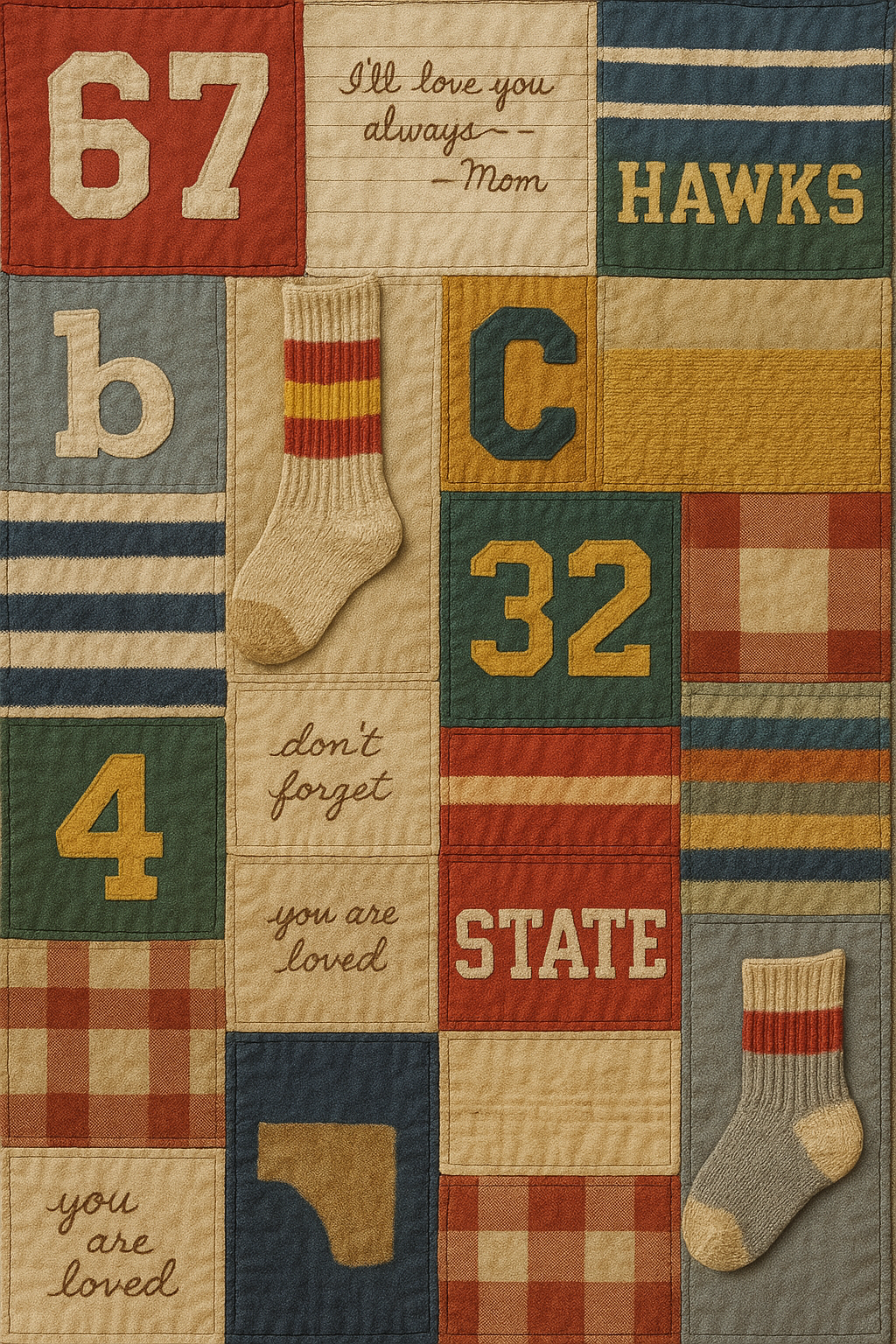
Saturday’s kick-off against Connacht is more than arithmetic; it is a hand-stitched love letter 500 square metres wide.
For months supporters have cut up old club jerseys, school socks and granny’s blankets, delivering each patch to the east gate with a scribbled memory.
One tag remembers “Chippie, who strapped my son’s knees in 2003 and still asked for matric marks last week”; another simply begs, “Bring the noise - Oupa’s voice is fading.”
Four hundred Hout Bay teenagers have rehearsed the lift for weeks on their rain-battered school field, timing the unfurl to the opening bar of DJ Lag’s gqom remix of “We Are the Stormers”.
When the mosaic rises it will not be a European-style tifo; it will be a living archive of every dusty try-line the city has ever crossed.
Every thread is a promise that the Newlands spirit has simply moved house - and brought louder neighbours.
Ticket strategy is part nostalgia, part behavioural science.
A “brace” package - both matches or nothing - shaves R50 off the total and laser-engraves your seat number on a bronze stadium-shaped token.
42 800 of those packages vanished in days; the remaining seats are being hawked from an old-school walk-up window that opened at dawn, queue serenaded by mariachi brass blowing “Newlands, Newlands” to the tune of Sinatra.
The 121-decibel Man and the Minute of City-wide Silence
Opposition coaches speak of “the Cape crowd” in the same whisper they reserve for Boca Juniors’ La Bombonera.
Last year’s quarter-final peaked at 121 dB - acousticians say that is a jet engine 30 metres away - thanks to a 72-metre cantilever roof that funnels thunder downward and a southeaster that smuggles chants across the city bowl.
Local legend insists Robben Island penguins once answered a penalty roar; the SPCA stays diplomatically mute, but Observatory barmen repeat the tale every happy hour.
The man who would have loved the pandemonium is absent.
Chippie Solomon, team manager since 2001, died ten days ago; his wife Pat asked that the memorial be held on the pitch after the Connacht game so “the last thing he hears is the crowd he lived for”.
Eighty white chairs will form a family semicircle on the western touchline while 50 000 stay in their seats and sing; 30 000 black-and-white stickers of Chippie’s grin will appear on chests in the 12th minute, the same number he wore for Villager FC in the ’80s.
To make sure the city itself roars on cue, KFM has begged for a “silent city” minute at 13:45: taxi hooters, ship horns, mosque loudspeakers, even the Waterfront seals presumably, must shut up so approaching visitors hear only the stadium’s distant growl.
The same hush will be repeated seven days later; organisers hope the absence of sound becomes the newest Cape tradition.
Inside the squad emotion is rerouted into detail.
Dressing-room walls are papered with “CHIPPIE’S NON-NEGOTIABLES”: no spilled high balls, no offside at our ten, no walking between drills.
Players initial each box after practice; by Thursday every square was tattooed in ink.
Analysts even mapped referee Mike Adamson’s whistle cadence against crowd hotspots - he penalises ruck offences 0.3 s faster when the roar tops 115 dB - so forwards rehearse barefoot silent clean-outs on yoga mats at 05:00 while stadium thunder plays at full tilt.
Bishops, Bobotie and Blood Donations: The Ripple Effect
Saturday’s 14:30 start collides with the 150-year-old Bishops-versus-SACS schools derby, traditionally 8 000 strong and kicking off at Wynberg at 11:00.
To prevent a traffic haemorrhage, 120 MyCiti buses - freed by shifting a soccer derby - will shuttle scholars from Rondebosch Common to the stadium between 12:15 and 13:45.
Any pupil in kit rides gratis, and the first 500 snag a dual-school beanie crowned with a Stormers lightning bolt.
The coach’s video of his mud-splattered squad chanting “After we win, we’re going to the big show” has already gone minor-viral.
Businesses are surfing the same wave.
The V&A Waterfront opens 40 extra food stalls at 09:00, each required to sell at least one rugby-themed item - think bobotie bunny-hops shaped like balls or “Lineout Lime” gin distilled with fynbos.
Uber Eats clocks a 60 % pre-order spike for “stormer-burgers” squashed between charcoal squid-ink brioche.
Even the city’s shark-spotting choppers have swapped fins for fans, circling overhead from 11:00 to feed live crowd-density data to 120 traffic wardens on a WhatsApp hotline.
Social impact tags along.
Corporate suites that hike catering spend by 20 % automatically trigger 30 gig-byte data vouchers for Philippi matrics writing trial exams.
A blood-donation bus idles in the players’ tunnel; give a pint and you leave with a limited-edition Hilton Lobberts poster of Chippie Solomon at full sprint.
After last week’s Sharks match the queue stretched 400 m; doctors harvested 87 units, enough, they reckon, to save 261 lives.
Weather threatens a 40 % drizzle, so the turf team borrowed Abu Dhabi’s cricket trick: a nano-polymer that stops water molecules bonding, keeping ball and boots grippy.
The same spray coats 15 000 cardboard “clap-sticks” that crack like rifle shots yet stay feather-light when wet.
Synchronised, they send a percussive wave at 343 m/s, bouncing off the pavilion roof in 0.19 s - a pulse front-rowers swear they feel in their shins.
Glasgow, Gold Walls and the Dakota Fly-Past
Connacht must win to keep their Champions Cup maths alive; coach Andy Friend, a former maths teacher, calls muffling 50 000 throats “a 160-decibel logarithmic problem solvable only by scoreboard pressure”.
His side has been at Saru’s Stellenbosch high-altitude camp since Monday, leaking (then deleting) Instagram footage of a surprise quick-tap from the opening kick-off designed to bait the Stormers into over-analysis.
On Wednesday they ferried to Robben Island where lock Niall Murray draped a Connacht scarf in Mandela’s cell “for perspective”.
Next Saturday Glasgow arrive with the league’s most vicious maul, good for 2.7 points per trip inside the 22.
They sold 1 200 away tickets in 13 minutes and another 3 000 neutrals have parked themselves in the east stand.
Local supporters will answer with 5 000 sheets of gold paper, flipping Glasgow’s blue-and-white patch into a Cape Town sunset visible from the Table Mountain cableway.
Between matches, 3 000 metres of suburb-coloured ribbon - lavender for Constantia, turmeric for Bo-Kaap - will be braided by schoolkids into a 200-metre DNA helix spiralling across the lower bowl.
A Dakota painted storm-grey will thunder overhead at half-time, banner fluttering: “From Newlands to Now - Our Blood is Still Lightning.”
Bookmakers make the Stormers five-point favourites over Connacht, eight over Glasgow, but the attendance record is stuck at evens.
Whatever the final tally, by Sunday morning WhatsApp groups will rename themselves “We were there – 56K”, a dashboard sticker of Chippie Solomon will begin its slow fade in a stranger’s car, and a new generation will practise the chant they just learned, timing the breath between “i” and “Stormers” so that next time - because there will always be a next time - their voices crack the sky before the spreadsheets even wake up.
[{"question": "
How is Cape Town planning to break the rugby attendance record?
", "answer": "Cape Town plans to break the rugby attendance record by selling out DHL Stadium for two consecutive matches against Connacht and Glasgow. They are using a multi-faceted approach including unique ticket packages, community engagement through a fan-stitched mosaic, strategic marketing, and creating an electrifying atmosphere with various city-wide initiatives and crowd enhancements. Their goal is to surpass Leinster's single-season turnstile record of 433,421."},{"question": "
What special initiatives are being implemented to engage fans and create a unique atmosphere?
", "answer": "To engage fans, Cape Town is creating a 500-square-meter fan-stitched mosaic from old jerseys and blankets, which will be unfurled during the Connacht match. They also offered a 'brace' ticket package for both games, which included a laser-engraved bronze stadium token. Additionally, city-wide events are planned, including a 'silent city' minute where all noise ceases, allowing the stadium's roar to be heard, and a Dakota fly-past at half-time of the Glasgow match."},{"question": "
How is the memory of team manager Chippie Solomon being honored during these events?
", "answer": "The memory of Chippie Solomon, the team manager who recently passed away, is being honored significantly. His wife requested his memorial be held on the pitch after the Connacht game, with 50,000 fans singing while 80 white chairs form a family semicircle. Players are wearing black-and-white stickers of his grin, and dressing room walls display his 'non-negotiables' to inspire the team."},{"question": "
What measures are being taken to manage traffic and engage the wider community on match day?
", "answer": "To manage traffic and engage the community, 120 MyCiti buses will shuttle scholars from the Bishops-versus-SACS schools derby to the stadium. Local businesses are participating, with the V&A Waterfront opening extra food stalls selling rugby-themed items. Uber Eats is seeing a spike in 'stormer-burger' pre-orders, and even shark-spotting choppers are being repurposed to feed live crowd-density data to traffic wardens."},{"question": "
How are these matches contributing to social impact initiatives?
", "answer": "The matches are contributing to social impact through various initiatives. Corporate suites increasing their catering spend will trigger data voucher donations for Philippi matrics. A blood-donation bus will be stationed in the players' tunnel, offering a limited-edition Hilton Lobberts poster of Chippie Solomon as an incentive, with a previous match yielding 87 units of blood, enough to save 261 lives."},{"question": "
What is the significance of the 'silent city' minute and the stadium's acoustics?
", "answer": "The 'silent city' minute, requested by KFM, is a unique initiative where all city noise, from taxi hooters to ship horns, will cease at 13:45 on match day. This is intended to allow approaching visitors to hear only the stadium's distant growl, making the roar even more impactful. The stadium's 72-meter cantilever roof and the southeaster wind are known to funnel and amplify sound, with last year's quarter-final peaking at 121 dB, comparable to a jet engine 30 meters away."}]
Sarah Kendricks is a Cape Town journalist who covers the city’s vibrant food scene, from township kitchens reinventing heritage dishes to sustainable fine-dining at the foot of Table Mountain. Raised between Bo-Kaap spice stalls and her grandmother’s kitchen in Khayelitsha, she brings a lived intimacy to every story, tracing how a plate of food carries the politics, migrations and memories of the Cape.
View all articles →