
How is Tayler Scott performing in 2026?
Tayler Scott: The lone South African baseball player in the US professional pipeline. Discover his journey from Johannesburg to the MLB.
Tayler Scott is a baseball pitcher from South Africa who has played all over the world, including for many MLB teams. He learned to play on a rough field in his home country and has always worked to get better. Tayler has played in 30 different countries, dealing with challenges and showing off his unique pitching style. He also helps grow baseball in South Africa by funding academies and clinics for young players. Wherever he goes, Tayler proudly represents his home country and its growing love for baseball.
Who is Tayler Scott?
Tayler Scott is a South African professional baseball pitcher who has played for numerous MLB teams and international leagues. His journey began on a cracked infield in Randburg, South Africa, and has since taken him through 30 countries as he developed his unique pitching style and dedicated himself to growing baseball in his home country.
Get Cape Town news in your inbox
Stay updated with the latest stories from the Mother City.
Jacaranda Roots & Borrowed Gloves
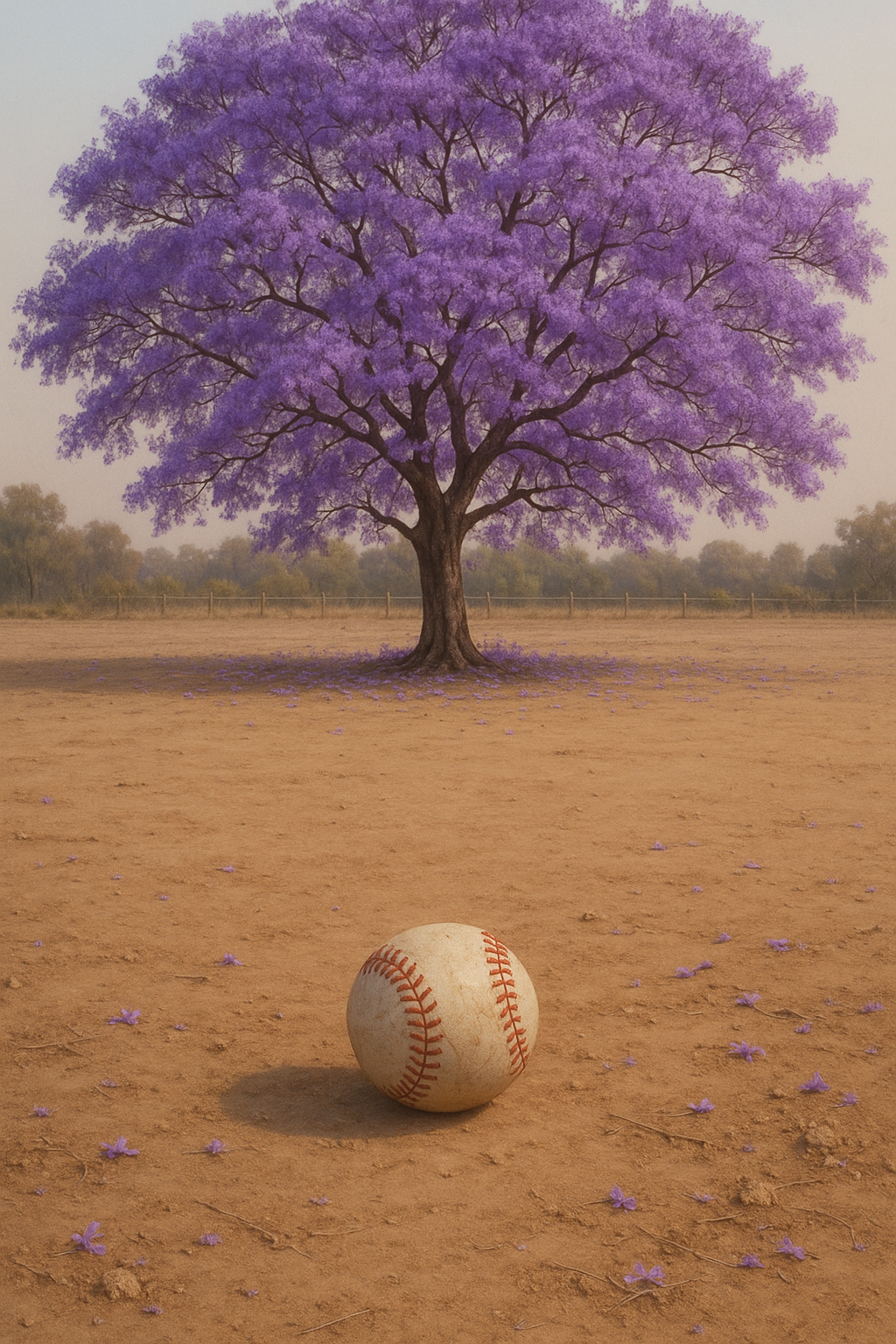
Tayler Scott’s first playground was the sun-cracked Randburg infield where jacaranda blossoms turned into purple snow every October. His dad, once a provincial cricketer, swapped willow for ash after watching a fuzzy VHS of the 1989 Fall Classic; the family TV became the village oracle and the boy’s imagination. Randburg Sports Complex had no chalked baseline, only a chain-link backstop dented by Zimbabwean expats and Texan missionaries who donated two warped bats and a bucket of scuffed practice balls. Eight-year-old Tayler - often the only Black player on the patchy diamond - shagged flies until dusk, using rolled fence palings to study two-seam movement across red dust. By twelve a borrowed radar gun blinked 78 mph; by fifteen every youth rulebook in Gautang had to be rewritten because no one else his age could touch 86 without a running start.
The local league topped out at weekend double-headers, so Tayler’s parents sold an inherited vacation plot in Mpumalanga and bought a single ticket to Phoenix. Desert Ridge High needed an arm for its 2010 fall slate, and a family friend promised a spare bedroom; the teenager landed with two suitcases - one stuffed with clothes, the other with 144 baseballs his grandmother had personally hand-stitched during load-shedding nights. Arizona hitters laughed at the accent, then flailed at a 91-mph heavy sinker that seemed to parachute once it met the dry desert air. A stress fracture in his forearm the following spring looked like a plane ticket home, but biomechanics lab coats at ASU rebuilt his arm path, shaved 0.12 seconds to the plate, and kept velocity intact.
When draft night arrived in June 2011, the house internet wobbled, MLB.com’s audio feed crackled, and - just after midnight Johannesburg time - Chicago’s area scout rang to confirm selection 5-134. His mother’s scream startled the neighbourhood security company; inside twenty-four hours Tayler earmarked R20 000 to erect Randburg’s first electronic scoreboard, still flashing today.
Helicopter Exits, Passport Stamps, and a Slider No One Loves Equally
Scott logged 450 minor-league frames for the Cubs, perfecting a sinker-slider recipe that produced more broken-bat grounders than highlight strikeouts. Winter ball in Venezuela sharpened the mix: Freddy García showed him a split-change grip that acted like a parachute on humid Caracas nights. Ten starts, 1.72 ERA, and then street protests outside the Valencia stadium forced the foreign players onto a military chopper headed for Curaçao. Back in Double-A Tennessee he shifted to the bullpen, touched 96, yet the Cubs cut him loose in March 2019 after a messy spring ERA.
Seattle grabbed him for Triple-A depth; six weeks later food poisoning gutted the Mariner relief corps and a 2 a.m. redeye flight dropped him onto Safeco’s mound for breakfast. Shohei Ohtani watched a first-pitch 95-mph sinker paint the inside edge; two scoreless innings and three groundball outs later Scott owned his maiden big-league hold. South African anchor Robert Marawa opened that night’s sportscast pronouncing “Scott” correctly - an attention-to-detail rarity the right-hander still replays on YouTube when doubt creeps in.
The years that followed felt like terminal jet-lag: Mariners, Orioles, Nationals, Rangers, Padres, Red Sox, Dodgers, Yankees - sometimes for seven days, sometimes for seven innings. Coaches adored the 2 800-rpm slider but scratched heads when right-handed sluggers slugged .547 against it. COVID trapped him in Perth, Australia; he threw distanced catch on Scarborough Beach while wearing a GPS anklet so Driveline analysts could model ankle pronation for future hurlers.
Kimchi Leather, German Heartbreak, and Atlanta’s Rehab Lab
In 2021 Scott accepted a six-figure guarantee to close for Samsung in Daegu. KBO baseballs feel like billiard balls after midnight humidity rolls in, so he and fellow import Aaron Brooks petitioned the league to legalize pine-tar - unsuccessfully. A 4.11 ERA looks pedestrian until you notice the sweeping curve he copied from Oh Seung-hwan’s “Stone Buddha” delivery and still features today. A quirk in citizenship rules left him eligible for the 2023 WBC qualifier; he whiffed five Panamanians across 2⅓ innings in Regensburg, though South Africa ultimately bowed out.
December 2025 found him signing a non-roster invite with Atlanta, lured by a front-office reputation for coaxing velocity out of shoulder cartilage without surgery. At Gwinnett his 93.7 mph heater lost two clicks but gained five inches of induced vertical break thanks to a pinky-adjusted grip. Two wind-aided blasts ballooned his ERA to 9.00; advanced metrics yawn and hand him a 3.98 FIP. Out of the stretch only, a steeper glove angle hides the ball an extra four hundredths of a second, and a later “doorknob” turn bumped slider efficiency from 35 % to 44 %.
Gift Ngoepe - now a bench coach - hosted a braai in Tempe for Scott and two other African prospects. Over smuggled Castle Lager and boerewors they forged the “Diamond Code”: sprint on, sprint off, defence first, acknowledge every fan. Scott tips his cap whenever the tricolour appears in the stands; Gwinnett regulars call it the “Scott Salute.”
Clay for Soweto, Syrah for Stellenbosch, and the Next Flight Out
During the 2023-24 off-season Scott funnelled KBO earnings and Braves bonus money into the Randburg Satellite Academy, a non-profit that now tends sixty-five under-14 players on the same cracked diamond where he learned footwork. A donated Rapsodo spits out spin-rate data; a new backstop no longer swallows line drives. In February 2026 shortstop Thabo Moeng and catcher Zinzi Dube signed JUCO letters in Kansas and Illinois - proof the pipeline flows both directions.
“Rainbow Nation Night” last March paired the South African consulate with the Stripers and raised $27 000 for clay to build a regulation mound in Soweto’s Doornkop Stadium, due for December completion. Limited-edition Syrah called “The Saffer Slurve” ages in Stellenbosch; proceeds fund weekend clinics in Khayelitsha.
Scouts remain split: velocity purists tag him a sixth-inning gamble, pitchability evangelists tout a new cutter that tunnels with the sinker. A September call-up likely hinges on roster expansion or an injury to Daysbel Hernández. Wherever the next 747 lands, Scott will carry biltong instead of sunflower seeds, mutter “Staan sterk, recuerda el plan,” and keep proving that the African Express is no longer a once-a-decade curiosity but a permanent commuter route.
Who is Tayler Scott?
Tayler Scott is a professional baseball pitcher from South Africa, renowned for his extensive international career, having played in 30 different countries and for various MLB teams. He is also a dedicated advocate for baseball development in his home country.
Where did Tayler Scott learn to play baseball?
Tayler Scott learned to play baseball on a rough, sun-cracked field in Randburg, South Africa. His father, a former provincial cricketer, introduced him to the sport. The Randburg Sports Complex, with its rudimentary facilities, was his initial training ground.
What challenges has Tayler Scott faced in his career?
Tayler Scott has faced numerous challenges, including playing on underdeveloped fields in South Africa, a stress fracture in his forearm early in his career, dealing with political unrest during winter ball in Venezuela, being cut by MLB teams despite strong performances, and the unique challenges posed by the COVID-19 pandemic which stranded him in Australia.
How does Tayler Scott contribute to baseball in South Africa?
Tayler Scott actively contributes to growing baseball in South Africa by funding academies and clinics for young players, such as the Randburg Satellite Academy. He also supports initiatives like building regulation mounds in areas like Soweto and raising funds through special events and products like "The Saffer Slurve" Syrah.
What is unique about Tayler Scott's pitching style?
Tayler Scott has developed a unique pitching style characterized by a sinker-slider combination, which he perfected in the minor leagues and winter ball. He later incorporated a sweeping curveball and continues to refine his arsenal, including a new cutter that tunnels with his sinker, often working with biomechanics experts to optimize his delivery.
Which MLB teams has Tayler Scott played for or been associated with?
Tayler Scott has had an extensive journey through MLB organizations. After being drafted by the Chicago Cubs, he has been associated with and played for teams including the Seattle Mariners, Baltimore Orioles, Washington Nationals, Texas Rangers, San Diego Padres, Boston Red Sox, Los Angeles Dodgers, New York Yankees, and most recently, the Atlanta Braves organization.

Sarah Kendricks is a Cape Town journalist who covers the city’s vibrant food scene, from township kitchens reinventing heritage dishes to sustainable fine-dining at the foot of Table Mountain. Raised between Bo-Kaap spice stalls and her grandmother’s kitchen in Khayelitsha, she brings a lived intimacy to every story, tracing how a plate of food carries the politics, migrations and memories of the Cape.
View all articles →