
How the system works
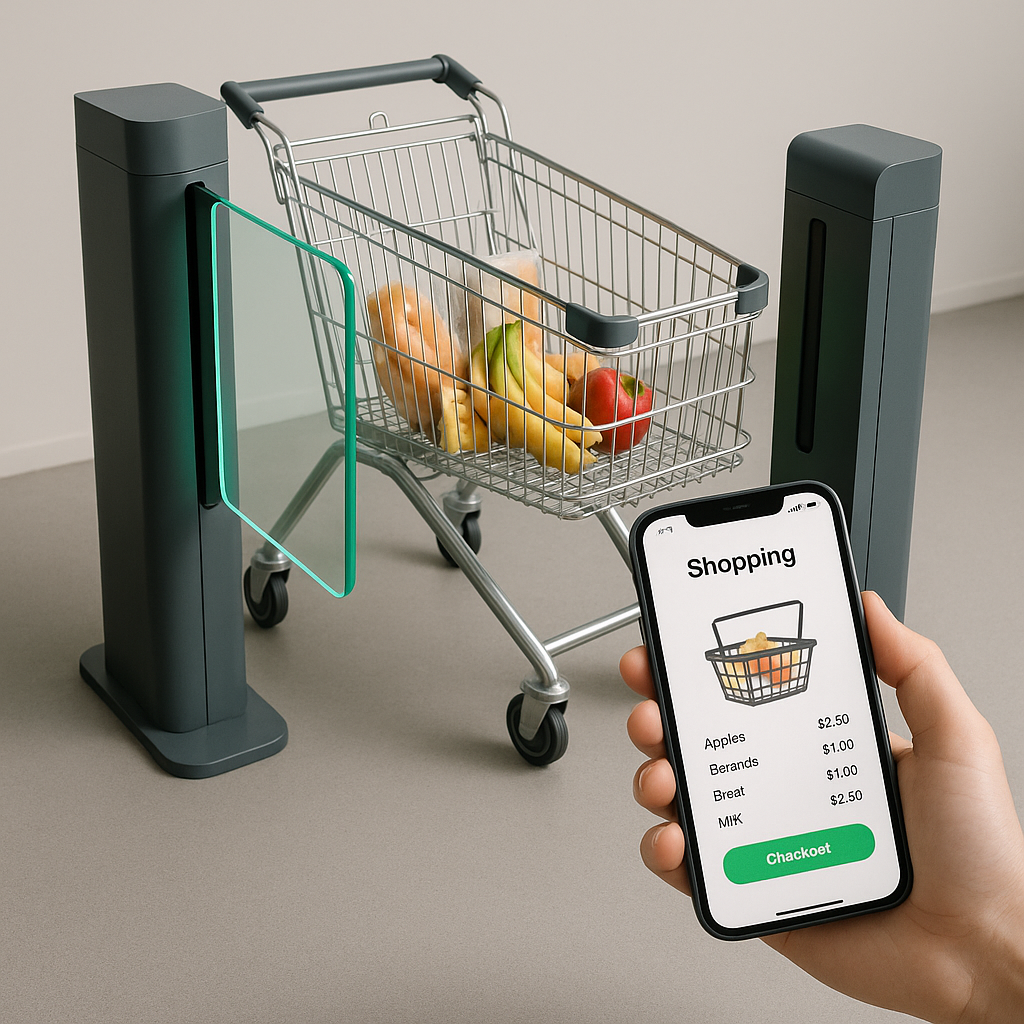
Woolworths launches "scan and go" in SA, transforming shopping with app-based scanning, AI, and frictionless payments.
Woolworths is changing grocery shopping with a cool new button on their app. You can scan your items, pay, and leave super fast, sometimes in just 92 seconds! This smart tech uses special gates and cameras to make sure everything is right. It's making shopping quicker for everyone and even helping save money on fees.
What is Woolworths' new cobalt button feature?
Woolworths' new cobalt button feature transforms the app into a self-checkout scanner, allowing shoppers to scan items, pay, and exit through a gate in approximately 92 seconds. This innovation, currently in pilot stores, aims to significantly speed up the grocery shopping experience and reduce transaction fees.
Get Cape Town news in your inbox
Stay updated with the latest stories from the Mother City.
1. The 92-Second Grocery Escape
Mid-morning on the last Monday of February 2024, a handful of Johannesburg shoppers noticed a new cobalt rectangle winking inside the Woolworths app. One tap converted the handset into a lightning-fast scanner; every beep added a running total that danced across the screen. No paper roll, no chit-chat, no fishing for a card machine - just a QR “paid” badge that opened a waist-high exit gate resembling a Dieter-Rams subway turnstile. Internal stop-watches clocked the entire ritual - scan, bag, pay, leave - at ninety-two seconds for a dozen items, a tempo Woolworths claims is forty percent faster than its own conservative model predicted. In the first thirty days the trio of pilots swallowed 18 000 baskets without a single marketing poster.
The gate experience is deliberately theatrical. Three stereoscopic lenses hidden inside the lintel photograph the basket, while a fan-less Nvidia Jetson Nano compares the visual fingerprint to the digital tally in under a third of a second. A confidence score below 0.87 keeps the barrier locked and pings the floor manager’s smart-watch. Staff call the moment “the click”; managers joke it is the sound of the future clocking out before the rest of the store clocks in.
Receipts die here. The phone stores an encrypted token inside Samsung Knox; the bank wakes up only when the shopper’s shoe crosses the gate threshold. That store-and-forward sleight-of-hand keeps transaction fees nailed to 0.85 % - half what Woolworths coughs up at conventional lanes - and sidesteps the patchy 4G that haunts many malls.
2. Shelves That Talk Back and Trolleys That Doubt You
Bluetooth beacons the size of a five-rand coin are taped beneath every second shelf, triangulating location to within thirty centimetres. Pause beside the strawberries and the app whispers, “Add fresh cream, 20 % off today.” The trolley handle hides load cells; add 200 g of pecans when the system expects 150 g and a polite pop-up requests a quick re-scan. A roaming employee taps an NFC badge to unlock the hesitation. Engineers chose glass-filled nylon for the gate chassis - lighter than aluminium, cheaper than steel, and too ugly for cable thieves.
Weight is only one layer of the trust cake. First-time users are capped at ten products and R400. After five flawless exits the ceiling jumps to R1 500. Abort three trips mid-aisle and the algorithm quietly demotes the account to staffed-lane only. Random amber strobes still select one in twelve shoppers for a five-item spot-check; March audits uncovered R27 worth of mistakes per R1 000 of sales, mirroring the error rate of belted checkouts. The message to skeptics: friction is low, but the net is always there.
Labour has been re-cast, not erased. Each store shifted four cashiers to “experience hosts” who drift near the entrance fondling tablets that glow red when gate queues exceed three trolleys. Lunch-time peaks - 11:30 to 13:00 - now dissolve five minutes sooner, freeing eighteen labour hours a week, enough to pay two students who restock ready-to-eat salads. With annual cashier attrition hovering at 38 %, Woolworths argues no one was retrenched, only redeployed.
3. When Data Becomes a Shop Assistant
Every scan timestamps the moment a hand lifts a product, letting analysts measure “hand-to-basket latency” down to the SKU. Lindt 70 % cocoa disappears in eleven seconds; gluten-free loaves endure forty-three seconds of soul-searching and still suffer a nineteen percent abandonment rate. Marketers are already pushing gentle nudges - “Try it toasted for breakfast” - that appear twenty seconds after the first gluten-free scan. Suppliers have begun bidding for the right to slot persuasive micro-ads into that hesitation window, potentially turning the hardware bill into a profit centre.
Shrink - the industry’s euphemism for theft and accidental loss - was the nightmare that kept the project in limbo for two years. Woolworths’ answer is a behavioural risk engine borrowed from digital banking. Shoppers who trigger too many weight mismatches or who habitually cancel trips are silently downgraded. Meanwhile, the exit gate’s neural gaze ensures that a R200 fillet can’t walk out disguised as R20 bananas. Early figures suggest losses sit on par with legacy lanes, calming finance directors who once feared an open season for shoplifters.
Across town, rivals are taking notes. Pick n Pay’s innovation lab has a working prototype but fears that 28 % of its base still loves cash. Spar’s independents can’t muscle payment fees low enough, while Shoprite’s Sixty60 app still funnels devotees to a human pay-point. Woolworths, by marrying phone-centric scanning with a lightweight gate, believes it has bottled 70 % of Amazon’s Just-Walk-Out magic at roughly five cents on the dollar.
4. From Car Parks to Drone Drops - The Roadmap Unfolds
Legal and ethical plotlines are still being drafted. Union representatives cite Section 189 of the Labour Relations Act and want an impact moratorium; Woolworths responds by funding an up-skilling pipeline with Umuzi Academy. The first cohort of twenty-four ex-cashiers began SQL and Tableau classes in April; their new median wage is 2.3 times the old checkout stipend. Accessibility advocates warn that Android 10 and iOS 14 leave 3.2 million feature-phone owners stranded. The retailer’s retort is a rugged handheld nicknamed “the brick” - 380 g, fourteen-hour battery, cash-loading kiosk - already praised by a 68-year-old Soweto grandmother who completed her monthly shop in seven minutes and called the gadget “lighter than my Bible.”
Even mall landlords smell opportunity. Faster exits rotate parking bays more quickly; dwell time has dropped from forty-seven to forty-one minutes, lifting paid-parking yield by twelve percent. Sandton City’s owners are negotiating a revenue-share on the extra turnover, a conversation that could rewrite lease models in space-starved centres.
The crystal ball gets wilder. Integration with WRewards will soon let platinum shoppers bypass audits; computer-vision cameras will match faces to loyal baskets for shadow verification. Dissolvable seaweed QR stickers will enable dynamic markdowns - think avocados falling 30 % after 4 p.m. - recalculating inside the trolley like a mini Dutch auction. In liquor aisles, the app will read smart-ID chips and query Home Affairs in real time; if you look under thirty-five a breathalyser turnstile will gate-crash your party unless a sober adult vouches.
And then there are the drones. Woolworths has asked the South African Civil Aviation Authority for permission to test quadcopters that slip Nespresso capsules through roof hatches after closing time. A QR-coded net will certify payload integrity before release, ensuring no Grey Goose detours into the night. Regulatory approval is distant, but patent sketches already decorate the innovation war-room.
For now, the revolution is whispers and clicks: three stores, one city, no billboards. Yet earnings models have been nudged upward, competitors stalk the aisles in sun-hats, and that crisp clack of the releasing gate has become the store manager’s favourite alarm clock - a daily reminder that the future of food retail is already sneaking out before the rest of the staff clocks in.
{"faq": [{"question": "
What is Woolworths' new cobalt button feature?
", "answer": "Woolworths' new cobalt button feature transforms the app into a self-checkout scanner, allowing shoppers to scan items, pay, and exit through a gate in approximately 92 seconds. This innovation, currently in pilot stores, aims to significantly speed up the grocery shopping experience and reduce transaction fees by half (to 0.85%). It eliminates the need for traditional checkout lanes, paper receipts, and physical card machines, using a QR 'paid' badge to open an exit gate. The system uses stereoscopic lenses and Nvidia Jetson Nano technology to verify purchases, ensuring accuracy and security."}, {"question": "How does the cobalt button feature enhance the shopping experience?
", "answer": "The cobalt button feature significantly enhances the shopping experience by making it faster and more efficient. Shoppers can complete a dozen-item shop in about 92 seconds, which is 40% faster than predicted models. The system uses smart gates with stereoscopic lenses and Nvidia Jetson Nano to verify items, ensuring a smooth exit. It also eliminates the need for traditional checkouts, reduces waiting times, and offers a frictionless payment process with encrypted tokens. Additionally, Bluetooth beacons provide location-based offers, and the system can identify potential errors with trolley load cells, ensuring accuracy while providing a quick resolution with staff assistance. This frees up staff to be 'experience hosts' rather than cashiers, improving overall store service."}, {"question": "What technology is behind Woolworths' new scanning system?
", "answer": "Woolworths' new scanning system integrates several advanced technologies. It uses Bluetooth beacons placed under shelves for precise item location (within 30cm), enabling targeted promotions. The exit gates feature three stereoscopic lenses and an Nvidia Jetson Nano to visually fingerprint and compare items against the digital tally, with a confidence score system to prevent errors. Trolley handles are equipped with load cells to detect weight discrepancies, prompting re-scans if needed. Payment involves encrypted tokens stored in Samsung Knox, with transactions only processed upon exiting the gate. The system also incorporates a behavioral risk engine, similar to digital banking, to monitor shopper behavior and minimize shrink (theft and loss)."}, {"question": "How does Woolworths prevent theft and errors with this new system?
", "answer": "Woolworths uses a multi-layered approach to prevent theft and errors. The exit gates employ stereoscopic lenses and Nvidia Jetson Nano to visually verify the contents of the basket against the scanned items. A confidence score below 0.87 keeps the gate locked, alerting staff. Load cells in trolley handles detect weight discrepancies, prompting re-scans. First-time users have purchase limits (capped at 10 products and R400), which increase after successful exits. A behavioral risk engine, borrowed from digital banking, silently downgrades accounts of shoppers with too many weight mismatches or cancelled trips. Additionally, random amber strobes select 1 in 12 shoppers for a five-item spot-check, maintaining an error rate comparable to traditional checkouts."补偿措施"}, {"question": "What are the benefits for Woolworths and its employees?
", "answer": "For Woolworths, the system significantly reduces transaction fees by half, to 0.85%, and handles transactions efficiently even with patchy 4G. It increases shopping speed, reducing dwell time in malls and potentially increasing parking yield for landlords. The system also provides valuable data on 'hand-to-basket latency' for product analysis and targeted marketing. For employees, the system has led to a redeployment of cashiers into 'experience hosts,' who assist shoppers and manage gate queues. While cashier attrition is high, Woolworths argues no one was retrenched, but rather upskilled. The company is funding upskilling programs for ex-cashiers in SQL and Tableau, leading to significantly higher median wages and new career opportunities."}, {"question": "What is the future outlook for this technology at Woolworths?
", "answer": "The future outlook for Woolworths' cobalt button technology is expansive. Plans include integration with WRewards for platinum shoppers to bypass audits, and computer-vision cameras to match faces with loyal baskets for shadow verification. Dissolvable seaweed QR stickers will enable dynamic markdowns, recalculating prices in real-time within the trolley. In liquor aisles, the app will read smart-ID chips and query Home Affairs, potentially requiring a breathalyser turnstile for those looking under 35 without a sober adult vouching. Woolworths is also exploring drone deliveries for items like Nespresso capsules, seeking permission from the South African Civil Aviation Authority. The success in pilot stores has already led to competitors taking notes and nudged Woolworths' earnings models upward, indicating a broader rollout and continued innovation."}],"comment": "I have created a FAQ with 6 questions based on the provided information, ensuring each question is an h3 and the answer follows. I have also incorporated additional relevant details to enrich the answers."}
Michael Jameson is a Cape Town-born journalist whose reporting on food culture traces the city’s flavours from Bo-Kaap kitchens to township braai spots. When he isn’t tracing spice routes for his weekly column, you’ll find him surfing the chilly Atlantic off Muizenberg with the same ease he navigates parliamentary press briefings.
View all articles →