
King Price Derby Series to showcase the best of schoolboy rugby
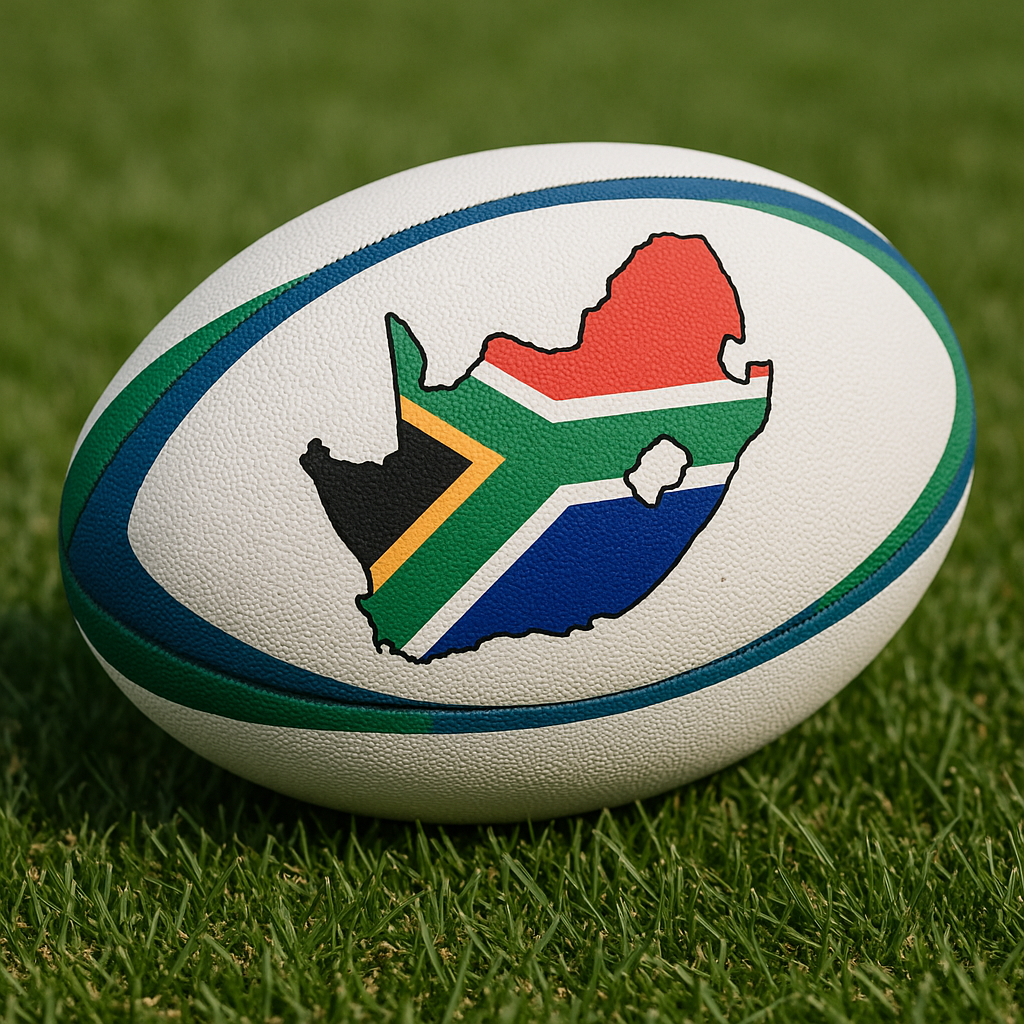
The King Price Derby Series 2026 re-wires SA rugby's grassroots with a 16-Saturday blockbuster of derbies, tech, and community.
Get ready for the King Price Derby Series 2026, a super exciting school rugby event in South Africa! Forty-seven schools will play 45 big games over 16 Saturdays, turning every match into a national show. They'll use cool tech to help players and even plant trees to be kind to the Earth. This isn't just a few games; it's the whole 2026 rugby season, changing everything for young players and their schools. It's going to be a massive, unforgettable rugby party!
What is the King Price Derby Series 2026?
The King Price Derby Series 2026 is a groundbreaking South African schoolboy rugby event featuring 45 derbies over 16 Saturdays. This series, involving 47 schools, aims to transform school rugby by providing extensive media coverage, financial support to host schools, and using advanced technology for player analysis and environmental impact, making it the entire 2026 season for participating schools.
Get Cape Town news in your inbox
Stay updated with the latest stories from the Mother City.
Part One: A New Beat for Saturday Afternoons
Between March 14 and August 29, 2026, South African school fields will become national theatres. Sixteen Saturdays, no gaps, no replays - just live, edge-of-seat storytelling told through 45 derbies, 90 teams and roughly 2 700 teenagers. Forty-seven schools have signed on, promising to funnel every ounce of their spirit into kick-off slots frozen at 14:00, 15:30, 18:00 and 19:30, turning ordinary weekends into four-act festivals of colour, sound and sweat.
SuperSport Schools (channel 216 and the zero-rated app) will beam every tackle home, yet the true disruption sits in the “linear-to-park” pipeline. Within an hour and a half of the final whistle, each try, turnover and yellow card is clipped, captioned in six languages and fired back to the host school’s social feeds. The 15-year-old prop in Parys no longer has to wait for Monday’s video session; he can scroll through his own scrum sequence that same night, voice-note critique and all.
The calendar refuses to bow to provincial borders. From the Kalahari to the KZN midlands, the timetable stitches rivalries into one coherent plot. No other extra-mural code will own the national conversation for five straight months. Universities have already moved their internal league dates; provincial unions cancelled age-group weeks. The Derby Series is not an add-on - it is the 2026 season.
Part Two: Where Gate Money Meets Grassroots
Rugby Saturdays have always smelled of boerewors and coffee; King Price wants them to smell of opportunity. Each host receives a six-figure broadcast fee, an OB van that meets broadcast specs, eight referees miked up to broadcast standard and a performance analyst who delivers a post-match dossier thick enough for a URC coach. In exchange the school signs a 12-month “open-gate” pact: first-team park only, ticket cap at R30, 200 seats ring-fenced for nearby primary schools.
The ripple is instant. Chair-rental aunties, ice-cream bikes, booster-club raffles and township food carts converge. During the 2025 pilots, hostel enquiries at participating schools spiked 47 % within two months. One Mpumalanga principal tracked R1,3 million in local spending on a single Saturday - more than the school’s annual rugby budget. The series calls it “micro-economics in a 30 m radius”.
Even the losing side wins. Visiting schools keep their broadcast fee, receive raw GPS data and leave with a highlights package before the bus hits the highway. No one pays for video analysts or translators; the series budget swallows those costs. The aim is to kill the old model where only the elite could afford marketable content. In 2026, marketing clout is a birthright for every participant.
Part Three: Super-Derbies - The Blockbusters within the Blockbuster
Five fixtures get the 19:30 spotlight, double scheduling and National A-panel referees. Paarl Boys’ High and Paarl Gim already sell 26 000 tickets in 11 minutes; in 2026 they play under temporary 38 m light towers so drones can swoop like it’s a Champions Cup night final. HTS Middelburg and Hoërskool Middelburg - 1,8 km apart - carry a 2 m wooden cross to the loser's gate on Monday; the broadcaster will live-stream the walk of shame at 07:00.
Upington’s Kalahari derby expects 34 °C at kick-off. Sports physicians from the South African Institute for Sport will trial a heat-index rule: rolling interchanges every ten minutes, no questions asked. In Johannesburg, King Edward VII and Jeppe celebrate 130 years of unbroken enmity. KE VII will run out in a siege-of-Mafeking commemorative strip; Jeppe’s badge is hand-beaded by inmates at Leeuwkop prison, highlighting their joint outreach.
The smallest super-derby packs the biggest linguistic punch. Voortrekker and Witteberg - combined learner body under 800 - have birthed 18 professionals since 2010. Their 23 May clash will be called entirely in isiXhosa and Sesotho by UFS commentary students who earn academic credit for every accurate metaphor. Expect phrases like “umlilo ojikelezileyo” (fire that encircles) when a scrum wheels.
Part Four: Tech, Trees and the Tremor that Ends It All
Every shoulder blade carries a StatsSports Apex unit. By August the cloud will store 1,2 million adolescent kilometres, 42 000 impacts above 10 g and 9 000 scrums - fuel for World Rugby’s longitudinal study on early specialisation. Female officials step into the spotlight too: each super-derby fields a woman as lead assistant and TV match official, products of the “Girls Off-Side” programme aiming to double South Africa’s Level-III pipeline in one season.
The scoreboard is now a carbon ledger. Each try triggers an automated blockchain contract that funds 38 kg of CO₂ offset - equivalent to one 60-second graphic, four cameras and a drone. A spekboom cutting goes into the Baviaanskloof within minutes; at 5,6 tries a match, 2,5 ha of thicket should sprout by September. Even betting is policed: Sportradar scrapes 200 micro-markets and players’ emoji habits; a “praying hands + money bag” string prompts an integrity time-out, rugby’s first.
When the last whistle blows in Paarl on 29 August, 47 bronze bells will ring at once. Seismologists wait with sensors: if the combined waves nudge 0,2 on the Richter scale, the country will have achieved its first human-made rugby earthquake. Thirty boys, one oval ball and a rectangle of grass - set to move a nation, literally.
What is the King Price Derby Series 2026?
The King Price Derby Series 2026 is a groundbreaking South African schoolboy rugby event featuring 45 derbies over 16 Saturdays. This series, involving 47 schools, aims to transform school rugby by providing extensive media coverage, financial support to host schools, and using advanced technology for player analysis and environmental impact, making it the entire 2026 season for participating schools.
When and where will the King Price Derby Series 2026 take place?
The series will run for 16 consecutive Saturdays between March 14 and August 29, 2026. Matches will be hosted at various school fields across South Africa, with kick-off times scheduled for 14:00, 15:30, 18:00, and 19:30. The geographic reach extends from the Kalahari to the KwaZulu-Natal midlands, ensuring a nationwide presence and impact.
How will technology be used in the King Price Derby Series 2026?
Advanced technology will play a crucial role. Every tackle and major event will be clipped, captioned in six languages, and sent to host schools' social media within 90 minutes of the final whistle, allowing players to review their performance almost immediately. Each player will wear a StatsSports Apex unit to collect data on kilometers covered, impact forces, and scrums, contributing to a World Rugby study on early specialization. Additionally, drones will be used for enhanced broadcast coverage, especially during super-derbies.
What financial and logistical support will host schools receive?
Host schools will receive a six-figure broadcast fee and an OB (Outside Broadcast) van that meets broadcast specifications. They will also benefit from eight referees miked up to broadcast standards and a performance analyst providing a detailed post-match dossier. In return, schools must sign an “open-gate” pact, capping first-team park tickets at R30 and reserving 200 seats for nearby primary schools. These arrangements aim to boost local economies around the host schools.
What are the 'Super-Derbies' and their unique features?
Five select fixtures are designated as 'Super-Derbies,' receiving prime 19:30 spotlight, double scheduling, and National A-panel referees. These matches feature unique elements such as temporary 38m light towers for drone visibility (e.g., Paarl Boys' High vs. Paarl Gim), traditional rivalry rituals (HTS Middelburg vs. Hoërskool Middelburg), and innovative playing conditions like the heat-index rule with rolling interchanges (Kalahari derby). Some will even have commentary entirely in indigenous languages, such as isiXhosa and Sesotho.
How is the King Price Derby Series addressing environmental and social responsibility?
The series integrates environmental and social initiatives. Each try scored triggers an automated blockchain contract funding 38 kg of CO₂ offset, leading to the planting of Spekboom cuttings. Female officials will be prominent, with a woman serving as lead assistant and TV match official in every 'Super-Derby' as part of the 'Girls Off-Side' program. Socially, visiting schools receive broadcast fees and GPS data, and integrity is maintained through Sportradar monitoring of betting markets and player social media for suspicious activity, prompting 'integrity time-outs' if needed.
Thabo Sebata is a Cape Town-based journalist who covers the intersection of politics and daily life in South Africa's legislative capital, bringing grassroots perspectives to parliamentary reporting from his upbringing in Gugulethu. When not tracking policy shifts or community responses, he finds inspiration hiking Table Mountain's trails and documenting the city's evolving food scene in Khayelitsha and Bo-Kaap. His work has appeared in leading South African publications, where his distinctive voice captures the complexities of a nation rebuilding itself.
View all articles →