
Panama silence Cape Town crowd with late winner
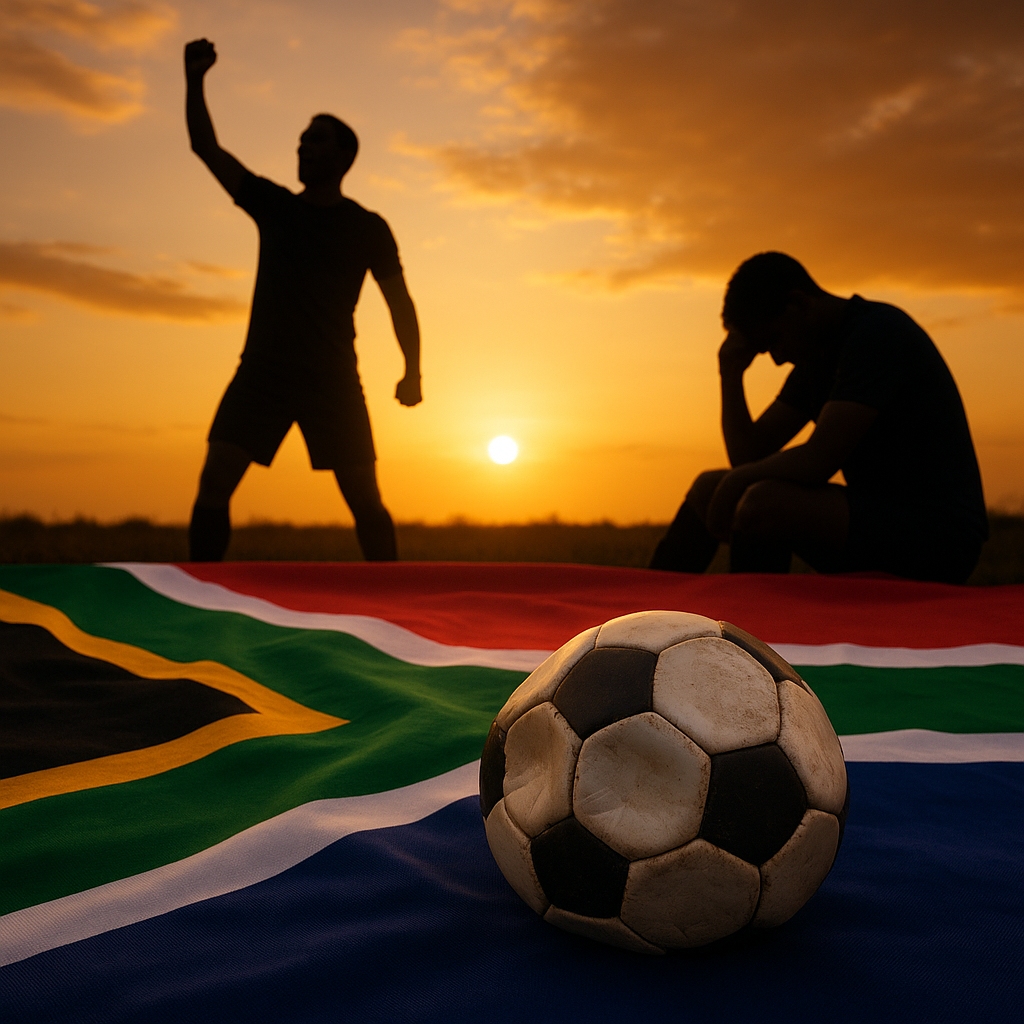
Bafana Bafana's Cape Town friendly against Panama ends in a 2-1 defeat, highlighting the narrow margins between promise and product.
Cape Town buzzed with excitement as 52,000 fans filled DHL Stadium, dreaming of Bafana Bafana's 2026 World Cup glory. But Panama, ranked much higher, played tough and scored first, silencing the roaring crowd. South Africa fought back with a stunning goal, only to lose 2-1 in the end. It was a tough lesson, showing that even with huge support, victory takes more than just spirit.
What was the outcome of the Bafana Bafana vs. Panama football match in Cape Town?
Panama defeated Bafana Bafana 2-1 in a mid-week exhibition match in Cape Town. Despite South Africa's strong crowd support and promising possession, Panama secured the win with goals in the 63rd and 83rd minutes, while Bafana Bafana scored their only goal in the 75th minute.
Get Cape Town news in your inbox
Stay updated with the latest stories from the Mother City.
The City That Turned Green and Gold
Cape Town’s DHL Stadium normally trembles on rugby weekends, yet Tuesday delivered a different surge: 52 000 seats disappeared in record time, the quickest wipe-out for any Bafana Bafana exhibition since the country returned to world football. By dusk a cool front had muffled the notorious south-easter, and the Fan Walk smelled of braai smoke while brass bands traded licks with gospel choirs. Under the lights the arena became a living flag: green, gold, red, blue, white. The stadium host bellowed that nothing about the evening was a drill - it was a sneak peek at 2026. After ten years of almosts, South Africa senses the planet’s biggest stage is within reach, and Panama - sixty-one rungs up the rankings - was the exam no one dared fail.
Ticket holders arrived hours early, jerseys flapping like national sails. Restaurants along the forecourt ran out of boerewors rolls before the sun set; street drummers kept tempo for spontaneous sing-alongs. Security staff admitted they had not seen this colour surge since the 2010 World Cup. Children wore face paint that mixed the Springbok and Bafana palettes, proof that summer still belongs to whoever seizes the moment. Inside, every light-show flash met a thunderclap of vuvuzelas, the collective lung power promising belief even before the first pass.
The anticipation weighed so heavily that even the Panama delegation paused their warm-up to film the stands. Coaches from other African nations, in town for a technical workshop, took notes on crowd dynamics instead of tactical boards. One FIFA observer quietly logged attendance figures, aware that CAF will soon inspect South Africa’s readiness for joint bids. Sponsors flashed messages on ribbon boards: “This is more than a game - this is a statement of intent.” By kick-off the temperature had dropped but the energy spiked; a single roar rolled from goal-line to goal-line like a thunderstorm trapped indoors.
Early Jitters and Tactical Tweaks
The opening scene refused to follow the home script. Rather than retreat into a shell, Panama hunted high, surrounding Bafana’s midfield pivot and forcing Ronwen Williams to roll dice with short distribution. Yellow shirts swarmed Mvala and Kekana, turning each attempted build-up into an anxious clearance. Makgopa received punts with two defenders already pinching his arms, and for a quarter-hour South Africa’s passing rhythm looked like a scratched CD. Concacaf’s 45th-ranked side showed zero deference; they pressed as if the result counted for World Cup points.
Midway through the half, Sphephelo Sithole solved the riddle by slipping between the centre-backs, instantly crafting a temporary back three. The move released overlapping full-backs Mobbie and Modiba, stretching Panama until right-back César Blackman screamed for winger Yoel Bárcenas to retreat. The tweak produced the night’s first billboard moment: a seventeen-pass sweep that began on Williams’ gloves and ended with Hlongwane side-footing a whisker wide. Fifty-two thousand lungs exhaled in unison, the groan so deep it rattled the advertising boards. Coaches on both benches scribbled the same note - space now lived on the flanks.
Hugo Broos paced his technical rectangle like a professor who realised the exam paper carried the wrong questions. At the break he sacrificed captain Williams - hamstring tightness plus a chance to test twenty-year-old Renaldo Leaner, Pretoria born, Jamaican heritage through his grandparents. Zakhele Lepasa made way for Evidence Makgopa, the lanky striker Broos privately labels “my Origi - quiet all night, deadly once.” The revised blueprint morphed 4-2-3-1 into 3-4-3, with Zwane sliding into the half-space as an extra interior playmaker. The dressing-room walls vibrated with instructions: compress less, switch more, trust the kid between the sticks.
Lightning, Silence, and a Mother's Touch
Panama struck first and froze the carnival. On 63 minutes Bárcenas’ corner found José Luis Rodríguez, whose downward header spilled off Leaner’s fingertips to José Córdoba; the defender smashed the ricochet into the roof. The ground fell into a vacuum - vuvuzelas froze mid-blast, drums missed a beat. Córdoba danced a short reggaeton shuffle that felt equal parts celebration and apology, aware he had silenced a continent-sized choir. Broos spun on his heel, already rehearsing substitutions in his head.
The cavalry arrived wearing pace and ambition. Appollis, GladAfrica assist king, tucked inside to drag Blackman with him; Maseko, once a 10.6-second schoolboy sprinter, hugged the chalk and asked questions Murillo could not answer. Suddenly Mosquera had work - first pawing Makgopa’s downward header, then watching Maseko’s curling missile kiss the frame. The crowd reignited, first a murmur, then a volcano. When the equaliser landed in the 75th, it arrived like a script no Hollywood executive would dare buy: centre-back Mbokazi strode forward, noticed no taker, and unleashed a 32-metre rocket that brushed the bar’s undercarriage. Trumpets in Section 107 spelled his surname in syncopation; his mother, domestic worker for the day on unpaid leave, pressed a crumpled R50 into his palm - “for taxi fare” - a moment beamed worldwide before the restart ended.
But football punishes open hearts. In the 83rd Bárcenas threaded substitute Cecilio Waterman between two centre-backs; the striker lifted the ball over Leaner before it trickled over the line with apologetic slowness. The stadium heard the referee’s whistle echo off concrete. Panama shifted to 4-1-4-1, Pérez playing lone guard dog while nine teammates parked the bus. Makgopa’s late flick forced Mosquera into a sprawling save, and a last counter saw Bárcenas drag wide, but the scoreboard locked at 2-1. When whistles blew, yellow jerseys bounced toward 200 travelling fans; green shirts lay scattered like fallen leaves, consoled by applause that sounded more lullaby than lashing.
Numbers, Context, and a Father's Whisper
Statisticians handed Broos a bittersweet dossier: 58% possession, 14 shots, seven corners. Panama countered with 42%, nine shots, three corners. The column that matters read 2-1, slim yet emphatic. Panama’s XI averaged 26.4 years and eight World Cup veterans; South Africa’s 24.1 years and two. The chasm is shrinking, but nights like this underline how slender the ledge between promise and payoff can be. Belgium’s 1980 European finalist now faces a 09:00 video session, already sketching March plans against Algeria or Saudi Arabia - similar borderland citizens of the global order.
Across Africa the scoreboard offered perspective: Morocco 0-0 Mauritania, Senegal 1-0 Iran, Tunisia humbled by Comoros, Ghana surviving Madagascar. Rankings wobble; there are no free lunches, only tutorials. Inside the tunnel a boy in an oversized Modiba shirt held a cardboard prophecy - “2026 IS OURS” - but autographs never came. His father knelt, recalling a 1993 loss to Angola that preceded France ’98 qualification. History is a thin blanket, yet sometimes the only warmth available when the floodlights dim. Cleaners swept away popcorn and plastic horns, security gently herded dreamers toward the exits, and Cape Town’s night air carried both salt and possibility - reminders that dress rehearsals end, but the drama is only beginning.
[{"question": "What was the outcome of the Bafana Bafana vs. Panama football match in Cape Town?", "answer": "Panama defeated Bafana Bafana 2-1 in a mid-week exhibition match in Cape Town. Despite South Africa's strong crowd support and promising possession, Panama secured the win with goals in the 63rd and 83rd minutes, while Bafana Bafana scored their only goal in the 75th minute."}, {"question": "How many fans attended the match and what was the significance of the attendance?", "answer": "52,000 fans filled DHL Stadium for the match. This was a record-breaking attendance for a Bafana Bafana exhibition since South Africa's return to world football, highlighting the immense national excitement and anticipation for the 2026 World Cup."}, {"question": "What was the atmosphere like in Cape Town and at the stadium before and during the match?", "answer": "The city buzzed with excitement. The Fan Walk was filled with braai smoke and music from brass bands and gospel choirs. The stadium itself became a 'living flag' with green, gold, red, blue, and white colors. Fans arrived early, restaurants ran out of food, and street drummers led spontaneous sing-alongs. The atmosphere was described as a 'statement of intent' for South Africa's 2026 World Cup aspirations, with vuvuzelas creating a thunderous sound."}, {"question": "What tactical adjustments did South Africa make during the game?", "answer": "Initially, Panama's high press caused issues for Bafana Bafana. Mid-half, Sphephelo Sithole's movement created a temporary back three, releasing full-backs and creating space on the flanks. At halftime, coach Hugo Broos made substitutions, including introducing 20-year-old Renaldo Leaner and changing the formation from 4-2-3-1 to 3-4-3 to improve playmaking and attacking options."}, {"question": "Who scored the goals in the match?", "answer": "Panama scored first in the 63rd minute through José Córdoba. South Africa equalized in the 75th minute with a stunning 32-meter goal from centre-back Mbokazi. Panama then secured their win in the 83rd minute with a goal from substitute Cecilio Waterman."}, {"question": "What lessons did Bafana Bafana learn from this match according to the article?", "answer": "The match served as a 'tough lesson,' demonstrating that 'victory takes more than just spirit,' even with massive fan support. Despite strong possession and numerous shots, the result highlighted the gap between promise and payoff, especially against a higher-ranked and more experienced team. It underscored the need for continued tactical development and resilience as South Africa prepares for potential 2026 World Cup qualification."}]

Isabella Schmidt is a Cape Town journalist who chronicles the city’s evolving food culture, from Bo-Kaap spice merchants to Khayelitsha microbreweries. Raised hiking the trails that link Table Mountain to the Cape Flats, she brings the flavours and voices of her hometown to global readers with equal parts rigour and heart.
View all articles →