
Red Bull Dune Dusters returns to Atlantis
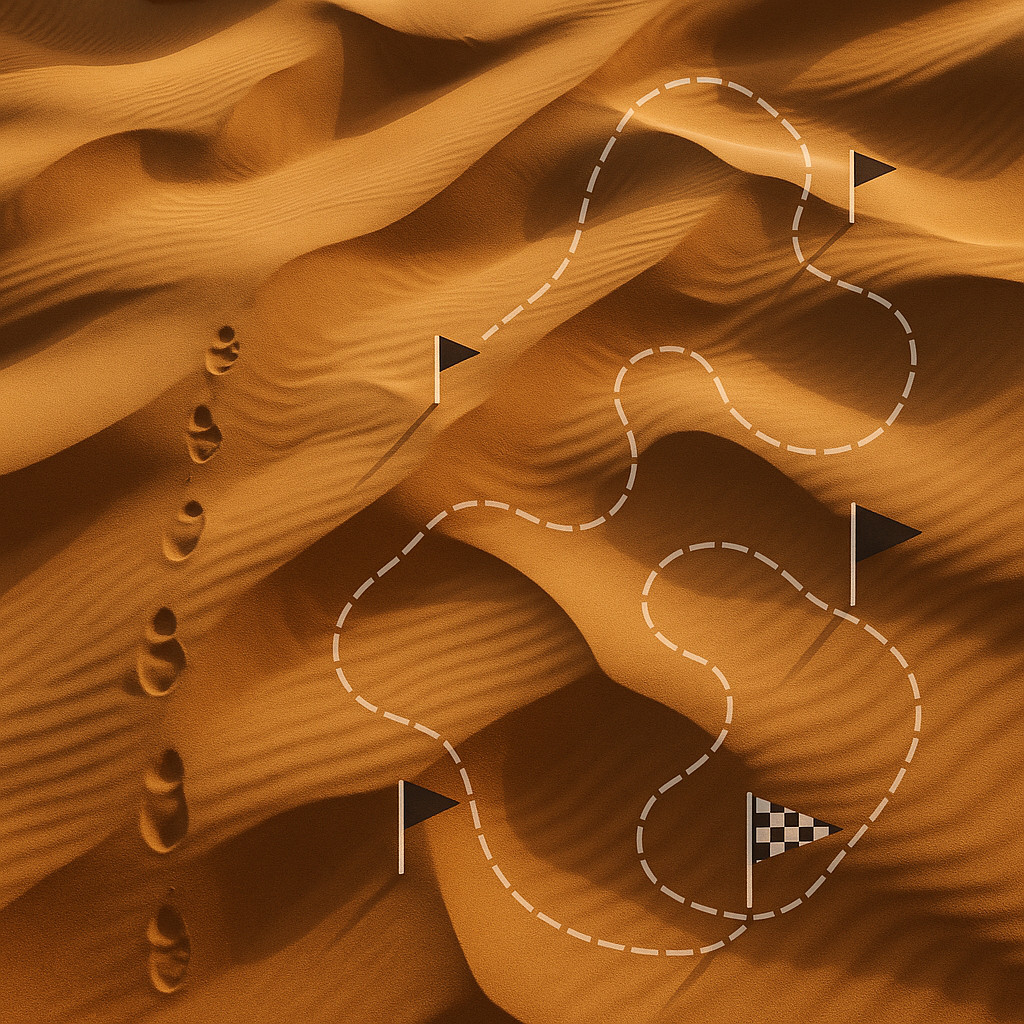
Explore the Red Bull Dune Dusters: a deep dive into the science, history, and future of sand-based endurance sports.
Red Bull Dune Dusters: Engineering, Evolution and Next-Frontiers of Sand Endurance Racing
Get ready for Red Bull Dune Dusters! This wild race started with soldiers training in South Africa's deep sand. Every day is a new challenge, as the wind redraws the 5 km course. It pushes athletes to their very limits, needing smart plans and special gear. Now, people from all over the world can join in this tough, exciting, and spectator-friendly competition!
What is Red Bull Dune Dusters?
Red Bull Dune Dusters is an extreme sand endurance race that evolved from military training in South Africa. Athletes navigate a constantly changing 5 km sand course, redrawn daily due to shifting dunes. It tests physical limits, requiring strategic pacing and specialized gear, and now includes global qualifiers for a challenging, spectator-friendly competition.
Get Cape Town news in your inbox
Stay updated with the latest stories from the Mother City.
1. The Living Laboratory Beneath Your Shoes
The Atlantis dune belt is a 27-kilometre ribbon of Pleistocene sand that the infamous “Cape Doctor” wind keeps shoving inland. Every particle is a near-perfect 0.2–0.8 mm quartz marble, polished for millennia. That roundness is why your heel drops 6–12 cm with every strike - three times deeper than on a beach at low tide. The rolling resistance coefficient jumps to 2.3 × asphalt, forcing the calf’s Type-IIa fibres to fire 34 % more often. In effect, the slope becomes a giant outdoor force plate; any hip drop, worn-out foam, or lazy glute is broadcast in real time.
Geologists love the place because a single storm can relocate an entire slip-face overnight. Exercise physiologists love it for the same reason: the terrain is a moving target, so athletes must improvise rather than memorise. Wind-packed “compression lines” feel almost like hard-pack trail, while lee-side bowls swallow your foot past the ankle. One misread flag colour and your heart-rate spikes five beats in ten metres.
Race morning starts at 03:00 when route designer Pierre van der Merwe launches a LiDAR drone. By measuring grain density in the dark, he can thread the next day’s 5 km loop through the firmest corridors. Slip-faces migrate up to 70 cm in twelve hours; ignore the update and you’ll send 90 runners into knee-deep sugar. The atlantis field is therefore the only endurance course on Earth that is redrawn while you sleep.
2. From Military Punishment to Global Broadcast
In 1984, South African paratroopers used the dunes behind Cape Town as a selection gate. Recruits hauled 20 kg sandbags up a 60 m face twenty times before breakfast; failure meant you never jumped out of a plane. Word of the “Dune 20” torture leaked to University of Cape Town runners, who sneaked onto the range for off-season strength. By 2009, local crew MuddyBoots staged an informal 4 km time-trial they cheekily called “SandSprint”.
Red Bull’s talent scouts noticed the Instagram clips in 2017. Within weeks, physiologists landed with portable metabolic carts and measured oxygen-cost curves across different grain densities. They discovered the venue could sustain a spectator-friendly elimination format without turning into a death march. The first branded edition in 2018 hosted 120 brave souls; the 2026 cap is set at 550 to keep erosion visible only to satellites, not television.
Media traction grew when the series added pop-up qualifiers: a vertical kilometre on Muizenberg Beach, a slag-heap dash in Kimberley, and a secret TikTok cipher that releases GPS coordinates 48 h before go-time. Wildcard winners earn an orange front-row bib that psych studies value at nine seconds over 5 km. What began as a military secret is now a three-continent hunt for sand-worthy legs.
3. How the Body Loses - and Wins - the Sand Chess Match
Energy economy falls off a cliff on dunes: every extra kilometre costs 7 % more oxygen, double the decay rate of a flat road 10 km. Lactate threshold arrives at 81 % of your asphalt VO₂ max, so even elites must start conservatively. Heart-rate drift adds 9–11 bpm by the third lap, yet perceived effort rockets from 15/20 to 18/20 despite a microscopic 4 % increase in speed.
To keep the field honest, organisers hand each athlete a “sand-factor” cheat-sheet: subtract 25 % from your road 5 km personal best, then divide by 1.35 to predict lap split. Drift outside the target by more than 8 % and you enter the elimination funnel. The protocol turns pacing into a public math exam while 500 people gasp for air.
Recovery tricks evolve just as fast. Frozen rooibos sachets appear at the start of the 11:00 repechage when sand surface tops 42 °C - hot enough to fire pain receptors. CamelBak labs proved that slipping a 500 ml flask inside a UV shirt sleeve keeps liquid 6 °C cooler, boosting voluntary intake by 22 %. Meanwhile, athletes gulp a 3 mg kg⁻¹ caffeine hit only for the 28-minute final; diuresis is irrelevant when your core is a convection oven.
4. Gear Wars, Gender Gains and the Planet’s Next Sandboxes
Three footwear tribes clash at every start line. Barefoot lifeguards tape 2 mm neoprene caps to avoid plantar burns. Minimal-shod speedsters swear by 150 g, 4 mm-drop racers because extra mass is exponentially punished. Lug maximalists accept a 34 g weight penalty for 8 mm claws that grip the 28° lee side; Red Bull data show no VO₂ difference over 5 km, but 18 % less shin trauma, giving the claw crew fresher calves on Sunday.
Performance gaps compress on silica. Corrected results from 2020 show women only 5 % behind men - half the road-racing deficit - because lighter foot-loading (1.9 vs 2.4 N cm⁻²) reduces sinkage. Masters women 40–49 actually beat open women by 1.3 %, hinting that hip stability peaks later in life. The finding has pushed coaching models to delay maximal load until the fifth decade.
Looking forward, Red Bull has already filed trademarks for “Ice Dusters” on Namibia’s frozen-dry Sossusvlei pan and “Volcano Dusters” on Iceland’s ash fields. Both will keep the 5 km elimination format but add altitude 7 m below sea-level and sulphuric aerosol at 180 µg m⁻³. Top-10 finishers in Atlantis 2026 earn automatic tokens, creating a planetary triple-crown of unstable terrain. When the last runner crosses the line, 2 000 Cape dune mole-rats emerge to erase every footprint overnight, resetting the board for next year’s tribe.
[{"question": "
What is Red Bull Dune Dusters?
", "answer": "Red Bull Dune Dusters is an extreme sand endurance race that originated from military training exercises in South Africa. Athletes compete on a dynamic 5 km sand course that is redrawn daily due to shifting dunes, pushing their physical and mental limits. It requires strategic planning and specialized gear, and has evolved into a globally recognized and spectator-friendly competition."}, {"question": "How does the unique terrain of the Atlantis dune belt impact runners?
", "answer": "The Atlantis dune belt is a 27-kilometre stretch of perfectly rounded quartz sand particles (0.2–0.8 mm). This unique composition causes a runner's heel to sink 6–12 cm with each step, three times deeper than on a beach. This significantly increases rolling resistance by 2.3 times compared to asphalt, forcing calf muscles to work 34% harder. The terrain is a 'living laboratory' where wind constantly reshapes the course, demanding improvisation from athletes rather than memorization. Route designers use LiDAR drones each morning to map the firmest corridors for the daily 5 km loop, ensuring the course is optimized for competition."}, {"question": "What is the history behind Red Bull Dune Dusters?
", "answer": "The race's origins trace back to 1984 when South African paratroopers used the dunes for grueling selection training, involving hauling 20 kg sandbags up a 60-meter face twenty times. This 'Dune 20' torture eventually inspired local runners to use the dunes for strength training. By 2009, an informal 4 km time-trial called 'SandSprint' was organized. Red Bull discovered this in 2017 through Instagram, and after physiological studies confirmed its potential for a spectator-friendly elimination format, the first branded race was held in 2018. It has since grown to include global qualifiers and is capped at 550 participants to manage environmental impact."}, {"question": "How does sand running affect an athlete's body and performance?
", "answer": "Running on dunes drastically impacts energy economy, requiring 7% more oxygen per extra kilometer than flat road running. Athletes reach their lactate threshold at 81% of their asphalt VO₂ max, necessitating a conservative starting pace. Heart-rate drift increases by 9–11 bpm by the third lap, and perceived effort rises significantly even with minimal speed increases. Organizers provide a 'sand-factor' cheat sheet to help athletes pace themselves, instructing them to subtract 25% from their road 5 km personal best and divide by 1.35 to predict lap splits. Deviating by more than 8% can lead to elimination. Recovery strategies include frozen rooibos sachets and specialized hydration techniques to combat the extreme heat."}, {"question": "What specialized gear and training considerations are important for Red Bull Dune Dusters?
", "answer": "Footwear is a critical choice, with three main categories: barefoot runners using neoprene caps to prevent burns, minimal-shod speedsters favoring lightweight shoes, and maximalists who accept a weight penalty for 8 mm lugs that improve grip and reduce shin trauma. Additionally, athletes use hydration strategies like placing 500 ml flasks inside UV shirt sleeves to keep liquids cooler, boosting voluntary intake. Training models have also adapted, particularly for women masters athletes, as data shows hip stability can peak later in life, delaying maximal load until the fifth decade."}, {"question": "What are the future plans for the 'Dusters' series?
", "answer": "Red Bull is expanding the 'Dusters' concept to other extreme environments with trademarks for 'Ice Dusters' in Namibia's frozen-dry Sossusvlei pan and 'Volcano Dusters' in Iceland's ash fields. Both will maintain the 5 km elimination format but introduce new challenges like running 7 meters below sea-level or amidst sulphuric aerosols. Top-10 finishers at Atlantis 2026 will earn automatic entry to these new events, creating a 'planetary triple-crown of unstable terrain.' After each race, 2,000 Cape dune mole-rats emerge to naturally erase all footprints, resetting the course for the next year."}]
Chloe de Kock is a Cape Town-born journalist who chronicles the city’s evolving food culture, from township braai joints to Constantia vineyards, for the Mail & Guardian and Eat Out. When she’s not interviewing grandmothers about secret bobotie recipes or tracking the impact of drought on winemakers, you’ll find her surfing the mellow breaks at Muizenberg—wetsuit zipped, notebook tucked into her backpack in case the next story floats by.
View all articles →