
SA stumble at Ice Hockey World Championship in Cape Town
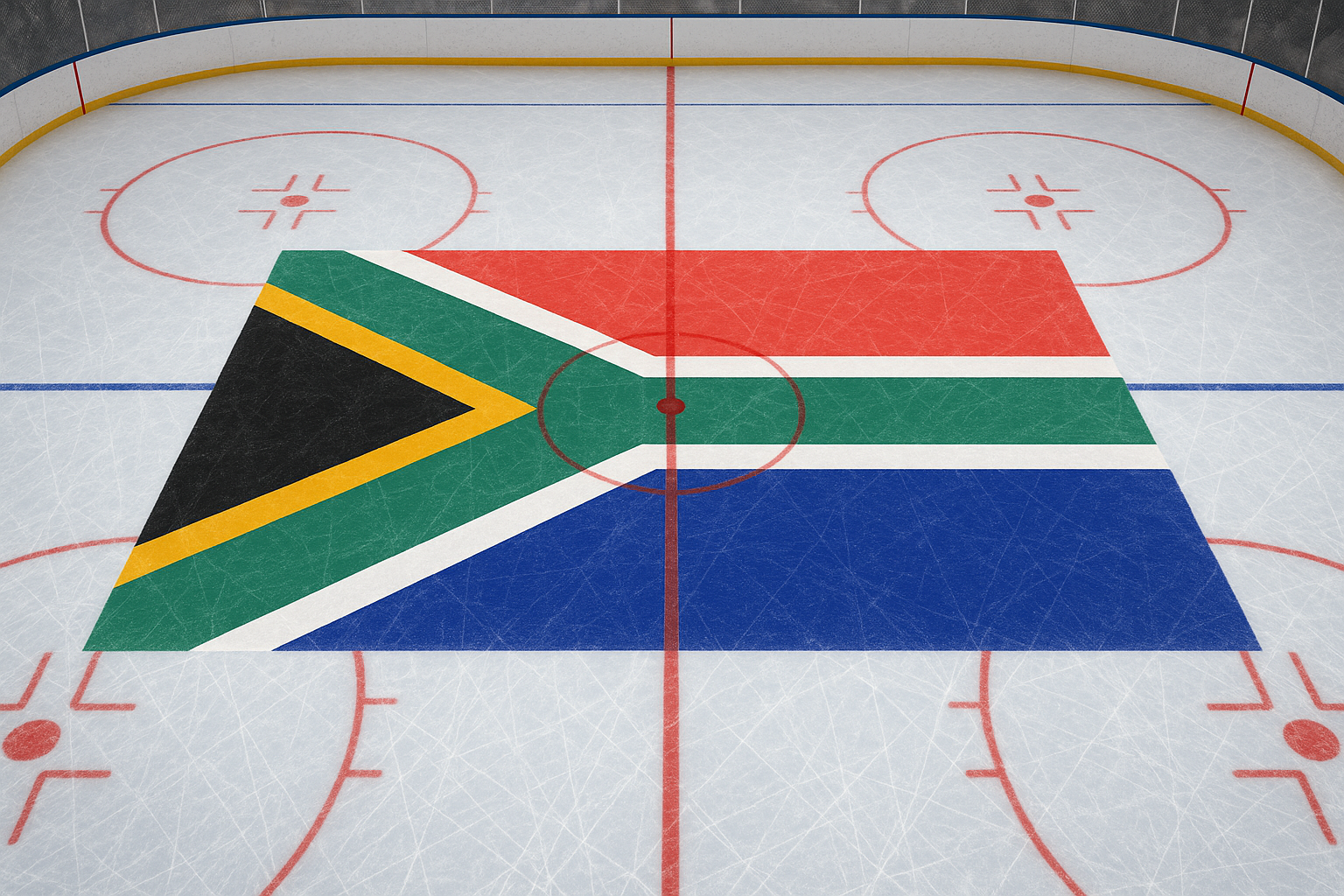
Cape Town hosted the world hockey championships for seven days, showcasing geopolitical rivalries, local heroes, and the sport's growth in Africa.
In a surprising turn of events, Cape Town's GrandWest Casino transformed into "Africa's coolest venue" for a week, hosting the IIHF Division III Group A ice hockey tournament. Six nations, including South Africa's newly dubbed "Rhinos," clashed on the ice, bringing international hockey to a continent with few rinks. Despite the casino's usual sounds, the arena buzzed with the excitement of pucks, blades, and enthusiastic fans. This unique event not only showcased competitive ice hockey but also sparked local interest, inspired development initiatives, and proved that passion for the sport can thrive anywhere.
What was the significance of the IIHF Division III Group A tournament in Cape Town?
The IIHF Division III Group A tournament in Cape Town, held at GrandWest Casino, was significant for bringing international ice hockey to a continent with limited rinks. It showcased six nations competing, fostered local fan engagement (e.g., the "Rhinos" team name), and promoted ice hockey development in South Africa.
Get Cape Town news in your inbox
Stay updated with the latest stories from the Mother City.
1. The Coolest Address in Africa
Deep inside GrandWest, a faux-Italian gambling palace wedged against the Tygerberg hills, the air is usually thick with slot-machine chimes and weekend bingo calls. For one mid-April week the soundtrack changed: pucks clanged off plexi, steel blades scraped glycol-chilled ice, and a global scoreboard flashed above a rink fifteen minutes from the Atlantic yet a hemisphere away from the nearest frozen pond. Between 13 and 19 April the IIHF’s Division III Group A turned the casino ice into “Africa’s coolest venue,” a slogan that rode every rush-hour radio wave and LED banner where Disney-on-Ice ads had hung the week before.
Six nations rolled in, passports stamped with the same crests once sewn to the sweaters of Datsyuks and Selännes. Autumn sun baked the parking lot at 28 °C while, behind glass, autumns from Ankara to Tijuana collided. Turkey’s roster featured four men who clock regular minutes in Germany’s second division and a coach who had “vacationed” here twelve months earlier to spy glass angles and concession queues. Mexico’s kit man doubled as the country’s roller-hockey goalkeeping guru, flying in 36 kilos of spare bearings in case the chiller collapsed and inline breakaways replaced slap-shots.
Thailand’s 38-year-old skipper, Tewin Chartsuwan, owns a Bangkok espresso bar whose walls wear jerseys from thirty countries; he hauled his own machine to the hotel foyer and built a pop-up shrine to Asian puck lore. Turkmenistan’s defensive duo learned the game inside a tilted Soviet textile hall whose corners sloped downhill, a quirk that now lets them fire reverse-angle lasers no radar expects. Bosnia’s assistant coach still owns the old Yugoslav league’s hardest shot - 99.4 mph in ’87 - and can rattle off the flex rating of every stick he packed.
South Africa itself debuted a fresh identity. A fan vote run by the South African Ice Hockey Association replaced the drab “national team” label with “Rhinos,” drawing 17 000 ballots - triple the number of registered senior players. The crest shows a white rhino exploding across an Africa-shaped shield, its horn spearing a hockey stick that doubles as the Drakensberg escarpment. Captain Andre Marais, a 31-year-old Stellenbosch attorney, 3-D-printed the logo in titanium and stitched it into his shoulder caps, shaving eleven grams and “a lifetime of explaining why Africans skate.”
2. Five Games, Five Lessons
Monday: Rhinos 4–3 Bosnia & Herzegovina
1 800 bodies squeezed into the barn, another 6 200 watched a YouTube stream whose moderator warned about “seagull interference” on the roof mic. South Africa struck twice before the fourth minute on rebounds that pin-balled off last week’s Disney props. Bosnia replied with accidental tips that seemed to shock even the shooters, setting up a third period that felt like cup-final overtime. With 2:47 left, 19-year-old centre Cameron Birrell - who trains in his parents’ garage with a golf ball on tile - pickpocketed the blue line, toe-dragged once, and roofed a wrister. Ladysmith Black Mambazo’s “Homeless” blasted overhead, the arena’s usual post-show jam.
Wednesday: Rhinos 5–3 Turkmenistan
The Akhal-Teke horse silhouetted on Turkmen jerseys looks eerily like a dangling forward on a break. Nine refinery workers from a Cape Town job site painted their faces green-white-orange and taught strangers a two-clap, one-stomp chant that ricocheted through the casino food court. South Africa’s second line - nicknamed “The Kitchen” for obvious heat reasons - piled up four points, including a between-the-legs beauty by winger Uthmaan Samaai that out-trended the weekend’s Stormers rugby clips.
Thursday: Turkey 8–1 South Africa
Sometimes the clock is cruel. Turkey’s roster averaged 187 cm and 92 kg, fresh from ten scrimmages in Bolzano against Südtirol’s U20s. Every Rhinos cycle vanished under a Turkish forecheck that swallowed space like a black hole. Coach Marc Giot, an eight-year Quebec expat growing the game south of the Zambezi, burned his timeout at 6–0 and barked in Afrikaans: “Remember why we’re here - eight-year-olds in your sweaters.” The next shift Dylan Compton wired a slapper so hard the goal judge flinched; it would be their lone reply.
Saturday: Thailand 7–3 South Africa
Forty-eight hours later the hosts met pure pace. Thailand’s programme is built on 40-second bursts and 5 a.m. sprints along Bangkok’s empty skyways. By the second period South African legs creaked like the Table Mountain cable car. History arrived between frames: the newly formed Cape Town Queens played a 3-on-3 exhibition, the first women’s international shift on African ice. They scored twice while the Zamboni driver cried behind the plexi - “My daughter never thought she’d see this.”
Sunday: Mexico 5–4 South Africa
Final day felt like a film festival of cliff-hangers. Mexico needed victory for silver; the Rhinos needed it to dodge last year’s fourth-place ghost. The lead swapped four times. With 17 seconds left and an extra attacker, Marais walked the blue line, freeze-framed the slap-shot, and threaded a back-door pass to Birrell. The puck rolled, time died, the horn sounded. An iPad balanced on the scorer’s table revealed 2 cm between rubber and goal-line. Mexico roared in two languages; South Africa knelt, sticks frozen to the surface.
3. Off-Ice Ledgers & Left-Behinds
GrandWest normally hums at –4 °C; IIHF rules demanded –6 °C, adding R28 000 a day to the power bill. Eskom miraculously suspended load-shedding all week, a coincidence so suspicious that talk-radio hosts begged the sports ministry to bid for Olympic rights. Tickets ran R50 for students to R250 glass-side - cheaper than popcorn and a movie. Scarves, beanies and replica jerseys vanished by Thursday; one vendor confessed he had sewn Rhino crests onto Bulgarian surplus the night before departure.
Development ripples spread. South Africa owns only four operational rinks - GrandWest, Durban’s Gateway, Johannesburg’s Ice Station and a pop-up in Gqeberha whose lease ends in October - yet 120 Western Cape schoolkids attended dawn clinics coached by the visitors. Thailand’s goalie ran a 45-minute paddle-down masterclass; Bosnia’s captain donated 30 composite sticks to a Khayelitsha outreach squad. Turkey pledged 500 blue pucks - “they film better on African ice” - and Mexico’s roller guru vowed a future hybrid clinic on wheels.
A three-camera YouTube stream, commentated by two UCT film students raised on NHL ’94 for Sega, peaked at 14 700 concurrent viewers - figures that dwarf domestic basketball and volleyball. A start-up called SportSight AI repurposed traffic-surveillance code to track skater speed from a single webcam: Birrell topped out at 32.8 km/h, NHL third-liner territory, while South Africa’s average shift dragged seven seconds too long. The report already props up SAIHA’s application for a national sports-science grant.
Every hockey tale needs its invisible Zamboni. Moses Gcinikhaya, 43-year-old grandfather, has resurfaced GrandWest ice since 2004. During the tournament he logged 19-hour days, shaving 3 mm each flood because “Europeans like it thin and fast,” timing laps to finish two Xhosa hymns before the horn. Asked if he dreams of bigger machines in bigger barns, he laughs: “Why? I already have the coolest job in Africa.”
4. After the Horn
Within 48 hours the rink will revert to UV disco-skating, boards repainted from “IIHF Fair Play” to “School Holiday Fun Camp.” Turkish staffers will fly home, leaving a roll of tape and a sticky note: “See you in Division II.” Birrell will return to university essays, Marais to court briefs, Samaai to warehouse-roof inline sessions. The ice will soften under neon, then harden under next week’s rehearsal of Frozen on Ice.
Yet under each resurfacing the lines linger, ghost-white scars only the cleaners see. For seven April nights a continent’s worth of frozen dreams fit inside a single spotlight, one blade-length at a time, proving that hockey’s heartbeat can thump inside any latitude when passion outruns geography.
[{"question": "
What was the significance of the IIHF Division III Group A tournament in Cape Town?
", "answer": "The IIHF Division III Group A tournament in Cape Town, held at GrandWest Casino, was highly significant. It marked a rare occasion for international ice hockey to be played on the African continent, which has very few rinks. The event brought together six nations, including South Africa's newly branded 'Rhinos,' and generated considerable local excitement. Beyond the competition, it sparked widespread local interest, inspired development initiatives for ice hockey in the region, and demonstrated that the sport's passion can thrive regardless of geographical location. It also saw the debut of the 'Rhinos' national team identity, chosen by a fan vote, and showcased the potential for growth in African ice hockey."}, {"question": "How did GrandWest Casino adapt to host an international ice hockey tournament?
", "answer": "GrandWest Casino, typically a gambling palace, underwent a remarkable transformation to host the IIHF Division III Group A tournament. The usual atmosphere of slot-machine chimes and bingo calls was replaced with the sounds of pucks, blades, and enthusiastic fans. While the casino normally operates at -4 °C, IIHF rules mandated a colder -6 °C for the ice, which added significantly to the power bill. Despite the logistical challenges, including a miraculous suspension of load-shedding by Eskom for the duration, the casino successfully provided 'Africa's coolest venue' for the event, showcasing its adaptability and the dedication of its staff, like Moses Gcinikhaya, the Zamboni driver."}, {"question": "What were some memorable moments from the games involving the South African 'Rhinos'?
", "answer": "The South African 'Rhinos' had several memorable moments during the tournament. They secured a thrilling 4-3 victory against Bosnia & Herzegovina, with 19-year-old Cameron Birrell scoring the game-winner with under three minutes left. They also defeated Turkmenistan 5-3, featuring a highlight-reel, between-the-legs goal by Uthmaan Samaai. While they faced tough losses against Turkey and Thailand, the games were fiercely contested. A significant historical moment occurred during the Thailand game with the first women's international shift on African ice, played by the newly formed Cape Town Queens. Their final game against Mexico was a nail-biting 5-4 loss that went down to the wire, with the Rhinos narrowly missing a tying goal in the closing seconds."}, {"question": "How did the tournament impact local ice hockey development and fan engagement in South Africa?
", "answer": "The tournament had a profound impact on local ice hockey development and fan engagement. A fan vote for the South African national team's new name, 'Rhinos,' garnered 17,000 ballots, far exceeding the number of registered players, indicating strong public interest. Despite only four operational rinks in South Africa, 120 Western Cape school children attended dawn clinics coached by visiting players. International teams also contributed to development, with Thailand's goalie running a masterclass, Bosnia's captain donating sticks, and Turkey pledging 500 pucks. The games attracted significant viewership, with a YouTube stream peaking at 14,700 concurrent viewers, surpassing domestic basketball and volleyball figures, and generated data for a national sports-science grant application."}, {"question": "What unique contributions did the visiting national teams bring to the tournament?
", "answer": "The visiting national teams brought a wealth of unique contributions and colorful personalities to the tournament. Turkey's roster included players from Germany's second division and a coach who had scouted the venue a year prior. Mexico's kit man doubled as a roller-hockey guru, prepared for any inline hockey contingency. Thailand's captain, Tewin Chartsuwan, a coffee shop owner, set up a pop-up shrine to Asian puck lore in the hotel. Turkmenistan's defensive duo, who learned to play in a sloped textile hall, showcased unique skills. Bosnia's assistant coach, a former Yugoslav league hard-shot record holder, meticulously managed his team's equipment. These diverse backgrounds enriched the tournament's international flavor and off-ice camaraderie."}, {"question": "What was the long-term outlook and legacy of this ice hockey tournament in Cape Town?
", "answer": "While the rink quickly reverted to its usual disco-skating and 'School Holiday Fun Camp' activities after the tournament, the event left a lasting legacy. The 'ghost-white scars' of the hockey lines under the ice symbolize the enduring impact of those seven nights. It proved that passion for ice hockey can thrive anywhere, inspiring a continent's worth of 'frozen dreams.' The development initiatives, including school clinics and equipment donations, aimed to foster future generations of players. The high viewership and data collection for sports-science grants suggest a potential for continued growth and investment in South African ice hockey, with the hope that the 'Rhinos' will continue to progress and compete on the international stage, perhaps even reaching Division II as suggested by the departing Turkish team."}]
Isabella Schmidt is a Cape Town journalist who chronicles the city’s evolving food culture, from Bo-Kaap spice merchants to Khayelitsha microbreweries. Raised hiking the trails that link Table Mountain to the Cape Flats, she brings the flavours and voices of her hometown to global readers with equal parts rigour and heart.
View all articles →