
Sharks do it again as Stormers fall in Durban
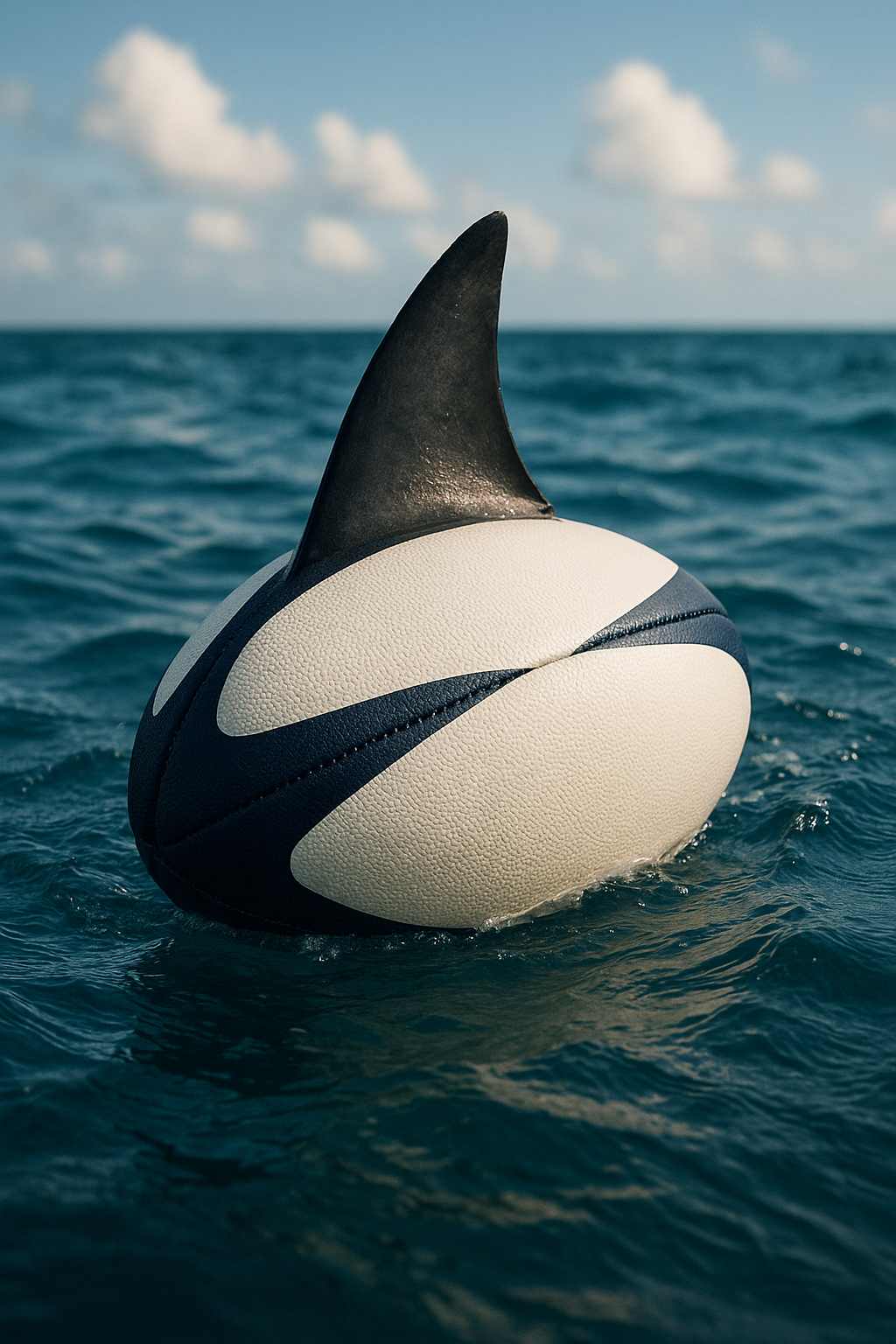
Sharks dominate Stormers 36-24, redefining coastal rugby supremacy. A tactical breakdown of the epic Indian Ocean derby.
The Sharks absolutely dominated the Stormers in a thrilling 36-24 rugby match in Durban, completely changing who's boss on the coast. They played smart, tackled hard, and had way more energy at the end. This win wasn't just a victory; it showed everyone that the Sharks are now the top team, setting the rules and leading the way.
How did the Sharks dominate the Stormers in the 36-24 Durban showdown?
The Sharks dominated by executing a plan built on layered phases, choke-tackle turnovers, and superior fitness. They controlled the center-field chess match with intelligent play, bullied the Stormers in set-pieces, and benefited from fresh legs and strategic rotations in the final quarter, ultimately outperforming their rivals in conditioning.
Get Cape Town news in your inbox
Stay updated with the latest stories from the Mother City.
1. Floodlights, Fireworks and a Rivalry Re-coded
King’s Park has hosted epic collisions before, yet Saturday night felt like someone pressed “delete” on the old script and uploaded a brand-new file. The Sharks never just toppled the Stormers; they re-engineered the very software that drives this derby, transforming a fixture normally settled by a late penalty into a four-act seminar on controlled violence. The 12-point gap was the biggest in Durban since 2012, but the tale runs deeper than any spreadsheet.
From the opening whistle the home side advertised a plan built on layered phases, choke-tackle turnovers and altitude-mimicking fitness. Where recent seasons featured cagey punting chess, this clash delivered sustained pressure, surgical counter-rucks and a final-quarter burst that left the visitors mentally empty. The crowd sensed history being edited in real time; every carry that rode past the gain-line felt like a line scored through yesterday’s textbook.
By the time the ball sailed into row 34 on the final whistle, the message was irrefutable: the Sharks are no longer hopeful participants in the coastal argument - they chair the meeting, set the agenda and hold the gavel.
2. Opening Gambits and the Centre-Field Chess Match
Forty-two seconds had barely elapsed when Cobus Reinach slid over beneath the sticks, stunning a venue that was still finding its voice. The score owed nothing to luck; it was homework turned into hazard. Stormers analysts spotted that Curwin Bosch habitually drifts left on restarts, so Manie Libbok dropped the kick into the narrow channel, forcing a scrambling take. Reinach timed his blitz perfectly, ripped the pill and finished in one motion, quieting 50 000 throats.
Rather than panic, the Sharks answered with a nine-phase clinic that resembled rope-a-dope boxing: each carrier stepped back into the ruck shield, denying Deon Fourie any sniff at the jackal. When Jordan Hendrikse launched an up-and-under from the 22 it was not escape, it was repositioning. Ethan Hooker’s ensuing rumble through Fourie measured 3.2 m post-contact - eye-popping output for a 20-year-old outside back - and suddenly the ambushers found themselves ambushed.
That exchange framed the evening: every momentum spike drew an immediate, intelligently crafted rebuttal. Where past Durban derbies hinged on aerial ping-pong, this one unfolded as a centre-field chess match, with pawns advanced, knights sacrificed and territory earned by brain as much as brawn.
3. Set-Piece Laboratory and the Birth of Micro-Edges
Minutes 15 through 35 morphed into a live case study of targeted set-piece bullying. Western Province arrived with the competition’s most reliable line-out yet only the tenth-best scrum; the Sharks flipped those numbers on their head. Every home throw inside the opposition 30 became an automatic maul summons, even when Joseph Dweba’s darts skewed. Eben Etzebeth rose at the tail, Siya Kolisi clamped on, and Bongi Mbonambi provided the 130 kg caboose, shunting would-be tacklers backwards. Two collapses earned Paul de Villiers a seat on the naughty step and granted Grant Williams the sniping room he craves.
Conversely, when the Stormers chose scrum ball, Thomas du Toit and Ox Nché cranked the vice. Two tight-heads in three minutes compelled Steve Kitshoff to seek counselling from referee Marius van der Westhuizen, yet the ledger refused to balloon. Sacha Feinberg-Mngomezulu’s cultured left boot punished every indiscretion, none sweeter than a 45-metre wind-assisted rocket on 33 minutes that nudged the visitors ahead at oranges. It was the first time this campaign the Sharks had stared at a halftime deficit in a home derby, a stat that mattered more upstairs than on the terraces.
Hidden within those arm-wrestle exchanges were the germs of victory. Ox Nché forced an almost imperceptible 0.8-second delay on every Feinberg-Mngomezulu clearance by sprinting into the kicker’s peripheral vision. No metres appear on any spreadsheet, yet the cumulative effect shunted the Stormers’ exit point 40 m deeper than planned - what analysts call “invisible territory” and coaches call gold.
4. Red Mist, Fresh Legs and the Science of the Finish
The third quarter opened with more Cape confetti as the returning De Villiers sliced through a guard lane missing Kolisi, who was off for an HIA. Ruhan Nel’s inside line created the gap, De Villiers dotted down and the travelling choir partied as though the trophy was en-route to Newlands. They overlooked John Plumtree’s deliberate rotation: three starting forwards exited inside 48 minutes, replaced by oxygen-rich reinforcements primed for a tsunami finish.
Payday arrived in the 54th minute when a retreating Stormers scrum, destabilised by Ntuthuko Mchunu’s angling drive, back-pedalled ball. Jordan Hendrikse scooped, darted and fed Andre Esterhuizen a hole you could wheel a supermarket trolley through. The skipper still had three jerseys to overpower; he used every gram of his 132 kg frame to trample one, palm another and collapse on the third. Sharks 26, Stormers 24, mood swing complete.
Then the game detonated. Ruben van Heerden, upright in a tackle on Williams, connected with chin rather than sternum. Sixty-three seconds of TMO replays produced inevitable red, leaving the visitors 14-strong and psychologically wobbling. Faced with the altitude-plus-humidity double whammy, they chased a win instead of locking the bonus-point gate. The Sharks sensed red in the water and attacked like, well, sharks.
Williams counter-rucked Libbok to steal, Jordan Hendrikse nailed the corner flag, and after the maul was halted, younger brother Jaden floated a flat miss-pass that put Esterhuizen over for a brace. The announcer had barely finished spelling the surname when Williams charged down Warrick Gelant’s panicked clearance, regathered and flopped on the sliding ball. Thirty-six points with eight minutes left felt like fifty, and the crowd noise peaked at 123 dB - jet-engine territory - staying above 115 dB long enough to rattle the Stormers’ line-out cadence and gift Kolisi a steal.
Beneath the surface, conditioning data told its own story. Durban may sit at sea level, but the Sharks spent four weeks training in hypoxic masks simulating 1 800 m. The payoff was a 34-beats-per-minute heart-rate recovery between scrums, versus the Stormers’ 21. In a 12-point contest, that gap translates to a dominant clean-out instead of a penalty concession, a margin that widens exponentially when a man short.
5. Log Maths, Transfer Whispers and Tomorrow’s Blueprint
The result catapults the Sharks to 41 table points, level with Leinster and top of the local shield on points difference. They own the season double over the Stormers, meaning the Cape side must now rely on favours from elsewhere. Trips to Galway and Parma await the black-and-white juggernaut; win both and a home quarter-final moves from fantasy to formality.
For the Stormers the ledger is bleaker. Stuck on 33 points and outside the playoff cut, they face Glasgow at Scotstoun and Ulster at Ravenhill in a cruel December double. Even more troubling, their defence has haemorrhaged 102 points in three games since Deon Fourie shifted from fetcher to hooker, stripping the breakdown of its chief pick-pocket. Coach John Dobson preaches that adversity builds character, yet character alone cannot plug a leak widening at four points an outing.
Off-field currents swirl just as strongly. Eben Etzebeth’s shaka-directed celebration sparked chatter that the towering lock has inked a one-year extension with a built-in player-coach clause aimed at 2027 World Cup succession. Grant Williams’ late brace reportedly landed six-month loan offers from Sale and Bristol, but Durban bosses want a seven-figure transfer fee, convinced he can gate-crash a Springbok squad short of a classic sniping nine. Meanwhile, next week’s fan-day programme teases a “mystery Bok”; social-media silhouette detectives are convinced Cheslin Kolbe will trade Toulon’s Mediterranean for a King’s Park cameo come July.
The final symbolic moment arrived with 90 seconds to play. A penalty on halfway offered the Stormers a consolatory scrum, but after two resets Thomas du Toit and Ox Nché stared them into submission. On the third shove the ball squirted out the back, Kolisi hoofed it high into the stands, and the siren sounded while the pellet was still arcing toward the neon “Mr Price” signage. In that soaring ellipse lay the new reality: the Sharks no longer ride the coastal wave - they own the whole Indian Ocean.
1. How did the Sharks manage to dominate the Stormers so convincingly?
The Sharks' dominance stemmed from a multifaceted approach, including a plan built on layered phases, choke-tackle turnovers, and superior fitness. They controlled the center-field, bullied the Stormers in set-pieces, and benefited from strategic player rotations that allowed for a strong finish.
2. What were the key moments or strategies that contributed to the Sharks' early lead?
The Sharks' early lead was established almost immediately, with Cobus Reinach scoring a try within 42 seconds, capitalizing on a pre-scouted habit of Curwin Bosch. They followed this with a nine-phase clinic, demonstrating intelligent play and immediate, well-crafted rebuttals to Stormers' attacks, turning the game into a "centre-field chess match" rather than aerial ping-pong.
3. How did the Sharks' set-piece play impact the game?
The Sharks' set-piece play was a significant factor, particularly their scrum and maul. Despite the Stormers having a strong line-out, the Sharks' maul became an automatic scoring threat, and their scrum, led by Thomas du Toit and Ox Nché, consistently put pressure on the Stormers, leading to penalties and disrupting their rhythm. They also utilized "invisible territory" gains by subtly delaying the Stormers' clearances.
4. What was the significance of the Sharks' player rotation and conditioning?
The Sharks' deliberate rotation of players, with three starting forwards exiting inside 48 minutes for "oxygen-rich reinforcements," proved crucial. This strategy, combined with their advanced conditioning (training with hypoxic masks simulating altitude), allowed them to maintain a higher heart-rate recovery rate than the Stormers, leading to a powerful "tsunami finish" in the final quarter, especially when the Stormers were reduced to 14 men.
5. How did the red card incident affect the outcome of the match?
The red card issued to Ruben van Heerden in the third quarter for a high tackle significantly impacted the game. With the Stormers reduced to 14 players, and facing the combined challenge of altitude-simulated humidity, they psychologically wobbled. The Sharks, sensing the advantage, attacked relentlessly, scoring multiple tries and sealing their dominant victory.
6. What are the implications of this victory for the Sharks and Stormers in the league standings and beyond?
This victory propels the Sharks to 41 table points, topping their local shield on points difference and making a home quarter-final a strong possibility. For the Stormers, stuck on 33 points and outside the playoff cut, the outlook is bleaker, exacerbated by a defense that has conceded 102 points in three games since Deon Fourie's positional shift. The match also fueled transfer rumors, with whispers of Eben Etzebeth's extension and Grant Williams attracting lucrative loan offers, and even speculation about Cheslin Kolbe joining the Sharks.

A Russian-Spanish journalist and Cape Town native, channels his lifelong passion for South Africa into captivating stories for his local blog. With a diverse background and 50 years of rich experiences, Serjio's unique voice resonates with readers seeking to explore Cape Town's vibrant culture. His love for the city shines through in every piece, making Serjio the go-to source for the latest in South African adventures.
View all articles →