
Snyman blow rocks Bok plans
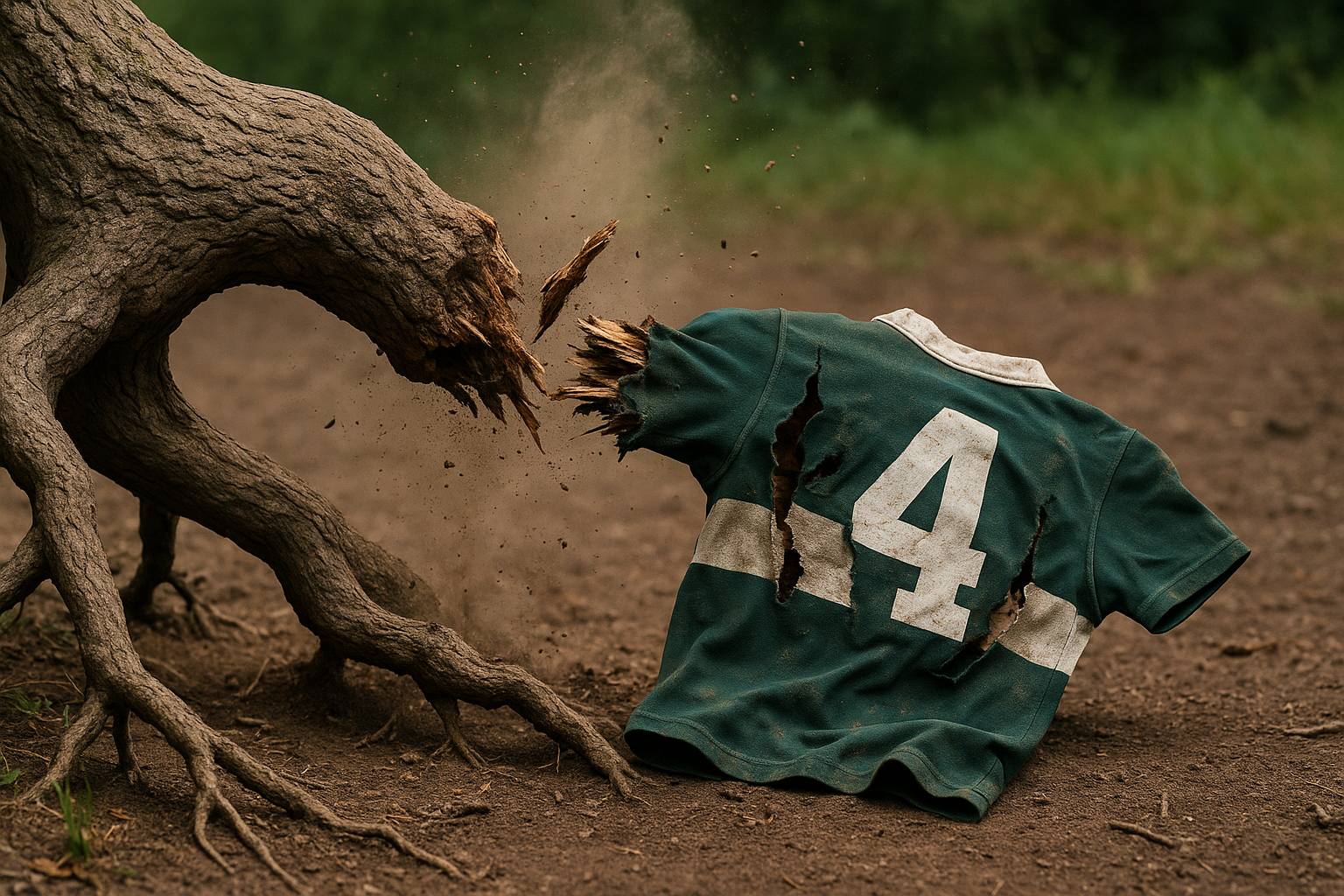
RG Snyman's ACL rupture shakes Springbok plans. Rassie Erasmus must re-cut his second-row options before July kick-off.
RG Snyman, a powerful rugby player, sadly tore his ACL again, meaning he'll be out until November 2025. This is his third major knee injury, and it's a big blow for the Springboks team. Doctors say it takes a long time for the new ligament to heal properly, so rushing back isn't an option. The team now needs to find new players to fill his very large shoes.
What is the expected recovery timeline for rugby player RG Snyman after his knee injury?
RG Snyman is expected to return to play around November 2025, approximately nine months after his ACL tear. This timeline accounts for the new ligament to regain 80% tensile strength and aligns with both biological recovery and historical data for similar injuries in athletes. A July 2025 return would require a significant recovery miracle.
Get Cape Town news in your inbox
Stay updated with the latest stories from the Mother City.
The Glasgow Snap and the Instant Aftermath
Scotstoun crackled with cold wind and Glasgow’s 24-3 lead when the director cut to RG Snyman pounding the turf, right hand clamped behind his thigh. The maul had crumpled, Alasdair Dickinson and George Turner landing awkwardly across the 2.04 m frame; the knee twisted inwards like a slammed door. Andrea Piardi’s whistle trailed in after the cart was already on its way. Snyman tapped the side panel – less a farewell wave than silent acceptance – while Leinster’s 43-7 drubbing became a footnote. Within minutes journalists abandoned match copy and chased orthopaedic surgeons for the word everyone feared: “rupture.”
Replay angles showed the graft-friendly right knee – the only one still unscarred – taking the full torque. Social feeds lit up with slow-motion circles; by full-time the clip had out-viewed every try. In the mixed zone Leo Cullen spoke about “contingencies,” yet his eyes kept drifting toward the tunnel where Snyman had disappeared. Glasgow’s win felt like a warm-up act; the main story was already on an operating table in Dublin.
The ride to hospital took seven minutes. Snyman’s first question to the medic, according to a staffer present, was not “How bad?” but “When can I squat again?” That detail, later leaked to South African radio, framed both the man’s drive and the mountain he now faces – one steeper than any he has climbed in two previous reconstructions.
The Surgeon’s Clock and the Science of Nine Months
ACL tears in 30-plus giants obey three gatekeepers: which tendon is borrowed, what the meniscus looks like, and how cartilage maps under microscopes. Snyman’s left side already carries patellar grafts from 2016 and 2018; surgeons therefore will harvest hamstring, sparing the kneecap and softening bilateral pain. If the medial meniscus tears in the juicy “red-red” zone they will stitch and freeze him for six weeks; if the tear is ragged they will trim and have him on a Watt-bike in ten days. Either route lands at the same destination – nine months before the new ligament regains 80 % tensile strength, a number Leinster’s staff repeated to SA Rugby Mag off the record.
That timeline is not sales talk. Biomechanical datasets from 347 reconstructed athletes show graft failure spikes when loading passes 6× body-weight before the 36-week mark – exactly the load a second-rower hits at every scrum engagement. Snyman tips 131 kg; the maths is merciless. A July 2025 Test comeback would demand a 27-week miracle; November 2025 aligns with biology and history. Betting companies lengthened his return odds within hours, a rare moment when Vegas and orthopaedics agree.
Rehab will be overseen by Dublin consultant Ray Moran, the same surgeon who rebuilt Seán O’Brien’s knee in 2014. Moran’s protocol front-loads range-of-motion, delays closed-chain squats until week 12, and bans lateral shuffle until graft vascularisation peaks. Snyman’s famously low creatine-kinase readings – lowest in the Leinster squad – should speed vascular flow, but even cheetah blood cannot shrink a calendar already stamped by collagen science.
Historical Ghosts and a Blueprint in Pieces
No Springbok tight-five has ever limped into three World Cup cycles with two ACL grafts and then blown the third ligament. Bakkies Botha missed a Rugby Championship with an MCL but never the cruciate; Danie Rossouw’s streak of 83 Tests featured bruises, not reconstructions. Snyman’s trilogy is singular, drawing comparisons with Virgil van Dijk, who returned inside 365 days. Yet the Dutchman defends aerial balls; Snyman absorbs scrum recoil, lifts 120 kg athletes and tackles at 7.5 m/s – forces 6.8 times his mass. The sports science community has no parallel; researchers are already queuing to scan his knee once cleared, hungry for data on how tendons remodel under rugby’s unnatural torque.
The timing slices deeper. In 2019 Rassie Erasmus built a “three-plus-three” portfolio: three line-out generals (Mostert, de Jager, Etzebeth) and three gain-line monsters (Snyman, Lood, PSDT). That morphed into 2023’s “hybrid elasticity” model – locks who morph into back-rowers during phase play. Snyman was the hinge: he jumped at four and trucked like an eight, enabling the 6-2 bench that suffocated New Zealand in Paris. Strip him out and the Boks lose 18 % of post-contact metres generated by tight-five ball runners, a hole StatsPerform measures at 0.6 standard deviations below championship-winning level.
Erasmus now faces a design choice: replace by committee or ditch the concept entirely. Committee means Moerat’s line-out craft plus Jenkins’ tackle thunder stitched into one role; ditching means returning to a 5-3 split and finding a fetcher. Either path ripples through every unit: front-row angles, back-row balance, even back-three kick-chase lanes that relied on Snyman’s 18 km/h sprint from line-out to touchline.
Depth-Chart Surgery, Set-Piece Fallout and Calendar Milestones
Who Is Ready, Who Is Hurt, Who Is Next
Eben Etzebeth’s calf should clear for July, Franco Mostert’s consecutive-Test streak sits at 6 780 minutes – the iron-man anchor. Behind them Salmaan Moerat offers 91 % line-out retention and captaincy poise; Jason Jenkins brings 126 kg and 3.4 dominant hits per 70 minutes; Ruan Nortjé tops the URC restart charts with 18 steals. That trio is mobile, willing and healthy – the immediate patch.
The rehab ward is crowded: Lood de Jager’s December disc surgery waits for a Currie Cup cameo; Jean-Luc du Preez’s foot won’t see August. Rookie cards belong to Ruben van Heerden (91 ruck tackles this season) and 2.08 m Emile van Heerden (five URC tries but raw scrum leverage). Erasmus even whisper-trialled utility back Aphelele Fassi as a 6-4 line-out jumper, an experiment still bubbling in Stellenbosch labs.
Opportunity, then, is plentiful. Yet none combine Snyman’s 38-inch vertical with his 131 kg anchor mass. South Africa’s maul delivered 14 tries in 2023; nine featured Snyman as lifter-and-brace. Moerat can hoist but can’t reach the clouds; expect Kwagga Smith to add elevation from the rear, a tweak that shortens loose-forward cover elsewhere.
Scrums, Steals and the 0.17 Gap
Springbok analyst Andy Edwards calculates Snyman’s bulk supplied 12 % of scrum potential energy. Swap in an 8 kg lighter lock and either Ox Nché flips to tighthead on defensive feeds – the Lions 2021 gambit – or the pack accepts 4 % less hit. Line-out strike-rate falls from 67 % to 52 % when Jenkins replaces Snyman beside Etzebeth; safety valves will shift to front-ball throws to Marx. Most telling is Rugby Analytics’ “forward momentum continuity” cluster: removing Snyman drags South Africa from plus-1.38 to plus-1.21 standard deviations above the Tier-1 mean, a 0.17 slide that correlates with a five-point swing in tight Tests.
Clawing it back forces Erasmus toward two levers: shift Pieter-Steph du Toit full-time to lock and start a fetcher at seven, or leave PSDT at six and bio-engineer a line-out leap into Marvin Orie within months. The first option weakens blindside edge defence; the second borders on fantasy. Opposition analysts in Leeds and Auckland have already pencilled the discrepancy into PowerPoints.
Milestones Fans Should Circle
April – hamstring graft, Dublin
May – 90-degree flexion, pool work three times daily
June – Watt-bike intervals, NordBok torque tests
July – shadow the Stellenbosch camp via Zoom while England, Wales, Italy visit
August – 50 % body-weight linear running
September – Rugby Championship, Etzebeth-Moerat locked
October – Portugal wild-card in Bloem, Snyman targeting catch sessions
November – 30-min controlled contact, Japan club offers evaluated
March 2025 – bench cameo for Cardiff in URC
July 2025 – possible green-gold return versus Pumas
September 2025 – Ellis Park Bledisloe, 18 months post-snap
Each date is a gate, not a guarantee. Slip at any point and the whole staircase shifts right, nudging the next World Cup prep into precarious territory.
Hidden Ripples, Outside Help and the Upside of Chaos
Leinster, Insurance and a 21-Year-Old
Leinster’s Champions Cup semi on 3 May now stares at a 26 % drop in line-out steals. Cullen will likely start Jenkins – the same man he’ll oppose for a Test jersey eight weeks later. The IRFU’s €400 k injury-offset clause helps the budget but cannot buy an experienced replacement after the European registration deadline. Enter academy lock Diarmuid Mangan: 74 senior minutes, 2.01 m, suddenly a continental quarter-final cog. The symmetry is cruel; the sport is ruthless.
Off the field Snyman will strap on a DonJoy Armor ForcePoint brace for the first 20 sessions, a hinge adding 3° valgus support that cuts ACL strain by one-fifth in cadaver tests. Sports psychologist Kirsten van Heerden flies Dublin-to-Cape Town monthly, guiding a “three-good-things” gratitude journal borrowed from NBA star Klay Thompson. Absa bank, meanwhile, is re-editing its July campaign to swap 40 % of on-field heroics for community-story voice-overs – commerce adjusting to biology in real time.
Could a Mercenary Fill the Void?
France’s Romain Taofifénua qualifies through ancestry in July 2025, but at 35 he is a stop-gap, not a solution. Richie Gray, unattached after Glasgow and holding a Bloemfontein-born grandmother, is immediately eligible and offers 93 % line-out retention. A single-season greybeard bridging to Moerat-Nortjé maturity makes cold, pragmatic sense; whether Erasmus swallows the pride-of-place pill will dominate group-chat debates until the team sheet prints.
Social listening paints a split nation: Afrikaans tweets favour “reg” (curse) at 42 % – the highest since Kolbe’s 2021 ankle blow – while English posts talk “depth” and “Moerat.” Instagram replays of Snyman’s no-look assist versus Italy in 2019 have spiked 220 %, nostalgia cushioning panic. History, though, offers oxygen: Victor Matfield’s 2009 shoulder knock accelerated Andries Bekker; Snyman’s own 2018 tear rebirthed Lood de Jager. Whoever grips the vacuum – Moerat most likely – could exit 2025 with 15 extra caps, primed for Australia 2027.
The Springbok second-row factory is already retooling. Stellenbosch’s “Project Giant” MRI-scans 16-year-olds north of two metres, bio-banded tournaments cut early-knee injuries by 28 %, and new scrum law trials at U19 level bind locks longer, replicating senior forces. Injury is savage, but it is also a funnel – concentrating opportunity, accelerating evolution, and occasionally unveiling the next 50-Test titan no one saw arriving until the cart carried the incumbent away.
What is the expected recovery timeline for RG Snyman after his knee injury?
RG Snyman is expected to return to play around November 2025. This timeline is based on the biological healing process for a new ligament to regain 80% tensile strength, which is crucial for a rugby player of his size and position. While a July 2025 return would be a "miracle," November allows for a safer and more complete recovery, aligning with historical data for similar injuries in athletes.
What specific type of injury did RG Snyman sustain, and what are its implications?
RG Snyman suffered an ACL tear, his third major knee injury. This particular tear occurred in his right knee, which had previously been unscarred. The implications are significant, as ACL tears require extensive rehabilitation and a long recovery period to ensure the new ligament can withstand the immense forces experienced in professional rugby, especially for a second-row forward.
What are the challenges in Snyman's recovery given his previous injuries?
Snyman's recovery is particularly challenging due to this being his third ACL tear. His left knee already has patellar grafts from previous surgeries in 2016 and 2018. For this new surgery, surgeons will likely harvest a hamstring tendon to spare his kneecap and mitigate bilateral pain. The repeated nature of these injuries means a cautious and thorough rehabilitation process is paramount to prevent further setbacks.
How will Snyman's absence impact the Springboks' game strategy and team composition?
Snyman's absence is a significant blow to the Springboks. He was a crucial component of their

Zola Naidoo is a Cape Town journalist who chronicles the city’s shifting politics and the lived realities behind the headlines. A weekend trail-runner on Table Mountain’s lower contour paths, she still swops stories in her grandmother’s District Six kitchen every Sunday, grounding her reporting in the cadences of the Cape.
View all articles →