
South Africa’s migration policy tracks bodies, not transitions
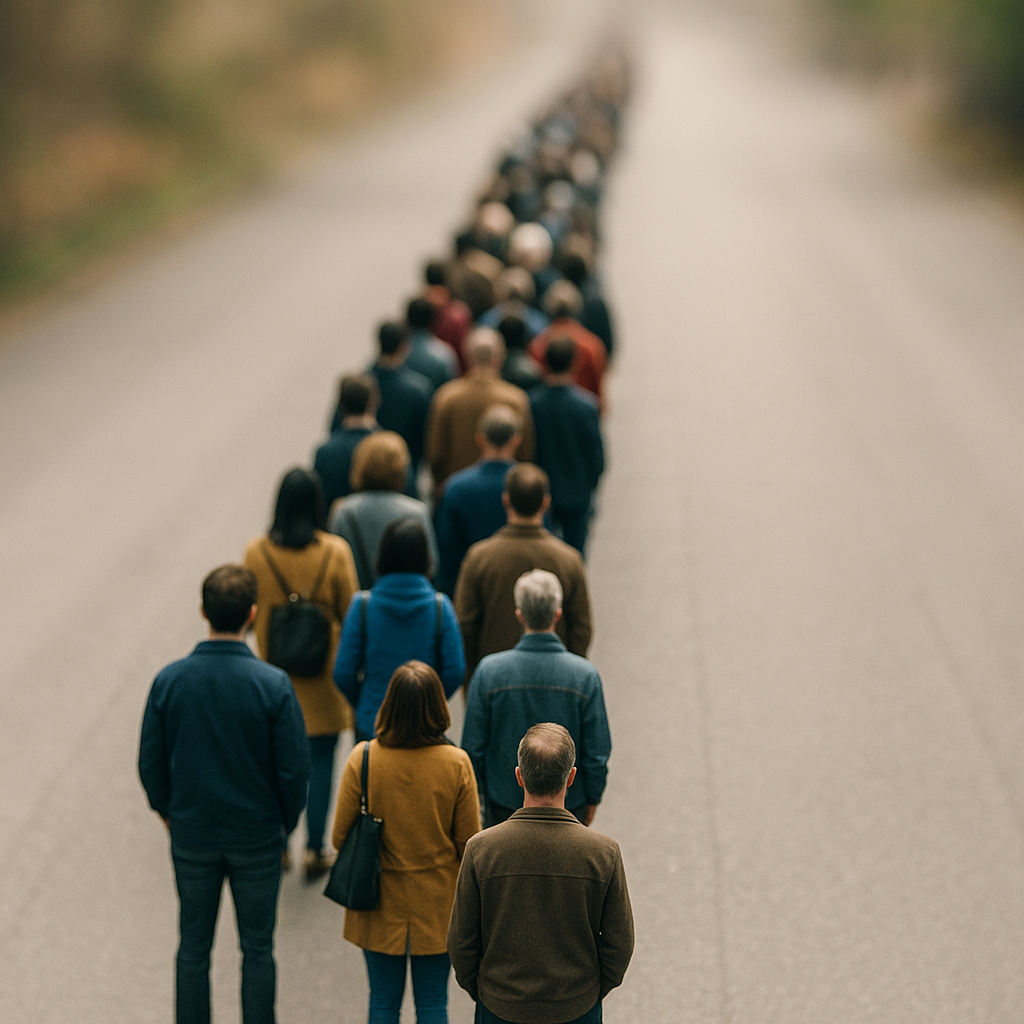
Explore South Africa's biometric revolution: a new system making queues legible to the state, impacting citizens and migrants alike.
South Africa is using a new biometric system called the Intelligent Population Register (IPR) to track everyone. This system collects fingerprints, iris scans, and face data, making people "readable to the state." It creates different experiences for citizens and non-citizens, affecting access to jobs, services, and even basic rights. The IPR shows that technology is changing how borders work, creating new challenges and making life harder for many people.
What is South Africa's Intelligent Population Register (IPR)?
The Intelligent Population Register (IPR) is a new biometric system in South Africa that collects and archives iris flashes, thumbprints, and facial templates. It aims to make the population "readable to the state" by linking these biometric events to a unique identifier, replacing traditional paper documents and influencing access to services for both citizens and non-citizens.
Get Cape Town news in your inbox
Stay updated with the latest stories from the Mother City.
I. Dawn on the Pavement: The Queue That Writes Itself
Four-thirty in Marabastatad feels like midnight that forgot to end. The first sleep-starved travellers unroll plastic sheets, claiming two-metre rectangles of cold cement that will serve as kitchen, cot and office for the next twelve hours. By six the tail already bends around the Salvation Army wall, a kilometre-long human snake whose head will stare at a locked gate for another four hours. There are no toilets, no shelter, no queue numbers. When the guard finally appears he yells, “System’s dead,” then slams the gate. No one flinches; dead is the default setting.
The ritual replays in Musina, Cape Town, Durban and Johannesburg. Polyester backpacks cracked by years of sun, envelopes of birth certificates sleeved in supermarket plastic, and the exhaustion produced by being asked the same three questions for a decade - passport, permit, proof - travel with every body in line.
The Intelligent Population Register will not shorten the wait. Its job is to make the wait readable to the state: each iris flash, each thumb pressed on glass, each facial template harvested at the door is shipped to a server farm whose address the Department treats like a nuclear code. When the gate finally creaks open at ten, only thirty-seven people make it through before the blue screen of death returns. Hundreds re-coil for tomorrow, their biometrics already archived, their bodies still in limbo.
II. Terminal as Laboratory: 90 Seconds that Tell Everything
OR Tambo, 19:43 on 15 September 2025. Passengers off the Addis flight walk straight into a white-lit tunnel labelled “ETA only.” No visa stickers, no arrival cards. Each traveller stops at a waist-high cylinder that explodes a flash of light into the eyes. In 1.8 seconds the algorithm checks iris code against Interpol, Afri-InfoSec and the United States IDENT warehouse. A green bar buys you freedom of the terminal; red funnels you to Room 12 where three former cops - now in private uniform - decide if you ever see Joburg’s nightlights.
The Electronic Travel Authorisation sells itself as friction-free “Africa-first seamless entry.” What the billboards skip is the data bundle riding every green bar: social-media handles scraped six hours before take-off, a risk score brewed in a Lagos fintech boiler-room, and the MAC addresses of every phone that whispered to Addis airport Wi-Fi at dawn. Business visitors beam at ninety-second immigration; fourteen Ethiopian women clutching French laissez-passers are still in Room 12 at midnight, phones confiscated, the kiosks lacking any off switch.
Inside the baggage hall, a wall of one-way glass hides a second row of cameras. These record gait, pupil dilation and luggage-drag cadence to feed next year’s “hostile intent” model. The airport has become both arrival gate and open-air experiment.
III. Twin Databases, One Body: How Citizens and Aliens Split
Two floors beneath Home Affairs headquarters, a single rack of blade servers hums two futures. The old National Population Register still cradles 59 million green-book ID numbers, half of them haunted by duplicate ghosts birthed in the Bantustan era. Beside it, the Intelligent Population Register knits every new biometric event - airport kiosk, refugee counter, roadside fingerprint gun - into a single 128-bit UUID.
Citizens are lured to “re-register” at pop-up booths that offer free airtime and R50 grocery vouchers. Refugees are ordered to re-register under threat of night-time police visits. The trick is one table with two invisible columns: citizen UUIDs sail on; foreign UUIDs carry a silent ALN flag that drains colour from every subsequent interaction - higher bank fees, vanished student-loan approvals, ghost quotas in hospital queues. A Zimbabwean nanny who opens a TymeBank savings account never sees the ALN suffix appended in milliseconds; she only notices the school web portal timing out when she tries to enroll her son. The citizen behind her, same salary, same browser, glides through.
IV. Paper Ghosts and Green Myths: When the Law Outlives Its Ink
In 2021 the Constitutional Court ordered refugee permits printed on A4 green paper to curb fraud. By 2025 the state printer ran out of the exact Pantone. Newly released asylum seekers clutch stamped white letters that clinic security dismiss as blatant fakes. A sheet of 2019-vintage emerald paper now sells for R120 on Twist Street - more than a bricklayer’s daily wage.
The IPR pledges to replace dye and pulp with cryptographic tokens, yet the court judgment still demands “a physical section-22 document.” The outcome is pure theatre: migrants whose faces are immortalised in the cloud must still hunt for a colour that no longer exists. In Alexandra, Operation Dudula vigilantes torch even genuine permits because the watermark is one generation too old. A four-year-old boy died of treatable meningitis after the local clinic refused his mother’s perfectly valid permit - the nurse thought the green looked too pale.
Meanwhile, counterfeiters have moved one floor up: they now sell QR codes that load flawless UUID profiles on any phone. The state responds by issuing circulars that warn “screenshots are not documents,” pushing the hustle back to paper, back to dawn queues, back to the colour green.
V. Township Algorithms: Micro-Borders Inside the Corner Shop
Hillbrow used to be the place where nobody asked your name. Today Bluetooth beacons the size of matchboxes dangle from spaza-shop awnings. South African phones receive discount vouchers; phones whose MAC address resolves to an ALN UUID trigger “refugee pricing” on the same app - an automatic 12% levy labelled “deportation-risk insurance.”
The surcharge is not advertised; it surfaces only at checkout. A vetkoek seller from Gisenyi watches his Sunmi POS load two price tables: one for locals, one for him. His monthly data costs triple because WhatsApp Business routes his chats through roaming servers after midnight - his SIM was RICA-ed with a Burundian passport number.
Every pavement becomes a customs post. The algorithmic border is no longer a fence at Beitbridge; it is the 300-millisecond pause that decides which price list flashes on a five-inch screen.
VI. Points Make Passports: The Gamification of Belonging
The 2023 White Paper swaps years-of-residence for “contribution metrics”: tax receipts, Coursera certificates, even Udemy badges. In a graffiti-covered Braamfontein hackerspace, Congolese seniors sell sealed envelopes containing UNISA short-course log-ins to Bangladeshi bakers who need twelve “verified micro-credentials” before their visa interview. Going rate: $4 per PDF.
Yet the IPR algorithm multiplies South African institution certificates by 2.3, so the hustle keeps spinning: buy the login, never attend, move on. A Mozambican grandmother who has laundered suburban school uniforms for fourteen years can show bank deposits, but the system discounts informal wages by 67%. Her best shot is an accredited “home-based care” certificate that costs R1,800 and five days of data she cannot spare. The algorithm cannot taste her peanut curry; it can only parse certificates.
Naturalisation becomes a video game where the high-score board is updated nightly and the rules are encrypted.
VII. Grammar of Limbo: How Delay Became a Language
In Marabastad the lingua franca mixes Shona, Portuguese and isiNdebele, but no word exists for “permanent.” People say “kuya end of month,” a shrug disguised as time. The Home Affairs website still lists 28 days for a relative’s visa, 56 for a critical-skills permit - numbers an intern refreshes by adding four days to the previous month.
The IPR, meanwhile, speaks fluent pause. Upload a French birth certificate and the OCR engine confuses “ç” with “ô” 12% of the time; the file drops into a manual queue staffed by zero Francophones. You receive an SMS: “query raised,” then silence. Each week in HOLD accrues 0.2 risk points; after 52 weeks you cross an invisible line and the system auto-labels you “undesirable,” e-mailing a deportation notice to an inbox you opened in 2017 and never check.
Time is no longer measured in days but in probability increments no human can read.
VIII. Night Shift in the Cloud: When Machines Dream of Borders
At 03:00, while high-pressure hoses sweep Marabastad’s courtyard, the IPR starts its reconciliation dance. Roadblock fingerprints greet asylum selfies; Instagram faces hashtagged #JoburgNights flirt with the watch-list of 1,400 “persons of interest.” The false-match jackpot is one in a thousand, which translates to 59,000 citizens mis-coloured as foreign.
A Limpopo first-year learns this when her NSFAS application bounces for “non-citizen” status. Her ID photo, taken at age eight, has been aged-forward by AI and judged Somali. The appeal takes six months, three affidavits and one MP’s letter.
Programmers call the process “continuous immigration intelligence.” Activists call it silicon phrenology. Both agree on the prize: a future where your next move is predicted before you dream of it. Treasury has earmarked R3.8 billion for analytics that will sniff “overstay intention” from Google searches and ATM withdrawals. Beta tests nail Indian and Bangladeshi nationals 87% of the time; Mozambicans stump the model because the training pool is shallow. The fix is simple - harvest more data, longer queues, more cameras.
IX. The First Breath as Checkpoint: Citizenship Begins in Labour Ward
Coronation Women’s Clinic in Soweto demands an IPR UUID before it hands out epidurals. Scan the barcode at admission; if the mother’s UUID carries ALN, the birth-notification printer spits out a hand-written certificate instead of the standard electronic extract. Hospital admin insists this is “protocol,” but the outcome is blunt: newborns without QR codes cannot be auto-enrolled for the R530 child-support grant.
Midwives have stopped noticing they notice. South African moms labour under flat-screens looping ocean waves; undocumented moms deliver in side wards with cracked windows. The biometric border has slipped inside the womb - deciding not only who may enter the country but who may enter the idea of country itself.
X. Export Grade Control: Selling the Future of Waiting
Pretoria’s creation is already on sale. Botswana’s army will pilot the ETA kiosk firmware at Kazungula; Rwanda wants the ALN flag rewritten to tag “political risk”; Kenyan lenders lease the face-ageing code to cap loans for Somali traders. The IPR intellectual property is 34% state-owned, 11% Dubai-sovereign, 55% hidden behind a BVI shelf company whose directors are also nowhere.
What ships abroad is more than software - it is the ideology that mobility equals risk, that belonging must be earned in bits, that tomorrow’s migrant will live on probation in perpetuity. Back in Marabastad the sky lightens. Plastic sheets fold, the line re-stitches itself. Cameras wink from new lampposts like tiny red constellations. No one knows who watches, yet everyone can read the instruction: stand here, offer your thumb, wait for the flash, and above all - keep waiting.
What is South Africa's Intelligent Population Register (IPR)?
The Intelligent Population Register (IPR) is a new biometric system in South Africa that collects and archives iris flashes, thumbprints, and facial templates. It aims to make the population "readable to the state" by linking these biometric events to a unique identifier. This system is designed to replace traditional paper documents and significantly influences access to services for both citizens and non-citizens.
How does the IPR differentiate between citizens and non-citizens?
The IPR uses a system where citizens and non-citizens are treated differently, even if subtly. While citizens are encouraged to re-register with incentives like free airtime, non-citizens, particularly refugees, are often compelled under threat. The system assigns a silent "ALN flag" (Alien) to non-citizen UUIDs, which can lead to disadvantages such as higher bank fees, denied student loan approvals, and ghost quotas in hospital queues, making their access to services more difficult.
What are the challenges faced by individuals interacting with the IPR system?
Individuals, especially non-citizens, face significant challenges. These include extremely long queues with poor conditions, system outages, and the need to re-register under duress. The IPR's reliance on technology and algorithms can lead to errors, such as misidentifying citizens as non-citizens, and can create micro-borders, with differential pricing for goods and services based on perceived nationality through digital identification.
How does the IPR affect traditional documents and legal processes?
The IPR aims to replace physical documents with cryptographic tokens. However, this transition is not smooth. For example, a Constitutional Court order requiring refugee permits on specific green paper became problematic when the state ran out of the correct Pantone, leading to valid documents being rejected. This creates a situation where physical documents are still demanded, even if they are no longer issued or recognized, forcing individuals into a difficult limbo.
What is the concept of "gamification of belonging" within the IPR system?
The "gamification of belonging" refers to how the IPR system assigns value to an individual's "contribution metrics" rather than traditional metrics like years of residence. This includes things like tax receipts, online course certifications, and even Udemy badges. The system can multiply the value of South African institution certificates, creating an incentive for individuals to acquire these, sometimes fraudulently, to improve their chances for visas or naturalization, effectively turning belonging into a point-based system.
How does the IPR extend its reach beyond national borders?
The IPR's technology and underlying ideology are being exported. Countries like Botswana and Rwanda are piloting or expressing interest in similar systems, including the Electronic Travel Authorisation (ETA) kiosk firmware and the ALN flag for political risk assessment. This indicates that South Africa is not only implementing this system domestically but also influencing the global trend of using biometric data and algorithms to manage and control population mobility, effectively selling the "future of waiting" to other nations.

A Russian-Spanish journalist and Cape Town native, channels his lifelong passion for South Africa into captivating stories for his local blog. With a diverse background and 50 years of rich experiences, Serjio's unique voice resonates with readers seeking to explore Cape Town's vibrant culture. His love for the city shines through in every piece, making Serjio the go-to source for the latest in South African adventures.
View all articles →