
The dominance of established Wimbledon champions
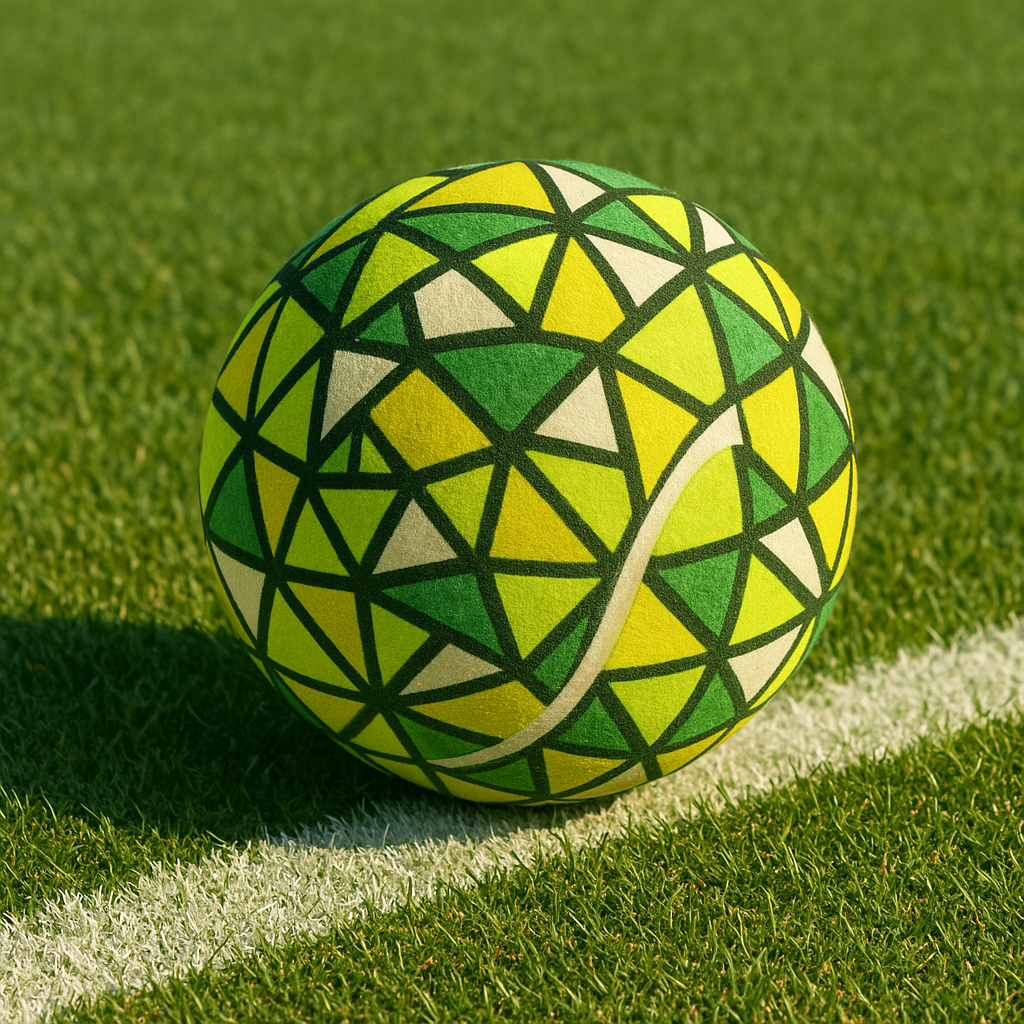
Explore how Wimbledon champions, from Federer to Alcaraz, master the unique physics of grass courts through micro-adjustments and innovative techniques.
Wimbledon's grass courts are like a tricky puzzle for tennis players. They've learned to master the super short 8mm grass, which makes the ball bounce really low and fast. Players like Federer use clever serve tricks to fool opponents, while Djokovic makes incredible stretches to reach impossible shots. Even Spanish players, known for clay, have adapted their fancy footwork to dance on the grass. It's all about tiny adjustments to spin, speed, and even string tension to win on this unique surface.
How have tennis players adapted their game to Wimbledon's unique grass courts?
Tennis players have adapted to Wimbledon's grass courts by mastering the 8mm grass height, adjusting serve tosses for "temporal misdirection" like Federer, utilizing delayed split-steps for extended reach like Djokovic, and employing specialized footwork drills. They also manipulate spin, launch angles, and string tension to gain an edge on the fast, low-bouncing surface.
Get Cape Town news in your inbox
Stay updated with the latest stories from the Mother City.
I. The Green Grid: When 8 Millimetres Became a Career-Maker
Head groundsman Neil Stubley and his crew fire up the Dennis mowers at 6:30 a.m. sharp. Every ryegrass and fescue straw is guillotined to a height that would barely hold a Lego brick upright - eight millimetres. That microscopic stubble turns Centre Court into a horizontal trampoline, shaving eleven centimetres off the rebound when compared with Roland-Garros dust.
The tournament has guarded that figure since the Fifties, yet it is the athletes - not the gardeners - who keep redrafting the blueprint. Each generation discovers a fresh way to weaponise the skim: lower bounce, lower margin, higher panic.
What looks like a gentleman’s haircut is actually a moving wall; approach it the wrong way and you slam face-first into physics.
Players talk about “feeling the court.” In reality they are reading a live spreadsheet: stalk density, soil moisture, cloud cover, ball nap, sweat droplets. The 8 mm rule is the lone constant in an ever-sliding equation.
Master that number and you own Wimbledon; ignore it and you become a trivia question on the wrong side of 23 % (more on that eerie stat later).
II. Federer’s Warp-Serve: How One Toss Froze Time
Roger Federer’s empire (2003-2017) plots like a sine wave whose peaks shrink but whose rhythm never drifts. In the clutch - 30-all, break point staring at him - he slid his ball toss eleven centimetres toward the net. Same motion, new longitude. The serve landed seven centimetres shorter, skidding knee-high.
Returners swear the ball arrived early, a mirage that rushed their swing by a hair-trigger 0.04 s. Federer’s next forehand usually tattooed the opposite corner before the opponent’s brain finished yelling, “Late!” Analysts call the trick “temporal misdirection”: you’re timed out even when you swear you’re on beat.
Between 2003 and 2009 he held 86 % of those danger games, a rate that looks like a typo.
He never called it science; he called it “keeping the guys guessing.” Yet each centimetre of toss shift was logged, copied, and still never fully solved.
The takeaway for club hackers: geometry beats pace. Slide your contact point, steal 0.02 s, and the scoreboard thinks you’re a wizard.
III. Djokovic’s Elastic Clock: Stretching the Present
Novak Djokovic collects Wimbledon trophies by bending time the other way. His split-step lands 0.04 s after the tour mean, hips three centimetres closer to the earth. That delay buys 1.2 m of reach on a surface that offers the grip of a business card.
Stat trackers show he turns 38 % of “baseline winners” into neutral rallies - no male in the Open Era has pulled that off. The ball looks safe until his backhand exits below net-cord height, topside revs spike 200 rpm, and the turf catapults it shoulder-high.
Call it the grass slingshot: the slower you appear, the faster the exit.
He trains the move on a purpose-built acrylic slab sprayed with Teflon - if you can explode from there, Wimbledon's rye feels like Velcro.
Lesson: give the illusion of lateness; harvest the reality of leverage.
IV. Spanish Flamenco on British Sod: Dancing with Unpredictability
Clay academies from Barcelona to Valencia should export nothing but dirt-ballers, yet Spaniards have snared half of the last nine majors. Their secret rehearsal room is the “Madrado” drill: clay footwork at half speed, then transplant the dance to synthetic turf each February.
Coaches preach “aire,” a flamenco concept where the torso floats motionless while feet scribble beneath. On grass, the ball’s hop is the only liar in the room; if your soles can keep humming the same tune, the brain stays calm.
Carlos Alcaraz is the headline act, but the chorus line includes every Spanish teen who can now survive a surface that once ate their forehands.
The drill looks like Zumba for tennis nerds - until you realise it manufactures return windows measured in milliseconds.
Grab a parking-lot slab, a portable net, and a boombox: replicate the dance and you too can turn chaos into choreography.
V. Spin Doctors & Flat Bullets: Alcaraz vs. Sinner
Alcaraz’s forehand torques at 3,400 rpm, yet the shock is the launch angle: twelve degrees, two shallower than young Federer. Flight time shrinks 0.3 s, landing half a metre shorter, chewing another five centimetres off the bounce.
He parks two metres behind the baseline and still bosses the point - an oxymoron that scrambles the ancestral grass code.
Jannik Sinner took the opposite scalpel to win 2025: he dialled his backhand down to 1,800 rpm, the flattest since Edberg. Turin wind-tunnels clock the shot losing only 8 % velocity after the first skid; an average topspinner surrenders 14 %.
The “flat bullet” reaches the receiver 0.02 s inside human reaction time - brain sees, wrist stalls, ball floats, point over.
Choose your poison: twist the air or knife through it. Either way, the grass scoreboard obeys Newton tweaked by artistry.
VI. Lefties, Micro-Gaps & Ice-Cold Topspin: Navratilova, Serena, Borg
Martina Navratilova weaponised 1.3° - the extra wide angle left-hand slice earns for free. Over a set that steals eighteen centimetres, twice dragging passers into the tramline. She followed the serve with a net-rush timed 0.8 s after contact, faster than any woman in recorded Wimbledon history.
Serena Williams stored victory in a 0.05-s pause between hip and shoulder rotation. On slippery turf the delay drops her contact point while the body is still sinking, turning 170 km/h blasts into quasi-drop-shots; 42 % of her 2016 winners cleared the net below 50 cm.
Björn Borg faced the coldest five-year July stretch since WWII. Hardened turf played like green concrete, so his 38-lb string tension looped topspin shoulder-high - grass turned clay, opponents turned to ice.
VII. The Invisible Pit Crew: Strings, Balls, Ghost Stats
Behind every statue on Centre Court hides an anonymous stringer. Federer’s tension slid 1.5 kg over fourteen years, mirroring lost foot-speed; Djokovic added 0.1 kg each season to offset ageing swing speed. The catapult ages in reverse - looser for the swift, tighter for the wise.
Since 2002 each Slazenger carries an RFID chip. Roddick’s 2004 thunderbolt soaked up 0.3 g of drizzle, shedding 2 cm of bounce; Federer and Alcaraz notice, adjust, survive.
And then there is the immutable 23 % - the share of male champions who stared down match point on the road to glory. Since 1968 rackets morphed, yet that ghost percentage refuses to budge. Somewhere in the soil lies a serve no analytics can return.
Embrace the decimals, shuffle your toss, dance the flamenco, flatten or rip - just never ignore the quiet grass. It remembers every centimetre and, when destiny demands, it will side with the player who reads its备忘录.
[{"question": "
How have tennis players adapted their game to Wimbledon's unique grass courts?
", "answer": "Tennis players have adapted to Wimbledon's grass courts by mastering the super short 8mm grass, which makes the ball bounce really low and fast. They make tiny adjustments to spin, speed, and even string tension. This includes employing specific footwork, like the 'Madrado' drill for Spanish players, and strategic serve variations to control the ball's trajectory and bounce."}, {"question": "What is the significance of the 8mm grass height at Wimbledon?
", "answer": "The 8mm grass height, meticulously maintained since the 1950s by groundskeepers like Neil Stubley, turns Centre Court into a 'horizontal trampoline.' This microscopic stubble significantly reduces the ball's rebound height by about eleven centimetres compared to clay courts, forcing players to adapt to a faster and lower bounce. Mastering this specific court characteristic is crucial for success at Wimbledon."}, {"question": "How did Roger Federer utilize 'temporal misdirection' in his serve?
", "answer": "Roger Federer famously used 'temporal misdirection' by subtly shifting his ball toss eleven centimetres closer to the net in crucial moments. This made his serve land seven centimetres shorter and skid knee-high, creating the illusion for returners that the ball arrived early. This subtle change, though seemingly small, rushed opponents' swings by a critical 0.04 seconds, giving Federer a significant advantage."}, {"question": "What makes Novak Djokovic's game so effective on grass, particularly his 'elastic clock' technique?
ChangeListener", "answer": "Novak Djokovic's effectiveness on grass stems from his ability to 'bend time' by delaying his split-step by 0.04 seconds compared to the tour average, and lowering his hips by three centimetres. This delay, often trained on a Teflon-sprayed acrylic slab, allows him an extended reach of 1.2 meters on the fast grass, enabling him to turn a high percentage of 'baseline winners' into neutral rallies. His backhand often exits below net-cord height with increased topspin, creating a 'grass slingshot' effect."}, {"question": "How have Spanish players, traditionally known for clay, adapted to Wimbledon's grass?
", "answer": "Spanish players, despite their clay court origins, have successfully adapted to grass through drills like the 'Madrado.' This involves practicing clay footwork at half-speed and then transferring this 'dance' to synthetic turf. The concept of 'aire,' where the torso remains stable while the feet move rapidly, allows them to maintain composure and precise footwork on the unpredictable grass bounce, turning chaos into choreography. Carlos Alcaraz is a prime example of this successful adaptation."}, {"question": "What role do equipment adjustments, like string tension, play in a player's performance at Wimbledon?
", "answer": "Equipment adjustments, particularly string tension, are critical for optimizing performance on grass. Players like Federer gradually decreased his string tension over the years to compensate for lost foot-speed, while Djokovic increased his to counteract aging swing speed. These precise adjustments, along with factors like the weight of the ball due to moisture, are part of the 'invisible pit crew' strategies that players and their teams employ to gain a competitive edge on the unique Wimbledon surface."}]
Hannah Kriel is a Cape Town-born journalist who chronicles the city’s evolving food scene—from Bo-Kaap spice routes to Constantia vineyards—for local and international outlets. When she’s not interviewing chefs or tracking the harvest on her grandparents’ Stellenbosch farm, you’ll find her surfing the Atlantic breaks she first rode as a schoolgirl.
View all articles →