
Top Billing returns to screens this month
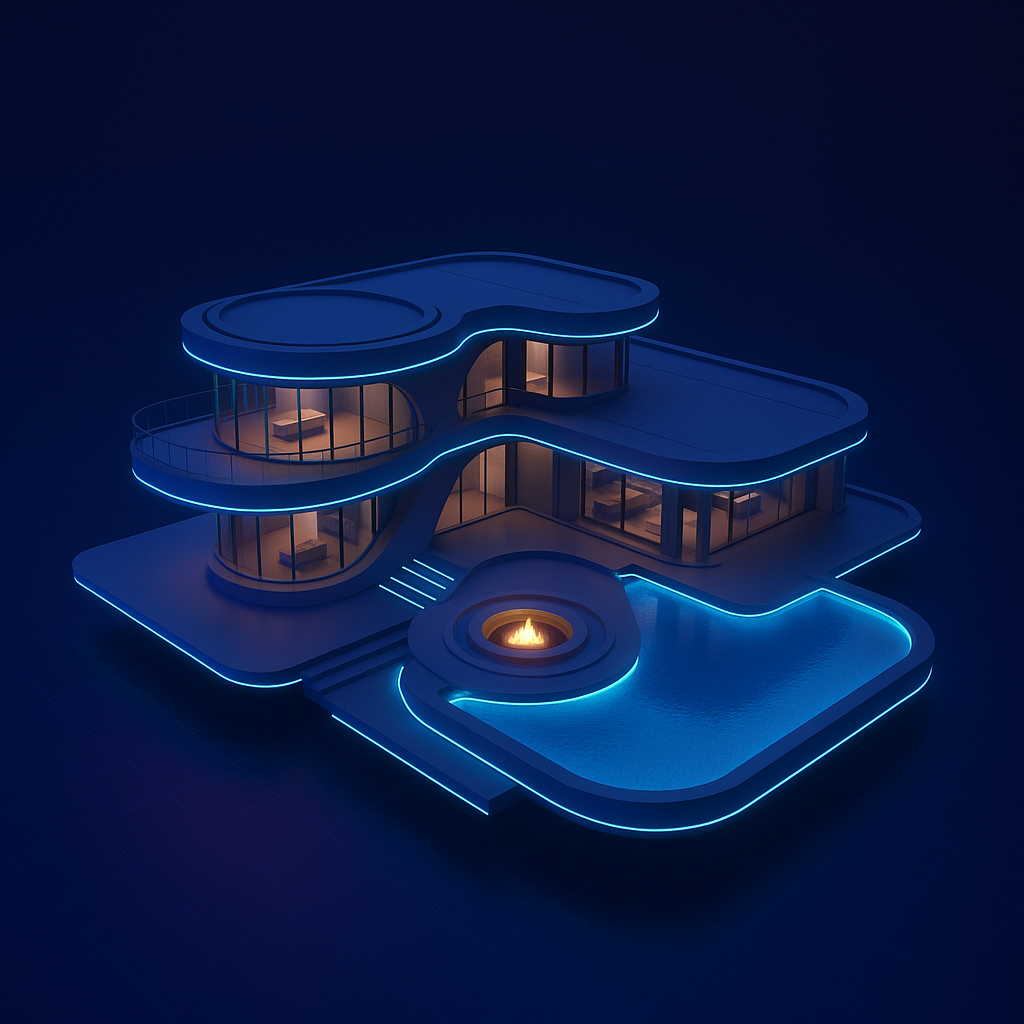
Top Billing's 2026 reboot decodes South African luxury for Gen Z, blending metaverse mansions, AI fashion & NFT art.
The 2026 version of Top Billing is totally changing what luxury means for young people. It uses TikTok, AR, and VR to show off amazing houses and cool new tech, moving away from old-fashioned rich stuff. Imagine drone racing through a closet or walking through a virtual mansion! This new show is all about sharing, new money like NFTs, and even teaches school kids about finance, making luxury exciting and relevant for today's digital world.
What is the main question readers have about the article?
The article primarily addresses how the 2026 iteration of Top Billing redefines luxury and television for a new generation, specifically focusing on how it integrates technology, social media, and a young, diverse cast to appeal to "TikTok Natives" and reflects a shift from traditional luxury concepts.
Get Cape Town news in your inbox
Stay updated with the latest stories from the Mother City.
The Calendar Was Never Random
Studio planners locked the debut long before the public saw a hashtag.
They circled Thursday 30 April 2026 because township TV retailers register their biggest high-def screen sales on the last payday of the month; new owners switch on at suppertime to “test the purchase,” swelling S3’s numbers for free. The slot also sits on the eve of Workers’ Day, gifting the promo team a four-day weekend in which memes, repeats and reaction videos can mushroom while the country is off the clock. In short, the schedule was reverse-built for shareability, not the old overnight-rating trophy.
The reveal strategy skipped the usual glossy trailer.
Instead, five augmented-reality QR stickers were hidden inside lifts, cafés and parking bays at The MARC in Sandton. A phone scan spat out a 15-second vertical video of a glass cube floating between two 1970s concrete towers in Braamfontein, ending with the line: “Luxury quit using postcodes.” Within 48 hours the teasers had clocked 1.3 million views and estate agents were listing homes as “post-luxury.” By the time the press release arrived, the audience had already written the marketing voice.
That buzz forced advertisers to rewrite their media plans.
A premium gin label that had booked a 30-second spot begged to move spend into the downloadable VR file so drinkers could “walk” through the digital bar. The switch set the tone: from here on brands would buy space inside the scan, not around it.
Meet the New Faces - and the Cameras They Ride
Basetsana Kumalo and Dr Michael Mol still open the show, but the heavy lifting is now split into four verticals, each fronted by a Gen-Z specialist.
Zia “Blurr” Mthimunye, a 22-year-old drone-racing champion, styles fashion stories while piloting an FPV quad through sneaker closets at 120 km/h.
Dr Lwazi Myeki, Wits lecturer and TikTok science star, 3-D-prints clay tiles from rehabilitated mine-dump soil and rates houses on how little carbon they bleed.
Chef-cum-chemical-engineer Tala Ntuli runs a cloud kitchen in Midrand that re-imagines sorghum and millet as five-course tasting menus minted as NFT receipts.
Naledi Kgosana, a digital-twin agent, buys and flips waterfront villas that exist only inside Fortnite Creative 2.0; her monthly dollar turnover already eclipses many flesh-and-brick Sandton brokers.
The old helicopter glide over emerald lawns is dead.
In its place is the “data dive”: a LiDAR sweep captures every stud, pipe and Wi-Fi dead zone, then Unreal Engine lets the camera ghost through walls in a single take. Viewers can kill the voice-over and free-roam the model in VR. Advertisers pay extra to embed products inside the file; an Italian tile firm recorded a 600 % web-traffic bump after fans re-skinned the virtual bathroom with its new lava-stone finish.
Traditional super-car glamour is gone too.
Blurr pits a colour-shifting e-ink Kombi against a solar-boosted longboard on Rivonia Road. The race tracks heart-rate, carbon saved and DMs per kilometre, awarding the most “efficient flex” rather than pure speed. The segment is shot, edited and uploaded before the traffic lights change green again.
Show Me the Money - Then the New Money
The 1990s format relied on mansion owners donating their homes for bragging rights.
The 2026 economy flips that script: crypto-flush twenty-somethings pay the producers a R 285 000 “content facility fee” to laser-scan their properties and mint them as limited-edition collectables. Smart contracts carve resale royalties 30/70 in favour of the owner; the show nevertheless pockets a six-figure slice every time the token changes hands online. The first drop sold out in 11 minutes on Polygon, earning more than the entire season’s old-school ad spend.
Corporate South Africa is stampeding to get inside the frame.
Nedbank’s green-bond unit bankrolled the whole sustainable-architecture vertical in exchange for embossing its 2027 carbon target on every 3-D-printed tile. Discovery Vitality layers on a “wellness” plug-in: walk 10 000 steps while you VR-tour the penthouse and you earn points redeemable against the next NFT drop. Health metrics and house deeds now share the same blockchain, something no actuary saw coming.
Even the travel budget has been rewired.
The “Slow Stamp” strand rules that every destination must be reachable from South Africa within 72 hours using only public or shared transport. Episode two straps fashion influencer Aisha Cassim to the revived Tazara rail, her phone charging off the train’s regenerative brakes. The episode climaxes with a WhatsApp-powered thrift pop-up on the platform; viewers purchase up-cycled garments while the locomotive idles, proving luxury can bloom on a moving budget.
School Exams, Starry Skies and Eternal Archives
The Department of Basic Education has baked the show into Grade 10 EMS lesson plans.
Learners must critique how digital scarcity is engineered inside the NFT mansion market and calculate the implied rental yield of a beach house that only exists in code. Early results recorded a 17 % leap in financial-literacy scores where the clips were used, turning Thursday-night escapism into Monday-morning homework.
Environmental side-effects are tracked just as closely.
Every location contract now enforces a 30-minute “dark-sky” window after the drone flight: all façade lights switch off so astrophotographers can capture the real night sky above the property. The star-fields are stitched into the VR file, letting inner-city kids crane their necks at a Milky Way they rarely see. Cape Town’s Astronomy Association logged a 40 % drop in residential LED glare on shoot nights - an accidental win for stargazers.
Finally, nothing is allowed to vanish.
Scans, sound stems, smart-contract code and even viewer chat logs are parked on Arweave’s permanent web. Two centuries from now a historian in a quantum headset should be able to wander through a 2026 Sandton penthouse and overhear a dinner debate about Stage-8 load-shedding, preserved at 32-bit fidelity. South Africa’s national archives waived usual copyright, convinced the archive will one day explain how a nation with 60 % youth unemployment became the lab for post-physical wealth.
And the loop never closes.
Episodes end on an empty soundstage: drones power down, printers cool, lights fade. A QR time-stamp invites fans to book a Saturday studio tour - payment accepted only in that week’s NFT currency. The queue stretches down Artillery Road; teens clutch phones that flash rotating avatars of swimming pools measured in pixel resolution, not litres. Security greets them as “landlords of the glitch,” the first generation to own square metres that weigh absolutely nothing - and yet, for a few dazzling minutes, matter more than marble ever did.
[{"question": "
What is the 2026 version of Top Billing and how does it redefine luxury?
\nThe 2026 version of Top Billing is a revolutionary South African luxury lifestyle show that redefines luxury for \"TikTok Natives\" and a new generation. It moves away from traditional notions of wealth by integrating advanced technology such as TikTok, augmented reality (AR), virtual reality (VR), drone racing, 3D printing, and NFTs. The show focuses on \"post-luxury\" concepts like sustainable living, digital assets, and shared experiences, making luxury engaging, relevant, and accessible for a digitally-native audience.
\n", "answer": ""}, {"question": "Who are the new faces of Top Billing and what do they bring to the show?
\nWhile Basetsana Kumalo and Dr Michael Mol still open the show, the core content is now driven by four Gen-Z specialists: Zia \"Blurr\" Mthimunye, a drone-racing champion who styles fashion stories; Dr Lwazi Myeki, a Wits lecturer and TikTok science star focusing on sustainable architecture; Chef-cum-chemical-engineer Tala Ntuli, who creates NFT-receipted five-course tasting menus; and Naledi Kgosana, a digital-twin agent who buys and sells virtual waterfront villas in platforms like Fortnite Creative 2.0. These new presenters bring diverse, tech-savvy expertise to each segment.
\n", "answer": ""}, {"question": "How does Top Billing leverage technology like AR, VR, and NFTs?
\nTop Billing extensively uses AR, VR, and NFTs to create immersive and interactive experiences. For instance, initial teasers involved AR QR stickers. The show utilizes LiDAR technology and Unreal Engine for \"data dives\" into properties, allowing viewers to free-roam virtual models in VR and advertisers to embed products. NFTs are central to the show's economy, with crypto-flush individuals paying fees to have their properties laser-scanned and minted as limited-edition NFT collectables, generating revenue through resale royalties.
\n", "answer": ""}, {"question": "How has the show's funding model and advertiser engagement changed?
\nThe 2026 Top Billing has completely transformed its funding model. Instead of relying solely on traditional advertising, it now charges a \"content facility fee\" to property owners who want their homes scanned and minted as NFTs. The show earns six-figure sums from resale royalties of these digital assets. Advertisers now buy \"space inside the scan,\" integrating their brands directly into downloadable VR files and digital experiences, rather than just purchasing traditional ad slots, as seen with a premium gin label moving spend to a digital bar in VR.
\n", "answer": ""}, {"question": "What social and educational impact does the new Top Billing aim to achieve?
\nBeyond entertainment, the show has significant social and educational impacts. It's integrated into Grade 10 EMS lesson plans by the Department of Basic Education, teaching students about digital scarcity, NFT markets, and implied rental yields, leading to a 17% leap in financial-literacy scores. Environmentally, location contracts enforce \"dark-sky\" windows for astrophotography, reducing light pollution. The show also aims to create a permanent archive of its content on Arweave, preserving a snapshot of South African culture and wealth for future generations.
\n", "answer": ""}, {"question": "What is \"post-luxury\" and how does Top Billing embody it?
\n\"Post-luxury\" as embodied by Top Billing signifies a shift from traditional, material-based indicators of wealth (like mansions and supercars) to new forms of value that are often digital, experiential, sustainable, and shared. It prioritizes efficiency, ethical consumption, digital ownership (NFTs), and immersive experiences (VR/AR) over ostentatious displays of physical wealth. The show promotes \"efficient flexes,\" sustainable architecture, and accessible travel, proving that luxury can \"bloom on a moving budget\" and that \"square metres that weigh absolutely nothing\" can matter more than marble.
\n", "answer": ""}]
Michael Jameson is a Cape Town-born journalist whose reporting on food culture traces the city’s flavours from Bo-Kaap kitchens to township braai spots. When he isn’t tracing spice routes for his weekly column, you’ll find him surfing the chilly Atlantic off Muizenberg with the same ease he navigates parliamentary press briefings.
View all articles →