
US-ISRAELI ATTACKS ON IRAN COULD IMPACT FOUR SA RUGBY TEAMS
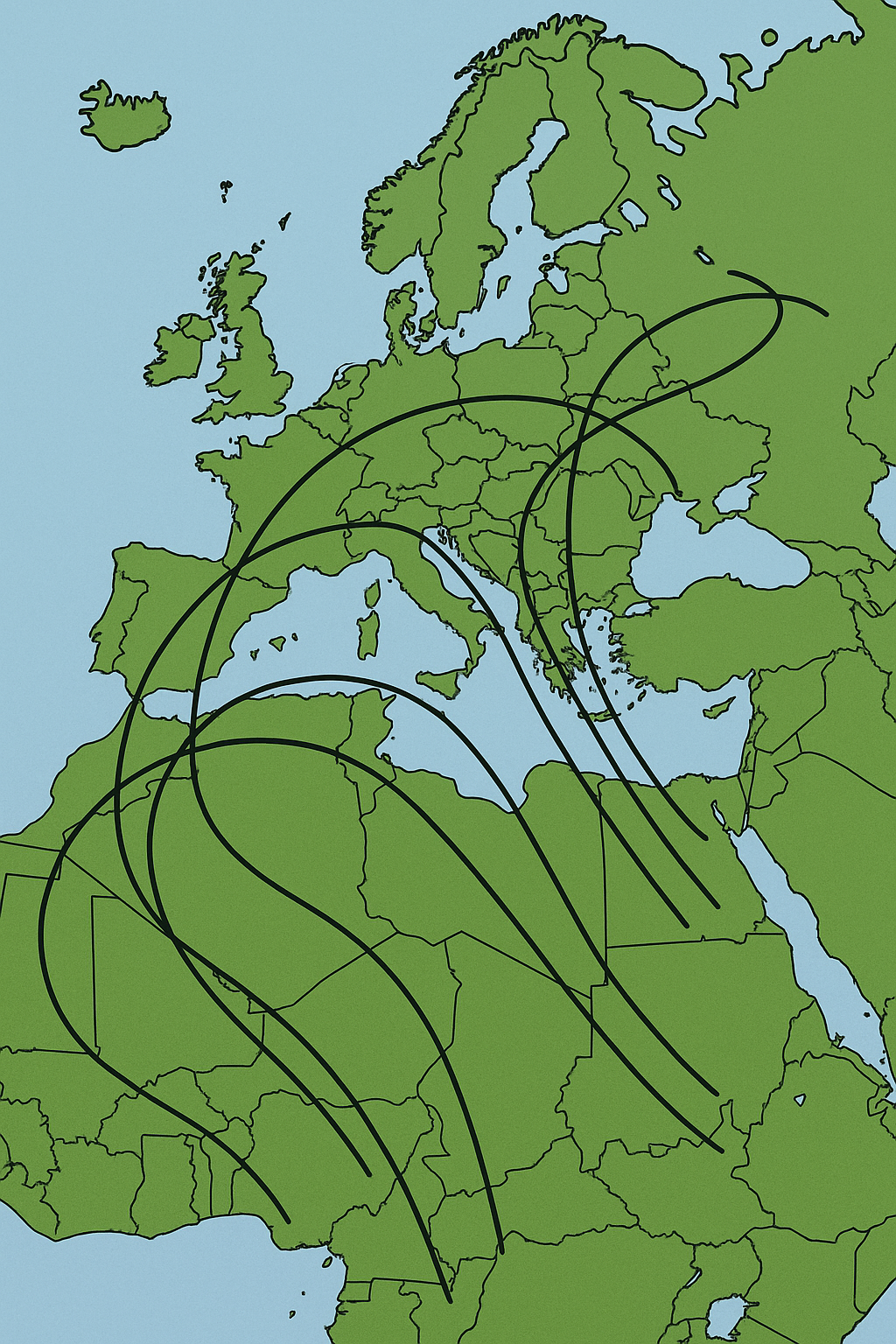
Middle-Eastern conflict redraws travel maps for SA Rugby, forcing teams to navigate rising costs, rerouted flights, and logistical nightmares.
The Middle-East conflict is causing huge problems for South African rugby teams traveling to Europe. Flights are now longer, more expensive, and face extra fees because of dangerous skies. This makes it tough to get players to games and costs a lot more money for hotels and travel. Teams worry about player injuries and even losing games if they can't get there on time, making future travel plans very uncertain.
How is the broader Middle-East conflict impacting South African rugby's European travel plans?
South African rugby teams face significant travel disruptions to Europe due to the Middle-East conflict. Flight paths are being redrawn, adding hours and millions in fuel costs, alongside new "war-risk surcharges." This geopolitical instability is also affecting hotel prices and increasing the risk of player injuries, severely impacting logistics and finances for European fixtures.
Get Cape Town news in your inbox
Stay updated with the latest stories from the Mother City.
Calendar, Cash and Contours
The 2025-26 northern-hemisphere season was meant to mark the moment South African rugby finally felt at home in Europe. After three seasons of dawn landings in Dublin and late-night coach rides across Wales, the Sharks, Bulls, Stormers and Lions had locked in charter blocks, frequent-flyer tie-ins and even a shared long-haul wet-lease deal that promised 38 fully-flat business beds every second weekend. Those agreements were inked in July, months ahead of Hamas’s 7 October attack and well before Tel Aviv and Washington opened their sixth and widest round of strikes on Iranian ports and nuclear sites. The assurances that once underwrote those deals - open Gulf skies, stable jet fuel prices, crew-rest nights in Doha or Dubai - have vanished.
What is left is a fixture list that still looks like a glossy travel catalogue: Galway in early April, Newport on a Friday night, Toulon’s sun-splashed Stade Mayol on a Saturday, Belfast on a bank-holiday weekend. From 3 April to 16 May the four franchises must complete a minimum of 11 away fixtures in the URC and EPCR, nine of them west of the Rhine and two in the Mediterranean corridor. European Professional Club Rugby’s rulebook is brutal: if a squad cannot touch down inside 24 hours of kick-off, the match is forfeited 28-0 and the host union pockets the gate. The 2019 revision of the regulations never foresaw “regional war” or “airspace closure” as force-majeure events; back then, the only existential threat was a virus.
The Geography That Now Shapes Ticket Prices
Passenger traffic between South Africa and Europe normally rides two aerial highways: the “southern arc” (Johannesburg–Windhoek–Luanda–Accra–London) and the far busier “eastern arc” (Cape Town–Victoria–Seychelles–Muscat–Dubai–Istanbul). Roughly three-quarters of all seats from OR Tambo northbound flow through the Gulf hubs. Since 12 December, when the Pentagon declared a 72-hour exclusion box from Bandar Abbas to the Strait of Hormuz, Emirates, Qatar Airways and Etihad have axed 41 % of weekly frequencies. Lufthansa and Swiss transferred cargo crews to passenger divisions, suspending Frankfurt–Tehran and Zurich–Dubai freight legs.
Turkish Airlines still advertises a Cape Town–Istanbul rotation, but the flight plan now bends 220 nautical miles north over Sudan and the Black Sea, adding 55 minutes and 5.3 t of jet-A per sector. On a chartered Boeing 777-300ER that extra burn costs US 34 000 - just under R650 000 - each way. Multiply by the eleven sectors the unions must fly and the unbudgeted bill tops R7 million. SARU’s travel grant was fixed in rand last July; since then the currency has shed 11 % against the dollar-linked fuel hedge. The hole is widening every time the oil price ticks higher.
What Decision-Makers Whisper (but Won’t Print)
Three high-performance chiefs - one each from Durban, Cape Town and Pretoria - agreed to speak only if their names and precise phrasing stayed off the record. Their consensus is brutally practical. Charter brokers now tack on “war-risk surcharges” of US 8 000 for every hour an aircraft must overfly the Gulf or Iraq. European hubs will not accept non-EU registered charters after 23:30 local because of post-Olympics crew-curfew rules, shredding the popular Friday-morning-out, Sunday-night-back rhythm SA sides have relied on. French unions have hinted that if a South African charter touches down less than six hours before kick-off they will demand a midday medical inspection under EPCR anti-doping code - effectively forcing coaches to finalise their match-day 23 somewhere over the Mediterranean.
The Detours Already Priced by Brokers
Air Charter Service, the firm that flew the Lions through last season’s Champions Cup pool, has circulated a 14-page “red-zone memo” outlining four possible escape lanes:
-
The Dakar Gateway
Johannesburg–Dakar in an A330, refuel, then hug the Atlantic to Lisbon. The route bypasses the Suez ADIZ entirely but adds 1 800 nm and requires a relief crew in Senegal, pushing cost up by US 120 000. -
The Central-African Spine
Cape Town–Kinshasa–Bamako–Bordeaux is doable with an A340-500, yet overflight rights through the DRC are under review after February’s coup scare. Insurers have slapped on a 0.35 % hull-risk surcharge - an extra US 385 000 on a US 110 million jet. -
The Polar Express
A non-stop Johannesburg–Helsinki run on a Finnair A350-900 rides the 78° north great-circle. It works in European winter but by late April head-winds restrict payload to 220 passengers, leaving no room for commercial uplift to offset the charter fee. -
The Split-Squad Ferry
Dispatch the match-day 23 on the earliest Turkish Airlines connection via Istanbul and send the remaining 25 on a cargo-converted B767 with seats. EPCR allows 48-hour squad registration, so both halves can reunite in Europe. Medical staff loathe the idea: one Istanbul-borne bug could split the squad under quarantine for the entire week.
Hotels: The Second Battlefield
Even if the aircraft fly, the beds may disappear. UEFA and EPCR oblige host cities to ring-fence room blocks - 1 000 for Champions Cup last-16 ties, 600 for URC top-eight clashes - at non-refundable rates eight weeks out. Middle-Eastern rerouting is funnelling thousands of long-haul passengers through Lisbon, Madrid and Rome, driving average daily rates up 34 % year-on-year. The Stormers were quoted €420 per room per night in Cardiff on 13 May against a budget of €190.
Clever unions have invoked “sister-city” deals: the Sharks will lodge at Swansea University, 90 km from the Ospreys’ Bridgend base, and bus in on match-day; the Bulls have commandeered a holiday park in the Brecon Beacons, rebranding it a 400 m high-altitude camp close enough to Newport to satisfy EPCR rules yet distant from hotel price spikes.
Hidden Fall-out No One Headlined
Performance staff calculate that every added four hours in transit lifts soft-tissue-injury risk by 0.7 % over the next fortnight. On the Dakar routing that projects to two extra hamstring strains per campaign. Sky UK has quietly inserted a clause letting kick-off drift ±48 hours if either side proves “verifiable transport disruption beyond commercial remedy,” threatening SuperSport’s Saturday slot and angering season-ticket holders who have already bought Johannesburg–Dublin flights. One major South African bank is reportedly rethinking sleeve-sponsorship activation because brand managers fear logos above news tickers screaming “WAR-ZONE DETOUR.” Agents say at least six Springbok-eligible players holding EU passports have written “European-base only” clauses into new deals, doubting SA clubs can guarantee seamless travel.
Matches That Could Still Vanish
Although April charters are locked, the May itinerary is conditional. EPCR’s competition manual article 12.3 lets the organising committee cancel or relocate a tie if both governments issue parallel Level 4 travel advisories. Pretoria has kept Iran, Iraq and the Gulf at Level 3 for now, but diplomats warn a move to Level 4 is “one missile strike on a civilian tanker away.” Should that happen, the Stormers’ 15 May date in Cardiff could shift to a neutral Spanish or Italian venue, while the Lions’ Dublin–Limerick double-header might compress into a single “Super Saturday” at London’s Tottenham stadium - great for broadcasters, ruinous for Irish gate receipts.
The Insurance Abyss
Standard sports-travel policies exclude “war and civil commotion.” SARU has therefore paid a US 1.8 million Lloyd’s binder that triggers only if the UK Foreign Office and the US State Department simultaneously label an airspace “hostile.” The cover reimburses ticket value for outright cancellation inside 96 hours, not rerouting costs. Unions must still shoulder higher fuel, extra crew, inflated hotels - yet if the jet never moves they claw back the fare. It is the costliest of gambles: spend more up front, pray for total cancellation.
Pretoria’s Counter-Strategy
SARU’s high-performance committee met on 2 March and produced a three-phase protocol:
- Phase 1 (now–31 March): Strip non-essential cargo - promo crates, spare scrum machines - saving 1.2 t and US 14 000 each sector.
- Phase 2 (1–30 April): Activate a “shadow squad” of 12 development players already contracted to English Championship clubs. If the main group is marooned, the shadow squad can fulfil the fixture under EPCR rule 15.4, dodging a 28-0 forfeit.
- Phase 3 (1 May onward): Lobby Celtic unions to reverse two-leg playoffs so South African sides travel first, return home for the decider, shrinking European exposure to any further airspace closures.
An Echo from 1991
When the Gulf War erupted in 1991, the Springboks were scheduled to tour Britain and France. SANOC cancelled after insurers refused cover at any price and South African rugby vanished from the northern hemisphere for two seasons, surrendering hard-won commercial traction built through the 1989 rebel tours. Three decades on, the currency is different - broadcast deals, not goodwill - but the lesson is identical: when rockets light up Middle-Eastern skies, even the mightiest sporting atlas can be shredded overnight.
[{"question": "
How is the broader Middle-East conflict impacting South African rugby's European travel plans?
", "answer": "The Middle-East conflict is causing significant disruptions for South African rugby teams traveling to Europe. Flight routes are being redrawn, leading to longer travel times, increased fuel costs, and new 'war-risk surcharges.' This geopolitical instability also affects hotel prices and elevates the risk of player injuries, severely impacting logistics and finances for European fixtures. Travel plans for the future have become highly uncertain.
"}, {"question": "What financial implications are South African rugby teams facing due to these travel disruptions?
", "answer": "The financial strain is considerable. The rerouting of flights, particularly those bending over Sudan and the Black Sea, adds significant fuel costs. For example, a chartered Boeing 777-300ER can incur an extra US$34,000 (roughly R650,000) each way in fuel burn. 'War-risk surcharges' of US$8,000 per hour for overflying the Gulf or Iraq are also being added by charter brokers. Additionally, hotel prices have surged, with some teams being quoted more than double their budget. SARU's travel grant, fixed in rand, has also been devalued by currency fluctuations, exacerbating the financial hole.
"}, {"question": "What are the alternative flight routes being considered, and what challenges do they present?
", "answer": "Several alternative routes are being explored, each with its own challenges:
- The Dakar Gateway: This route involves flying Johannesburg–Dakar, refueling, and then hugging the Atlantic to Lisbon. It bypasses the Suez ADIZ but adds 1,800 nautical miles and requires a relief crew in Senegal, increasing costs by US$120,000.
- The Central-African Spine: A Cape Town–Kinshasa–Bamako–Bordeaux route is possible with an A340-500, but overflight rights through the DRC are under review due to political instability, and insurers have added a 0.35% hull-risk surcharge, an extra US$385,000 on a US$110 million jet.
- The Polar Express: A non-stop Johannesburg–Helsinki flight on a Finnair A350-900 rides the 78° north great-circle. While viable in winter, by late April, headwinds restrict payload, leaving no room for commercial uplift to offset charter fees.
- The Split-Squad Ferry: This option involves sending the match-day 23 on a Turkish Airlines connection via Istanbul and the remaining 25 on a cargo-converted B767. However, medical staff are concerned about potential illness outbreaks within the squad.
How are hotel accommodations being affected, and what strategies are teams employing to mitigate costs?
", "answer": "Hotel accommodations are becoming a 'second battlefield' due to the rerouting of thousands of long-haul passengers through European cities like Lisbon, Madrid, and Rome, driving up average daily rates by 34% year-on-year. To counter this, clever unions are leveraging 'sister-city' deals. For example, the Sharks will stay at Swansea University, 90 km from their Ospreys' base, and bus in on match-day. The Bulls have booked a holiday park in the Brecon Beacons, rebranding it as a high-altitude camp close enough to Newport to meet EPCR rules but distant from peak hotel prices.
"}, {"question": "What are the potential impacts on player welfare and match outcomes?
", "answer": "Increased transit times pose a significant risk to player welfare. Performance staff estimate that every additional four hours in transit increases the soft-tissue-injury risk by 0.7% over the subsequent fortnight, potentially leading to two extra hamstring strains per campaign on routes like the Dakar option. Furthermore, European Professional Club Rugby (EPCR) rules are strict: if a squad cannot arrive within 24 hours of kick-off, the match is forfeited 28-0, meaning teams could lose games without even playing, and the host union pockets the gate revenue.
"}, {"question": "What is SARU's counter-strategy to address these challenges?
", "answer": "SARU's high-performance committee has developed a three-phase protocol:
- Phase 1 (now–March 31): Strip non-essential cargo (e.g., promo crates, spare scrum machines) to save weight, reducing costs by US$14,000 per sector.
- Phase 2 (April 1–30): Activate a 'shadow squad' of 12 development players already contracted to English Championship clubs. This squad can fulfill fixtures under EPCR rule 15.4 if the main team is stranded, preventing a 28-0 forfeit.
- Phase 3 (May 1 onward): Lobby Celtic unions to reverse two-leg playoffs, allowing South African sides to travel first and return home for the decider, thereby minimizing European exposure to potential airspace closures."}]

Amanda Wilson is a Cape Town-born journalist who covers the city’s evolving food scene for national and international outlets, tracing stories from Bo-Kaap spice shops to Khayelitsha micro-breweries. Raised on her grandmother’s Karoo lamb potjie and weekend hikes up Lion’s Head, she brings equal parts palate and pride to every assignment. Colleagues know her for the quiet warmth that turns interviews into friendships and fact-checks into shared laughter.
View all articles →