
Watch: Ramaphosa commends doctors following conjoined twins surgery
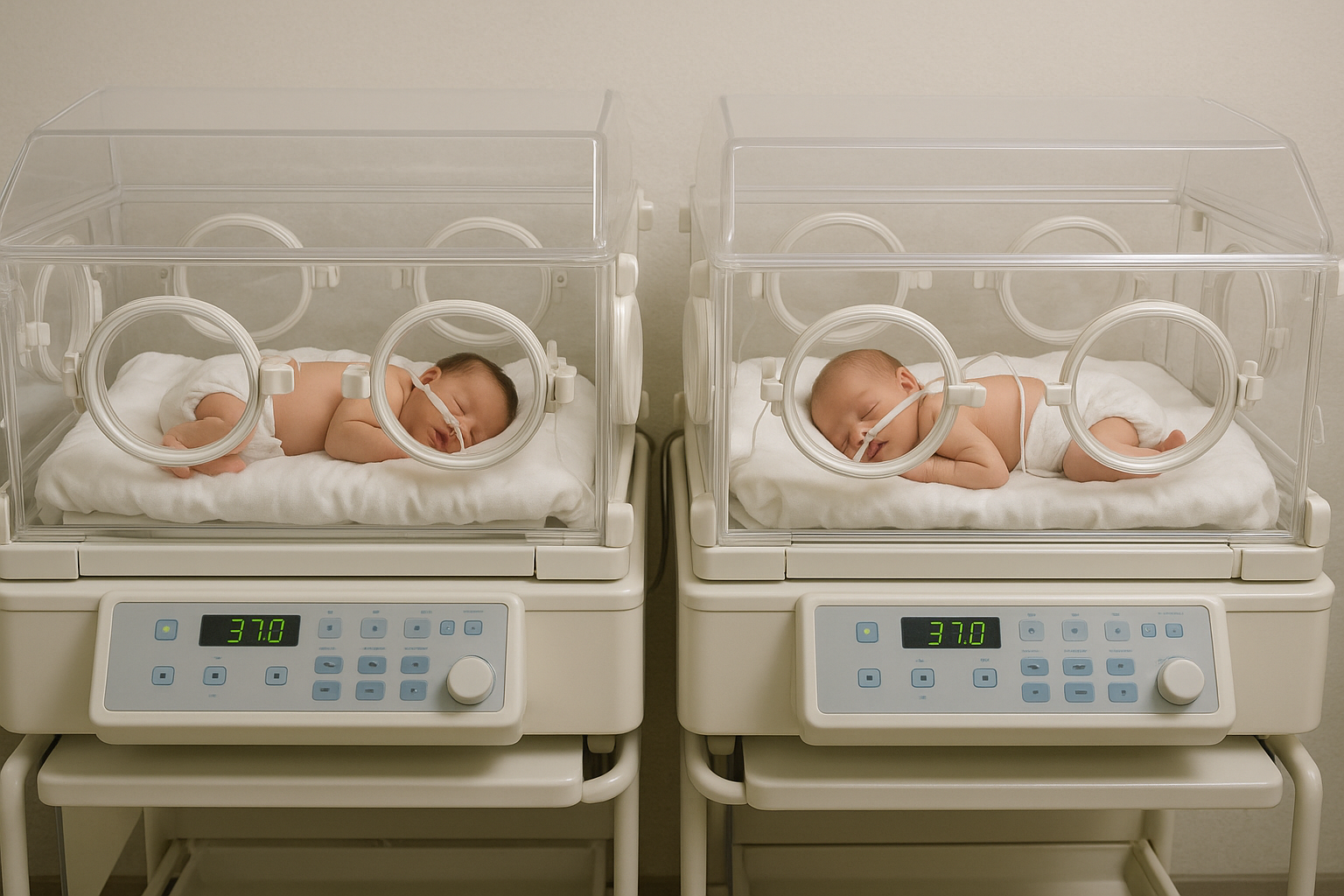
Mankweng Hospital achieves a medical marvel, successfully separating conjoined twins in a 48-day campaign, shifting surgical excellence in SA.
In a truly amazing feat, Limpopo, South Africa, successfully separated conjoined twin boys in 2026, making global headlines. This wasn't just any surgery; it showcased incredible ingenuity, like growing new body parts from the twins' own cells and powering the whole operation with solar energy. It proved that even with limited resources, passion and clever solutions can achieve medical miracles. This event has put Limpopo on the map as a leader in complex surgeries, inspiring a whole region.
What medical firsts has Limpopo achieved in complex surgeries?
Limpopo has achieved several significant medical firsts:
* The planet's first HIV-positive-to-positive kidney transplant (2018).
* The first heat-stable carbetocin trial for post-partum haemorrhage (2021).
* The first conjoined-twin separation using autologous tissue-engineered graft outside the global North (2026).
Get Cape Town news in your inbox
Stay updated with the latest stories from the Mother City.
The Clip That Shook a Province
At 07:03 on 17 March 2026 every smartphone in Limpopo vibrated in unison.
A twelve-second, low-resolution recording - shot on a nurse’s ageing Android - showed two infant boys breathing in perfect, separate rhythms.
The boys had never lain side-by-side before; until that moment their chests rose and fell like pistons wired to the same crank.
Within seven minutes the Presidency reposted the footage, eNCA froze its breakfast ticker, and #Mankweng Miracle out-trended the UEFA play-off draw.
The public reaction looked spontaneous, yet the clip was the carefully timed finale of a 48-day internal campaign code-named “Operation Sekwele” - Sepedi for “divide and share”.
Communications staff had sat on the footage for 36 hours, waiting for the neonatal team to confirm stable blood gases and for the provincial head of media to return from a Gauteng funeral.
Their restraint paid off: by sunset the hospital’s switchboard had crashed, the Limpopo health website had clocked two million hits, and Dr Nyaweleni Tshifularo’s name was being spelled (and misspelled) from Lagos to Lisbon.
What the clip did not show was the army of people who had already been living inside the story for six weeks: cleaners who learned to mop around a 3-D printer, cooks who plated 2 ml breast-milk fortifier into specimen cups, and security guards who logged every DHL van as if it carried donor organs - which, in fairness, it often did.
Their invisible labour became the substrate on which fame grew, reminding the province that a single dramatic frame is merely the fruit of a very long vine.
From Late Diagnosis to Surgical Moonshot
The drama began quietly on 28 January at Maputha-Malatjie District Hospital, where a 29-year-old first-time mother pushed out a double-footling breech that turned out to be two boys sharing a liver and a postage-stamp of diaphragm.
Because she had missed four scheduled antenatal scans, the fusion was picked up only at week 34, leaving the province a three-week runway to plan what most centres contemplate for three months.
A provincial tele-audit classified the anatomy as “separable omphalopagus”, landing the infants in the lucky 30 % bracket, but the official referral algorithm still pointed to Pretoria or Cape Town - cities 300 km and 1 600 km away respectively.
The on-call paediatric surgeon that night was Tshifularo, a 42-year-old associate professor who had spent 18 months in Toronto learning to print livers in translucent resin.
He argued, successfully, that distance alone should not dictate destiny: Limpopo had a teaching hospital, a 128-slice CT, and - crucially - a WhatsApp group that had been forged in the aftermath of a 2022 ECMO transfer tragedy.
By 02:00 the retrieval ambulance was heading north-east instead of south-west, and the twins arrived at Mankweng wrapped in ordinary hospital blankets because the expensive transport incubator was, ironically, already en route to Gauteng for servicing.
Within 90 minutes of arrival, CEO Mabunda sent the first “CODE TWINS” blast, and OR 3 was indefinitely block-booked.
Procurement officers - usually painted as villains in public-health lore - became improbable heroes, invoking Section 32 of the Public Finance Management Act to unlock R3.8 million in 72 hours.
They ordered everything from Munich Gore-Tex to a 1:1 liver cast that would later sit on the CEO’s desk like a translucent paperweight, reminding visitors that bureaucracy can move at the speed of life if the motive is loud enough.
Engineering a New Anatomy Inside an Old Hospital
While journalists waited for a “separation day”, the real work unfolded in 2 ml increments: blood draws, nutrition tweaks, VR rehearsals.
Radiographers pushed low-dose perfusion scans to the university cluster each night; by week 3 the digital twin predicted that the left infant could keep 62 % of the shared liver, well above the 35 % metabolic safety line.
The right infant, however, faced a 28 % diaphragmatic shortfall, a gap that could sentence him to lifelong ventilation.
Engineers solved the problem with a patch grown from the boys’ own thigh fascia, bathed in platelet-rich plasma inside a hacked blood-gas machine - Africa’s first autologous tissue-engineered diaphragm.
Anaesthesia posed a Goliath challenge: combined weight 5.7 kg, total blood volume 450 ml - less than a soda can.
Seventeen altruistic donors were rostered into a rolling expiry calendar so that no unit of Kell-negative blood would be older than 48 hours at transfusion time.
A perfusionist built a Lego-like rapid-infuser from a syringe-driver that could ram 20 ml/min through a 24-gauge cannula; the university has since filed a patent and nicknamed the gadget “Mini-Moto”.
When the Wall Street Journal later called the device “MacGyver medicine”, the inventor laughed: “We just couldn’t buy what we needed, so we parented what we lacked.”
On 15 March the hospital unplugged from Eskom and ran the entire theatre wing on its new 1 MVA solar farm, ensuring that Stage-4 load-shedding could not flicker a single cautery pen.
Two GoPro-wearing nurses live-streamed to an overflow seminar room where final-year students timed every clamp-and-cut with stopwatches.
At 10:31 Tshifularo tied the final 7/0 prolene stitch; simultaneously, Masha unlocked the right table and the boys rolled apart like train carriages decoupling on a siding.
Total blood loss: 32 ml - less than the volume the anaesthetist usually discards when flushing his lines before breakfast.
Aftershocks: Politics, Headlines and the Long View
Before the twins blinked awake, the political machinery had already shifted into celebration gear.
President Ramaphosa, midway through a Kenya trade visit, ditched a golf slot to laud “procurement ninjas who weaponised the PFMA for good”.
Limpopo Premier Mathabatha summoned an emergency legislature session to table a R120 million escalation fund, while Health MEC Ramathuba declared Mankweng one of four future “Centres of Paediatric Surgical Excellence” - complete with a bio-printing lab and a College-accredited fellowship.
Headlines from London to Doha anointed the event “solar-powered separation”, and The Lancet requested MRI-angio fusion images for an August cover, a first for an African public hospital.
Yet triumph rides shotgun with reality.
Mankweng still boils instruments in a 1998 autoclave whose gasket is repaired with paper clips, and four senior paediatric surgeons have left for the UK since 2020.
The same 3-D printer that modelled the liver was salvaged from engineering, calibrated at midnight by students who YouTubed “human tissue tolerances”.
Such ingenuity is born not of abundance but of chronic shortage: when you cannot buy, you braid, solder and sew until the device works long enough to save a life.
Historical ledger-books place the first African separation in Cairo, 1981; sub-Saharan Africa has since logged fewer than 30 indexed successes, most clustered in Gauteng and the Western Cape.
By dragging the epicentre 1 500 km north-east, Limpopo joins its own honours roll: the planet’s first HIV-positive-to-positive kidney transplant (2018), the first heat-stable carbetocin trial for post-partum haemorrhage (2021), and now the first conjoined-twin separation using autologous tissue-engineered graft outside the global North.
As ultrasound penetration improves, more referrals will surface; Nairobi and Accra surgeons have already requested the Mankweng protocol, and COSECSA will broadcast anonymised footage to 14 time-zones.
Every dawn, the NICU whiteboard still carries Tshifularo’s pre-op scribble:
“Skill is cheap; passion is priceless; geography must never be destiny.”
The twins - now 3.1 kg and 3.0 kg respectively - breathe beneath hand-painted name cards, unaware that their first independent lungfuls have become a manifesto for an entire region determined to trade deficit for destiny, one improvised stitch at a time.
[{"question": "What significant medical firsts has Limpopo achieved in complex surgeries?", "answer": "Limpopo has achieved several groundbreaking medical firsts, including the planet's first HIV-positive-to-positive kidney transplant in 2018, the first heat-stable carbetocin trial for post-partum haemorrhage in 2021, and notably, the first conjoined-twin separation using autologous tissue-engineered graft outside the global North in 2026. This last feat involved growing new body parts from the twins' own cells for the separation."}, {"question": "How did Limpopo manage to perform such a complex conjoined-twin separation with seemingly limited resources?", "answer": "The successful conjoined-twin separation in Limpopo was a testament to ingenuity, passion, and clever solutions. Despite resource constraints, the team leveraged existing technology creatively, such as using a 3-D printer salvaged from engineering and calibrating it with YouTube tutorials. They also improvised equipment, like a 'Mini-Moto' rapid-infuser built from a syringe-driver, and powered the entire theatre wing with a 1 MVA solar farm to avoid power outages. This demonstrated that a lack of abundance can foster innovation."}, {"question": "What was the public and political reaction to the conjoined-twin separation?", "answer": "The public reaction was immediate and overwhelming. A 12-second video clip showing the separated twins went viral within minutes, with #MankwengMiracle trending globally. Politically, the event was lauded by President Ramaphosa and Limpopo Premier Mathabatha, who announced a R120 million escalation fund for healthcare. The Health MEC declared Mankweng one of four future 'Centres of Paediatric Surgical Excellence,' complete with a bio-printing lab and a College-accredited fellowship, highlighting the national pride and recognition of this medical achievement."}, {"question": "Who was Dr. Nyaweleni Tshifularo, and what was his role in the separation?", "answer": "Dr. Nyaweleni Tshifularo was the 42-year-old associate professor and on-call paediatric surgeon who played a pivotal role in the conjoined-twin separation. Having spent 18 months in Toronto learning to print livers in translucent resin, he successfully argued for the twins to be treated in Limpopo rather than being transferred to larger cities. His expertise and determination were central to the operation's success, and his name garnered international recognition after the procedure."}, {"question": "What specific challenges did the surgical team face, and how were they overcome?", "answer": "The team faced numerous challenges, including a late diagnosis of the conjoined twins at week 34, leaving only three weeks for planning. The twins shared a liver and a small portion of the diaphragm, requiring precise anatomical engineering. Anaesthesia was particularly challenging due to the infants' combined weight of 5.7 kg and limited blood volume. Engineers created an autologous tissue-engineered diaphragm from the boys' own thigh fascia to address a diaphragmatic shortfall. Procurement officers became 'heroes' by rapidly securing necessary equipment, invoking emergency acts to unlock funds, and even ordering a 1:1 liver cast for planning."}, {"question": "What long-term impact is the conjoined-twin separation expected to have on Limpopo and beyond?", "answer": "The conjoined-twin separation in Limpopo is expected to have a profound long-term impact. It has positioned Limpopo as a leader in complex surgeries, inspiring a whole region and demonstrating that 'geography must never be destiny.' The event has led to plans for 'Centres of Paediatric Surgical Excellence' in the province and requests for the Mankweng protocol from surgeons in Nairobi and Accra. It serves as a manifesto for the region to 'trade deficit for destiny, one improvised stitch at a time,' emphasizing that ingenuity born of shortage can lead to medical miracles and inspire future advancements in healthcare across Africa."}]

Liam Fortuin is a Cape Town journalist whose reporting on the city’s evolving food culture—from township kitchens to wine-land farms—captures the flavours and stories of South Africa’s many kitchens. Raised in Bo-Kaap, he still starts Saturday mornings hunting koesisters at family stalls on Wale Street, a ritual that feeds both his palate and his notebook.
View all articles →