
Explore Cape Town’s nature reserves for free this long weekend
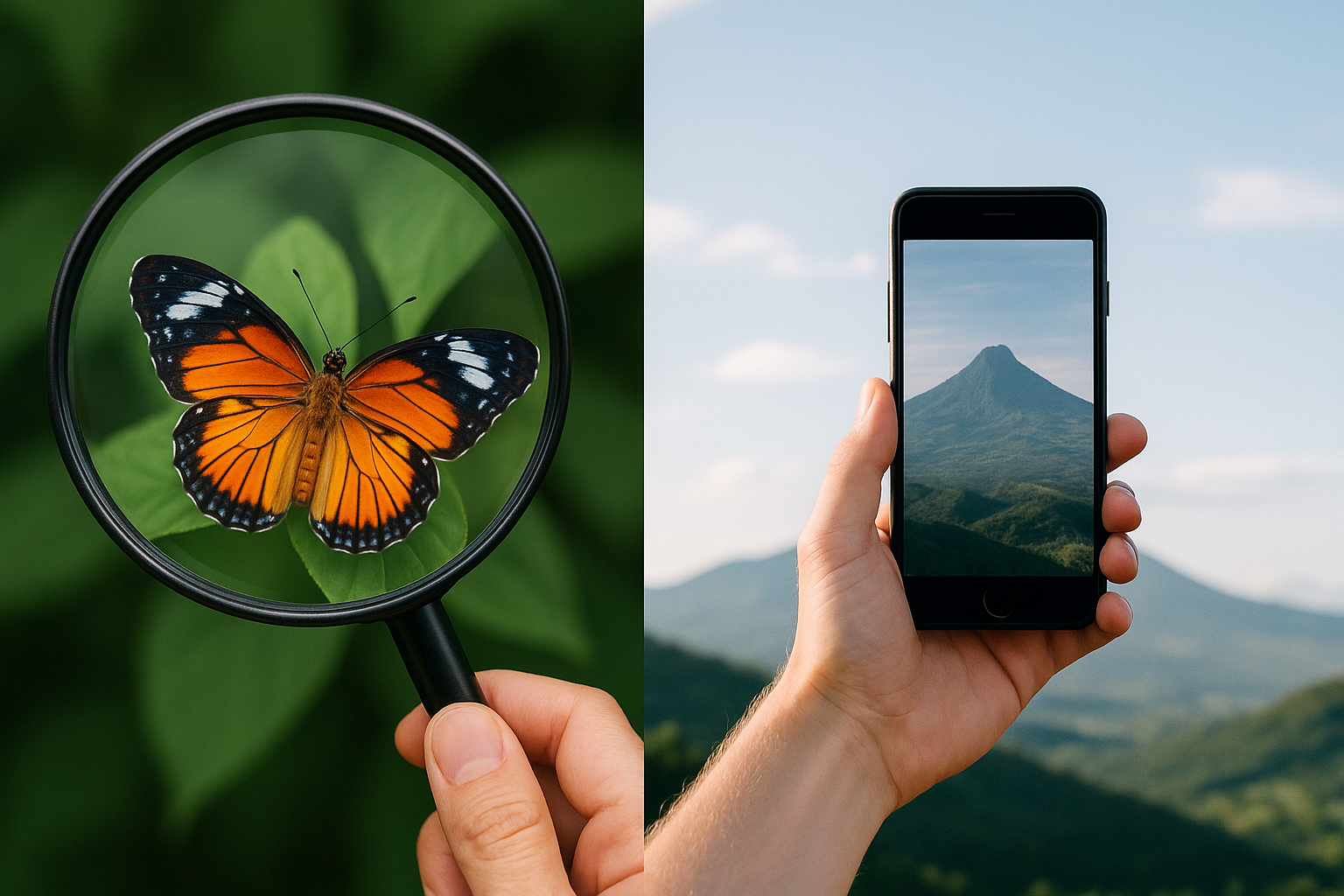
Join Cape Town's free City Nature Challenge 2026! Explore reserves, use iNaturalist, & become a citizen scientist for biodiversity.
Cape Town is hosting an exciting 96-hour event called the City Nature Challenge from April 24-27, 2026. People will use a simple app called iNaturalist to take pictures of plants and animals all over the city, from beaches to backyards. This fun competition helps scientists learn more about nature and protect it for the future. Everyone can join, turning everyday places into amazing outdoor labs to discover wild things!
What is Cape Town's City Nature Challenge?
Cape Town's City Nature Challenge is a 96-hour event (April 24-27, 2026) where citizens document local biodiversity using the iNaturalist app. Participants explore various natural areas, from dunes to wetlands, to record sightings of plants and animals. This global "bioblitz" aims to gather valuable data for scientific research and conservation efforts.
Get Cape Town news in your inbox
Stay updated with the latest stories from the Mother City.
How the Mother City is turning yards, wetlands, rooftops and rock-pools into open-air laboratories
Section 1 – Doors Swing Open
From 24–27 April 2026 every nature gate in the metro - from the windswept Atlantic dunes to the mist-belt kloofs - raises its boom without charging a cent. The timing is deliberate: those four days coincide with the worldwide City Nature Challenge, the planet’s biggest friendly “bioblitz.” While cities vie for the highest tally of wild sightings, the real prize is data. Every picture uploaded to iNaturalist becomes a geo-referenced, time-stamped brick in a digital archive that researchers, teachers and reserve wardens will still be mining in thirty years to see how species cope with warming seas, spreading suburbs or fresh conservation measures.
The process is child-friendly. Download the free app, tap the camera icon, take a picture of anything that looks alive, hit share. Within seconds machine-learning proposes a name, then thousands of human specialists refine or correct it. Once two reviewers agree, the sighting graduates to “research grade” and feeds straight into academic papers. Last year Cape Town racked up 68 000 verifiable records in 96 hours, placing third behind La Paz and San Diego. Long-range weather models predict mild anticyclonic days, light south-easterly breezes and no frontal rain, so organisers privately hope to sail past 75 000.
Section 2 – Where the Wild Things Are
Reserve managers have unclipped the padlocks across more than 30 sites, handing the keys to anyone who wants to play scientist. In the far south, the 552-hectare Kenilworth Racecourse Conservation Area still harbours slivers of critically endangered Cape Flats Sand Fynbos; dawn sees the famous Moraea tulbaghensis iris pop open for a mere handful of sunlit minutes. A short drive away, Silvermine hides tannin-stained pools where the western leopard toad keeps ancient breeding appointments.
Westwards, the 3 000-hectare Kogelberg reserve, often called “the hottest hotspot in the smallest floral kingdom on Earth,” tempts visitors along boardwalks draped over quartz patches sewn with Erica species found nowhere else. Along False Bay you can zig-zag between Helderberg, Harmony Flats and Zandvlei - estuary, strandveld and surf line within ten kilometres - so spotting a southern right whale offshore, an African black oystercatcher on the rocks and an endangered Cape platanna frog in a pond can all be checked off before the tide changes.
Yet the real revelation is that you do not need a bus or car. Verges, traffic circles and cemetery glades have been quietly upgraded to micro-reserves. In 2025 a twelve-year-old in Langa snapped the first urban photograph of a rain spider devouring a peppermint gecko in the alley behind his home; the image now anchors a peer-reviewed study on arachnid range shifts under night-time warming. A retired pharmacist in Bellville added 37 leaf-mining moth species from the balcony of her apartment block, doubling the host-plant lists for several micromoth genera. The refrain from organisers is simple: biodiversity is never “out there”; it is beneath your shoes, above your head and sometimes sitting on your windowsill.
Section 3 – Guided Quests & How to Get There
Expert-led walks roll out like festival shows. At 06:00 on the 24th, marine biologist Dr Maya Govender leads an expedition across St James’s tide-pools armed with underwater magnifiers to reveal candy-striped shrimp and clingfish clinging to pulsating anemones. Saturday at 09:00, bat specialists rig mist nets over Durbanville vineyards before translating the ultrasonic chatter of Cape serotine bats into child-friendly chirps. Dawn on Sunday belongs to the ringing station at Zandvlei, where visitors can release a freshly weighed malachite kingfisher. Night-owls haven’t been forgotten: at 19:00 on both weekend evenings, Dark Sky champions host ultraviolet-torch scorpion hunts and telescope sessions at Perdekloof Reserve, swapping Jupiter’s moons for southern constellations.
Getting around has been stitched into the same spirit of inclusion. MyCiTi buses accept screenshots of a Wild Card or an active iNaturalist profile as tickets on routes running through Blaauwberg, Table View and Melkbosstrand. At Constantia’s Green Point terminus a free fleet of bikes - helmet, field guide and smartphone cradle included - awaits early birds bound for the Cecilia Forest corridor. Uber Green halves the fare for trips that start or finish at any reserve, while the electric-kombi start-up Tread Lightly loops every thirty minutes between Kirstenbosch traffic circle and Skeleton Gorge, a late-April orchid hotspot.
Accessibility upgrades for 2026 are game-changers. A new iNaturalist beta auto-produces audio descriptions - “probable orange-breasted sunbird probing red-hot poker” - when a phone is tilted horizontally. A low-bandwidth mode compresses uploads to 150 kilobytes, a lifesaver for residents on prepaid plans. Afrikaans, isiXhosa and South African Sign Language tutorial videos under 90 seconds are cached on free Bluetooth beacons at every gate; your phone pairs instantly and the clip plays without data.
Section 4 – After the Bell & Tips for Champions
When the closing klaxon sounds at midnight on the 27th the project is far from over. Six weeks later the Central Library’s MakerSpace hosts open-data hackathons where coders spin dashboards that flag wattles marching into new valleys, aloes wilting in heat islands, or pollinator gardens bursting with indigenous pride. Schools can win R10 000 in lab equipment for the grade that keeps logging follow-up observations for three consecutive months, nudging pupils toward sustained monitoring instead of one-off snaps. UCT and Stellenbosch are folding verified records into semester projects on urban biogeography, giving first-years real-time data to interrogate instead of yellowing museum ledgers.
If you crave strategy, listen to past winners. Dawn and dusk “golden hours” deliver the fastest species turnover, especially for insects; UV flashlights at night reveal scorpions glowing neon blue. A quick sweep of a fifty-metre verge of unkempt grass can add twenty leafhoppers or parasitic wasps in minutes; flipping a single log regularly triples your centipede count. veterans swear by a white ice-cream tub: anything you shake from a branch shows up like star-dust against the bright plastic, speeding photography and narrowing IDs to finer levels.
Global banter is already sizzling. On 1 April the mayor of La Paz tweeted a GIF of a llama nibbling Table Mountain; Cape Town retaliated with a great white shark surfing Bolivia’s altiplano. Behind the jokes the two cities have agreed to swap flagship species - giant lobelias for red-hot pokers - boosting continental distribution maps of climate-stressed plants. Retailers are piling on: Cape Union Mart’s limited-edition buff displays the fifty most misidentified organisms, Woolworths gives away seed-paper bookmarks that erupt into nectar-rich perennials, and Uber Eats’ “Biodiversity Bundle” meals plant a spekboom cutting in a township school garden while doubling leaderboard points if you later log the same species in the wild.
Newcomers fret over wrong IDs. The etiquette is relaxed: a fuzzy photo labelled “unknown fungus” helps science more than a deleted file. The AI flags broad groups - plant, reptile, slime-mould - letting experts triage later. A handy rule is the two-shot minimum: one habitat shot, one close-up of diagnostic parts, plus a ten-second clip of behaviour if possible; identifiers repeatedly cite wing-flick angles, femur-scraping grasshoppers or sunbird-probing arcs as the clincher.
Security and ethics receive equal airtime. Drones are banned after last year’s near-collision with Verreaux’s eagles at Echo Valley. Tripods that block paths require a day permit, and feeding caracals on Signal Hill carries an instant R2 500 fine. On the coast the “Look, Don’t Touch” mantra reigns: rolling a stranded jellyfish into a rockpool for a selfie can rupture its delicate bell and drown it in freshwater runoff. If you stumble across evidence of poaching - snare wire, abalone caches, pet-trade orchids - snap the scene discreetly; iNaturalist automatically masks GPS coordinates for species targeted by illegal trade.
History proves how fast the Challenge rewires conservation. In 2024 a teenager’s casual shot of a lone quiver tree on Hout Bay’s Volkerskraal slope was dismissed as a garden escape until botanists followed up and found 27 adults and 312 seedlings on private land zoned for luxury villas. The discovery flipped the file from “develop” to “steward,” creating a 45-hectare contractual reserve. One uploaded photo bent an entire planning process as effectively as a petition with thousands of signatures.
Whatever the final tally, Cape Town’s 2026 City Nature Challenge already stands out for its seamless blend of high-tech tools, low-tech curiosity and sweeping inclusivity. Every observation - blowfly on trash, blue whale on the horizon, backyard pomegranate - becomes another pixel in the living mosaic of one of Earth’s most botanically celebrated cities.
What is the Cape Town City Nature Challenge?
Cape Town's City Nature Challenge is a 96-hour event from April 24-27, 2026, where participants use the iNaturalist app to document local plants and animals across the city. This "bioblitz" aims to collect valuable biodiversity data for scientific research, conservation, and education.
How can I participate in the City Nature Challenge?
Participation is designed to be child-friendly and accessible. Simply download the free iNaturalist app, use its camera function to take pictures of any living organism you find, and then share it. The app's machine learning will suggest an identification, and human experts will refine it. Once two reviewers agree, your sighting becomes "research grade" data.
Do I need to be an expert or go to specific locations to participate?
No, you don't need to be an expert, and you don't need to travel far. While many nature reserves will offer free access, biodiversity is everywhere – in your backyard, local parks, verges, and even traffic circles. The event encourages discovering nature in everyday places. The iNaturalist app also has features like low-bandwidth mode and audio descriptions for greater accessibility.
What are the benefits of participating in this challenge?
By participating, you contribute to a vast digital archive of biodiversity data that scientists, educators, and conservationists will use for decades. This data helps understand how species adapt to climate change, urban development, and conservation efforts. Your observations can directly inform academic research and even influence planning processes, as demonstrated by the discovery of a quiver tree population in Hout Bay.
Are there any guided activities or special access during the event?
Yes, the challenge features expert-led walks and events, including marine biologist expeditions, bat observations, bird ringing, and scorpion hunts. Many nature gates across the metro will offer free entry during the 96 hours. There are also incentives for eco-friendly travel, such as MyCiTi bus access with an iNaturalist profile, free bikes at Constantia, and reduced Uber Green fares.
What happens after the 96-hour competition ends?
The project continues long after the four days. Data from the challenge fuels hackathons, where coders create dashboards to monitor environmental changes. Schools can win lab equipment for sustained follow-up observations. Universities like UCT and Stellenbosch integrate this real-time data into academic projects, ensuring the biodiversity records contribute to long-term research and education. The event also fosters global collaboration and promotes conservation awareness through various initiatives and partnerships.

Sarah Kendricks is a Cape Town journalist who covers the city’s vibrant food scene, from township kitchens reinventing heritage dishes to sustainable fine-dining at the foot of Table Mountain. Raised between Bo-Kaap spice stalls and her grandmother’s kitchen in Khayelitsha, she brings a lived intimacy to every story, tracing how a plate of food carries the politics, migrations and memories of the Cape.
View all articles →