
WHY HAS THE GREAT WHITE SHARK DISAPPEARED FROM THE CAPE COAST?
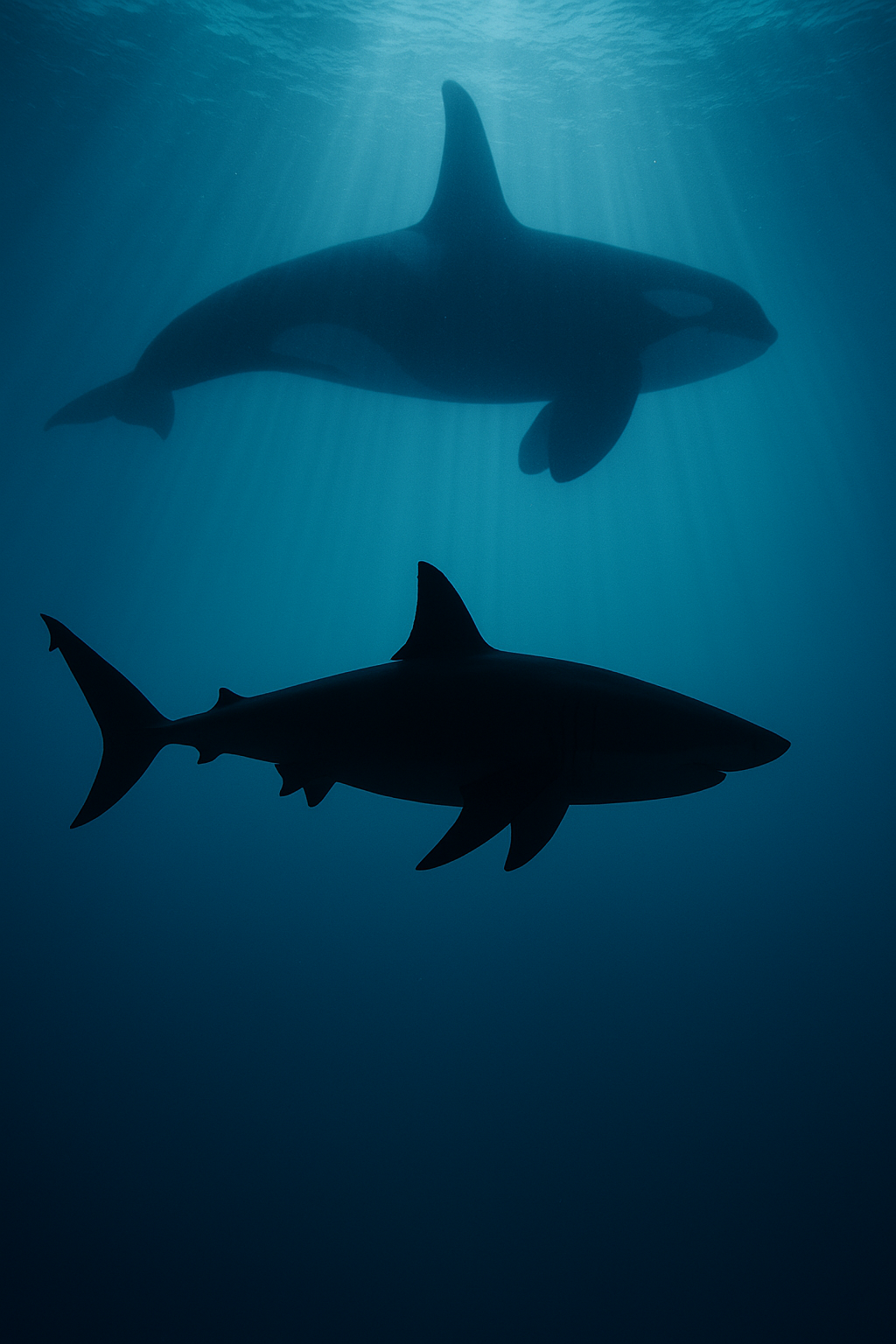
Explore the mysterious disappearance of great white sharks from South Africa's False Bay, examining orca predation, human impact, and climate change.
Great white sharks are vanishing from South Africa's False Bay, a once-bustling shark hotspot. Their disappearance is a big mystery with a few key players. Killer whales, like Port and Starboard, are hunting them, and the sharks' favorite food, like smaller sharks, are becoming scarce. Plus, the ocean is getting warmer, pushing the great whites to new, cooler homes further east. This silent retreat leaves behind empty waters and worried scientists.
Why are great white sharks disappearing from South Africa's False Bay?
Great white sharks are disappearing from False Bay, South Africa, due to a combination of factors: increased orca predation, declining prey species like smoothhound and soupfin sharks, and warming ocean temperatures pushing them eastward. These stressors have severely impacted their population and distribution.
Get Cape Town news in your inbox
Stay updated with the latest stories from the Mother City.
1. Empty Arena: When the Star Performer Leaves the Stage
From Daily Spectacle to Echoing Silence
A short cruise past Simon’s Town jetty once guaranteed a liquid fireworks show. Between 1995 and 2012, skippers glanced at their tide charts and logged up to eighty separate breaches every month inside False Bay. Tourists dubbed the moment “life-altering,” “bucket-list,” “raw nature at its best.” Ten years later, the same skippers turn their keys at dawn, spend six hours combing the swell, and return with nothing but salt-stained camera housings. The 2015 ledger still estimated white-shark tourism at US $38 million a year; today, the same spreadsheet contains so many zeroes it looks like a barcode. The star has not grown timid; it has simply left the building.
The Statistics That Broke the Habit
Long-running logbooks held the first clue. In 1997 a banner day could rack up fifteen different individuals circling Seal Island. By 2018 most operators recorded fewer than fifteen encounters per season. At local pubs, captains who once argued over lens sizes now debate whether they actually saw a grey head or just a wave-shadow. The tonal shift from triumphal to hushed is audible even over the rumble of diesel engines.
Ripple Through the Souvenir Shelves
Curio shops feel the chill. T-shirts emblazoned with breaching sharks remain folded in polythene; sealing wax key-rings of Carcharodon carcharias gather dust. Dive-store owners say international underwater-film crews reroute to Mexico’s Guadalupe Island, draining South African prestige and foreign earnings in one go. When the apex predator vanishes, the entire food web of tourism loses its keystone.
2. Timeline of an Unraveling
2009–2012: The High-Water Mark
Acoustic arrays inside False Bay counted six or seven hundred signature “pings” every year. In July 2010 alone, cage-dive crews filmed sixty-three full breaches in a single week. Clients queued around the block, and permits fetched top dollar on the secondary market. No one imagined the graphs would slope downward so fast.
2013–2016: First Cracks in the Mirror
Strandings of sevengill sharks without livers hit local newspapers in 2013. By 2015, white-shark detections dipped 30 %. Amateur drone pilots noticed two male orcas, dorsal fins leaning left and right, patrolling Seal Island in tight formation. The pair became infamous under the nicknames Port and Starboard. Between January and June 2016 eight licensed operators recorded zero great-white sightings - an event once considered statistically impossible.
2017–2022: The Great Trek Eastward
Fishers working Eastern Cape yellowtail lines reported more strikes by white sharks on hooked tuna, then watched the satellite tracks slide 350 km eastward. In 2020 False Bay cage-dive permits dropped by two-thirds. Two juvenile white sharks washed up on Franskraal beach with hearts and livers surgically removed, the hallmark of orca butchery. Fleet owners who had never ventured past Cape Agulhas began studying waypoints off Algoa Bay.
3. Killer Tactic: How Two Orcas Rewrote the Menu
Culture on the Hunt
Orcinus orca populations split into culturally distinct clans. Port and Starboard belong to the offshore ecotype famous for annihilating sharks up and down the continental shelf. Once they fine-tune a technique, knowledge spreads through the pod like gossip on WhatsApp.
The Triple-Phase Execution
Step one: synced charges from below, flipping the shark into a trance-like immobility. Step two: a shoulder-level ram followed by a scalpel-clean bite that removes a ten-kilogram liver through the pectoral cavity. Step three: the carcass - minus its calorie-dense organs - drifts away for catsharks and gulls. Marine pathologists call the wound type “coring,” evoking imagery from fruit-packing plants.
Viral Evidence, Sobering Implications
March 2022 drone footage shows five orcas corralling a 3.5-metre sub-adult female in a twenty-metre bait-ball, ending her in less than 120 seconds. Online views passed twelve million; scientists grimace because the clip demonstrates practiced skill rather than opportunistic luck. Each streaming click underlines the competence gap between predator and prey.
4. A Web of Stressors: Diet, Gear, and Degrees Celsius
Starving Calves in an Empty Larder
Smoothhound and soupfin sharks historically fed young white sharks along the Benguela Current. Trawl surveys document a 60 % plunge in adult biomass since 2007, and legal-size fish have all but vanished. Juveniles either migrate farther or venture inshore, straight into gill-nets.
The Cost of Safety Theatre
KwaZulu-Natal’s shark nets and drumlines target bulls and tigers, yet great whites still make up seven to nine percent of annual catch. Over three decades that totals more than five hundred deaths - an unsustainable harvest for a late-maturing species.
Heat in the Pipeline
Satellite data reveal tongues of warm water pushing south-east after 2014. Tagged whites now linger in cooler layers below 150 m, far from acoustic receivers and tourist cameras. The “thermal squeeze” does not evaporate the population; it redistributes it beyond easy reach, cutting surface sightings to ribbons.
5. Algoa Bay: The New Neighbourhood
From Zero to Fourfold in Four Years
Acoustic receivers placed off Port Elizabeth registered a four-hundred-percent spike in white-shark visits between 2019 and 2023. Most detections matched sub-adults between 2.5 and 3.5 metres. Scuba operators logged forty-seven separate encounters - an unimaginable count a decade earlier.
Seal Suburbs for Rent
Cape fur seals have swelled the Black Rocks colony, offering calorie-rich prey that lures predators eastward. With cooler upwellings near Algoa Bay, both shark and seal find a more hospitable address than the warming shallows of False Bay.
Trophic Dominoes Back West
Sevengill sharks and bronze whalers now patrol Seal Island in reckless numbers, nosing into lobster traps and upsetting the fine print of marine food webs. Without the white shark’s suppressive presence, a new ecological normal is taking root.
6. Smart Barriers, Fewer Barbarisms
Magnetic Curtains
Rows of high-voltage cables emit electromagnetic pulses that muddle sharks’ electro-receptor organs. Pilot arrays in KwaZulu-Natal cut target-species catch by eighty percent while sparing teleosts bony fish.
Plastic Nets With Loopholes
Recycled-HDPE eco-nets reach only six metres deep, enough to stop the big cruisers without drowning turtles. Durban’s uShaka trial logged zero shark attacks across eighteen beach-months.
Eyes in the Sky
AI-equipped drones stream high-resolution thermal feeds to lifeguard towers. Fish Hoek beach reached eighty-eight percent accuracy in white-shark identification within fifteen seconds of sighting; insurers are already drafting lower-premium packages.
Ledger of Lives and Dollars
Drumline maintenance sits at US $3,000 per beach per year. A full magnetic barrier for a kilometre of coast demands an upfront US $180,000 - yet amortised over five years it undercuts the hidden costs of culling. The calculus, once written out, is no longer abstract.
7. Policy Gridlock and the Long Road Ahead
Legal Blind Spots
South Africa’s 1991 white-shark harvesting ban built a conservation poster child, but loopholes remain. Coastal longliners still operate within thirty kilometres of hotspots, exactly where juveniles feed. KwaZulu-Natal’s lethal nets renew every two years without external review, and small-scale fleets report by-catch on the honour system.
Drafting a Way Forward
In 2021 Parliament vowed to publish a White-Shark Management Plan by 2025. Early drafts propose May-to-August spatial closures timed to Port and Starboard’s peak raids, mandatory electronic logs logs, and subsidies for fishers willing to switch to turtle-friendly circle hooks. Stakeholder workshops thrash out details each quarter, but final ink is still wet with compromise.
8. Counting Ghosts, Enlisting Citizens
When Budgets Shrink, Phones Fill the Gap
Government monitoring funds fell forty-two percent between 2016 and 2021. Into that vacuum stepped Shark Spotters, a Cape Town NGO that persuaded volunteers to clock 2,700 observation hours during 2022 alone. Each sighting follows a strict data sheet, feeding peer-reviewed journals that policymakers still read.
Apps and Algorithms
The 2023 “Spot the Fin” app urges kayakers to upload geo-tagged dorsal-fin photos. Machine-learning software compares silhouettes with an open-source catalogue, turning casual beach days into population estimates. Early data already hint at seasonal corridors the sharks use to slip between Algoa Bay and southern Namibia.
Hacking the Ocean
University students anchor “SharkSafe” acoustic stations on weekends, logging every ping of tagged individuals. The units cost less than a mid-range surfboard but furnish decade-spanning baselines. In the absence of state largesse, surfboards and smartphones shoulder the scientific load.
9. Beyond One Species: A Sea in Flux
False Killers, Sunfish, and Blue Shadows
False killer whales now attack dusky dolphins off Cape Point, enlarging their menu on the go. Oversized ocean sunfish strandings suggest gelatinous plankton blooms riding the same warm tongues that shooed white sharks eastward. Even blue whales - absent from the Benguela since the 1970s - have been sighted near Hondeklip Bay. Each observation is a pixel in a larger, shifting mosaic.
Economic Threads Pulled Loose
Cage-dive clients historically spent 3.2 times their ticket price on lodging, restaurants and rental cars. False Bay operators now bleed US $5.4 million a year. Lobster fishers battle seal raids because the seal-eater-in-chief is no longer on patrol. Abalone poachers push deeper, emboldened by predator-light reefs. Documentary budgets fly to Mexico, draining South Africa’s brand equity drop by drop.
The Crossroads Decade
Great-white recovery hinges on more than orca avoidance. It demands protected prey stocks, lethal-gear retirement, and cooler ocean refuges buffered from human appetite. The next ten years will determine whether the fin that vanishes today reappears tomorrow - or whether a bronzed new hierarchy owns the southern seas forever.
[{"question": "
Why are great white sharks disappearing from South Africa's False Bay?
", "answer": "Great white sharks are disappearing from False Bay, South Africa, due to a combination of factors: increased orca predation, declining prey species like smoothhound and soupfin sharks, and warming ocean temperatures pushing them eastward. These stressors have severely impacted their population and distribution.
"}, {"question": "How has the disappearance of great white sharks impacted tourism in False Bay?
", "answer": "The disappearance of great white sharks has severely impacted tourism. Once a major attraction, shark-related tourism generated an estimated US $38 million a year in 2015. Today, tour operators report zero sightings for entire seasons, souvenir shops are struggling, and international film crews are rerouting to other locations like Mexico's Guadalupe Island, leading to significant economic losses and a drain on South Africa's prestige and foreign earnings.
"}, {"question": "What role do killer whales (Orcas) play in the sharks' disappearance?
", "answer": "Two specific killer whales, nicknamed Port and Starboard, are key predators. They belong to an offshore ecotype known for hunting sharks. These orcas use a sophisticated, multi-phase hunting technique: first, they flip the shark into a trance, then precisely remove its liver, which is a calorie-rich organ. This knowledge of 'coring' sharks is believed to spread within orca pods, and drone footage confirms their practiced skill in hunting great whites. This increased predation pressure is a major factor driving sharks away.
"}, {"question": "What other environmental factors are contributing to the decline of great white sharks in False Bay?
", "answer": "Beyond orca predation, several other factors contribute. A significant decline in prey species like smoothhound and soupfin sharks, likely due to overfishing, means less food for young great whites. Additionally, warming ocean temperatures, particularly after 2014, are pushing the sharks to seek cooler waters further east, making False Bay less hospitable. Over 500 great white sharks have also been caught in KwaZulu-Natal's shark nets and drumlines over three decades, which is an unsustainable loss for this slow-maturing species.
"}, {"question": "Where are the great white sharks relocating to, and what are the implications?
", "answer": "Great white sharks are relocating eastward, with a significant increase in sightings and detections in Algoa Bay, off Port Elizabeth. Acoustic receivers in this area registered a 400% spike in visits between 2019 and 2023. This shift is driven by cooler upwellings and an abundance of calorie-rich Cape fur seals in Algoa Bay. This relocation means False Bay's ecosystem is changing, with species like sevengill sharks and bronze whalers now more prevalent around Seal Island, disrupting the marine food web in the absence of the great white shark.
"}, {"question": "What conservation efforts and solutions are being explored to protect great white sharks and manage human-shark interactions?
", "answer": "Several solutions are being explored. 'Smart barriers' like magnetic curtains that emit electromagnetic pulses can deter sharks without harming them. 'Plastic nets with loopholes' (eco-nets) reach only six meters deep, preventing shark entanglement while still offering protection. AI-equipped drones provide real-time shark identification for lifeguards. Additionally, there are efforts to improve policy, such as creating a White-Shark Management Plan, implementing spatial closures during peak orca activity, and encouraging fishers to use turtle-friendly hooks. Citizen science initiatives, like the 'Spot the Fin' app and volunteer observation programs, are also filling gaps in government monitoring.
"}]
Kagiso Petersen is a Cape Town journalist who reports on the city’s evolving food culture—tracking everything from township braai innovators to Sea Point bistros signed up to the Ocean Wise pledge. Raised in Bo-Kaap and now cycling daily along the Atlantic Seaboard, he brings a palpable love for the city’s layered flavours and even more layered stories to every assignment.
View all articles →