
WHEN ELEPHANTS TURN DEADLY
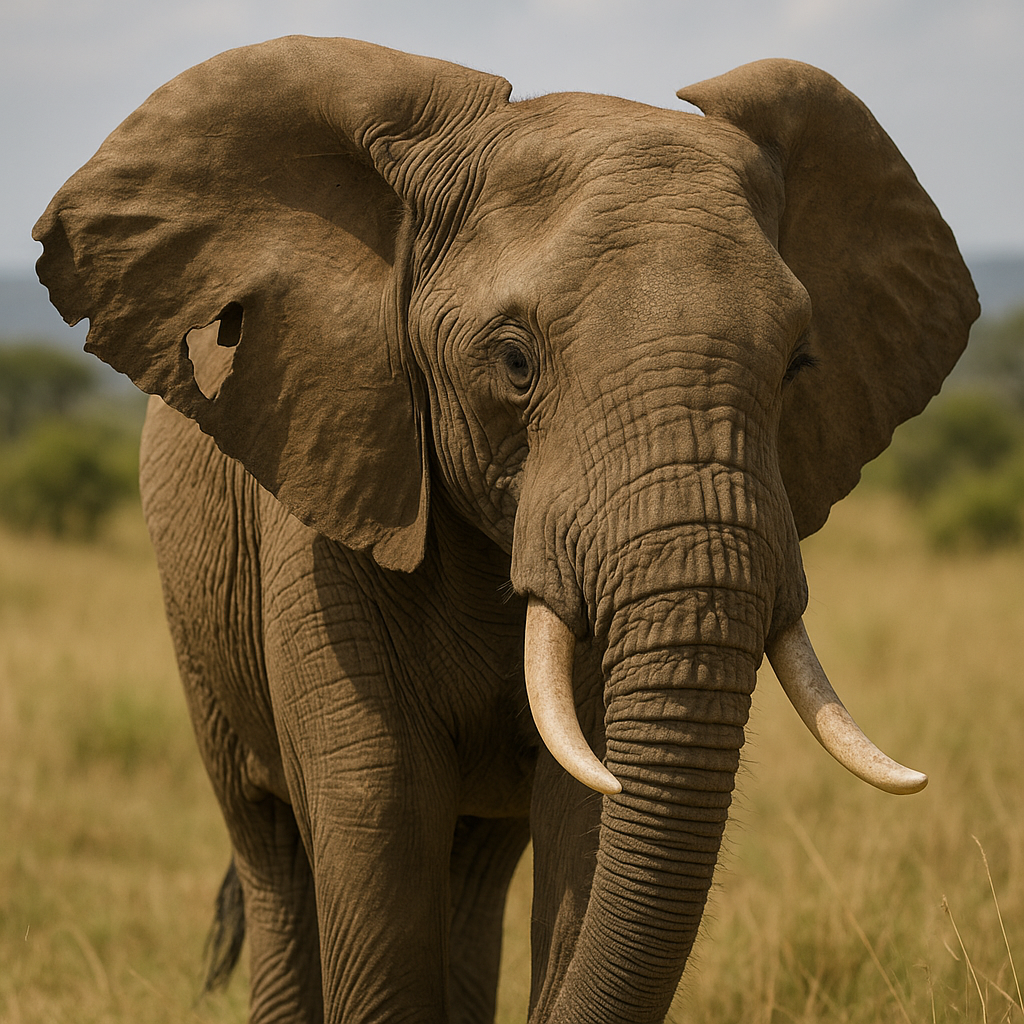
Gary Freeman's death by an elephant highlights the complex dangers of human-wildlife interaction, challenging the 'gentle giant' myth.
Elephants are incredibly smart, sensing human fear and remembering past interactions. Misunderstandings happen when our stress, noise, and their silent communication mix. Sadly, this can lead to dangerous encounters, like the one where an elephant tragically killed a guide. We need to learn how they see the world and change our behavior to coexist peacefully with these magnificent creatures. Simple actions like dressing in muted colors and staying calm can make a big difference.
How do elephants perceive and react to humans in the wild?
Elephants perceive humans through scent, detecting adrenaline within fifteen heartbeats. They distinguish between different human groups, reacting based on past interactions. Their infrasonic communication, combined with human stress signals, fading light, and engine noise, can lead to misunderstandings, often perceiving human presence as a threat.
Get Cape Town news in your inbox
Stay updated with the latest stories from the Mother City.
Dusk in the Lowveld – Where Stillness Masks Movement
In the half-light that follows an amber sunset, South Africa’s Lowveld exhales. Cicadas fade, marula scent drifts low, and the bush performs its nightly shuffle of dominance. It is during this soft glow that the planet’s heaviest land dweller can dissolve behind a modest termite hill only thirty strides away, then rematerialize roadside with three motionless tonnes of intent. Travel posters love the tranquil cliché: a mother steering calves across sand, trunks swaying, dust turning to gold in dying light. Those pictures are honest, just incomplete. They end before the footnote begins - the instant an engine pops, a shutter clicks too sharp, or a guide misreads the nearest thicket.
Gary Freeman’s death inside Klaserie Private Nature Reserve yanked that missing page into the spotlight. Freeman co-owned a modest camp, logged more nights in a canvas tent than beneath a tiled roof, and could tell a mock charge - ears flapping, trunk folded - from the real attack. One August evening, escorting six visitors toward their vehicle, he crossed paths with a breeding herd filtering out of mopane country. A single cow detached, lifted her head, and closed the gap at thirty-five kilometres an hour. A warning shot cracked, shouts rang to retreat, yet the span was erased before the rifle could chamber a second round. When the reaction unit arrived, dust had settled; calves wove between legs that moments earlier had been battering rams. Rangers labeled it textbook defence: swift, targeted, concluded.
Fatal collisions refuse to fit the easy “rogue” label beloved by colonial-era gunmen. The female that toppled Freeman rejoined her companions within minutes, displayed no follow-up hostility, and has since been photographed sipping peacefully at water pans. She was guarding a four-month-old calf that had wandered toward the trail. In short, she acted exactly as millennia of natural selection prepared her. The awkward reality is less that elephants are turning nasty than that human conduct has grown porous. From 2024 to 2026, Mpumalanga’s tourism authority recorded nine visitor deaths linked to elephants inside public reserves; six were on foot, two had stepped out for clearer snapshots, one was jogging with earbuds at dawn. Against more than 1.2 million annual arrivals nationwide, the statistical risk remains slimmer than a lightning bolt, yet every incident punches a hole in public trust far wider than the raw numbers justify.
How an Elephant Reads You Before You Notice
Grasping why seasoned professionals still get ambushed means learning how Loxodonta samples the planet. An adult trunk packs roughly 40 000 muscles, yet the true marvel sits at its tip: a fusion of olfactory bulb and vomeronasal gear able to taste hormone metabolites down to parts per trillion. A person’s adrenaline signature can surge through skin vapour within fifteen heartbeats of sudden fright. Research in Botswana shows bulls distinguish the scent of Maasai herders - historically spear-happy - from that of less combative communities, widening or shrinking their comfort zone accordingly. At twilight, temperature inversions glue these scent trails ankle-high. By the time a ranger senses trouble, the stress chemicals in his own bloodstream have already announced danger to the herd’s early-warning radar. Mix fading vision, a droning engine, and the infrasonic baritone conversations elephants hold - calls that roll for kilometres below our hearing - and the stage is primed for a perfectly logical misunderstanding.
Guests seldom internalise velocity. A relaxed cow ambles at 1.5 metres per second; an agitated female can rocket to ten metres per second in two strides. Forty kilometres an hour equals eleven metres each tick - quicker than any Olympian - and she does it wearing sandals of raw collagen. Guides teach the “2.5 rule”: if an elephant halves the gap in the time you need to count two-and-a-half seconds, you’re already inside the strike radius. That yardstick, however, presumes open sightlines, something mopane woodland rarely grants. Mopanes rise in cathedral rows, trunks blood-red, leaves folded edge-on at dusk to stem moisture loss, creating vertical blinds. A two-tonne matriarch can glide between those pillars with the hush of a theatre curtain.
Engineering Calm – New Tricks for an Ancient Interface
Managers have replied with a cocktail of hard structures and soft psychology. Kruger’s opening move was bricks-and-mortar: rerouting roads that sliced historic paths, carving turning bays so buses reverse without a three-point scramble, stacking low stone lines that deter off-track detours yet keep horizons uncluttered. Pilanesberg, a reserve cradled inside an extinct volcano, launched “virtual herders,” drones fitted with heat-cameras and downward speakers that loop distressed-bee soundtracks. Elephants loathe African honey-bees; two minutes of buzz usually nudges a herd clear of a lodge fence. Still, gadgets top out where impatience collides with animal unpredictability; the final gap is sealed by etiquette, the sort no firmware can encode.
Contemporary guide academies now devote equal blocks to breathing technique and botany. Cadets rehearse box-breathing to steady pulse during a mock charge; a calm leader is virally calming. Clients mirror the ranger’s stance and respiration within seconds, a reflex neuroscientists dub locomotor resonance. Field syllabi include a “stop-do-not-move” routine: motor off, palms visible on thighs, binoculars down, chatter hushed to library hush. It feels counter-intuitive - instinct roars for acceleration - yet trial data show a motionless vehicle is filed by elephants as a monolithic non-anthropoid, whereas the same car inching forward reads as pursuit.
Reading the Clock and the Contract – Windows of Risk and Hope
Timing is pivotal. Elephants run on a crepuscular rhythm: emerge at dawn, drink mid-afternoon, feed again as shadows stretch. Between four-thirty and six p.m., vigilance hormones crest; mush bulls see testosterone surge for months, a slow-motion adrenaline wave. A bull in mush will broadside a vehicle, something cows seldom attempt. Spotting one is easy once you know: dark temporal-gland seepage, hind legs stained by urinary drip, a swishing gait from penile retractor spasms. Alas, the same dim light that cloaks these clues flatters sunset photography, so the urge lingers for one final portrait.
Biologists caution the true tipping point lies ahead. South Africa holds a steady 24 000 elephants, yet human numbers along the fence line climb almost three per cent yearly. Housing estates nudge right up against electrified wire; school soccer pitches end at conservation boundaries. Dispersing young bulls now meet cul-de-sacs before the next wildlife block. Conflict is inevitable, but also a portal: if neighbours earn revenue from living elephants - craft markets, photo safaris, citizen-science kits - tolerance climbs. The maths is stark: a single elephant can return roughly 1.3 million rand across its life, versus 18 000 rand slaughtered for meat and ivory. Closing that gap is the most potent antidote to the “us or them” reflex that surfaces after every fatality.
Visitors can layer a few hacks atop standard advice. Choose the left-rear bench in open vehicles - drivers instinctively veer right when reversing, placing that seat farthest from charge line. Dress in muted leaf-green rather than classic khaki; colour trials show bulls stay calmer when hues match mopane reflectance at 550 nanometres. Tuck a small mist bottle of plain water; a fine upward spray can scatter light, softening your silhouette and buying seconds without alarm. None replace distance, yet they tilt odds in a species that maps reality through scent, tremor and wavelength.
Tonight in Klaserie, the herd that met Freeman has blended with a bachelor gang along the river. Trackers identify them by a ragged tear in the matriarch’s left ear and a GPS collar nicknamed “Belle.” She drifts through moonlit glades, trunk tasting for lion sourness or wild-mango sweetness. The memory of one lethal clash is not archived in her behaviour; elephants don’t brand whole species as enemy, only specific threat imprints. The burden stays with the two-legged visitor to fine-tune that imprint, to breathe slower, tread lighter, and remember that the gentle-giant trope is not a guarantee but a clause - valid only while the fine print is spoken with every footfall.
[{"question": "
How do elephants perceive humans, and why do misunderstandings occur?
\nElephants possess a highly developed sense of smell, capable of detecting human adrenaline within fifteen heartbeats. They can differentiate between various human groups based on past encounters, leading to varied reactions. Misunderstandings often arise from a combination of human stress signals, noise, fading light, and the elephants' infrasonic communication, which can cause them to perceive human presence as a threat. This complex interplay can unfortunately lead to dangerous encounters."},{"question": "What factors contribute to dangerous encounters with elephants, particularly at dusk?
\nDangerous encounters are often exacerbated by several factors, especially during twilight hours. Reduced visibility at dusk, combined with human stress, engine noise, and the elephants' silent, long-distance infrasonic communication, creates a challenging environment. Elephants can seem to 'disappear' and 'reappear' suddenly, and their rapid acceleration (up to 40 km/h) can quickly close distances. Human errors, such as misreading elephant behavior, making sudden movements, or taking photographs too close, further increase the risk."},{"question": "How can visitors to African wildlife reserves reduce the risk of elephant encounters?
\nVisitors can significantly reduce risk by adopting several practices. This includes dressing in muted, leaf-green colors that blend with the environment, maintaining calm and steady breathing (as elephants can detect adrenaline), and adhering to a 'stop-do-not-move' routine if an elephant approaches. Staying in a motionless vehicle makes it appear as a non-threatening monolith. Additionally, being aware of peak vigilance times for elephants (especially late afternoon) and avoiding areas where 'mush' bulls (identifiable by temporal gland secretions and urine stains) are present can be crucial."},{"question": "What is the '2.5 rule' and why is it important for understanding elephant proximity?
\nThe '2.5 rule' is a guideline for assessing immediate danger: if an elephant halves the distance to you in the time it takes to count two-and-a-half seconds, you are already within its strike radius. This rule highlights the incredible speed an agitated elephant can achieve. However, it's important to remember that this rule assumes open sightlines, which are often not present in dense bush, making it even more challenging to react in time."},{"question": "How are wildlife managers and guides adapting to promote peaceful coexistence with elephants?
\nWildlife managers are implementing strategies like rerouting roads to avoid historic elephant paths and creating turning bays for vehicles. Some reserves use technology like drones with distressed-bee sounds to gently guide herds away from human infrastructure. Guide academies now incorporate training in breathing techniques and 'stop-do-not-move' routines to ensure guides remain calm and can project that calmness to visitors. The emphasis is on understanding elephant behavior and engineering environments that minimize conflict."},{"question": "What is the economic argument for elephant conservation and coexistence?
\nBeyond ethical considerations, there's a strong economic incentive for elephant conservation. A single elephant can generate approximately 1.3 million rand over its lifetime through tourism, compared to only 18,000 rand if it is killed for meat and ivory. By involving local communities in revenue generation from living elephants through initiatives like craft markets, photo safaris, and citizen-science programs, tolerance for these animals increases, offering a potent antidote to human-wildlife conflict and promoting long-term coexistence."}]
Aiden Abrahams is a Cape Town-based journalist who chronicles the city’s shifting political landscape for the Weekend Argus and Daily Maverick. Whether tracking parliamentary debates or tracing the legacy of District Six through his family’s own displacement, he roots every story in the voices that braid the Peninsula’s many cultures. Off deadline you’ll find him pacing the Sea Point promenade, debating Kaapse klopse rhythms with anyone who’ll listen.
View all articles →