
Rare witte wijnappel van Riebeeck tree returns to Cape Town
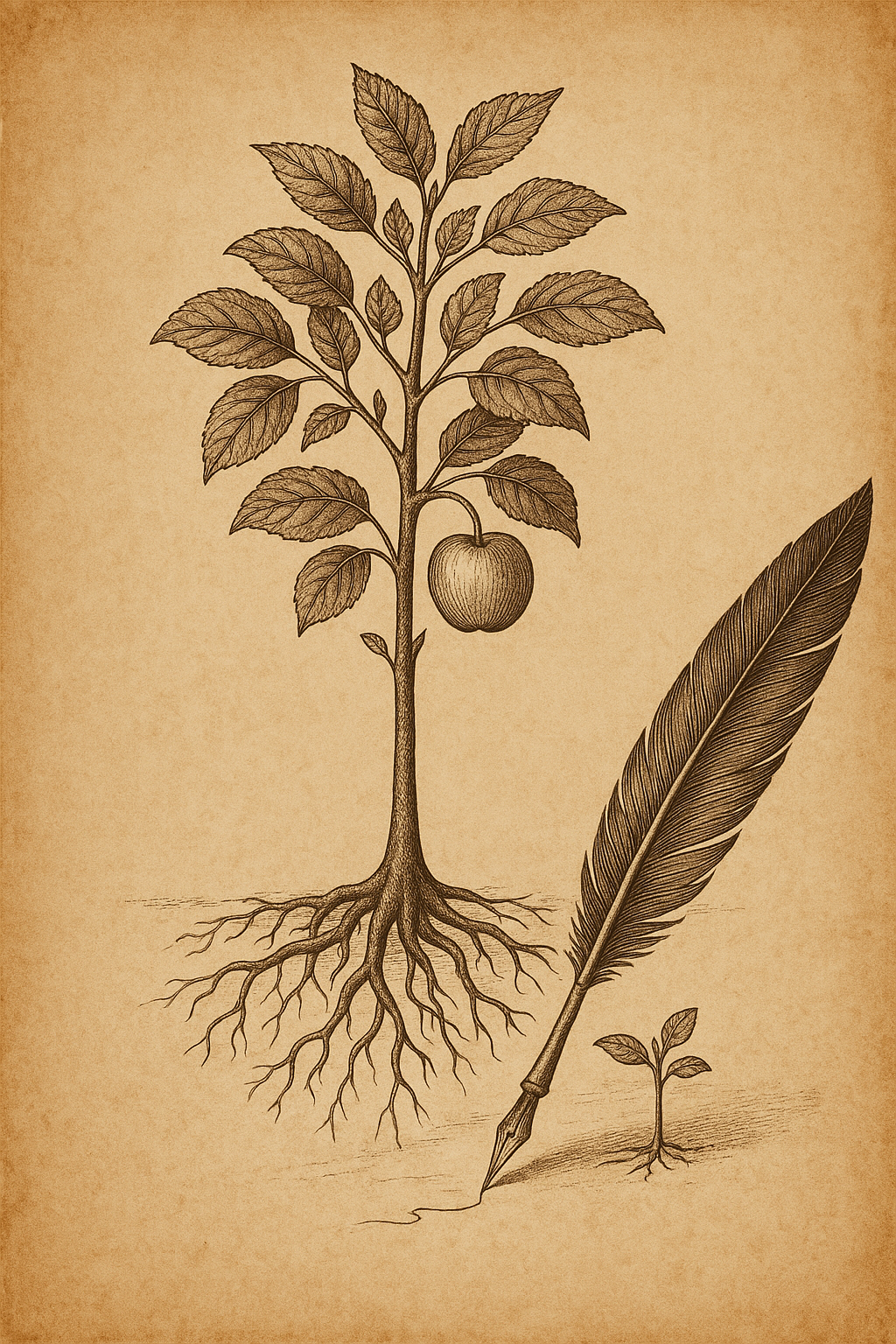
A rare 17th-century Dutch apple tree, the 'witte wijnappel,' returns to the Cape, symbolizing a living link to history.
An old apple tree, thought to be gone forever, is back in Cape Town! This special tree, called witte wijnappel, was first grown there a very long time ago. Now, a young tree is planted at a school, linking history to today. It's like a superhero apple, tough enough for a changing world and helping keep all kinds of apples strong. This little tree could even help grow new, super apples for the future!
What is the significance of the witte wijnappel apple tree's return to Cape Town?
The witte wijnappel's return is significant as it's a 362-year-old variety, believed extinct in South Africa. Its planting at Jan van Riebeeck High School connects historical records with modern conservation, serves as an insurance policy against climate change due to its low-chill tolerance, and promotes genetic diversity within the apple industry.
Get Cape Town news in your inbox
Stay updated with the latest stories from the Mother City.
A Quiet Return to the Cape Flats
On a wind-scoured lawn in front of Jan van Riebeeck High School, a knee-high stick of wood, barely leafy, now stands where learners normally toss their backpacks. Nothing in its slim silhouette hints at the odyssey inside its cells: a recipe for fruit last tasted when the Castle of Good Hope was still wet plaster and the air reeked of thatch, kelp and woodsmoke. The variety is witte wijnappel - Dutch for “white wine-apple” - a cultivar so scarce that only three other living individuals remain anywhere in South Africa. Its planting, timed for the school’s centenary, links a quill-penned diary note from 17 April 1662 with modern drip-irrigation tape and a TikTok-ready drone overhead.
The sapling’s arrival caps four years of negotiation, virus-testing and micro-propagation that began when heritage curator Jeanne Fourie spotted the cultivar name in the 1662 journal of Jan van Riebeeck. She traced a single European specimen to the Dutch National Plant Collection in Wageningen, then battled red tape to import cryo-packed budwood under EU conservation exemptions. After heat-therapy and lab multiplication, sixty clean plantlets emerged in Stellenbosch; one of them, now hardened-off to two metres, was lowered into a specially engineered planting pit on the Cape Flats.
The school badge already carries an apple tree and the motto Ex arboribus ad astra - “from trees to the stars” - so the choice of venue was poetic rather than pragmatic. The campus sits in one of the driest, windiest corners of the city, so horticulturists swapped out a cubic metre of sterile sand for a custom blend of pine-bark compost, bio-char and clay-rich subsoil trucked from Durbanville. A Grade-9 technology class welded a 1.2 m stainless cage to foil skateboards and the occasional porcupine that ambles over from Rondebosch Common.
From Quill to Graft: Resurrecting a Lost Apple
Van Riebeeck’s diary entry is terse - “twee appelen van eenen witten wijn-appel” - yet it is the earliest proof that a named European apple ever fruited south of the equator. The tree stood only five feet tall, but its success told the commander that the settlement could recreate familiar flavours on foreign soil. In Holland the same cultivar had been prized since at least the 1400s; cooks loved its razor-sharp acidity for tarts that needed no verjuice, and cider makers blended its juice to brighten colour and aroma. At the Cape it became mother-stock for later arrivals, the genetic godmother of a multi-billion-rand industry.
By the 1920s the witte wijnappel had disappeared from commercial orchards, muscled out by heavier croppers such as Rome Beauty and Golden Delicious. State botanist Anders Eriksson Eksteen formally listed it as “presumed extinct in RSA,” and textbook authors reduced South Africa’s apple origin story to “unknown Dutch seedlings.” The phrase rankled pomologists who kept bumping into ancient, mis-labelled trees in farm graveyards and mission stations, yet had no way to prove identity.
Fourie’s 2016 literature sweep inside Tru-Cape’s archives connected the dots between the 1662 name and a solitary Dutch nursery catalogue line: “Witte Wijnappel, oude boompje, slechts 1 st.” Export rules forbid moving scion wood for commercial use, but an exception allows genetic material for conservation if the receiving country guarantees quarantine and back-up. Cue three years of permit wrangling, further complicated by South Africa’s on-again-off-again potato-and-apple protocol talks with Brussels. When forty-eight budsticks finally landed in 2020, they were heat-treated, virus-indexed and coaxed into sixty identical plantlets - time travellers scrubbed clean of 21st-century pathogens.
Planting Day: Marimbas, Buchu Water and a 1.2 m Cage
The turf-cutting ceremony mixed baroque and bytes. A gavotte transcribed for marimbas opened the proceedings while a drone live-streamed to the school’s TikTok channel. Learners recited the 1662 entry in four languages - Afrikaans, English, isiXhosa and Khoekhoegowab - before the head girl and head boy each clipped a competing branch, dripping buchu-infused water into the wound to honour Khoi grafting traditions that pre-date European arrival. Instead of a ribbon, the couple’s secateurs became the symbolic tool of human choice shaping a living lineage.
Beside the apple went a Rosa centifolia, the cabbage rose that sailed the same spice-route ships. Unlike its new neighbour, the rose never went extinct; it naturalised along streams from Constantia to Namaqualand and still flavours Turkish delight distilled in Johannesburg factories. Together the two plants form a pocket physic garden - one for fruit, one for fragrance - both rooted in the colonial impulse to make alien soil smell and taste like home.
Inside the planting hole, mycorrhizal fungi cultured from oak leaf litter at the school will trade phosphorus for sugars, while a colour-coded dripper delivers six litres of water a week for the next two summers. After that, the tree must tough it out on winter storms and playground run-off. Every September learners will measure bud-break and chilling hours, turning the tree into a living climate-change probe.
Future Fruit: Low-Chill Genes, Scholarships and Tarte Tatin
South Africa’s apple industry faces a 12 % drop in winter chill by 2040 - enough to evict high-chill rock stars such as Fuji and Braeburn. The witte wijnappel needs only 450 chill units, half the demand of Cripps Pink, so breeders at the Agricultural Research Council hope to cross it with modern lines, locking low-chill tolerance into fruit that still holds its ivory flesh in sliced packs. The cultivar’s home-coming therefore doubles as an insurance policy against a warming planet.
The three previously known specimens - at Babylonstoren, the Grabouw research farm and the Company Gardens - already draw heritage tourists. Babylonstoren’s “1662 blossom walk” has pushed mid-week visits up 28 %. To balance access with education, the school’s parent body is mulling an “adopt-a-scion” scheme: every Grade-8 family may buy a micro-grafted sapling whose proceeds fund a full-fee scholarship for a child from a historic orchard labourer family. If half the cohort joins, fifty moon-white witte wijnappels could soon bloom in suburban backyards, a private constellation orbiting the 45 million commercial trees stretching from Ceres to the Langkloof.
Maintaining genetic diversity will take more than good intentions. Bees work a one-kilometre radius, so the school tree will inevitably swap pollen with neighbourhood ornamentals. Tru-Cape intends to sow 100 open-pollinated seedlings, hunting within their variable DNA for a brand-new cultivar adapted to hotter, drier summers. South Africa’s 2021 plant-breeders’ rights update allows such “essentially derived” heritage varieties to be trademarked, meaning a witte-wijnappel grand-child could one day carry both commercial clout and a 362-year salute to its ancestor.
When the first apples appear - most likely in 2027 - the school’s eco-club will harvest them for Stellenbosch’s sensory lab. Under red lights that mask colour bias, trained tasters will score acidity, tannin and floral lift, feeding data into Slow Food’s global heritage-apple flavour map. A Cape patisserie has already requested 20 kg for a “1662 tarte Tatin,” pledging a slice of each sale to the school’s maths-and-science upliftment fund. One taste, and diners will bite into the same snap Van Riebeeck once paired with hard tack and salted meat - proof that history can be sliced, caramelised and served with vanilla ice-cream.
[{"question": "What is the significance of the witte wijnappel apple tree's return to Cape Town?", "answer": "The witte wijnappel's return is significant as it's a 362-year-old variety, believed extinct in South Africa. Its planting at Jan van Riebeeck High School connects historical records with modern conservation, serves as an insurance policy against climate change due to its low-chill tolerance, and promotes genetic diversity within the apple industry."}, {"question": "Where was the witte wijnappel apple tree planted, and why is this location significant?", "answer": "The young witte wijnappel sapling was planted at Jan van Riebeeck High School in Cape Town. This location was chosen for its poetic significance, as the school's badge already features an apple tree and its motto is 'Ex arboribus ad astra' (from trees to the stars). Although the campus is in a dry, windy area, a specially engineered planting pit with custom soil was prepared to ensure its survival. The planting also aligns with the school's centenary."}, {"question": "How was the witte wijnappel apple tree, previously thought to be extinct, brought back to Cape Town?", "answer": "The resurrection of the witte wijnappel began when heritage curator Jeanne Fourie discovered its name in Jan van Riebeeck's 1662 journal. She traced a single European specimen to the Dutch National Plant Collection. After four years of negotiation, virus-testing, and micro-propagation, which involved battling red tape to import cryo-packed budwood under EU conservation exemptions, and subsequent heat-therapy and lab multiplication, sixty clean plantlets were produced in Stellenbosch. One of these, hardened-off to two meters, was eventually planted."}, {"question": "What historical importance does the witte wijnappel hold according to Jan van Riebeeck's diary?", "answer": "Jan van Riebeeck's terse diary entry from April 17, 1662, 'twee appelen van eenen witten wijn-appel,' provides the earliest proof that a named European apple variety ever fruited south of the equator. This small, five-foot-tall tree demonstrated to the commander that it was possible to cultivate familiar European flavors in a foreign land. In Holland, the cultivar had been prized since at least the 1400s for its sharp acidity, ideal for tarts and cider."}, {"question": "How is the return of the witte wijnappel apple tree intended to benefit South Africa's apple industry and combat climate change?", "answer": "South Africa's apple industry faces a potential 12% drop in winter chill by 2040, threatening popular high-chill varieties. The witte wijnappel, however, requires only 450 chill units, half that of varieties like Cripps Pink. Breeders at the Agricultural Research Council hope to cross it with modern lines to introduce low-chill tolerance, providing an 'insurance policy' against a warming planet. This genetic diversity could lead to new, resilient 'super apples' for the future."}, {"question": "What educational and community initiatives are associated with the witte wijnappel tree's planting?", "answer": "The planting ceremony incorporated both traditional and modern elements, including a gavotte played on marimbas and a drone live-streaming to TikTok. Learners recited the 1662 entry in four languages, and a traditional Khoi grafting ceremony was performed. The school's parent body is considering an 'adopt-a-scion' scheme where Grade 8 families can buy micro-grafted saplings. The proceeds from this scheme would fund scholarships for children from historic orchard laborer families, linking the tree's legacy with community support and education. Additionally, learners will monitor the tree as a 'living climate-change probe.'"}]

Sizwe Dlamini is a Cape Town-based journalist who chronicles the city’s evolving food scene, from boeka picnics in the Bo-Kaap to seafood braais in Khayelitsha. Raised on the slopes of Table Mountain, he still starts every morning with a walk to the kramat in Constantia before heading out to discover whose grandmother is dishing up the best smoorsnoek that day.
View all articles →