
Cape Town revamps Zeekoevlei water system
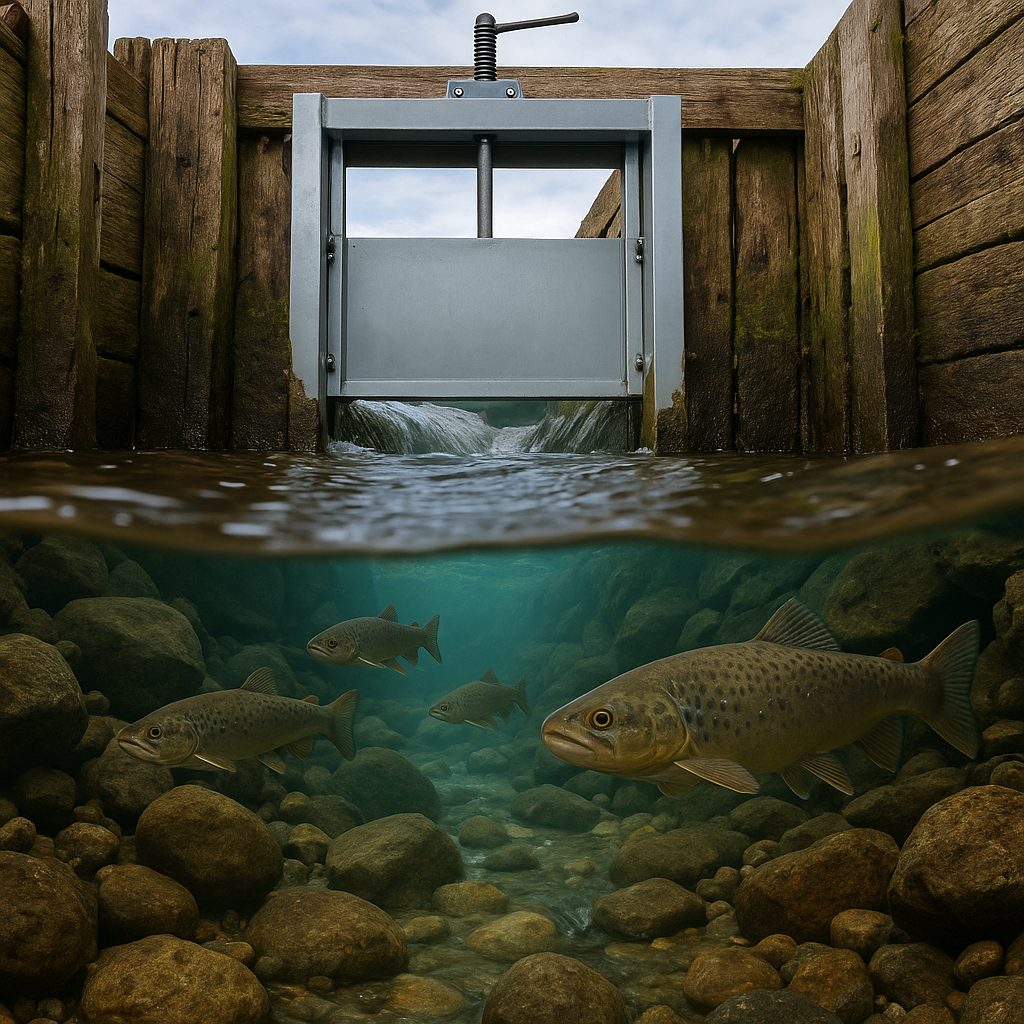
Cape Town's Zeekoevlei is getting a major upgrade! Discover how new tech and community efforts are restoring this vital wetland.
Zeekoevlei, a big wetland in Cape Town, was once full of hippos and elephants. But city growth turned it into a dirty pond. Now, Cape Town is working to bring it back to life. They're putting in smart gates and helping fish swim freely again. By 2028, they hope to see the wetland full of nature once more, showing how a city can fix its natural heart.
What is Zeekoevlei and what is Cape Town's plan to restore it?
Zeekoevlei is a significant wetland in Cape Town, once a thriving estuary but now a degraded pond due to urban development. Cape Town's plan involves a multi-stage re-wilding project to restore its ecological function, including new electromechanical gates, fishways, and community engagement, aiming to revitalize the wetland and its biodiversity by 2028.
Get Cape Town news in your inbox
Stay updated with the latest stories from the Mother City.
From Hippo Highway to Choked Pond: the Rise and Fall of a Living Estuary
Long before tar and bricks arrived, Zeekoevlei was open water so broad that hippos surfed its waves and elephants wandered the sedge meadows where Grassy Park’s houses now stand. The lake breathed in tandem with the Diep River, its mouth wandering across the flood-plain every winter, flushing nutrients into False Bay and pulling in marine fish on the return tide. Railways, drainage canals and a rash of 1950s suburbs sliced that pulse into pieces. All that remained was a hand-winch of warped eucalyptus planks jammed across the only exit channel, a makeshift dam no wider than a suburban driveway. That splintering relic still locks 250 hectares of water, four neighbourhoods and one of the busiest city reserves into a single, creaking water-level agreement.
By the late 1990s the numbers were brutal: algal chlorophyll spiked to 300 micrograms per litre, thirty times the red-flag level posted at beaches. Every storm shoved a cocktail of lawn fertiliser, dog droppings and street soot down 38 square kilometres of drains optimistically labelled “temporary outfalls” on 1960s plans. Black sludge on the bottom acted like a giant nutrient battery: whenever the lake level rose, waves recharged the water with phosphorus. When caretakers wrestled the penstocks open with crowbars and logging chains, the water crept down too slowly to hitch a ride on the outgoing tide.
The coming refit swaps sweat for circuitry. A pair of electromechanical steel gates, each able to push 11 kilonewton-metres of torque, will sit on a crest dropped 80 centimetres below the present lip. The new sill perches 3,5 m above sea-level, letting the lake dump an extra 600 000 cubic metres of soupy water every time the gates swing. A palm-sized programmable controller will watch a weather mast on the shoreline and a tide probe at Strandfontein; when False Bay drops below one metre amsl - something that happens 45 to 60 nights a year - the system cracks the leaves for a six-hour pulse, whisking phosphorus-laden silt seaward while salt water is kept at arm’s length.
Building While the Lake Stays Open: Six Stages of Surgical Civil Works
Keeping a wetland wet while you rebuild its only artery is civil choreography. The team - City environmental engineers paired with Marine & Civil - chopped the job into six overlapping acts so water never stops slipping out.
-
Stage 1* (December 2025 – March 2026) is a plant rescue: 3 800 indigenous reeds and sedges are being lifted, QR-tagged and parked in a pop-up nursery on the old scout camp. Drill rigs have confirmed that Pleistocene sand below the site can shoulder 180 kilopascals, so the new gatehouse can be cast straight on a raft slab - no piles required.
-
Stage 2* (April – July 2026) slides in a twin-cell cofferdam. Silent press-in sheets (AZ26, six metres) cage the work island so African purple swamphens can finish nesting two metres away. Workers will then rip out the timber weir and scoop 480 tonnes of peat that has accumulated since 1987, trucking it to an off-site composting pad.
-
Stage 3* (August 2026 – January 2027) pours the stilling basin and drops in a precast fishway like a Lego aqueduct. Gabion mattresses, stuffed with Malmesbury volcanic stone and wrapped in geotextile, will armour the revetment against the notorious southeaster that can fling 30-knot jets across the fetch.
-
Stage 4* (February – April 2027) is wires and code. Fibre runs will tie the gate actuators into the City’s Smart Catchment mesh already listening to 54 urban lakes. Commissioning will include a 48-hour live rehearsal drawdown, with ecologists on standby to net stranded fish and relocate tadpoles.
Fish Highways, Mud Diets and Community Wins
For fish, the weir has been a slammed door since 1990. The rebuild cracks two doorways. A 25 m rock-ramp - one-in-twenty slope, cobble pools every five metres - lets estuarine recruits skirt the new concrete. Beneath Ottery Road a vertical-slot bypass, 150 mm wide, is tuned to the 0,15–0,30 m/s sweet spot that tagged juvenile mullet picked in 2023 RFID trials. Night-vision cameras and tag loops will feed a public dashboard; anglers can watch anonymised fish counts tick over in real time.
Dredgers have been nibbling at black mayonnaise since 2011, but the new water-level playbook turns wind into a dredge. Model runs suggest two fortnight-long drawdowns per year will let sun and breeze desiccate and re-suspend 190 tonnes of phosphorus-bound muck over five years, achieving what 1,5 hectares of mechanical spoil cells do at barely fifteen per cent of the price.
People who live, sail, bird or jog around the lake have bled opinions into the project since 2019. Monthly veranda summits at the yacht club secured a no-wake buffer for the rowing lane, three fish-eagle rafts anchored beyond jet-ski reach, and a shoreline QR trail that turns Grade-6 science into augmented-reality games. A R4 million slice of the Neighbourhood Partnership Grant is now casting a floating classroom barge so schoolkids can microscopically interrogate the same water they splashed through on the way to class.
Climate Valve, Job Engine and Open-Data Goldmine
False Bay has climbed 1,9 mm a year since 1958; high-carbon scenarios add another 63 cm by 2100. Paradoxically, the lower crest gives managers a fresh-water lever: when a storm surge shoves seawater inland, gates can pulse upper-catchment runoff into the lake first, keeping salinity low enough for reed-nesters and submerged plants.
Tender documents baked in a 30 % local-content rule and a seven percent slice for small businesses. Peak construction needs 42 full-time pairs of boots; 18 are reserved for women certified in underwater welding or tower-crane operation. Two TVET apprentices per phase will log real hours on SCADA code and gabion lacing.
The bill rings in at R128 million. Fifty-five percent drips from the City’s capital budget over four years, thirty percent from a Green Bond floated in January 2025, and fifteen percent from a Global Environment Facility biodiversity grant. Interest earned on a R3 million bond reserve seeds an independent trust that must bankroll five years of adaptive monitoring - an insurance policy seldom seen on South African public works.
Once live, every gate twitch, raindrop and fish tag will spool into an open PostgreSQL ledger mirrored on the City’s data portal. Scientists at CSIR already eye the feed to sharpen early-warning algal-bloom algorithms, while code carpenters in eThekwini and Nelson Mandela Bay have downloaded the “Open Wet-CAD” drawing pack, keen to transplant the design to uMhlanga Lagoon and the Chatty Salt Pans.
The first ceremonial drawdown is pencilled for September 2027, three months after final commissioning. Within six weeks managers expect a tagged mullet to trigger the fishway antenna; by January 2028 the reserve will host a city-wide BioBlitz to see what else has come home. If African marsh harriers quarter the reed-beds once more, or the haunting call of a Knysna warbler slips through the sedges, the ledger will record more than numbers - it will log the sound of a city choosing to breathe with its wetland heart again.
[{"question": "What is Zeekoevlei and what is Cape Town's plan to restore it?", "answer": "Zeekoevlei is a significant wetland in Cape Town, once a thriving estuary but now a degraded pond due to urban development. Cape Town's plan involves a multi-stage re-wilding project to restore its ecological function, including new electromechanical gates, fishways, and community engagement, aiming to revitalize the wetland and its biodiversity by 2028."}, {"question": "What caused the degradation of Zeekoevlei?", "answer": "Zeekoevlei's degradation was primarily caused by urban development, including the construction of railways, drainage canals, and 1950s suburbs. These developments sliced the natural pulse of the lake and the Diep River, leading to a build-up of pollutants like lawn fertiliser, dog droppings, and street soot. The makeshift dam also prevented proper flushing, contributing to high algal chlorophyll levels and a build-up of black sludge at the bottom."}, {"question": "How will the new electromechanical gates help restore Zeekoevlei?", "answer": "The new electromechanical steel gates are a crucial part of the restoration. They will be positioned on a crest 80 centimetres below the present lip, allowing the lake to dump an extra 600,000 cubic metres of water. A programmable controller will monitor weather and tides, opening the gates for a six-hour pulse when False Bay's sea level drops, whisking phosphorus-laden silt seaward while keeping saltwater out. This 'sweat for circuitry' approach is designed to efficiently manage water levels and nutrient flushing."}, {"question": "What are the different stages of the civil works for Zeekoevlei's restoration?", "answer": "The restoration of Zeekoevlei involves six overlapping stages. Stage 1 (Dec 2025 – Mar 2026) focuses on plant rescue and preparing the foundation for the gatehouse. Stage 2 (Apr – Jul 2026) involves installing a cofferdam, removing the old timber weir, and scooping 480 tonnes of accumulated peat. Stage 3 (Aug 2026 – Jan 2027) includes pouring the stilling basin, installing a precast fishway, and armoring the revetment. Stage 4 (Feb – Apr 2027) is dedicated to installing wiring and code for the gate actuators and commissioning the system with a live rehearsal drawdown."}, {"question": "How will fish migration be supported in the restored Zeekoevlei?", "answer": "The restoration project includes two 'doorways' to support fish migration. A 25-meter rock-ramp with a gentle slope and cobble pools will allow estuarine fish to bypass the new concrete structure. Additionally, a 150mm wide vertical-slot bypass, specifically tuned for juvenile mullet, will be installed beneath Ottery Road. Night-vision cameras and tag loops will feed real-time fish count data to a public dashboard, allowing anglers and the public to monitor fish activity."}, {"question": "What are the broader benefits and funding sources for the Zeekoevlei Re-wilding Project?", "answer": "The Zeekoevlei project offers numerous benefits, including climate resilience by acting as a 'climate valve' to manage storm surges, job creation with a 30% local-content rule and 7% for small businesses (including roles for women in specialized fields), and an 'open-data goldmine' with all environmental data publicly accessible. The project costs R128 million, funded by 55% from the City's capital budget, 30% from a Green Bond, and 15% from a Global Environment Facility biodiversity grant. An independent trust, seeded by a R3 million bond reserve, will ensure five years of adaptive monitoring."}]

Aiden Abrahams is a Cape Town-based journalist who chronicles the city’s shifting political landscape for the Weekend Argus and Daily Maverick. Whether tracking parliamentary debates or tracing the legacy of District Six through his family’s own displacement, he roots every story in the voices that braid the Peninsula’s many cultures. Off deadline you’ll find him pacing the Sea Point promenade, debating Kaapse klopse rhythms with anyone who’ll listen.
View all articles →