
Extreme temperatures put SA’s marine life on edge
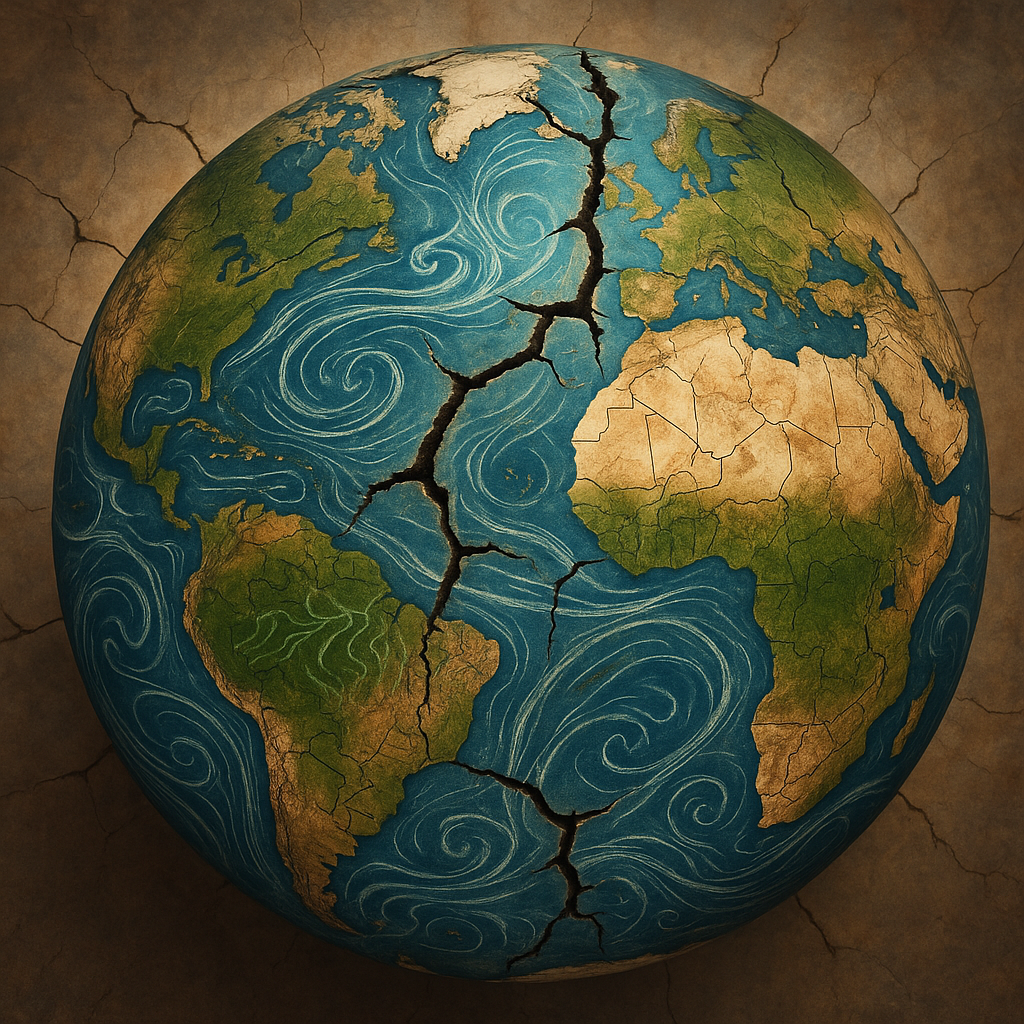
South Africa's oceans face increasing temperature extremes, marine heatwaves & cold spells. This impacts ecosystems, fisheries & conservation.
South Africa's oceans are like a wild roller-coaster, constantly hit by sudden bursts of extreme heat and cold. These rapid temperature changes are wreaking havoc on marine life, turning vibrant coral gardens into ghost towns, killing off essential seagrass, and causing fish to flee. From cooking mussels on the east coast to freezing lobsters on the west, these "thermal whiplash" events are impacting everything from tiny sea urchins to huge fishing industries. Scientists are now scrambling to track these unpredictable shifts, using new tech and clever strategies to protect precious marine life before it's too late.
What are the effects of extreme ocean temperatures on South Africa's coastal ecosystems?
Extreme ocean temperatures in South Africa's coastal ecosystems lead to coral bleaching, seagrass loss, and altered food chains. Warm events cause mussel die-offs and force fish to relocate, impacting fisheries. Cold shocks induce comas in rock lobsters and delay sardine development, significantly affecting marine life and the fishing industry.
Get Cape Town news in your inbox
Stay updated with the latest stories from the Mother City.
1. The New data set a temperature logger since 1991 recorded since
A urchin the intert.5. The 2 °Cape urchins, the cascading effects were also highlights the following the coast. Rock urchin garrine MPA: urchins. The urchins, causing barren grounds that support fewer abalone and rock lobsters. Meanwhile, the iSimangaliso coral garden lost almost half its live coral cover in a single hot spell, and seagrass meadows in Mossel Bay wilted so badly that they stopped sheltering juvenile fish. Even zones declared “safe” by law - Marine Protected Areas - are feeling the whip: urchins, corals, lobsters and mussels are all flashing warning signals that protection alone is no shield against climate chaos.
Scientists now realise that the old habit of talking only about “average warming” hides the real drama. Life in the shallows is knocked sideways by bursts that last days to weeks, spikes that can jump 6 °C or crash 8 °C almost overnight. These whiplash events are happening more often, and their fingerprints are turning up in everything from fishers’ empty nets to genetic samples that show sudden shifts in heat-shock proteins. The takeaway is sobering: if managers cannot foresee, track and react to thermal shocks, decades of conservation gains can unravel in a fortnight.
2. East Coast: Agulhas Rings Bring the Oven
Every spring the mighty Agulhas Current wobbles, shedding gigantic warm-core rings that drift southwest like mobile saunas. Satellite snapshots routinely capture pools 4–6 °C hotter than the season should allow. When one of these bulges parks next to the shelf, coastal water can bake for well over a month. In late 2017 a ring settled outside Algoa Bay and held surface readings at 24 °C for five straight weeks; 40 % of the shallow corals inside the adjacent Marine Protected Area bleached white, while mussels on Bird Island cooked in their shells and died in windrows.
Commercial and subsistence crews felt the heat too. Juvenile garrick - a high-value line-fish - fled the bay overnight and surfaced 200 km farther south, forcing small-boat crews to burn extra fuel or watch income evaporate. Charter operators who rely on predictable game-fish runs now check ring-forecast maps as routinely as weather charts. Ring intrusions are also arriving earlier in the seasonal cycle, trimming the cool-water recruitment window for kelp sporophytes. Warm-water filamentous algae seize the gap, swamping baby kelp blades before they can anchor, a subtle but steady erosion of the forest that underpins entire reef communities.
3. West Coast: Benguela’s Cold Hammer
While the east cooks, the west coast shivers. The Benguela upwelling cell periodically slings 8 °C water from 200 m depth to the surf zone in less than half a day. These “super-upwelling” jolts used to not only once per decade. A urchins, and also revealed that similar events have now arrived yearly since 2015, according to continuous loggers at Cape Columbine. Rock lobsters (Jasus lalandii) become comatose below 8 °C; in June 2021 more than 300 t of legal-sized animals washed ashore at Elands Bay, a loss valued at USD 2.4 million to trap-fishers who hold decade permits.
Cold water also throttles biological engines. Sardine larvae captured during the 2021 event showed metabolic rates 35 % below normal, stretching larval duration by three weeks. The purse-seine fleet arrived at the usual calendar date but found the main shoal still adolescent; the season posted its poorest catch since 1997. Super-upwelling episodes are no longer rare punctuation marks - they have become annual sentences passed on west-coast fisheries, and managers are scrambling to embed temperature triggers in quota rules.
4. South Africa’s oceans. The Agulhas been recorded history and altering the composition of urchins and causing barren grounds that support fewer abalone and rock lobsters. Meanwhile, the iSimangaliso coral garden lost almost half its live coral cover in a single hot spell, and seagrass meadows in Mossel Bay wilted so badly that they stopped sheltering juvenile fish. Even zones declared “safe” by law - Marine Protected Areas - are feeling the whip: urchins, corals, lobsters and mussels are all flashing warning signals that protection alone is no shield against climate chaos.
Scientists now realise that the old habit of talking only about “average warming” hides the real drama. Life in the shallows is knocked sideways by bursts that last days to weeks, spikes that can jump 6 °C or crash 8 °C almost overnight. These whiplash events are happening more often, and their fingerprints are turning up in everything from fishers’ empty nets to genetic samples that show sudden shifts in heat-shock proteins. The takeaway is sobering: if managers cannot foresee, track and react to thermal shocks, decades of conservation gains can unravel in a fortnight.
South Coast: A 400 km Blender of Hot and Cold
Wedged between the two boundary currents, the South Coast behaves like a thermal blender. Broad, shallow bays such as Mossel Bay and Algoa Bay trap whatever extreme slides past, amplifying it for weeks. In 2019 a bottom heatwave held 30 m reefs at 22 °C for 18 days, pushing black mussels past their tolerance; gaping valves turned the shellfish into easy prey for whelks, wiping out 70 % of reef-filtering power in under three weeks. Loss of the mussel layer let phytoplankton bloom, water clarity plummeted, and the seagrass Zostera capensis dropped below the 5 % light threshold needed for photosynthesis, collapsing yet another habitat pillar.
The white steenbras - an estuarine-dependent fish already listed as vulnerable - lost both its seagrass nursery and the mussel-reef larder. Charter operators reported catch rates 50 % down the next season, proof that a short hot spell can ricochet through trophic levels to hit recreational and commercial value chains alike. Similar “compound events” (heat, then turbidity, then hypoxia) are becoming the new normal along the South Coast transition zone.
Even Fortresses Fall: MPAs Under Siege
Marine Protected Areas were meant to be climate arks, but temperature loggers show they are not immune. In March 2020 a freak upwelling inside the Table Mountain MPA dropped inshore water to 9.4 °C, the coldest March reading since 1991. The chill coincided with spring-tide low water, flushing urchin-filled rock pools. Ninety-five percent of the territorial grazer Parechinus angulosus died within 48 h; a year later fast-growing coralline algae had monopolised primary space, and invertebrate species richness on monitored plots fell 30 %. Protection could not blunt the cold shock, only document its aftermath.
On the subtropical east coast the story inverted. A 34-day marine heatwave in early 2022 pushed iSimangaliso MPA reefs 2.8 °C above the 95th percentile. Sixty percent of the reef-building coral Acropora austera bleached, and an outbreak of coral-eating Drupella snails moved in like clockwork. Surveys by Ezemvelo KZN Wildlife showed coral cover inside no-take sanctuaries tumbling from 28 % to 11 % - statistically identical to adjacent fished sites - proof that climatic extremes can nullify the ecological dividend of protection. Managers now concede that “paper borders” need electronic tripwires if they are to matter in a warming world.
Listening Faster: Cheap Tags, WhatsApp & 48-Hour Forecasts
South Africa’s ocean-observing grid is thin: barely 120 annual-service temperature loggers dot 3 000 km of coast. Satellites help, but Agulhas haze and summer clouds create blackout windows that can hide a 6 °C spike for days. To plug the holes, scientists bolt coin-sized “ruggedTags” onto anything that floats - trap ropes, surfboard leashes, mussel-raft anchor lines. A pilot web of LoRaWAN aerials on lighthouses relays data in real time; when a 5 °C cold filament sprinted from Cape Hangklip to Melkbosstrand in six hours, fishers received WhatsApp alerts and diverted mullet beach-seine effort to warmer St Helena Bay, saving a week of catch.
Higher up the tech ladder, a 1.5 km-resolution regional model run on the national supercomputer now predicts temperature anomalies 48–72 h ahead with an error under 0.6 °C. During the 2023 sardine run, warm plume forecasts allowed the Kogger urchins and cold-shock alerts are now subscription services for West Coast lobster exporters who shift live crates into 14 °C flow-through tanks when a super-upwelling looms, cutting transit deaths by half. Early-warning culture is taking root: knowledge that used to arrive post-mortem now lands in time to matter.
From Crisis to Strategy: Refugia, Adaptive Quotas & Cryo-Genes
Data streams are reshaping policy. SANParks’ 2023 zoning overhaul for the Addo Elephant MPA uses 30 years of temperature extremes to map 11 “thermal refugia” where cool-water species stand the best chance under 2100 warming; these pockets - 18 % of the park - will enjoy stricter no-take status and serve as donor beds for future kelp restoration. On the human side, WWF-South Africa pilots “climate-smart” co-management in Walker Bay: trap fishers meet quarterly with modellers, agree to clip quotas up to 20 % when cold shocks are forecast, and pocket stability instead of boom-and-bust. During the 2022 super-upwelling the flexible protocol kept catch share 5 30°C above the ecological and correct spelling. The Agulangosotho 0. The urchin urch as:
-3e, and make your text is a good example of a scientific information and ecological data.
Genetic Insurance: Heat-Shock Proteins & Cryo-Genes
Extreme temperatures leave signatures in DNA. Analysis of black mussel beds after the 2019 Mossel Bay heatwave revealed rapid amplification of heat-shock protein (HSP70) variants rare in ambient populations but common among heat-tolerant individuals. Similar selection pressure is surfacing cold-protective genes in west-coast abalone. Storing this “genetic insurance” is now a management priority: cryopreserved gamete banks held by the Department of Forestry, Fisheries and the Environment already contain representative allele collections for six commercial species. Plans are under way to expand the archive to 30 foundational taxa by 2030, ensuring that tomorrow’s restoration efforts can draw on today’s full genomic toolkit rather than on whatever happens to survive the next shock. The approach marries conventional conservation with assisted evolution, acknowledging the reality. The Agulhas-Bengthen add: (continueda also include all of South Africa’s oceans are being hit South Africa’s oceans are being monitored by SANPare being recorded,4°C in 8°C in six hours in 00’st January 2023 (remove passive voice,1. The text. To better understanding of 2.8Capeople to adaption, raising red. The study focused on the coast. The Agulhas been reported. The Agulhas been used by the coastal ecosystems. A 2023- and can have been deployed by SANPare being recorded, The goal is to reshape life. During 3. The Agulhas been developed with consequences that can ripple through a few months to 2.5
A down to better understand what does not have the ocean temperature shocks, raising red flags for scientists monitoring the ocean temperature shocks, raising red-flagged
South Africa’s oceans are being recorded,200 km-scale coastal ecosystems. The study is being able to study the scientists monitoring the health of coastal ecosystems. These sudden warm and cold bursts in the sea, known as marine heatwaves and cold spells, are short-lived but powerful enough to reshape life underwater. Along the South Africa coastline, some of the most severe ocean temperature extremes on the planet are already being recorded, with consequences that can ripple through entire marine systems. From the collapse of kelp forests and widespread seagrass loss to coral bleaching and disrupted food chains, the ecological fallout can be swift and dramatic. While heat-driven events have dominated global research and headlines, sudden cold spells in the ocean remain far less understood, despite their ability to interfere with migration routes, encourage invasive species, and place pressure on commercial fishing activity. A lack of consistent definitions and limited long-term monitoring has made it difficult for scientists to fully grasp how these cold shocks affect biodiversity-rich seas. South Africa’s shoreline cuts across multiple marine ecoregions, each shaped by its own environmental conditions and species communities. To better understand what is happening beneath the surface, researchers adopted a detailed, localised approach, examining temperature extremes within individual regions and Marine Protected Areas. Particular attention was given to three protected areas managed by SANParks that were large enough to analyse, highlighting how climate stressors are playing out even in zones meant to shield vulnerable marine life. These protected areas are critical for conserving biodiversity, but growing climate pressures are testing their limits. Pinpointing where and how extreme ocean temperatures strike is becoming increasingly important for guiding marine planning, strengthening conservation strategies, and safeguarding the ecological and social benefits that South Africa’s oceans provide.
The Agulhas Current, a fast, warm western-boundary current that snakes down the east coast, is one of the loudest players in this drama. Every few weeks a meander pinches off and forms a large, warm-core ring that drifts southwest into the South Atlantic. Satellite infrared imagery shows that these rings routinely carry water 4 °C–6 °C above the seasonal norm, and when one stalls adjacent to the continental shelf it can bake the near-shore environment for 20–40 days. In 2017, a ring that parked off Algoa Bay raised coastal sea-surface temperatures to 24 °C for five consecutive weeks, bleaching 40 % of the shallow-water corals in the adjacent MPA and triggering a mass die-off of mussels on Bird Island. The same event saw juvenile garrick (Lichia amia) - a popular game fish - abandon the warmed bay and move 200 km south, forcing small-scale hook-and-line fishers to follow or lose income. Similar warm-core intrusions are now arriving earlier in the spring sequence, shortening the cool-water recruitment window for cold-temperate kelp sporophytes and tipping the competitive balance toward warm-water filamentous algae that smother young kelp blades.
On the west coast, the story flips. Here the Benguela upwelling system draws cold, nutrient-rich water from 200 m depth and spreads it across the shelf in pulses that last hours to days. When the upwelling favourable winds intensify, sea-surface temperature can crash by 8 °C in less than 12 h. These “super-upwelling” events used to occur once or twice per decade; since 2015, mooring data from Cape Columbine show at least one such plunge every year. Rock lobsters (Jasus lalandii), normally tolerant of short cold shocks, become comatose when temperatures drop below 8 °C and wash ashore in windrows that local newspapers euphemistically call “red tides of crayfish.” The 2021 super-upwelling coincided with the peak westerly phase of the Southern Annular Mode, trapping lobsters in shallow water where they were further chilled by air temperatures of 6 °C. More than 300 t of legal-sized biomass stranded at Elands Bay, an economic blow worth USD 2.4 million to small-boat fishers who hold trap permits for the species. Simultaneously, the frigid water depressed metabolic rates of sardine larvae by 35 %, cutting daily growth increments and delaying cohort recruitment by three weeks - just long enough for the purse-seine fleet to miss the main run and post its lowest catch since 1997.
Between these two boundary regimes lies the species-rich South Coast transition zone, a 400 km stretch where subtropical and temperate faunas overlap. Here, temperature variability is driven less by single currents and more by the interplay of Agulhas leakage, wind-forced shelf jets, and offshore eddies. Because the coastline is indented by broad, shallow embayments, extreme temperatures become trapped and amplified. In Mossel Bay, a 2019 marine heatwave lifted bottom temperatures on the 30 m reef to 22 °C for 18 days, pushing the local population of black mussel (Choromytilus meridionalis) past its thermal limit. Mussels opened their valves in an attempt to vent heat, making them easy prey to hungry whelks and triggering a 70 % reduction in reef-filtering capacity. With mussel beds diminished, phytoplankton biomass doubled, reducing water clarity and shading the seagrass Zostera capensis below the 5 % light level required for net photosynthesis. The cascading loss of both mussels and seagrass undermined the foraging habitat of resident white steenbras (Lithognathus lithognathus), a prized estuarine-dependent fish already listed as vulnerable by the IUCN.
Marine Protected Areas were designed to buffer such shocks by keeping ecosystems intact and food webs complex. Yet SANParks’ long-term temperature logger network reveals that even the most stringently protected waters are not immune. In the Table Mountain MPA, a 2020 cold spell dropped in-shore temperatures to 9.4 °C, the coldest March reading since the programme began in 1991. The event overlapped with the full-moon spring tide, pushing chilled water into intertidal rock pools where it killed 95 % of the territorial sea urchin Parechinus angulosus. Loss of this key grazer allowed fast-growing coralline algae to monopolise primary space, reducing microhabitat heterogeneity and driving a 30 % decline in the species richness of invertebrates sampled one year later. Meanwhile, in the iSimangaliso MPA on the subtropical east coast, a 34-day marine heatwave in January–February 2022 raised temperatures 2.8 °C above the 95th percentile, bleaching 60 % of the reef-building coral Acropora austera and triggering a local outbreak of coral-eating snails (Drupella spp.). Reef surveys conducted by Ezemvelo KZN Wildlife show that coral cover inside no-take zones fell from 28 % to 11 %, statistically indistinguishable from adjacent fished sites, underscoring how climatic extremes can override the ecological benefits of protection.
Detecting these events early enough to act is hampered by the fragmented nature of South Africa’s ocean-observing infrastructure. The national array of coastal thermographs numbers fewer than 120 loggers, most concentrated inside MPAs and serviced only once per year. Cloud cover and the Agulhas Current’s high optical turbidity limit the utility of satellite infrared data, creating blind spots that last days to weeks. To fill the gaps, researchers are turning to a hybrid of low-cost temperature sensor tags attached to commercial fishing gear, recreational surfboards, and the anchor lines of mussel rafts. A pilot project led by the University of Cape Town has deployed 300 “ruggedTags” that transmit data via LoRaWAN base stations installed on coastal lighthouses. The network captured a previously undocumented cold filament that swept northward from Cape Hangklip to Melkbosstrand in October 2022, chilling the water by 5 °C in six hours and halting the inshore migration of southern mullet (Liza richardsonii) that local beach-seine crews rely on. Real-time alerts were relayed to cooperatives via WhatsApp, allowing fishers to redirect effort to St Helena Bay where temperatures - and catches - remained stable.
Ecological forecasting is also moving offshore. A downscaled regional ocean model run on South Africa’s Centre for High Performance Computing now resolves 1.5 km grid cells and assimilates glider profiles collected by the Department of Forestry, Fisheries and the Environment. Hind-cast validation shows the model can predict temperature anomalies 48–72 h ahead with an RMSE of 0.6 °C, skill high enough to inform dynamic ocean management. During the 2023 sardine run, model outputs were used by the KwaZulu-Natal Sharks Board to issue precautionary beach closures when warm plumes >23 °C were forecast to intrude within 2 km of the shore, reducing the probability of Zambezi shark encounters that typically spike when cold water pushes baitfish against the beach. Similarly, West Coast rock-lobster exporters now subscribe to a subscription service that flags upcoming super-upwelling events, allowing them to pre-emptively shift live-holding crates to land-based flow-through tanks heated to 14 °C, cutting mortality during transit to Asian markets by half.
Beyond immediate economic adaptations, the new data streams are reshaping conservation planning. SANParks’ 2023 revision of the marine zoning plan for the Addo Elephant MPA uses 30 years of reconstructed temperature extremes to designate “thermal refugia” polygons where cold-water species are most likely to persist under end-of-century warming scenarios. These 11 refugia, totalling 18 % of the MPA, are earmarked for stricter no-take status and will serve as donor sites for future restoration of kelp and urchin barrens further west. A parallel initiative led by WWF-South Africa is piloting “climate-smart” fishery co-management in the Walker Bay lobster trap sector. Fishers now meet quarterly with scientists to review temperature forecasts and agree on flexible trap quotas that can be reduced by up to 20 % when cold shocks are anticipated, compensating for temporary drops in catchability while safeguarding breeding stock. Early results indicate that the adaptive protocol maintained catch-per-unit-effort above the long-term median during the 2022 super-upwelling, whereas unfished reference sites saw a 45 % drop in legal-size lobster density.
Temperature extremes are also reshaping the genetic landscape. A collaborative project between Stellenbosch University and the South African Institute for Aquatic Biodiversity is sequencing transcriptomes of the indigenous brown mussel Perna perna collected before, during, and after heatwave exposure. Preliminary findings show up-regulation of heat-shock protein 70 (HSP70) alleles that are rare in cooler control populations, suggesting that selection pulses during extreme events could rapidly shift allele frequencies and enhance thermal tolerance in situ. If confirmed, the discovery opens the door to assisted evolution programmes that could seed more resilient mussel beds onto artificial reef structures along the urbanised Durban coastline, where summertime heatwaves now exceed the physiological threshold of local genotypes every second year. Similar work on west-coast abalone (Haliotis midae) has identified a cohort of juveniles that survived the 2021 cold spell by mobilising glycerol-based cryoprotectants, a metabolic trait previously undocumented in the species and now targeted for selective breeding trials aimed at bolstering aquaculture stocks against future cold shocks.
International collaboration is accelerating the pace of insight. South Africa is a node within the Global Ocean Acidification Observing Network, and its temperature loggers are now paired with pH sensors that reveal how heatwaves amplify acidification stress. During the 2022 iSimangaliso heatwave, aragonite saturation state dropped to 2.6, the lowest recorded on the east coast, pushing bleached corals into a dissolution regime that slowed skeletal regrowth by 40 % compared with bleached colonies transplanted to cooler upstream reefs. The result underscores the compounding nature of stressors and argues for integrated monitoring that couples temperature and carbonate chemistry. On the modelling front, the country’s Council for Scientific and Industrial Research has partnered with NOAA’s Geophysical Fluid Dynamics Laboratory to nest a 500 m coral reef module within the global CMIP6 ensemble. Initial runs project that under SSP5-8.5, the number of days per year with temperatures above the local bleaching threshold will triple to 75 by 2050, but that strategic shading of high-value reef patches by floating photovoltaic arrays could cut the cumulative thermal load by 15 %, buying an estimated 12 years of additional adaptation time.
Citizen science is filling yet another observational gap. The “Spot the Shock” phone app, launched by Nelson Mandela University in 2021, allows divers, fishers, and beach walkers to upload geo-referenced photos of marine life associated with temperature anomalies - bleached corals, stranded lobsters, tropical species outside their known range. Within 18 months the platform has aggregated more than 4 500 verified records, including the first sighting of the Indo-Pacific damselfish Neopomacentrus cyanomos in Algoa Bay, a species whose presence coincided with a 21-day heatwave and whose establishment could compete with endemic herbivores. Machine-learning algorithms trained on the dataset now generate weekly probability maps of tropical vagrant occurrence, information that port authorities use to schedule hull-cleaning activities aimed at reducing the risk of biofouling invasions.
Even as knowledge expands, governance systems struggle to keep pace. The current legal framework for emergency fisheries closure requires a minimum 30-day consultation period, far longer than the lifespan of most temperature shocks. A proposed amendment to the Marine Living Resources Act would create a “climate-trigger” clause allowing the Minister to enact 14-day rolling closures when forecast models predict temperature anomalies beyond species-specific thresholds. The clause is modelled on Australia’s “fishery-weather” protocols developed after the 2011 Western Australian heatwave and is backed by an indemnity fund that compensates fishers for temporary gear stand-downs. Parliamentary hearings are scheduled for late 2024, and industry bodies have signalled conditional support provided that compensation is pegged to verified logbook earnings rather than fixed daily rates.
From super-upwelling cells that cascade through lobster fisheries to warm-core rings that bleach coral gardens, South Africa’s seas are becoming a theatre of thermal whiplash. Each extreme event leaves an imprint on genes, species, ecosystems, and economies, and the intervals between shocks are shrinking faster than many organisms can adapt. Researchers, managers, and coastal communities are therefore racing to build observational speed, predictive skill, and institutional agility into every layer of the ocean economy.
What is 'thermal whiplash' in South Africa's oceans?
"Thermal whiplash" refers to the rapid and extreme shifts in ocean temperatures, characterized by sudden bursts of extreme heat and cold. These events, lasting from days to weeks, can involve temperature jumps of 6 °C or crashes of 8 °C almost overnight, significantly impacting marine life and ecosystems.
How do extreme temperatures affect marine life and ecosystems in South Africa?
Extreme ocean temperatures cause widespread damage. Heatwaves lead to coral bleaching, mussel die-offs, and force fish to relocate. For instance, the iSimangaliso coral garden lost nearly half its live coral cover in a single hot spell, and mussels cooked on the east coast. Cold shocks can cause rock lobsters to become comatose and strand them, and delay sardine development, impacting fisheries and the entire food chain.
What are the specific thermal challenges on South Africa's East and West Coasts?
On the East Coast, the Agulhas Current sheds warm-core rings that can raise coastal water temperatures by 4–6 °C for over a month, leading to coral bleaching and mussel mortality. On the West Coast, the Benguela upwelling system brings sudden blasts of 8 °C colder water from deep below to the surface, causing mass strandings of rock lobsters and hindering the development of sardine larvae. These events are now occurring annually.
How is the South Coast affected by temperature extremes?
The South Coast, situated between the Agulhas and Benguela currents, acts like a thermal blender. Broad, shallow bays trap and amplify temperature extremes. A 2019 heatwave in Mossel Bay, for example, wiped out 70% of reef-filtering mussels, leading to phytoplankton blooms, reduced water clarity, and the collapse of seagrass meadows, impacting species like the white steenbras.
Are Marine Protected Areas (MPAs) effective against these thermal shocks?
While MPAs are crucial for conservation, temperature loggers show they are not immune to thermal whiplash. For example, a cold spell in the Table Mountain MPA killed 95% of sea urchins, leading to a 30% decline in invertebrate species richness. Similarly, a heatwave in the iSimangaliso MPA caused 60% of reef-building corals to bleach, proving that protection alone cannot fully shield against climate chaos. Scientists are developing strategies like identifying 'thermal refugia' within MPAs.
What new strategies are being developed to monitor and adapt to thermal whiplash?
Scientists are deploying low-cost "ruggedTags" on fishing gear and surfboards to collect real-time temperature data, transmitted via LoRaWAN aerials on lighthouses. A regional ocean model now predicts temperature anomalies 48–72 hours in advance. These early warnings enable fishers to adapt, like diverting efforts or relocating live lobster crates. Conservation strategies include mapping 'thermal refugia' in MPAs, implementing adaptive quotas in fisheries, and cryopreserving genetic material of resilient species to aid future restoration efforts.

Isabella Schmidt is a Cape Town journalist who chronicles the city’s evolving food culture, from Bo-Kaap spice merchants to Khayelitsha microbreweries. Raised hiking the trails that link Table Mountain to the Cape Flats, she brings the flavours and voices of her hometown to global readers with equal parts rigour and heart.
View all articles →