
Kleinvlei Canal cleanup removes 150 tonnes of waste
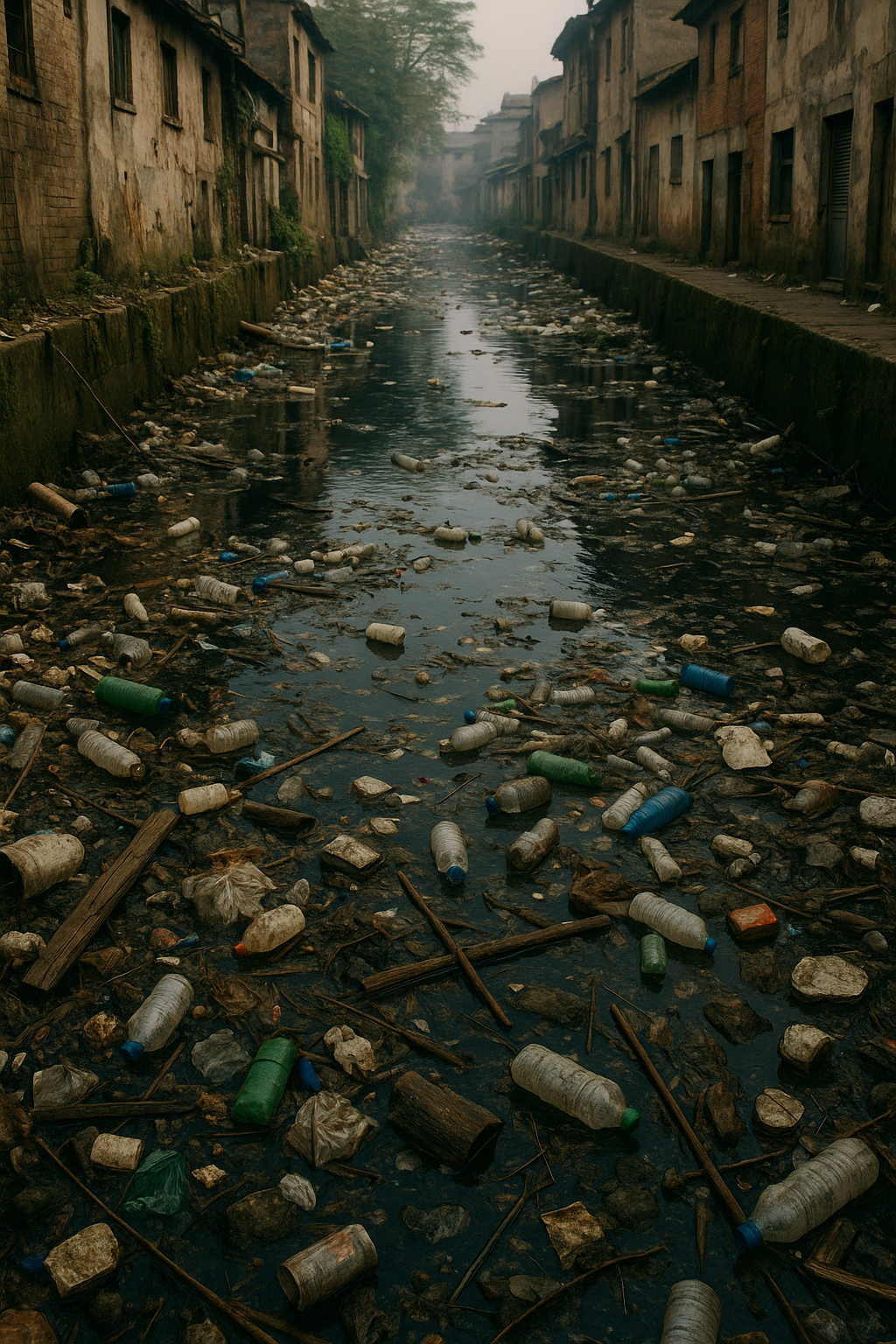
Kleinvlei Canal: Cape Town's R1.9M rescue removed 150 tonnes of waste. Learn how they did it & the wider war on plastic pollution.
Cape Town cleaned up its Kleinvlei Canal, removing a massive 149.3 tonnes of trash, mostly building waste and plastic, in just over a month. This huge effort used special equipment and a dedicated team, filling 18 garbage trucks. The canal is super important for water in the area and people living nearby. They even put in smart new systems to stop trash from getting in again, showing how clever ideas and community help can save our waterways.
How much waste was removed from the Kleinvlei Canal clean-up?
An astounding 149.3 tonnes of debris, primarily construction waste (38%) and plastic packaging (34%), were removed from just 3.1 kilometers of the Kleinvlei Canal between November 4 and December 15, 2025. This massive clean-up filled 18 municipal garbage trucks, highlighting the scale of the environmental degradation.
Get Cape Town news in your inbox
Stay updated with the latest stories from the Mother City.
The Massive Clean-Up Operation
Between November 4 and December 15, 2025, an ambitious environmental restoration project transformed the Kleinvlei Canal from a waste-choked waterway into a symbol of hope for Cape Town's environmental future. A dedicated team of 42 workers, clad in protective waders and safety gear, embarked on a six-day work week schedule to remove an astounding 149.3 tonnes of debris from just 3.1 kilometers of canal.
The operation employed an impressive array of equipment including extended-reach excavators, flat-bottom boats, conveyor systems, and manual nets to extract everything from construction debris to household garbage. This massive haul equated to filling 18 municipal garbage trucks, with each load carefully documented and transported to the Vissershok landfill 35 kilometers away. The waste underwent rigorous documentation, including photography and bar-coding, with every fifth load receiving manual inspection.
The composition of recovered materials revealed concerning patterns: construction waste dominated at 38%, followed closely by plastic packaging at 34%. Organic matter accounted for 11%, textiles 9%, and miscellaneous items 8%. This breakdown highlights the diverse sources of pollution affecting Cape Town's waterways and the complex challenge facing environmental managers.
Why This Waterway Matters for Cape Town's Future
The Kleinvlei Canal serves as a crucial link in Cape Town's water system, acting as the final urban channel before the Kuils River expands into the extensive Zeekoevlei-Rondevlei-Zandvlei estuarine network spanning 2,800 hectares. This system ultimately drains into False Bay, making the canal's health vital for both marine and freshwater ecosystems.
The canal's significance extends far beyond its modest length, as it serves 650,000 residents across multiple communities including Khayelitsha, Blue Downs, Kuils River, and Stellenbosch's agricultural areas. The water quality impacts extend to three internationally recognized Ramsar wetlands and supports one of South Africa's last remaining commercial mullet fisheries, demonstrating the canal's outsized environmental and economic importance.
Water quality monitoring revealed alarming statistics throughout 2024, with ammonia levels reaching 9 mg/l during winter months - triple the acceptable threshold for irrigation purposes. Microplastic concentrations exceeded 5,000 particles per cubic meter, levels typically associated with busy harbor environments rather than inland waterways. These figures underscore the urgent need for sustained intervention and the critical role the canal plays in the broader ecosystem.
The Human Cost of Environmental Neglect
The canal's transformation from a functional storm water channel to a waste repository reflects broader urban planning failures and social challenges. Originally constructed in 1978 as a concrete channel designed to handle 30 cubic meters of storm water per second, the infrastructure was never intended to manage the waste generated by rapid urban expansion that began in 1994.
Post-apartheid development brought massive population growth to the area, with formal maize fields giving way to RDP housing, informal settlements, and light industrial zones. However, waste management services failed to keep pace with this expansion. 2023 municipal data revealed that only 68% of households in southern Eerste River received weekly wheelie-bin collection, leaving 48,000 people dependent on 240 communal skips serviced twice weekly.
This service gap created perfect conditions for illegal dumping, euphemistically termed "fly-tipping" by authorities. Project surveillance using infrared cameras documented an average of 14 nightly dumping incidents, with the most egregious example involving a 12-ton truckload of drywall fragments deposited by a vehicle bearing cloned license plates. These statistics reveal how infrastructure shortfalls directly contribute to environmental degradation.
Engineering Solutions and Economic Innovation
The clean-up's success hinged on preventing new waste from entering the waterway, leading to the installation of two innovative interception systems in October 2025. The Water and Sanitation Directorate retrofitted existing infrastructure at the Eerste River South outlet and added a second interceptor 700 meters upstream at Dreamworld, creating a dual-barrier system.
Each interceptor features sophisticated technology including 12-millimeter galvanized bar screens with 50-millimeter spacing, positioned at 70-degree angles to automatically guide debris onto collection decks. Solar-powered Archimedes screws lift captured materials into 6-cubic-meter containers, while IoT-enabled load cells notify city control centers when containers reach 80% capacity - typically every 9.4 days. Emergency bypass mechanisms protect the infrastructure during flood conditions exceeding 40 cubic meters per second.
The economic efficiency of these locally-designed systems proved remarkable, costing R1.1 million for both units compared to R1.6 million for a rejected German alternative. The decision prioritized local maintenance capabilities over imported technology, ensuring rapid response times for repairs. Since installation, these devices have captured an additional 11 tonnes of waste, demonstrating that the December clean-up represented an ongoing challenge rather than a one-time crisis.
Funding the Future of Urban Environmental Management
The financial structure supporting the Kleinvlei restoration reveals innovative approaches to environmental funding. The 2025/26 budget of R1.822 million breaks down into strategic categories: R1.1 million for interceptor infrastructure (fully spent), R722,000 for labor-intensive cleaning operations (completed), R180,000 for bi-weekly interceptor maintenance, and R150,000 allocated for a pre-winter intensive clean-up scheduled for May 2026.
At R12 per kilogram removed, the operation significantly undercut the R18 per kilogram cost of the 2023 Black River rehabilitation. This efficiency resulted from utilizing Extended Public Works Programme wages of R150 daily rather than private contractor rates of R350 daily. This approach demonstrates how government programmes can deliver environmental services while providing employment opportunities in high-unemployment communities.
The Extended Public Works Programme subsidy covers 70% of wage costs, addressing criticism about temporary employment while providing pathways to permanent positions. Data from similar projects shows 34% of participants transitioning to permanent employment in related fields including landscaping, security services, and municipal waste management, proving these initiatives serve as genuine stepping stones rather than poverty traps.
Beyond the Canal: Creating Circular Economy Solutions
The 51 tonnes of recovered plastic waste demonstrates both the challenge and opportunity inherent in urban waste management. Rather than simply relocating the problem, the project created genuine recycling pathways through partnerships with Cape Town's growing waste-processing infrastructure. Materials Recovery Facilities like Kraaifontein employ advanced optical sorting technology to separate different plastic types for specific recycling applications.
PET bottles undergo washing and flaking processes before sale to Johannesburg-based Extrupet at R2.80 per kilogram, creating closed-loop recycling that currently supplies 12% of Cape Town's new beverage bottle production. Films and laminate pouches, too contaminated for mechanical recycling, serve as alternative fuel at the Belville cement kiln, replacing 3% of coal consumption under South Africa's waste-derived-fuel protocols.
This approach transforms environmental liability into economic opportunity while reducing landfill dependence. The integration of digital surveillance tools, including a WhatsApp "Dump Spotter" hotline, has generated 312 reports since October 2025, resulting in 38 fines totaling R5,000 for the most serious violation. While the 12% fine-success rate may seem modest, it represents a three-fold improvement over traditional telephone hotlines.
Climate Adaptation and Future Challenges
Climate change projections add urgency to these restoration efforts, with Western Cape winter rainfall expected to decrease 8% by 2035 while individual storms intensify by 15%. This pattern creates longer dry periods for waste accumulation followed by extreme weather events capable of flushing accumulated debris downstream in hours.
The interceptor systems were engineered to withstand 1:10 year flood events, but "Day-Zero" type storms dropping 127 millimeters in 24 hours would overwhelm current capacity. In response, the May 2026 pre-winter operation will deploy a 200-meter floating barrier manufactured from recycled HDPE pipes, install litter bins every 100 meters along canal pathways, and pilot license-plate recognition cameras at known dumping hotspots.
International collaboration enhances these local efforts, with Cape Town engineers studying Nairobi's "River Rescue" app for crowd-sourced waste reporting while sharing their own innovations with Durban officials facing similar challenges. This knowledge exchange demonstrates how urban environmental solutions can scale globally while adapting to local conditions.
Community Action and Individual Responsibility
The project's ultimate success depends on sustained community engagement and individual behavioral change. Four monthly "Skip Saturdays" at Kleinvlei sports field provide free waste disposal opportunities, while 20 buy-back centers within 7 kilometers offer R1.80-2.80 per kilogram for separated plastics. These initiatives create tangible incentives for proper waste management while supporting local recycling industries.
Educational institutions and community organizations can access R10,000 micro-grants for adopting 200-meter canal stretches, enabling vetiver grass planting that stabilizes banks while trapping floating debris. These grassroots efforts complement technological solutions, creating multiple layers of protection for Cape Town's waterways.
As winter 2026 approaches, the floating barrier stands ready for emergency deployment while interceptors continue their mechanical vigilance. The WhatsApp reporting system processes daily tips, enforcement officers respond to violations, and specialized equipment removes accumulated waste. This integrated approach transforms the Kleinvlei Canal from an environmental casualty into a proving ground for urban sustainability, demonstrating that with sufficient investment, innovation, and community participation, even the most polluted waterways can recover their ecological function and economic value.
How much waste was removed from the Kleinvlei Canal clean-up?
An astounding 149.3 tonnes of debris, primarily construction waste (38%) and plastic packaging (34%), were removed from just 3.1 kilometers of the Kleinvlei Canal between November 4 and December 15, 2025. This massive clean-up filled 18 municipal garbage trucks.
What types of waste were found in the Kleinvlei Canal?
The waste removed predominantly consisted of construction waste (38%) and plastic packaging (34%). Other significant components included organic matter (11%), textiles (9%), and miscellaneous items (8%).
Why is the Kleinvlei Canal important to Cape Town?
The Kleinvlei Canal is a crucial link in Cape Town's water system, flowing into the extensive Zeekoevlei-Rondevlei-Zandvlei estuarine network and ultimately draining into False Bay. It serves 650,000 residents and impacts three internationally recognized Ramsar wetlands and a commercial mullet fishery, making its health vital for both ecosystems and communities.
What caused the significant waste accumulation in the canal?
The waste accumulation is largely attributed to rapid urban expansion and inadequate waste management services. Post-apartheid development led to massive population growth, but municipal waste collection services did not keep pace, resulting in widespread informal dumping, evidenced by an average of 14 nightly dumping incidents.
What solutions were implemented to prevent future pollution?
Two innovative interception systems were installed. These systems feature galvanized bar screens, solar-powered Archimedes screws to lift captured materials into containers, and IoT-enabled load cells to notify city control centers when containers are full. They also have emergency bypass mechanisms for floods and have already captured an additional 11 tonnes of waste.
How was the clean-up funded and what was its economic impact?
The clean-up cost R1.9 million (R1.1 million for interceptor infrastructure and R722,000 for labor-intensive cleaning). The operation was efficient, costing R12 per kilogram removed, significantly less than previous projects. It utilized the Extended Public Works Programme, providing employment opportunities to 42 workers, with 34% of participants from similar projects transitioning to permanent employment.

Zola Naidoo is a Cape Town journalist who chronicles the city’s shifting politics and the lived realities behind the headlines. A weekend trail-runner on Table Mountain’s lower contour paths, she still swops stories in her grandmother’s District Six kitchen every Sunday, grounding her reporting in the cadences of the Cape.
View all articles →