
Leopard killed by power line near Worcester
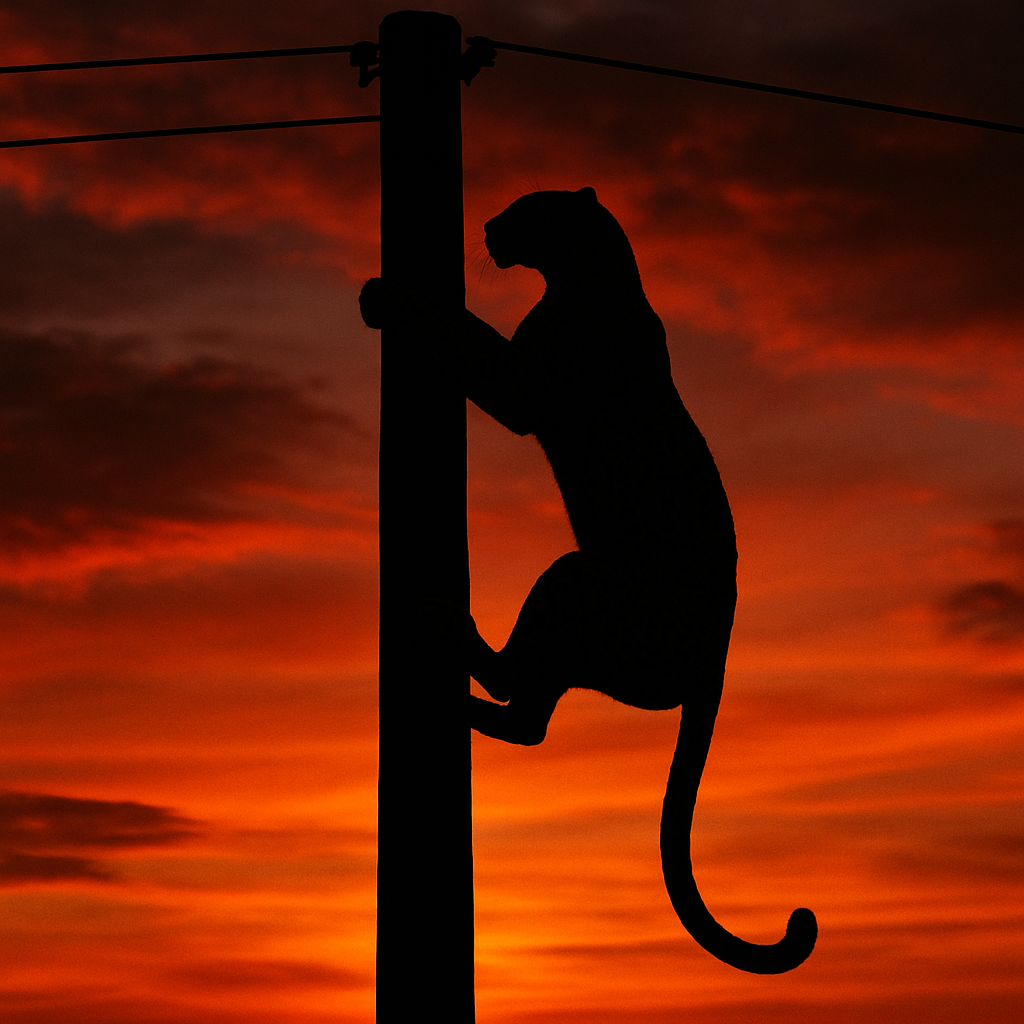
A leopard's electrocution on a power pole reveals the urgent need to protect wildlife in South Africa's changing wild spaces.
A powerful Cape leopard met a fiery end when it climbed an Eskom power pole, electrocuted by a bare 11 kV wire. This tragic event not only caused a power outage but also highlighted the dangerous gaps in infrastructure that threaten wildlife in biodiverse areas. Farmers, vets, and conservationists gathered, revealing a story of a wild cat's struggle against human-made hazards. This incident sparked a crucial conversation about protecting these magnificent creatures and ensuring our power lines are safe for both people and animals.
What caused the cape leopard's death?
The Cape leopard died from electrocution after climbing an Eskom power pole (Line 3D-47) and touching a bare 11 kV copper wire. The incident, which caused a power outage, highlights the risks wildlife face from inadequately insulated infrastructure in biodiversity corridors.
Get Cape Town news in your inbox
Stay updated with the latest stories from the Mother City.
1. The Spark That Stopped the Valley
At dawn on 23 January the Riviersonderend cliffs were still purple when Line 3D-47 hiccupped.
To motorists winding along the Nuy dirt road the wooden mast is just another crooked spine in Eskom’s 42 000-kilometre Western Cape web, yet to a young tom leopard it was the shortest route to a female whose oestrus scent drifted uphill like heated wine.
He climbed, one fore-pad brushed the bare 11 kV copper, 10 000-odd volts detonated through his chest, and the whole feeder fell silent - pumps, sorters, cold-chain conveyors, everything.
Gideon April, the linesman on call, crested the switch-back at 07:43 and saw the silhouette tail-down, claws still hooked.
One radio call later the 3D feeder stayed dark: drip-lines in 26 hectares of table grapes sighed to a stop and fourteen tonnes of blueberries waited mid-belt while farmers, vets and CapeNature staff formed a loose ring at 33° 34′ 19.4″ S, 19° 28′ 52.1″ E.
Before the baboons could scatter the evidence, Dr Marina Botha strapped climbing spurs to a second pole and ascended to a crime scene suspended three storeys above fynbos.
Burn lesions star-burst from the right fore-paw to the inner hind leg; claw-grooves polished 87 cm of resin to glass; a crescent of tarry scat at the base fixed the climb to within two hours of sunrise.
Down on the Land Cruiser tailgate the necropsy tally read 34.3 kg, full testes, stomach still holding a grey rhebok calf, canines micro-fractured by hard times.
No collar had ever hugged his neck, so whiskers, ear clips and lymph nodes were split into vials bound for labs in Stellenbosch, Cape Town and Stockholm - his passport to immortality written in bar-code.
2. What the Grid Forgot to Remember
Eskom’s protection engineer Luvuyo Mnyatheli shot images of 1994-vintage insulators, no spacers, no sheathing: standard kit across 28 000 km of the province.
Leopards rarely trip sustained faults, so they vanish from spreadsheets dominated by baboons and snakes; Line 3D-47 was ranked “medium-low” risk in 2022 and quietly forgotten.
Insulate one kilometre and you invoice R 180 000; add wildlife hardware and you double the price - hundreds of millions when threaded across secret ridgeways cats have used since the Pleistocene.
Conservation accountants read the ledger differently.
One adult male, by trimming baboon numbers and keeping herbivores mobile, safeguards forage worth R 1.3 million inside 200 km² over his lifetime - offsetting irrigation, pesticide and vet bills farmers never think to connect to a spotted ghost.
The maths is crisp: if one leopard prevents R 50 000 per hectare of fruit damage in a single baboon raid, then insulating 30 km of murderous cable is no longer a cost but a hedge fund against chaos.
Still, budgets do not pivot on spreadsheets; they pivot on stories.
Within forty-eight hours a respectfully cropped photograph of the dangling tom had out-trended load-shedding on News24, eclipsing cabinet reshuffle gossip.
Public indignation distilled into one sentence: why, thirty years after the first bird-guard prototypes, do priority biodiversity corridors still run naked?
3. Where Farms, Finance and Felines Collide
The Breederiver-Rooiberg Conservancy is a 3 000-hectare mosaic of title deeds; a tom that needs 180 km² can cross forty properties before breakfast.
Eskom’s risk algorithm multiplies customer density by recorded animal faults, so a 2 MW frost-fan block trumps a remote kloof that happens to glue the Cape Fold Belt to the Swartberg.
Institutional memory is equally short: the previous leopard electrocution was eight years ago, longer than the average regional manager tenure; lessons retired faster than they were learnt.
Money is not absent - it is just shy.
Carbon markets now pay premiums for “biodiversity co-benefits”; a 30 km insulation corridor would sequester modest carbon yet secure a SANBI-designated gene-flow bottleneck.
Talks launched in March 2023 between Landmark Foundation, Conservation South Africa and the Green Trust have sketched a R 7.5 million pilot, contingent on Eskom matching external cash rand-for-rand; the Nuy leopard’s DNA will be the before-and-after ruler.
Technology has sprinted ahead while invoices gathered dust.
Snap-on silicone sleeves can cloak live conductor in minutes; a Dutch 3D-printed “Lynx Guard” slips over insulators like a 300-gram sock rated 38 kV.
Chile’s Chilquinta cut Andean-cat deaths 94 % across 800 km for 0.7 % of its annual maintenance budget, recouping the outlay in two years through fewer outage claims - proof that amps and empathy can share a balance sheet.
4. After the Flash: Lessons Humming in the Wire
Willie Visagie, two kilometres upslope, has already collar-flashed his pump pylons with sheet-metal too slick for claws - low-tech, high-hope.
DIY fixes can beckon lightning without proper earthing, but every farmer who drills a bolt now asks Eskom for a safety check, forcing linesmen to map unofficial “hot spots” GPS never logged.
Piecemeal or not, the chatter keeps the cat’s story alive while procurement officers float tenders for covered conductor and yellow danger tape flutters like crime-scene bunting.
The leopard himself waits in a –20 °C drawer, aliquots removed, curriculum ready.
Plans oscillate between a travelling skeleton that will let rural children feel the claw that scored resin and a life-size hide in a future conservancy centre, burn star on the right fore-paw left naked beneath glass.
Either way he keeps teaching: volts, amperes, the price of cold berries and the higher price of losing what you never knew you owned.
Out on Pole 3D-47 the current is caged again, berries roll toward export markets and the female whose scent wrote the tom’s death warrant still pads the ridge.
When she next crosses the valley she may meet a mast wearing slick grey armour, too smooth for claws, its hum insulated from fur and ambition alike.
She will sniff industrial lubricant instead of scorched whiskers, and the flash that once stopped a valley will stay mercifully silent - an invisible architecture rewired, at last, for both power and wild breath.
[{"question": "What caused the Cape leopard's death?", "answer": "The Cape leopard died from electrocution after climbing an Eskom power pole (Line 3D-47) and touching a bare 11 kV copper wire. The incident, which occurred at dawn on January 23rd, caused a power outage and highlighted the dangers posed by uninsulated infrastructure to wildlife in biodiverse areas."},
{"question": "What was the significance of this particular incident?", "answer": "This tragic event not only caused a power outage affecting pumps, sorters, and cold-chain conveyors for local agriculture but also sparked a crucial conversation about the dangerous gaps in infrastructure that threaten wildlife. Public indignation, fueled by media coverage, brought attention to the need for safer power lines in biodiversity corridors."},
{"question": "Why are power lines in biodiverse areas often uninsulated?", "answer": "Eskom's protection engineer Luvuyo Mnyatheli noted that standard kit across 28,000 km of the province includes 1994-vintage insulators with no spacers or sheathing. Leopards rarely trip sustained faults, so they are often overlooked in risk assessments dominated by animals like baboons and snakes. Insulating one kilometer costs R 180,000, and adding wildlife hardware doubles the price, making it a significant expense."},
{"question": "What is the economic value of a Cape leopard?", "answer": "Conservation accountants view the value of an adult male Cape leopard differently. By controlling baboon populations and keeping herbivores mobile, a leopard safeguards forage worth R 1.3 million within 200 km² over its lifetime. This offsets irrigation, pesticide, and vet bills for farmers, demonstrating that insulating power lines can be a 'hedge fund against chaos' by preventing wildlife-related agricultural damage."},
{"question": "What solutions are being explored to prevent future incidents?", "answer": "Technology offers solutions like snap-on silicone sleeves for live conductors and 3D-printed 'Lynx Guards' that slip over insulators. Chile's Chilquinta successfully reduced Andean-cat deaths by 94% using similar methods. Locally, talks between Landmark Foundation, Conservation South Africa, and the Green Trust are exploring a R 7.5 million pilot project for a 30 km insulation corridor, contingent on Eskom matching funds. Farmers are also implementing DIY fixes like collar-flashing pump pylons."},
{"question": "How will the legacy of this leopard be preserved?", "answer": "The leopard's remains are being used for scientific study, with whiskers, ear clips, and lymph nodes sent to labs in Stellenbosch, Cape Town, and Stockholm, essentially writing its 'passport to immortality.' There are plans for a traveling skeleton to educate rural children and a life-size hide in a future conservancy center, ensuring the leopard continues to teach about the interconnectedness of nature and human infrastructure."}]

Tumi Makgale is a Cape Town-based journalist whose crisp reportage on the city’s booming green-tech scene is regularly featured in the Mail & Guardian and Daily Maverick. Born and raised in Gugulethu, she still spends Saturdays bargaining for snoek at the harbour with her gogo, a ritual that keeps her rooted in the rhythms of the Cape while she tracks the continent’s next clean-energy breakthroughs.
View all articles →