
Look: A glimpse of the world beneath Cape Town’s waters
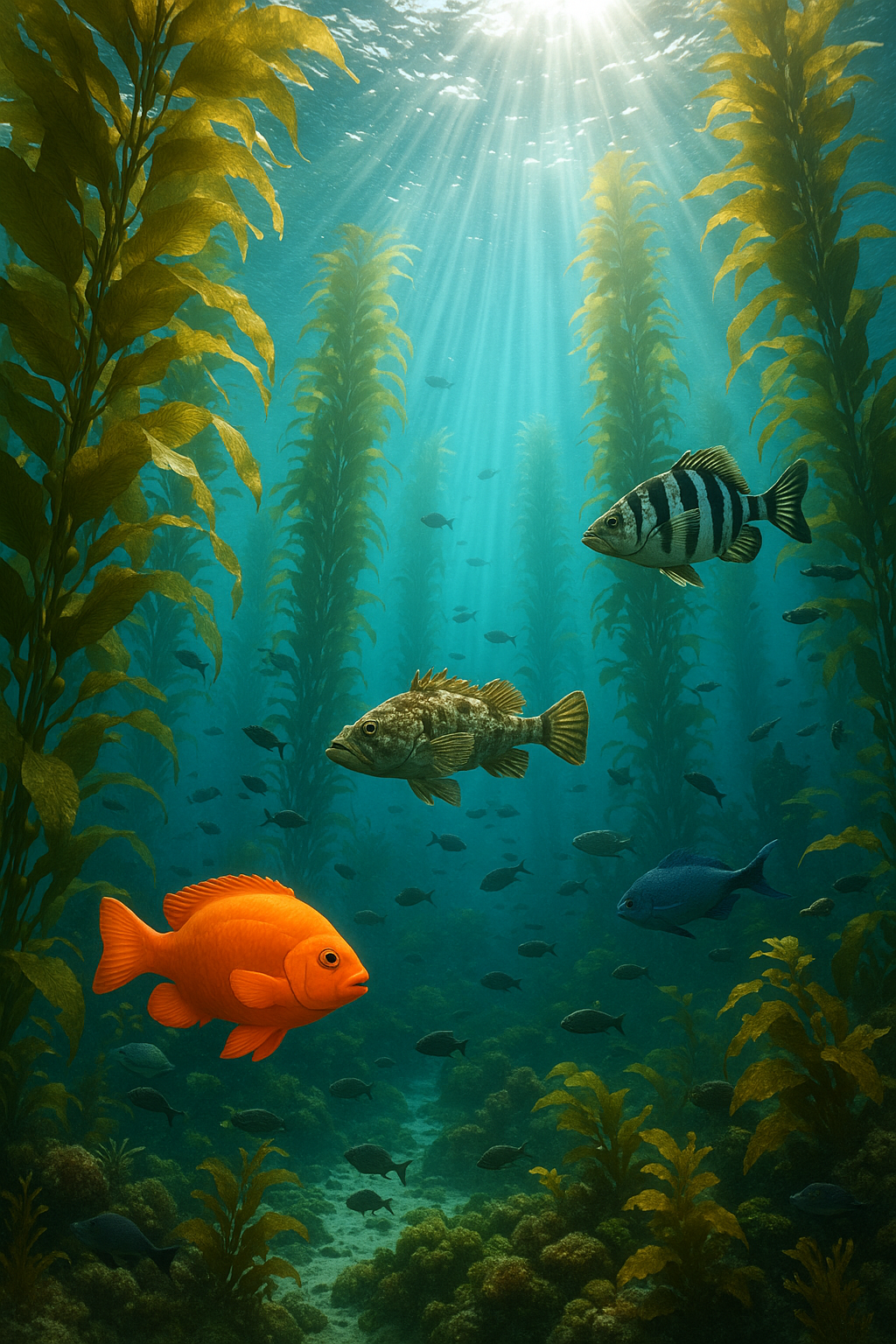
Explore False Bay's kelp forest with marine photographer Jean Tresfon, revealing a vibrant underwater world.
Beneath Cape Town's bustling surface lies a secret, vibrant world: the 'Golden Forest' of kelp. Here, conservation photographer Jean Tresfon and his team dove into a thriving marine high-rise, capturing stunning images of giant red steenbras, shimmering strepies, and camouflaged reef fish. They witnessed puffadder shysharks playing dead, octopuses flashing vibrant colors, and tiny creatures clinging to the kelp, each frame a vital piece of evidence for marine conservation. This hidden underwater city, untouched by human timetables, proves wilderness still flourishes where few ever venture.
What marine life exists in Cape Town's kelp forests?
Cape Town's kelp forests, like the "Golden Forest" at 28-Mile Bank, teem with diverse marine life. This includes large red steenbras, shimmering strepies, various reef fish that camouflage perfectly, puffadder shysharks, common octopuses, rock crabs, clingfish, and wandering anemones, all thriving amidst the rapidly growing kelp.
Get Cape Town news in your inbox
Stay updated with the latest stories from the Mother City.
A Hidden World Off the Commuter Coast
Most Capetonians race the clock on the M3, latte in hand, oblivious to the drama unfolding just past the breakers. Out there, the Atlantic keeps a second heartbeat, dictated by lunar drag, not human timetables. Amber kelp fronds shoot upward half a metre every 24 hours, knitting a living high-rise that sways in slow motion. Last Tuesday, conservation photographer Jean Tresfon, freedivers Don Hunter and Roman Ondruj, and a small support skiff waited for a lull between cold fronts, then slipped overboard above a shallow plateau locals call “28-Mile Bank.” Six sunlit hours later they were back on deck with memory cards groaning under the weight of an entire city block of marine life - proof that wilderness still thrives where beachgoers never kick a fin.
The site sits too far for a casual paddle and too deep for shore-divers on a breath, so traffic is light. A stalled high-pressure cell glassed off the swell, and an odd 19.5 °C thermocline parked itself on the reef, three degrees toastier than the surrounding sea. Tresfon left his 5 mm suit half-unzipped between drops. Hunter, once a competitive spearo, now speaks for fish; he carved his own monofin from discarded carbon-fibre sailcloth. Ondruj codes software by day and builds walnut-sized 3-D camera housings by night. Their paired styles - one stripped-down, one tech-heavy - let Tresfon swap from stills to 8 K cinema without exhaling a single scuba bubble.
The first clue that they had entered another dimension was a scent: a sweet-metal tang released by hordes of thumb-nail-sized crustaceans grazing the kelp canopy. “Imagine stepping into a pine plantation minutes after a storm, except the trunks bend and twist,” Tresfon says. From the boat the surface looked like beaten brass; from underneath it became a maze of corridors, widening and pinching with each surge, strobing shafts of sun onto silver schools of maasbanker. Cape fur seals usually herd these bait-balls into glittering coin-stacks, but on this morning the mammals were elsewhere, granting rarer actors the stage.
Icons, Ghosts and Living Disco Balls
Two red steenbras - striped like old-school sweets and pushing a metre each - glided out of the gloom and fixed Tresfon with the binocular stare of creatures that once ruled the reef. Overfishing has trimmed their numbers so sharply that scientists believe False Bay now hosts fewer breeding adults than the city has traffic lights. Tresfon locked his shutter at 1/250 s to freeze the tremble in their dorsal rays; the frames will feed a citizen-science head-count on iSpot. Moments later, a thousand strepies folded themselves around the divers, nibbling kelp blades to lacework. Their mirrored flanks turned the scene into a spinning disco ball; Ondruj slowed the glitter to liquid gold at 120 fps, capturing the moment a vegetarian fish became a light show.
Descent along a kelp stipe feels like rappelling down a living skyscraper. Strawberry anemones flex turquoise-flecked tentacles; redbait squirt miniature geysers when brushed; thumb-sized sea fans pose as pink bonsai. The holdfast anchoring each giant alga can outweigh a packed rucksack and host more than 80 species. Tresfon found one the diameter of a truck tyre that cradled baby sea cucumbers, candy-striped prawns, and a klipvis whose skin pixels matched the coralline crust beneath it. Many reef fish carry real-time Photoshop: they shuffle pigment cells until they vanish against their chosen background, a sleight-of-hand that keeps predators guessing.
Halfway down, Hunter tapped his nose and pointed. A puffadder shyshark lay on a sand clearing, tail curled like calligraphy, practicing the ancient art of playing dead. The species slows its heart to throw off hunters, so divers can cradle it without drama. A few kicks away, two mermaid’s purses - leathery egg cases - swayed from red seaweed like forgotten wallets. Inside each capsule an embryo pulsed, still months from hatching, its yolk sac bright against the translucent wall. Ondruj zoomed in, recording a nine-month ocean maternity ward that doubles as a shock-absorbing cradle in heavy surge.
Night-Shift Hunters and Floating Chessboards
On the second drop the forest revealed its night shift in daylight. A common octopus the size of a rugby ball prowled open water, arms marbled white and rust, probing rocks for soft-shelled snacks. Alarmed by Tresfon’s dome port, it flashed traffic-light red - xanthommatin pigment on full blast - then jetted off, ink blooming like a thought balloon. Macro frames caught siphon jets firing in micro-bursts, frames that will join a University of Cape Town catalog of octopus “faces” used to map individual wanderings.
Elsewhere, a rock crab clutched a broken mussel shell like a gladiator’s shield; a juvenile clingfish suction-cupped to a swaying blade; and a wandering anemone floated free, tentacles rowling for new turf. Each clip drives home the kelp creed: real estate is modular, neighbourhoods swap places with every tide, turning the forest into a living chessboard where pawns can become kings overnight.
By noon the trio had logged 110 minutes across four drops; their carbon blades looked showroom-new. On deck, wind had veered south-east, ruffling the canopy into pennants. Tresfon off-loaded 1,400 RAW images and a terabyte of motion. Every frame will be geo-tagged and handed to SeaChange, a nonprofit that retraces former poachers as kelp rangers. Algorithms will tally each fish, urchin and shark, feeding managers data to decide whether to push the existing Marine Protected Area beyond its present 120 km² boundary.
Pixels in a Planetary Courtroom
Back on land, the pictures look like pure escapism - golden cathedrals, disco-fish, flying sharks. Their real job is evidence. Kelp sequesters carbon up to twenty times faster than pine plantations, while its fronds buffer acidifying seawater. Yet the service fails if the food web frays: urchins need predators, predators need reefs, reefs need intact holdfasts. Tresfon’s files are high-resolution testimonies in a planetary courtroom where the docket lists climate chaos, biodiversity loss and overfishing. The verdict is still open, and every plate we rinse, every menu we choose, writes the next line in the judgment.
What is the 'Golden Forest' and where is it located?The 'Golden Forest' is a vibrant kelp forest located beneath the surface of Cape Town, specifically at a shallow plateau known as '28-Mile Bank.' It's a secret, thriving underwater city that few people ever venture into.### Who explored the 'Golden Forest' and what was their mission?Conservation photographer Jean Tresfon, along with freedivers Don Hunter and Roman Ondruj, explored the 'Golden Forest.' Their mission was to capture stunning images and cinematic footage of the marine life, gathering vital evidence for marine conservation efforts.### What kind of marine life can be found in Cape Town's kelp forests?Cape Town's kelp forests, including the 'Golden Forest,' are home to a diverse array of marine life. This includes large red steenbras, shimmering strepies (a type of fish), various camouflaged reef fish, puffadder shysharks (known for playing dead), common octopuses, rock crabs, clingfish, and wandering anemones. Giant kelp fronds also support a multitude of smaller crustaceans and species within their holdfasts.### Why is the 'Golden Forest' considered a hidden world?The 'Golden Forest' is considered a hidden world because it's situated too far for casual paddling and too deep for typical shore-divers, meaning human traffic is light. This allows wilderness to thrive untouched by human timetables, making it a pristine and largely unexplored ecosystem.### How do the images and footage contribute to conservation?The high-resolution images and terabytes of motion captured by Jean Tresfon and his team serve as crucial evidence for marine conservation. Every frame is geo-tagged and provided to organizations like SeaChange, where algorithms tally fish, urchins, and sharks. This data helps marine managers decide whether to expand existing Marine Protected Areas and provides testimony in the fight against climate chaos, biodiversity loss, and overfishing.### What unique adaptations do some of the marine creatures exhibit?Many reef fish in the kelp forest possess a real-time 'Photoshop' ability, shuffling pigment cells to camouflage perfectly against their background. Puffadder shysharks play dead by slowing their heart rate to deter predators. Octopuses can flash vibrant colors, like traffic-light red, using xanthommatin pigment when alarmed, and their siphon jets fire in micro-bursts for propulsion. Kelp holdfasts, which can be the size of truck tires, also act as cradles for numerous species, including baby sea cucumbers and candy-striped prawns.

Amanda Wilson is a Cape Town-born journalist who covers the city’s evolving food scene for national and international outlets, tracing stories from Bo-Kaap spice shops to Khayelitsha micro-breweries. Raised on her grandmother’s Karoo lamb potjie and weekend hikes up Lion’s Head, she brings equal parts palate and pride to every assignment. Colleagues know her for the quiet warmth that turns interviews into friendships and fact-checks into shared laughter.
View all articles →