
NSRI urges caution around Cape fur seals amid rabies concern
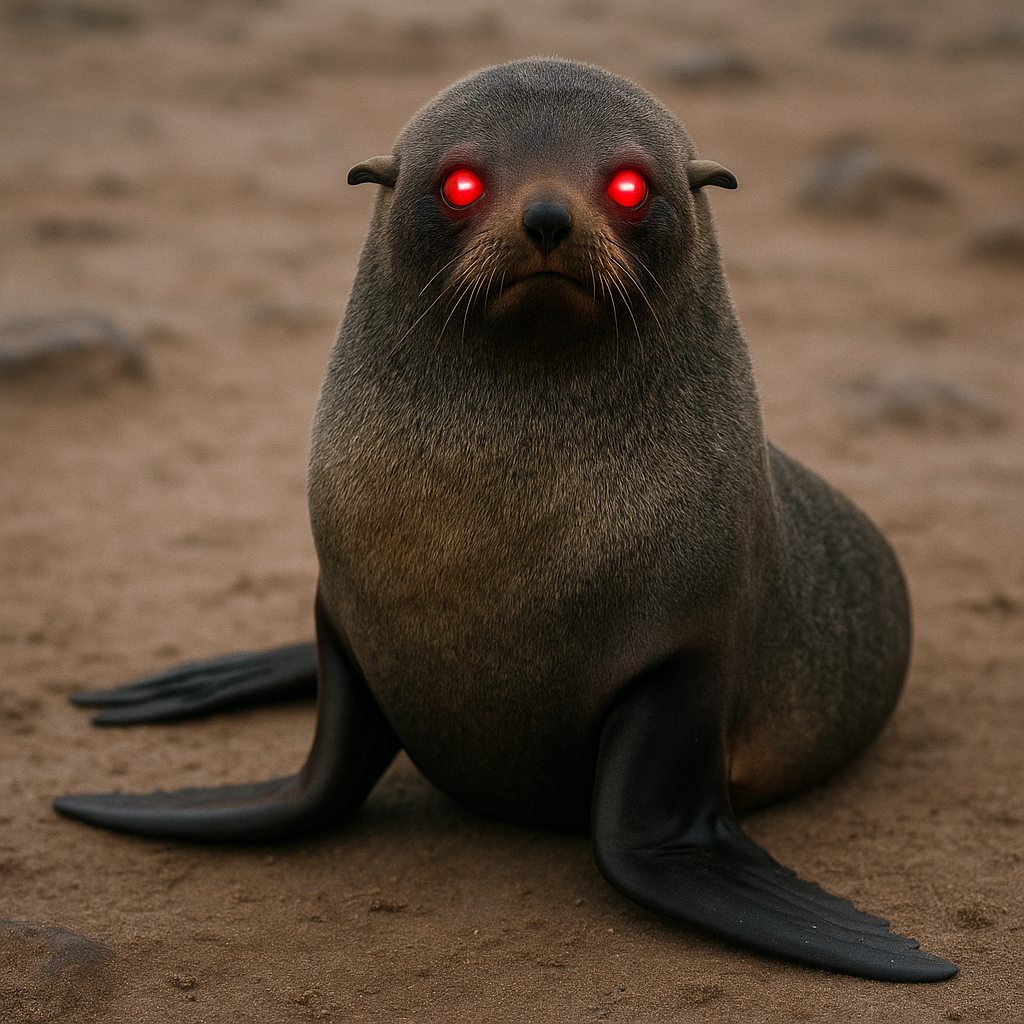
Rabies is reshaping Cape Town's coastline, with a marine epidemic in Cape Fur Seals. Learn about its origins, impact, and mitigation.
Seal rabies, a scary new type of rabies, began in late 2020 when a jackal bit a seal. It spreads super fast because seals live so close together and travel huge distances along the coast, turning the ocean into a risky playground. This rabies is tricky; it doesn't just disappear but keeps a low burn with sudden flare-ups, making every beach a gamble. People, especially surfers and paddleboarders, are getting bitten in specific hot spots. Cape Town is now fighting back with new medical treatments, drone surveillance, and even trying vaccines and birth control for seals, all while urging people to keep their distance to stay safe.
What is seal rabies and how does it spread?
Seal rabies is a variant of the Africa 1b rabies lineage that emerged in Cape fur seals in late 2020, likely from a jackal bite. It spreads rapidly due to seals' social behavior and extensive foraging circuits, turning the coastline into an interactive risk map. Unlike classic rabies, it exhibits a "slow burn with flares" pattern, maintaining a constant viral presence.
Get Cape Town news in your inbox
Stay updated with the latest stories from the Mother City.
1. From Jackal Bite to Surf-Break Nightmare
No-one can name the exact sunrise when rabies first tasted salt water, but genome stamps kept at Onderstepoort Veterinary Faculty point to late-2020. A juvenile Cape fur seal on a lonely beach probably nosed an aggressive black-backed jackal; one nip passed the Africa 1b rabies lineage into the marine world. Within weeks the virus had accrued only four single-letter changes, a 99.6 % match that screams “here to stay.”
Seal society is engineered for contagion. Pups pack into creches where bodies touch from whisker to flipper, bulls shove chest-to-chest on cramped granite platforms, and entire gangs nap fin-to-fin in drifting rafts. During a single foraging circuit the same animal can commute 600 km along the Benguela upwelling, stitching Lambert’s Bay to Cape Agulhas into one continuous viral nightclub.
Because infected seals move, every rocky outcrop and harbour wall has become a roulette wheel. Where a jackal can bite only the next animal in its territory, a rabid seal can deliver virus from Robben Island to Strandfontein in a tide cycle, turning the coastline into an interactive map of risk.
2. The Mathematics of a Never-Ending Smoulder
University of Cape Town modellers call the new pattern a “slow burn with flares.” Classic rabies erupts, exhausts local victims and fades; seal rabies keeps itself on life support. Annual pup production and roaming juveniles refresh the pool of susceptibles, holding the average reproduction number just above unity (R0 ≈ 1.2). Instead of spectacular die-offs, the coastline sees a quiet, constant spill of virus.
Explosions still happen when three triggers align. December–January rookeries balloon to 30 000 newborns within a few hundred square metres. If anchovy or sardine numbers crash the same summer, starving seals pack tighter on land while immunity plummets. Finally, fishermen tossing by-catch offal train animals to swarm boats, creating floating food courts where saliva exchange skyrockets and local R0 can jump to 2.5.
The result is a calendar of unpredictability. Tourists who assume “no news is good news” miss the point: the baseline is quietly positive, and any given Tuesday can flip into a hot zone without warning.
3. Rabies, Seal-Style: Clenched Jaws on Mooring Chains
Since 2021 government vets have opened 140 seal carcasses and found a split personality. Seventy percent display the furious form: animals rocket toward engine noise, gnaw aluminium propellers until teeth snap, and unleash a high-pitched staccato bark that snorkellers mistake for playfulness. The remaining thirty percent look drunk; they stagger ashore, hind flippers limp, and quietly starve because they cannot chase fish. Heart rate drops to 20 beats per minute just before death - resting seals cruise at 60–70.
Incubation is the sleeper threat. In dogs the virus usually declares itself within two months; in seals it whispers for nine to twenty-four weeks, giving an infected animal multiple oceanic tours before anyone notices. A playful-looking year-old seal that nips a surfer’s ankle may have been shedding virus for weeks, turning a routine session into a medical emergency.
4. Where People Actually Get Bitten
Cape Town’s ocean users log 14 million entries a year - surf, snorkel, dive, paddle. Forty-seven seal bites were recorded between 2021 and 2023, clustered in three tiny patches of coastline. Hout Bay harbour mouth is prime real-estate conflict: trawlers offload at dawn, kayakers launch at the same hour, and discarded fish heads float between the two groups. Millers Point, a sundowner snorkel site, sits cheek-by-jowl with a bachelor colony that resents weekend invasions. Kalk Bay breakwater completes the triangle; tourists buy sardine wallets and dangle breakfast over the wall, teaching seals that every hand could contain a snack.
Victims skew young, male and mobile. Two-thirds are twenty-to-forty-five-year-old stand-up paddleboarders or surfers who instinctively fend off a curious seal with bare hands or feet, offering the perfect delivery route for infected saliva.
5. The Hospital, the Harbour and the 3-D Printed Bite-Block
Groote Schuur’s travel clinic now packages rabies shots with doxycycline and a 15-minute hypertonic-salt scrub borrowed from reef-coral trauma kits. The hybrid protocol cuts secondary bacterial infections to one-third of historical levels. Out of 312 completed post-exposure courses, antibody titres hit 100 %, yet two late arrivals still reached ICU; one survived on the Milwaukee protocol, becoming only the eighth human known to beat a non-canid rabies variant.
On the water, the National Sea Rescue Institute has redesigned its mission. Each craft carries a sealed “Seal-Bite SOP” case: saline with chlorhexidine, pre-loaded HRIG syringes kept at four degrees, and a waterproof armband that links paramedics to an online calculator. Crews rehearse “reverse boarding”; swimmers enter only after a drone circles for erratic swimming, head twitches or body rolls. If the algorithm flashes red, rescue becomes observation and paddlers become their own first responders, oars doubling as distance poles.
6. Smart Eyes, Early DNA and the Price of Panic
A convolutional neural network trained on 18 000 seal clips now flies aboard DJI drones, beating human spotters by almost a quarter when flagging sick animals. Alerts ping harbour masters and surf-forecast apps in real time. For silent warning, weekly litre grabs of seawater screen for rabies eDNA; virions survive up to two days, giving authorities a ten-day heads-up before carcasses hit the sand.
Stellenbosch economists tally the bill: each bite costs society R37 800 once lost wages, counselling and cancelled hotel nights are added. Forty-seven documented bites equal R1.8 million - small change beside the R2.3 billion ocean-tourism economy, yet enough to raise insurance premiums and tag Cape Town in foreign magazines as a “rabies hotspot.” Surf tour operators already report a 5 % booking dip for next summer, translating into an estimated 2 100 seasonal jobs at risk.
7. Vaccines, Birth Control and a City Rewiring Its Own Habits
Delivering one million doses to animals that refuse to queue is sci-fi, so three trials run in parallel. Fish-meal baits achieve 38 % uptake on Seal Island before gulls hijack them; biopsy darts carrying canary-pox vaccine produce protective antibodies for at least fifteen months; and a self-spreading herpes vector waits in biosafety lockdown for risk approval. Contraception enters the conversation - one shot of Deslorelin suppresses ovulation for two years and could halve outbreak frequency if one-third of females receive it, but fishery scientists warn fewer seals might shift predation pressure and unravel quota maths.
Meanwhile behavioural economists ask humans to do the simplest thing: stay away. Posters at kayak ramps display peer-pressure stats - 85 % of paddlers keep a ten-metre buffer, will you? - and biodegradable fish-oil leaflets handed to skippers dissolve only after the message is read. A WhatsApp group with 4 300 members uploads geo-tagged clips that cut official response time from hours to minutes, proving that a phone in a waterproof pouch is the cheapest surveillance tool available.
8. Legal Gaps, Namibian Winds and the Toolkit for Tomorrow
South Africa’s statutes still class pinnipeds somewhere between fish and scenery; a draft “Seal Accord” would impose 50 m no-approach rules for tour boats and grant rescuers legal cover to euthanise suffering animals. Public comment closes late 2024, watched by whale-watching operators who fear the same framework could one day apply to dolphins.
Ocean models say the virus will reach Namibia’s Ichaboe Island within two breeding cycles, so cross-border stockpiles of immunoglobulin and joint eDNA grids are being drafted. Eastward, the Agulhas highway could deliver vagrant infectives to the Wild Coast, where shark nets and communal harvests wait with higher human density. Anyone who delivers a stranded carcass for testing earns R500 - if it tests negative, discouraging fridge-fillers from gaming the system.
Until the science catches up, every surfboard, paddle or mask should ride with a 90-gram safety kit: saline, chlorhexidine wipes, nitrile gloves, an orange whistle proven to deter 68 % of inbound seals, and a QR sticker that opens real-time outbreak maps. The ocean stays open, wild, and statistically safer - provided the user packs knowledge along with sunscreen.
[{"tag": "h3", "content": "What is seal rabies and how did it originate?"}, {"tag": "p", "content": "Seal rabies is a new variant of the Africa 1b rabies lineage that emerged in Cape fur seals in late 2020. Genomic evidence suggests it originated from a black-backed jackal bite on a juvenile Cape fur seal on a beach. This event introduced the terrestrial virus into the marine environment."}, {"tag": "h3", "content": "How does seal rabies spread so rapidly among seals and along the coastline?"}, {"tag": "p", "content": "Seal rabies spreads rapidly due to the highly social behavior and extensive travel patterns of seals. Pups huddle in creches, bulls crowd on platforms, and entire groups nap together, facilitating direct contact. Additionally, seals can travel up to 600 km along the Benguela upwelling during a single foraging circuit, effectively turning the entire coastline into a continuous viral pathway. Unlike terrestrial rabies, an infected seal can carry the virus over vast distances, making every coastal location a potential risk."}, {"tag": "h3", "content": "What is unique about the pattern of seal rabies outbreaks?"}, {"tag": "p", "content": "Unlike classic rabies which tends to erupt and then fade, seal rabies exhibits a 'slow burn with flares' pattern. This means the virus maintains a constant, low-level presence (R0 ≈ 1.2) due to continuous reproduction and the presence of susceptible young seals. Flare-ups occur when factors like dense rookery populations (especially during December-January), food scarcity (e.g., anchovy crashes), and human activities like tossing by-catch to seals align, dramatically increasing transmission rates. This makes the virus unpredictable, as any day can become a 'hot zone' without prior warning."}, {"tag": "h3", "content": "Where are people most likely to get bitten by rabid seals in Cape Town?"}, {"tag": "p", "content": "In Cape Town, seal bites are concentrated in specific \"hot spots\": the Hout Bay harbour mouth, Millers Point, and the Kalk Bay breakwater. These areas are characterized by high human-seal interaction, often involving discarded fish, close proximity between marine users (kayakers, snorkelers), and seals accustomed to human presence. Victims are typically young, male, and mobile (20-45 years old), such as stand-up paddleboarders or surfers who reflexively use their hands or feet to fend off curious seals."}, {"tag": "h3", "content": "What are the signs of rabies in seals, and what is the incubation period?"}, {"tag": "p", "content": "Rabid seals display a split personality: about 70% show a 'furious' form, characterized by aggression, gnawing on objects, and high-pitched barking. The remaining 30% exhibit a 'dumb' form, appearing disoriented, staggering ashore with limp hind flippers, and quietly starving. A critical aspect is the long incubation period, which can range from nine to twenty-four weeks, much longer than in dogs. This means an infected seal can shed the virus and interact with humans or other seals for several oceanic tours before showing symptoms, posing a significant hidden risk."}, {"tag": "h3", "content": "What measures are being taken to combat seal rabies and protect humans?"}, {"tag": "p", "content": "Cape Town is implementing a multi-faceted approach. Medical treatments include an enhanced post-exposure prophylaxis protocol. Surveillance involves drones with AI-powered convolutional neural networks to spot sick animals and weekly seawater testing for rabies eDNA for early warnings. Research is underway for seal vaccination strategies (fish-meal baits, biopsy darts, self-spreading vectors) and birth control (Deslorelin shots) to reduce population density and outbreak frequency. Public safety is emphasized through campaigns urging people to maintain distance, and tools like the \"Seal-Bite SOP\" for rescue teams, and a 90-gram safety kit for ocean users containing essentials like saline, chlorhexidine wipes, and an orange whistle to deter seals."}]

Amanda Wilson is a Cape Town-born journalist who covers the city’s evolving food scene for national and international outlets, tracing stories from Bo-Kaap spice shops to Khayelitsha micro-breweries. Raised on her grandmother’s Karoo lamb potjie and weekend hikes up Lion’s Head, she brings equal parts palate and pride to every assignment. Colleagues know her for the quiet warmth that turns interviews into friendships and fact-checks into shared laughter.
View all articles →