
Public warned of toxic pufferfish on beaches
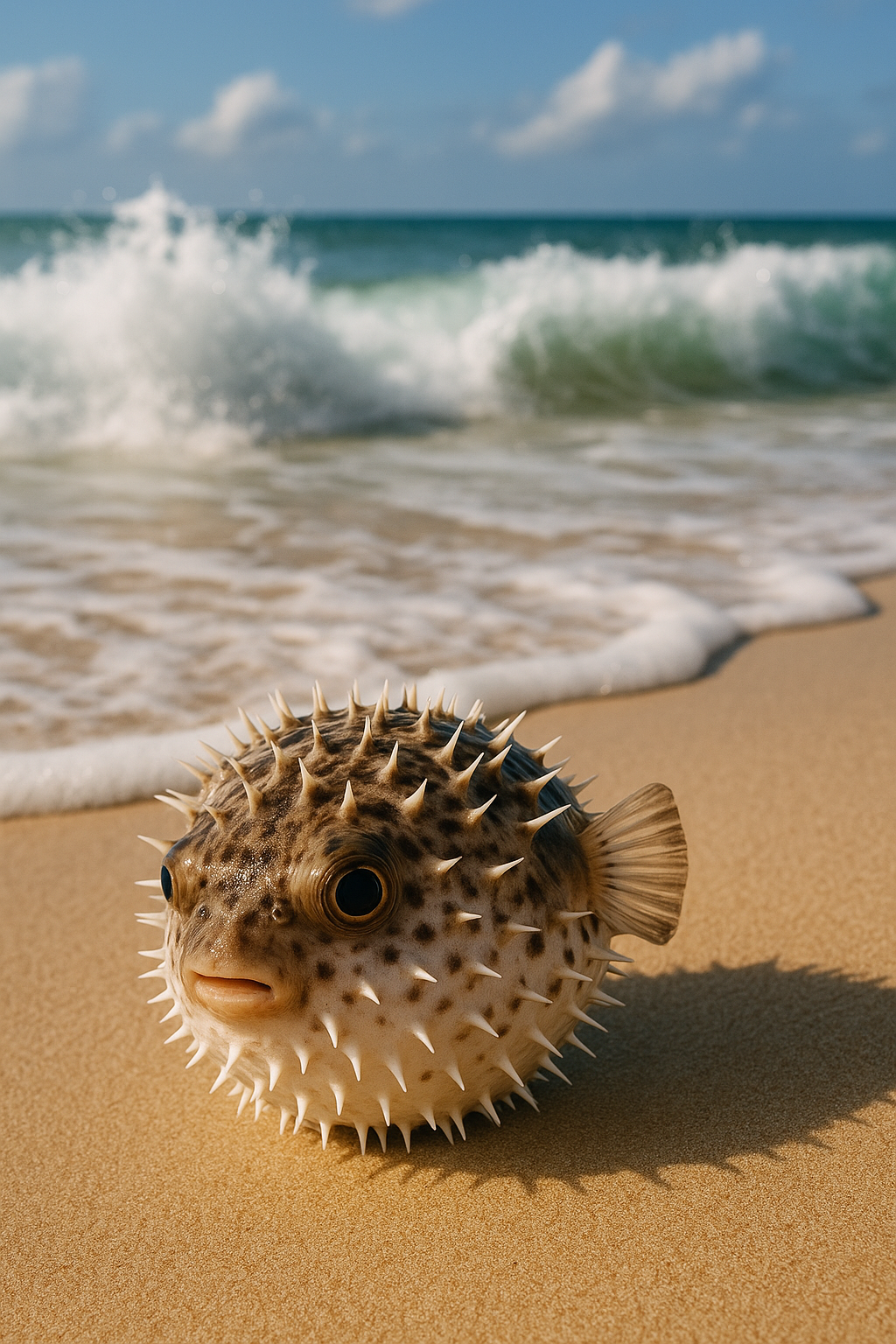
Rough seas bring deadly pufferfish and sea snakes to South Africa's coast, posing lethal threats to dogs. Learn how to protect your pets.
Rough seas are bringing deadly sea creatures like pufferfish and sea snakes to South Africa's popular holiday beaches. These animals carry powerful toxins that can kill dogs and even humans. Scientists say changes in ocean currents, possibly due to climate change, are making these dangerous strandings more common. Beach-goers are warned to keep pets on leashes and avoid touching any strange marine life.
How to save a dog poisoned by a pufferfish?
To save a dog poisoned by a pufferfish, get them off the sand immediately. Induce vomiting with 3% hydrogen peroxide (1 ml/kg, max 45 ml) if ingestion was within 30 minutes and no symptoms are present. Rinse their mouth with seawater while wearing gloves. Call the vet en route, asking them to prepare oxygen and other necessary treatments. If the dog is already wobbly, skip home remedies and drive to the vet immediately.
Get Cape Town news in your inbox
Stay updated with the latest stories from the Mother City.
Dawn Tragedy: One Dog, One Bite, Six Hours to Die
Sunrise Beach looked like a tourism brochure at 07:30 on 13 April - low tide, pastel sky, a lazy breeze. Regulars had let their dogs sprint along the Keurbooms estuary mouth when a young Boerboel-cross named Groot began pawing at a lemon-flecked lump the size of a hamburger bun. The owner thought “toadfish,” yelled a vague “leave it,” then watched the dog swallow a chunk the size of a golf ball. By 15:30 Groot lay on a Robberg vet table, tongue purple, heart thrashing like marbles in a tin. Blood ruled out viruses; stomach contents carried tetrodotoxin at fourteen times the canine lethal threshold. Two more dogs from the same stretch were already seizing before nightfall. A hoarse WhatsApp voice note ricocheted through neighbourhood groups: “If your dog even sniffs a puffer, run to the vet - no excuses.”
The speed of the collapse shocked even seasoned staff. Tetrodotoxin does not wait for rush-hour traffic; it locks sodium channels, silences nerves and leaves the victim wide-eyed as paralysis reaches the diaphragm. Within forty minutes the first clinic oxygen cylinder was empty; a second was wheeled in while the owner sobbed in the corridor. By sunset a single beach had claimed three pets and triggered a wave of panic that would ripple 250 km of coastline in less than a day.
The Invisible Poison: Why a Palm-Sized Carcass Contains Enough Toxin to Kill a Classroom
Tetrodotoxin - call it TTX - is a heat-proof alkaloid that turns nerve cells into statues. One adult pelagic puffer (Lagocephalus lagocephalus) hoards enough in its liver and ovaries to stop the breathing of thirty grown humans. The molecule wedges into voltage-gated sodium channels, halting every electrical twitch that keeps hearts pacing and lungs pumping. Victims stay awake while numbness crawls downward; death arrives by suffocation with full awareness.
Dogs are four times more vulnerable than people on a weight-for-weight basis; a postage-stamp shred can drop a 25 kg shepherd. Because TTX is not a protein, the immune system never notices, which is why no anti-venom exists on the planet. Rural South African clinics rarely own ventilators, so once weakness reaches the neck the outcome is almost always fatal. Even state-of-the-art facilities can do little beyond oxygen and IV fluids while the body slowly scrubs the poison over one to two days - provided the patient survives that long.
The macabre twist: toxin levels can rise after death. Autolysis bursts cellular bags, leaking even more TTX into remaining flesh. That means a sun-bloated carcass found at noon may be deadlier than the living fish that stranded at dawn - bad news for scavenging terriers.
Oceanic Ambush: How a Warm Whirlpool Sneaks Tropical Killers Toward Holiday Sunbathers
Picture the Agulhas Current - a 100 km-wide, 24 °C freight train that bulldozes south along the edge of the continental shelf. When its flow kinks around a submarine canyon it sometimes snaps off a mammoth warm-core ring that spins west toward Cape Agulhas. Last week a cut-off low that drowned the Western Cape interior flattened offshore swells, letting one such 200 km ring drift within eight kilometres of the beach between Knysna and Port Alfred.
Inside the whirlpool rode a drifting menagerie: bubble-raft bluebottles, by-the-wind sailors, tiny clumps of cyanobacteria - and two tropical hitch-hikers: the yellow-bellied sea snake and the pelagic puffer. The moment that ring kissed the 14 °C upwelled tongue locals nickname the “Bengkelani,” the cold stunned every warm-water traveller. Reptiles and fish lose muscle power below 18 °C; they go limp and surf the tide until they’re dumped on the high-tide mark like soggy fireworks.
Oceanographers call the process “thermal shock stranding,” and it is becoming more frequent. Climate models predict a thirty-percent jump in ring shedding this century, turning today’s freak event into a seasonal hazard. In short, the same physics that brings sardines to Durban in winter now delivers toxic souvenirs to previously safe swimming beaches.
Strandings Snapshot: From Mossel Bay to East London - an Alarming Tally
Between 9 and 14 April the citizen-science app “iStrand” logged 73 puffers and 19 yellow-bellied sea snakes - the busiest week since records began in 2018. Hotspots hug the landward edge of the rogue warm ring: Santos Beach in Mossel Bay reported eleven puffers and two snakes; Victoria Bay added six puffers; Wilderness tallied nine puffers and a single snake.
Further east, Sedgefield counted four puffers; Swartvlei mouth saw seven (plus three poisoned dogs and one fatality); Plettenberg Bay’s four beaches amassed twenty-two puffers, six snakes and three confirmed dog deaths. Even Kei Mouth near East London, usually too chilly for tropical waifs, registered fourteen puffers and three snakes. Each dot marks animals found alive but lethargic; most puffers die within two hours of air exposure, after which toxin concentration rises as cell membranes dissolve.
The pattern is unmistakable: warm eddies act like Uber for tropical toxins, dropping them precisely where weekend crowds walk barefoot at sunrise.
Snake on the Sand: The Pelamis Problem
The yellow-bellied sea snake (Pelamis platura) is the only truly oceanic serpent - born at sea, drinks rainwater from the surface film, and never needs land. Adults average 70 cm, sport a chocolate-brown back and canary-yellow belly, and paddle with a flattened tail that looks like a tiny oar. Fangs are a mere 2 mm, tucked under the eye, so human bites almost always involve deliberate handling; dogs are struck on the nose or tongue while investigating the sluggish coil.
Venom is a fast-acting postsynaptic neurotoxin, cobra-class but delivered in smaller volumes. There is no commercial anti-venom on Earth; South African doctors improvise with off-label boomslang serum plus ventilation. Only two human fatalities have ever been documented (Malaysia 1935, Australia 1927), yet a 2022 Durban study calculated that a 20 kg dog needs less than 0.5 mg of dried venom to die - an amount easily injected in a single defensive bite.
Hypothermic snakes rarely strike, but adrenaline can override cold stupor when a snout pokes them. The rule is simple: no selfies, no sticks, no Samaritan rescues - mark the spot, retreat three metres, phone the hotline.
Why Dogs Bear the Brunt: Curiosity, Odour, and a Lousy Risk Radar
Canine instincts create a perfect toxic trap: they explore with mouth and nose, love fishy smells, and are unleashed at dawn when strandings peak. Owners often shrug off puffers as “blowies,” assuming danger is overblown. Weekend photos show kids prodding inflated carcasses at 10 am; by noon the same remains lie deflated, dragged gleefully by terriers who have no idea they are tow-toxing themselves.
Early signs - frothy drool, wobbly legs, vomit - are easy to dismiss as “ate something rotten.” Many owners wait “to see if it passes,” burning the narrow thirty-minute window for safe emesis induction and activated charcoal. Once the dog lies down, mortality skyrockets because rural clinics lack ventilators and after-hours staff.
Golden Half-Hour: A Beach-Goer’s Pocket Guide to Saving a Dog
Onderstepoort toxicologists have distilled a six-step field card:
1. Get the dog off the sand; stop further munching.
2. If ingestion was within thirty minutes and no symptoms appear, induce vomiting with 3 % hydrogen peroxide (1 ml kg⁻¹, max 45 ml); repeat once if nothing happens in fifteen minutes.
3. Rinse the mouth with seawater while wearing gloves - TTX crosses human mucosa too.
4. Phone the nearest vet en route; ask staff to prep oxygen, endotracheal tubes, diazepam.
5. Skip home charcoal if the dog is drowsy; aspiration pneumonia kills almost as often as toxin.
6. If the animal is already wobbly or flat, skip steps 2–3 and drive - every minute spent on kitchen-table antidotes slashes survival odds.
Laminated cards are being handed out at beach entrances; a QR code links to a 90-second first-aid video in isiXhosa, Afrikaans and English.
Municipal Reaction: Signs, Quads, and Incinerators by Lunchtime
Plettenberg Bay’s Disaster Management met at 08:00 on 14 April; by noon bright warning boards stood at five access points showing both puffer and sea snake silhouettes. Shark Spotters repurposed two quad bikes to cruise Lookout-to-Robberg at dawn; carcasses are scooped with double nitrile gloves, bagged in medical waste and burned at the municipal incinerator.
CapeNature has invoked the “human safety” clause, letting trained volunteers remove protected sea snakes without permits. A WhatsApp hotline - 072 581 0838 - now funnels reports to a rotating duty officer who decides whether to dispatch a quad, a drone, or both.
Forecast: Another Ring Spinning, Another Wave Coming
Nelson Mandela University oceanographers warn that the next warm-core ring is already pinching off the Agulhas Bank; model runs show landfall during the first week of May if four-metre swells and on-shore winds align. A second cargo of tropical waifs is probable.
Long-term climate projections indicate a thirty-percent rise in ring shedding this century, nudging mass strandings from “freak” to “seasonal.” Veterinarians are sketching a coastal toxin-watch network modelled on California’s Harmful Algal Bloom alerts - webcams, drone sweeps and citizen pings fused into geo-fenced push warnings for registered dog owners.
Until then, every tide is a lottery.
Safer Strolls: Seven Habits While the Ocean Stays Dangerous
- Walk at midday when colder water discourages stranding.
- Keep dogs leashed within twenty metres of the high-tide line; most puffers strand at the previous night’s spring peak.
- Drill a bullet-proof “leave it” using stinky fish treats; rehearse with decoys at home.
- Pack a 100 ml syringe (no needle) and 3 % peroxide; weigh your dog monthly so dosing is instant.
- Install the free “iStrand” app and enable push alerts for your beach.
- Spot a live yellow-bellied sea snake? Mark the GPS, stay back three metres, call the hotline - do not play lifeguard.
- Assume anything inflated, stripy or simply “not local” is photogenic, not sniffable.
The Agulhas Current will relax eventually, and the icy Benguela will reassert its chilly grip - but until that day, the safest rule is the simplest: if the sea coughed it up, let the leash do the talking.
What deadly marine creatures are washing up on South African beaches?
Rough seas are bringing deadly sea creatures like pufferfish and yellow-bellied sea snakes to South Africa's popular holiday beaches. These animals carry powerful toxins, such as tetrodotoxin (TTX) in pufferfish and a potent neurotoxin in sea snake venom, that can be lethal to dogs and even humans.
Why are these dangerous strandings becoming more common?
Scientists believe changes in ocean currents, specifically the Agulhas Current, are making these strandings more frequent. Warm-core rings, essentially warm whirlpools, are breaking off the Agulhas Current and drifting towards the coastline. These rings carry tropical marine life, including pufferfish and yellow-bellied sea snakes. When these warm-water creatures encounter the colder upwelled water near the coast, they experience 'thermal shock stranding,' becoming lethargic and washing ashore. Climate models predict a significant increase in these ring-shedding events this century.
What makes pufferfish so dangerous?
Pufferfish contain tetrodotoxin (TTX), a heat-proof alkaloid that is incredibly potent. One adult pelagic puffer can carry enough TTX in its liver and ovaries to kill thirty adult humans. The toxin blocks sodium channels, paralyzing nerves and muscles, leading to death by suffocation while the victim remains conscious. Dogs are particularly vulnerable, being four times more susceptible than humans on a weight-for-weight basis. A grim fact is that toxin levels can increase after the fish dies as cellular bags burst, making sun-bloated carcasses even deadlier for scavenging animals.
What should I do if my dog encounters a pufferfish?
If your dog ingests pufferfish or even sniffs it, immediate action is crucial. If ingestion was within 30 minutes and no symptoms are present, induce vomiting with 3% hydrogen peroxide (1 ml/kg, max 45 ml). Rinse their mouth with seawater while wearing gloves. The most important step is to get to a vet immediately, calling them en route to prepare oxygen and other necessary treatments. If the dog is already showing symptoms like wobbliness or frothy drool, skip home remedies and drive directly to the vet. Every minute counts, as the narrow 30-minute window for effective home intervention closes quickly.
What are the dangers of yellow-bellied sea snakes and how should I react?
The yellow-bellied sea snake is a truly oceanic serpent with a potent neurotoxic venom, similar in class to cobra venom. While human fatalities are rare, a small amount of venom can be lethal to dogs. They rarely strike when hypothermic, but adrenaline can override this stupor if provoked. The rule is simple: do not touch or attempt to rescue the snake. Mark the spot, retreat three meters, and call the relevant hotline (e.g., the WhatsApp hotline 072 581 0838) for trained professionals to handle it. Do not attempt selfies or use sticks to prod them.
What measures are being taken to address this issue and how can beach-goers stay safe?
Municipalities like Plettenberg Bay are installing warning signs, deploying quad bikes to patrol beaches for carcasses, and incinerating collected marine life. CapeNature allows trained volunteers to remove protected sea snakes without permits. A citizen-science app, "iStrand," logs sightings, and a WhatsApp hotline funnels reports. For beach-goers, it's advised to walk at midday when water is colder, keep dogs leashed within twenty meters of the high-tide line, and train them with a strong "leave it" command. Carry 3% hydrogen peroxide and know your dog's weight for quick dosing. Install the "iStrand" app for alerts and assume anything unusual washed ashore is potentially dangerous.

Zola Naidoo is a Cape Town journalist who chronicles the city’s shifting politics and the lived realities behind the headlines. A weekend trail-runner on Table Mountain’s lower contour paths, she still swops stories in her grandmother’s District Six kitchen every Sunday, grounding her reporting in the cadences of the Cape.
View all articles →