
Rare Antarctic seal stuns Cape`s coastline
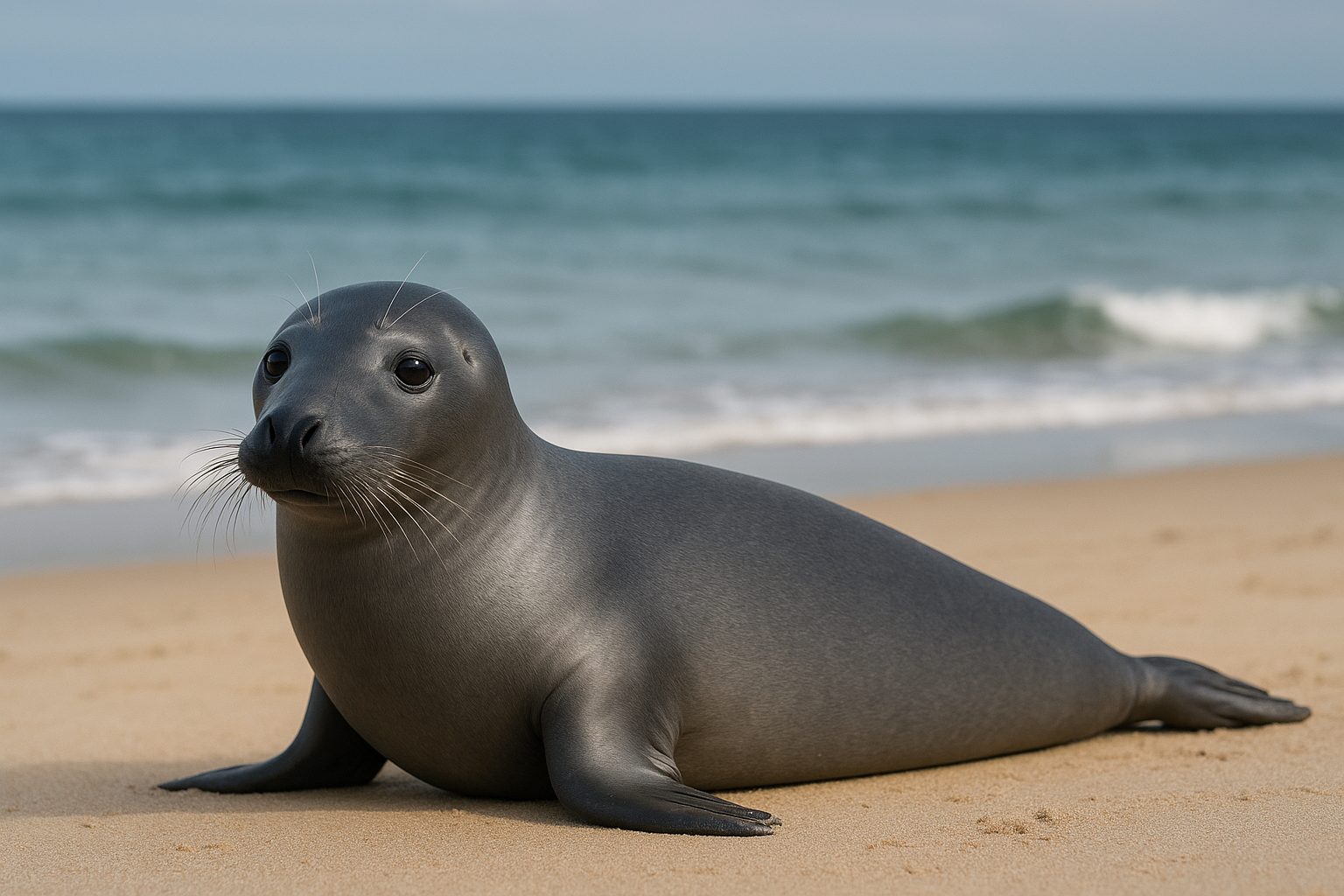
A rare crabeater seal appeared on a South African beach, sparking excitement and scientific study of this Antarctic visitor.
A lost Antarctic crabeater seal named Lola surprised everyone by showing up on a Cape Town beach, far from her icy home! This rare visitor, normally found in vast numbers around the South Pole, caused a stir and became a real-time science experiment. Her unexpected journey highlighted how connected our world's oceans are and gave scientists clues about how climate change might be affecting marine life. Lola's adventure showed that even a single animal can teach us a lot about our planet.
What is a crabeater seal?
A crabeater seal (Lobodon carcinophaga) is a highly abundant Antarctic seal species, rarely seen outside of its pack-ice habitat. Despite their name, crabs make up less than 2% of their diet; they primarily feed on krill, which they filter using specialized sieve-shaped teeth. These seals are well-adapted to extremely cold environments.
Get Cape Town news in your inbox
Stay updated with the latest stories from the Mother City.
1. A Ghost on Golden Sand: First Contact at Strand
The Western Cape’s summer playbook is usually simple: tourists bronze, surfers queue for Atlantic rollers, and the only Antarctic imports are postcard-perfect clouds. Last Monday dawn rewrote that script. Before the municipal hotline had finished its first coffee, a grainy cellphone image landed: a silver-grey seal, mottled like fading jeans, wedged against Strand’s dunes where teenagers normally stash cooler boxes. She was thinner than the Cape fur seals that nap on the pier, with a snout too delicate for a leopard seal and a coat the colour of weathered driftwood. Lifeguards christened her “Lola” on the spot; marine biologists called her something rarer - Lobodon carcinophaga, the crabeater, eight million strong in the Antarctic but practically mythic in South Africa.
Within minutes, the beach resembled a pop-up marine lab. Cooler boxes traded beers for biopsy vials, surfers surrendered their towels to become crowd barriers, and the city’s coastal rangers threaded neon tape between granite boulders. By sunset Lola had scuttled back into 17 °C surf - an aquatic sauna by Antarctic standards - only to reappear 14 km south-east at the postcard-perfect curve of Strand’s main bathing strip, 50 m from where surfboards usually line up like dominoes. Overnight, the promenade became an open-air lecture theatre: security guards doubled as citizen-scientists, restaurants offered “seal-safe” discounts to leashed dogs, and WhatsApp groups lit up with questions about krill swarms and climate oscillations.
The reason for the frenzy is simple arithmetic: fewer than a dozen verified crabeater sightings exist in South African records that stretch back to Victorian lighthouse logbooks. Each new set of spotted flippers triggers the same cascade - rangefinders, telemetry tags, multilingual press releases - because every vagrant is a datapoint in a continent-sized blind spot. Where exactly do pack-ice predators go when they overshoot the Polar Front? Are we seeing one confused individual or the vanguard of a warming Southern Ocean? Lola’s Monday morning cameo turned a family beach into a real-time experiment.
2. Why a Pack-Ice Phantom Went Surfing the Agulhas
Crabeater seals are built for a floating world: ice flues that crack and knit like living stained glass. They suck krill like vacuum cleaners, filtering two kilograms of pink paste every sixty seconds through sieve-shaped cheek teeth. But when an individual blunders north of the Sub-Tropical Convergence, the world flips from minus-two to plus-seventeen degrees Celsius, and krill clouds become anchovy schools. Satellite tracks from earlier vagrants - South Australia 2019, Patagonia 2022 - show the same pattern: once the circumpolar express drags an animal past 40 °S, many simply keep surfing the ribboned current until land feels safer than endless water.
Lola fits the profile. She is 18–24 months old, fresh from her first solo foraging year, a life-stage when exploratory wiring overrides caution. Her hips jutted like tent poles, her neck was narrower than a healthy pack-ice adult, and stomach lavage returned zero hard parts - an empty pantry that explained the silhouette. Yet physiology buys time: pinnipeds can dump heat through flipper skin and sink into metabolic slow-motion. City vets delivered a rapid-fire intervention - subcutaneous fluids, rabies shot, orange rotax tags - then retreated before habituation set in. Eight minutes of contact, no cages, no crowds pressing in for selfies.
Oceanographers aboard the research vessel Algoa supplied the smoking gun. CTD probes revealed an anomalously cold filament hugging the coast at 20 m depth - 9–11 °C water that felt, to a seal brain, like a ghost corridor of home. Negative phases of the Southern Annular Mode had slackened the westerlies, letting warm-core eddies spin off the Agulhas and, paradoxically, inject pockets of sub-Antarctic water toward the equator. Lola probably locked onto that phantom ice edge like a railroad switch and rode it until Strand’s golden sand appeared, a convincing substitute for a floe.
3. When the City Becomes a Field Station: Balancing Safety, Science and Sentiment
Cape Town already juggles great-white politics, abalone syndicates and taxi protests; the last thing officials needed was a viral seal saga. Protocols borrowed from New Zealand’s leopard-seal playbook - cordon, educate, monitor - were rolled out before sunrise. Law-enforcement loud-hailers warned that a crabeater can out-sprint a human on sand; local radio rotated bulletins in English, Afrikaans and isiXhosa; restaurants turned leash-compliance into a discount game. Result: zero bites, zero dogs in chase, and a community that felt ownership rather than inconvenience.
Tagging was deliberately minimalist. Two numbered orange tags carry a toll-free hotline printed in three languages, converting every jogger into a roaming data logger. If Lola surfaces at Gansbaai, Plettenberg Bay or even Mozambique, the same algorithm that once matched whale-shark dots will flag the scar pattern behind her left fore-flipper within minutes. Iziko Museum curators stand ready with sterile whisker jars and biopsy vials - insurance that even a tragic re-stranding would seed South Africa’s meagre circumpolar archive. Science, tourism and sentiment neatly braided.
The public payoff was immediate. School chat groups downloaded infographics explaining why “crabeater” is a taxonomic prank (crabs <2 % of diet). Surf anglers argued whether krill specialists threaten bait stocks; retirees debated negative Southern Annular Mode indices over sundowners. For three days the coastline felt like a living extension of the Antarctic pack, a reminder that planetary processes can clock in at the edge of a suburban ice-cream stand.
4. After the Footprints Fade: What One Seal Teaches About an Ocean in Flux
By dawn on day three Lola had vanished, leaving only a comma-shaped flipper print and a hashtag wave. Yet the episode rewrites mental maps. South Africa’s marine story is usually told through charismatic great whites, collapsing abalone and snoek prices. A lone crabeater shifts the spotlight to invisible drivers - wind fields, eddy kinematics, krill phenology - processes most residents will never see but which can deposit eight million years of evolution on a breakfast beach. Each vagrant is a postcard from a system that is warming faster than any large marine realm; the postmark just happens to be a city that thinks it knows its coastline.
Researchers now wait for the next ping: a WhatsApp image, a fisher’s call, an algorithmic match on iNaturalist. If Lola reappears, her breadcrumb trail will plug a data hole no ship survey can fill - post-lactation dispersal vectors, inter-basin gene flow, thermal tolerance thresholds. If she dies, museum jars will still speak. Either way, the conservative tally of “fewer than a dozen sightings” has already expanded by one, nudging distribution models that feed directly into Antarctic krill-fishery quotas and climate-risk assessments.
For Strand locals the lesson is simpler: the horizon is not a fence. Ecosystems that feel polar-remote can clock in at coffee temperature; every selfie reflex can double as data capture; every dog leash can become a conservation act. Somewhere beyond the breakers a silver-grey head may again surface, sieve-teeth glinting in subtropical sun, scanning for floes that exist only as memory and metaphor. When that moment comes, Cape Town will be ready - cooler boxes primed, algorithms humming, loud-hailers charged - proof that a single misplaced predator can turn an entire coastline into a forward operating base for Antarctic science.
What is a crabeater seal and why was Lola's appearance in Cape Town so unusual?
Crabeater seals (Lobodon carcinophaga) are a highly abundant Antarctic seal species, primarily found around the South Pole in pack-ice habitats. They are known for their specialized sieve-shaped teeth, which they use to filter krill, their main food source. Lola's appearance in Cape Town was extremely unusual because crabeater seals are rarely seen outside their icy home; fewer than a dozen verified sightings exist in South African records stretching back centuries. Her presence highlighted the interconnectedness of global oceans and raised questions about how climate change might be affecting marine life.
How did Lola, an Antarctic crabeater seal, end up in the warm waters of Cape Town?
Lola, an 18-24 month old crabeater seal, likely traveled north from the Antarctic by riding ocean currents. While the exact trigger for her journey isn't definitively known, similar patterns have been observed in other vagrant crabeater seals. Oceanographers detected an anomalously cold filament of water (9-11 °C) hugging the Cape Town coast at 20 meters depth. This sub-Antarctic water, carried by specific oceanographic conditions, likely provided a 'ghost corridor' that made the journey to warmer latitudes somewhat more tolerable for Lola, leading her to perceive the golden sands of Strand as a suitable resting place.
What did Lola eat, given her specialized diet and the absence of krill in Cape Town?
Crabeater seals are highly specialized feeders, primarily consuming krill, which they filter using their unique sieve-shaped teeth. Despite their name, crabs make up less than 2% of their diet. In Cape Town, Lola's stomach lavage returned 'zero hard parts,' indicating an empty digestive system. This suggests she was experiencing difficulty finding appropriate food in the warmer waters, which lack the vast krill swarms found in the Antarctic. Her emaciated condition further supported the idea that she was struggling to feed.
How did Cape Town authorities and the public respond to Lola's unexpected visit?
Cape Town authorities implemented protocols borrowed from New Zealand's leopard seal playbook, focusing on cordoning off the area, educating the public, and monitoring Lola. Lifeguards, marine biologists, and coastal rangers quickly established a safe zone, using neon tape and engaging the public. The community responded positively, with security guards acting as citizen-scientists and restaurants offering 'seal-safe' discounts. Public education campaigns explained Lola's species and diet, fostering a sense of ownership and conservation among locals. Minimal intervention, such as quick health checks and tagging, was performed to avoid habituation.
What scientific insights did Lola's journey provide?
Lola's unexpected appearance offered valuable real-time data regarding ocean connectivity and potential impacts of climate change. Her journey provided insights into post-lactation dispersal vectors, inter-basin gene flow, and thermal tolerance thresholds for crabeater seals. Researchers can use her data to refine distribution models, which are crucial for Antarctic krill-fishery quotas and climate-risk assessments. Lola's presence highlighted how a single animal can serve as a 'datapoint' in understanding large-scale oceanographic and climatic shifts, reminding scientists that global processes can manifest in unexpected ways at local levels.
What is the long-term significance of Lola's visit for conservation and public awareness?
Lola's visit significantly raised public awareness about the interconnectedness of global ecosystems and the potential reach of Antarctic wildlife. It demonstrated that even seemingly remote polar processes can directly impact coastal communities. The incident fostered a sense of community engagement in conservation, turning everyday citizens into 'roaming data loggers' through simple tag reporting. Ultimately, Lola's journey underscored the importance of every individual animal as a messenger from a changing planet, reminding us that conservation efforts must consider broad ecological connections and that local actions can contribute to global scientific understanding.

Hannah Kriel is a Cape Town-born journalist who chronicles the city’s evolving food scene—from Bo-Kaap spice routes to Constantia vineyards—for local and international outlets. When she’s not interviewing chefs or tracking the harvest on her grandparents’ Stellenbosch farm, you’ll find her surfing the Atlantic breaks she first rode as a schoolgirl.
View all articles →