
THE PIN-TAILED WHYDAH MALE: ONE OF THE MEANEST BIRDS IN NATURE
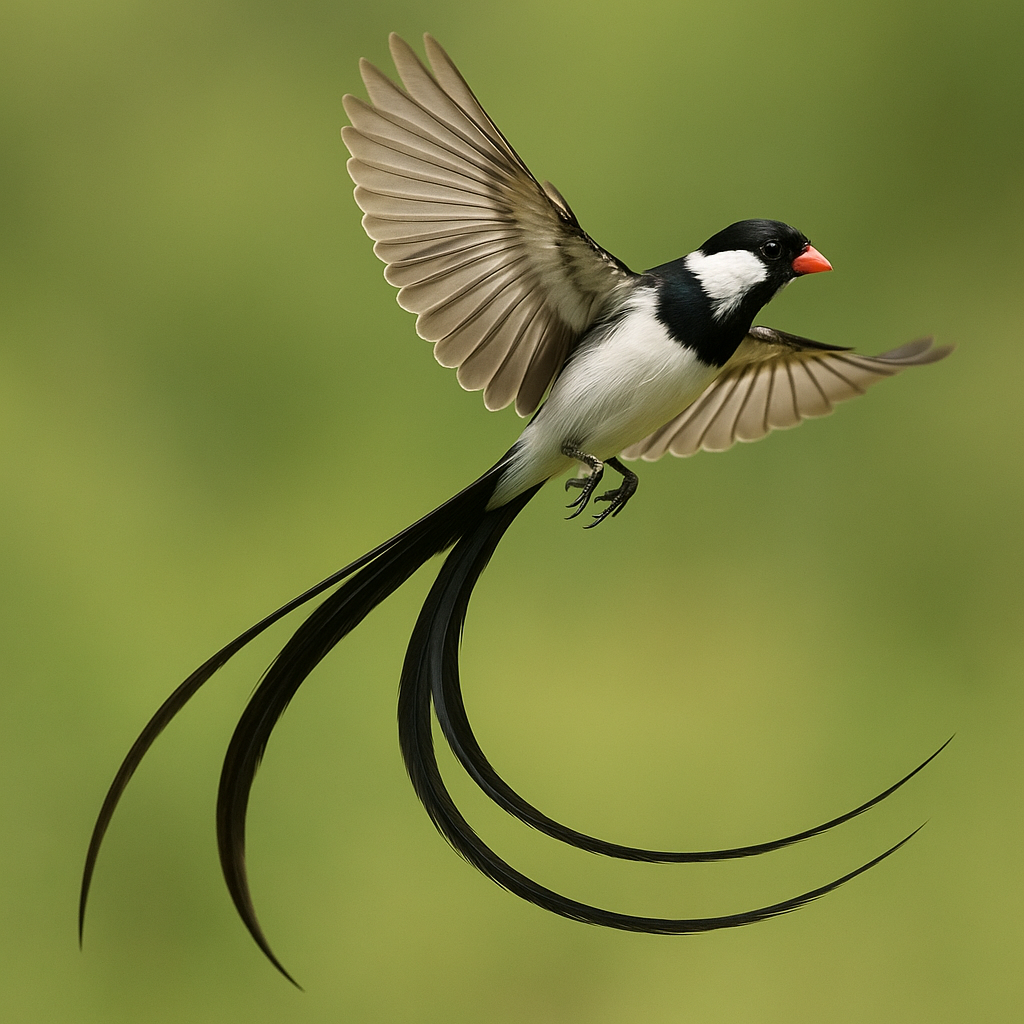
Meet the Pin-Tailed Whydah, Africa's feathered con artist. This elegant bird, with its long tail feathers, is a master of brood parasitism.
Meet the Pin-tailed Whydah, a fancy bird from Africa that's all about looking good. Males have super long tail feathers and do amazing dances to impress the ladies. But these birds are tricky; the females lay their eggs in other birds' nests, letting the foster parents do all the hard work. Their chicks even look like the host's babies to get all the food. It's a wild show of nature's cleverness!
What is unique about the Pin-tailed Whydah's reproductive strategy?
Pin-tailed Whydahs are brood parasites, meaning females lay their eggs in the nests of other bird species, typically estrildid finches. They meticulously mimic the host's eggs in appearance and even accelerate embryo development. Whydah chicks also mimic the host's nestlings in appearance and behavior, ensuring they receive parental care.
Get Cape Town news in your inbox
Stay updated with the latest stories from the Mother City.
Sunlight spills across the savanna and a four-inch bird steps out like a miniature Victorian gentleman. Jet-black hood, snow-white waistcoat, and behind him two satin ribbons - tail feathers five times longer than his body - sway like metronome arms. This is the male pin-tailed whydah, Vidua macroura, a bird that turned “extra” into a survival strategy. Every dry-season morning he claims a patch of grass or millet stubble, hops onto his favorite perch, and begins the day’s performance.
The makeover happens overnight when the first storms drum across Africa. Brown winter garb molts into formal wear: an ebony bib that drinks light, a crisp white belly, and those impossible streamers that can reach twenty centimeters. They weigh almost nothing, yet catch every breeze, so each swoop and climb leaves calligraphy in the air. Females cruise the lek, shopping for the male whose tail draws the cleanest arcs; the longer and steadier the swing, the fitter the suitor.
A whydah territory is less a parcel of land than a stage. From a thorn-top throne the male fires off a song too big for his frame: liquid whistles, metallic trills, a crescendo that carries half a kilometer. Neighbors counter-sing, rivals retreat, and interested females circle overhead. When one ventures close, he rockets upward, stalls, hovers helicopter-style while his streamers flutter like victory banners. The display lasts seconds, but the image burns itself into the female’s memory - and into any human lucky enough to witness the aerial ballet.
The Egg That Wears a Mask
Beneath the glamour lies a darker tale. Female whydahs do not nest, warm eggs, or gather grubs; they outsource every maternal duty. Instead, each hen becomes a covert operative, casing estrildid finches - waxbills, firefinches, twinspots - day after day. She memorizes when they weave grass into globes, when their first egg drops, how long the parents leave to forage. Her window is narrow: slip in too soon and the foster pair pitches the foreign egg; too late and her chick hatches behind schedule and starves.
Nightfall or a quick distraction by a grazing gazelle gives her the opening she needs. In three seconds she lands, lays one perfect counterfeit, and vanishes. The egg’s tint, speckles, even sheen match the host clutch so precisely that researchers need hand-lenses to tell the swap. Some populations take mimicry further: inner-shell chemistry speeds development, so the whydah embryo cracks the shell a few hours ahead of its nest-mates, securing first access to parental attention.
The chick’s debut is pure theater. Its gaping mouth flashes the same color pattern as the host young; some strains even sprout juvenile plumage that mirrors foster-sibling hues. Within days the foster parents are slave to a mouth three times larger than their own. A single whydah nestling can gulp seventy percent of every food delivery although it is only one of several hungry beaks. It grows obese, often doubling the size of the attendant adults, who stagger in with grass seeds and millet, driven by instinct they cannot override.
An Arms Race Written in Eggshells
Whydah and host are locked in evolutionary one-upmanship. Where the parasite is common, waxbills evolve eggs with denser freckles or pinker bases; in places without whydahs, shells stay bland. Scientists call it a geographic mosaic: each hillside or farmstead becomes a tiny battlefield where defenses and forgeries sharpen one another. Over millennia this tension has split some finch populations into separate lineages, each sporting egg signatures tuned to local parasite strains.
The bird’s cultural life adds another layer. A nestling whydah hears its foster parents’ calls and locks them into memory. When that chick - now a grown female - searches for a mate, she prefers males who weave matching notes into their own songs. Thus dialects pass through generations, binding parasite to host in a sonic web as strong as genetics. Switch the host species and within a few seasons local whydah songs shift, keeping the masquerade seamless.
Humans unwittingly tip the scales. Backyard seed trays concentrate susceptible finches, giving whydahs buffet conditions. In Hawaii, Puerto Rico, and suburban California the parasite followed imported waxbills, establishing self-sustaining populations within a decade. Males now display above golf courses and strip-mall palms, their tail streamers snagging on sprinkler mist rather than acacia thorns. Researchers watch to see whether island hosts will evolve defenses fast enough, or if the parasite will throttle its own lifeline by overexploitation.
Nomad of a Ten-Million-Square-Kilometer Kingdom
From Senegal’s Sahel to South Africa’s fynbos, pin-tailed whydahs ride the rains. They track fresh grass seed the way surfers chase swells, appearing in vast feeding flocks one month and gone the next. This wanderlust has scattered them across more than ten million square kilometers, making them one of Africa’s most successful songbirds. Along the way they juggle more than twenty host species, an insurance policy against local crashes.
Numbers follow boom-and-bust cycles. A run of wet summers supercharges finch breeding; whydah output skyrockets. When drought returns, host nests fail, parasite chicks starve, and whydah populations plummet - only to surge again when clouds rebuild. For scientists the pattern is a living lesson in density-dependent feedback, a textbook case played out in real time across savanna, farmland, and city park.
Yet the bird’s triumph remains fragile. It prospers only while its unwitting partners thrive. Conservationists monitoring West African waxbills warn that heavy pesticide use on rice fields could tip the balance, knocking out both host and parasite. For now, though, the drama continues: each dawn the tuxedoed male climbs into the African sky, tail feathers writing promises of endurance against the blue, while somewhere in the grass below a female plots the next immaculate forgery.
What makes the male Pin-tailed Whydah so visually striking?
The male Pin-tailed Whydah is renowned for its impressive appearance, especially during the breeding season. It sports a jet-black hood, a snow-white waistcoat, and most notably, two incredibly long tail feathers that can be up to five times longer than its body, reaching lengths of twenty centimeters. These satin-like ribbons are used in elaborate aerial displays to attract females.
How does the Pin-tailed Whydah's reproductive strategy benefit from mimicry?
The Pin-tailed Whydah is a brood parasite, meaning the female lays her eggs in the nests of other bird species, primarily estrildid finches. This strategy relies heavily on mimicry. The whydah's eggs remarkably match the host's eggs in tint, speckles, and sheen, making them difficult for the foster parents to detect. Furthermore, whydah chicks mimic the host's nestlings in appearance and behavior, including displaying similar gaping mouth patterns and even juvenile plumage, ensuring they receive parental care and food.
What is the "arms race" between the Pin-tailed Whydah and its host species?
The relationship between the whydah and its host is an ongoing evolutionary "arms race." As the whydah evolves better mimicry to parasitize nests, the host species, such as waxbills, develop counter-adaptations. For instance, in areas with high whydah prevalence, waxbills evolve eggs with denser freckles or pinker bases to help them identify and reject foreign eggs. This constant push and pull lead to a "geographic mosaic" where defense and forgery strategies are continually refined.
How does the Pin-tailed Whydah adapt its song?
Interestingly, a nestling whydah learns and memorizes the calls of its foster parents. When it matures, a female whydah will prefer males whose songs incorporate these learned notes. This cultural transmission means that whydah songs can shift over generations to match the dialects of their current host species, creating a strong sonic bond between parasite and host that reinforces the mimicry.
What impact do humans have on Pin-tailed Whydah populations?
Human activities inadvertently affect Pin-tailed Whydah populations. Backyard seed trays, for example, concentrate susceptible finches, providing ideal conditions for whydahs to parasitize. The species has also successfully established self-sustaining populations in new regions like Hawaii, Puerto Rico, and California after following imported waxbills. While this shows their adaptability, concerns exist that heavy pesticide use in agricultural areas could negatively impact both host and parasite populations.
What is the geographic range and nomadic behavior of the Pin-tailed Whydah?
The Pin-tailed Whydah is found across a vast area of Africa, spanning over ten million square kilometers from Senegal to South Africa. They are highly nomadic, following the rains to track fresh grass seeds, appearing in large feeding flocks in one area and then moving on. This wanderlust and their ability to parasitize more than twenty host species contribute to their widespread success and act as an insurance policy against local population crashes.

Chloe de Kock is a Cape Town-born journalist who chronicles the city’s evolving food culture, from township braai joints to Constantia vineyards, for the Mail & Guardian and Eat Out. When she’s not interviewing grandmothers about secret bobotie recipes or tracking the impact of drought on winemakers, you’ll find her surfing the mellow breaks at Muizenberg—wetsuit zipped, notebook tucked into her backpack in case the next story floats by.
View all articles →