
TINY HEROES IN OUR DAILY LIVES
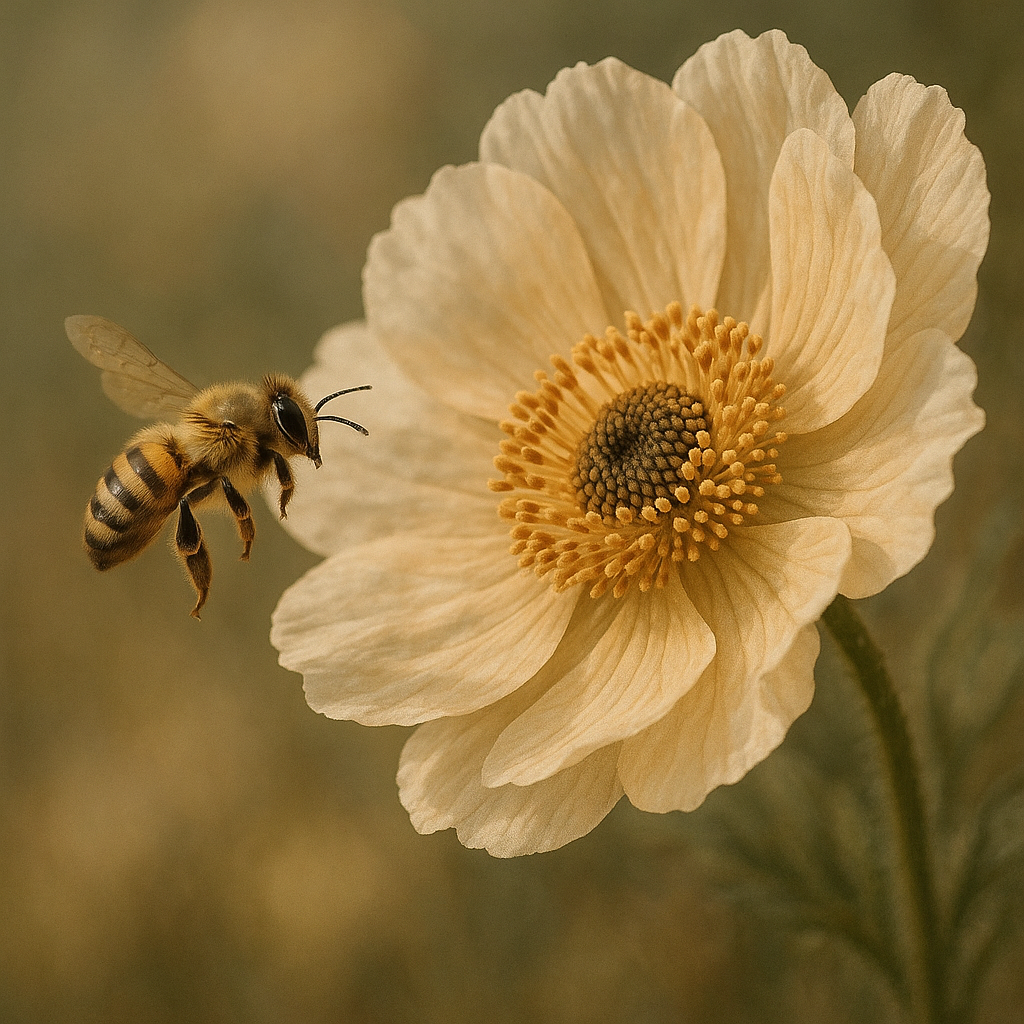
Bees are the planet's invisible engineers, crucial for one-third of our food. Learn about their vital roles, threats, and solutions.
Bees are tiny, buzzing heroes that keep our planet fed! They visit flowers, picking up golden dust called pollen, which helps plants grow fruits, veggies, and nuts. Without these busy little insects, a third of the food we love, like apples and avocados, would vanish from our plates. But sadly, invisible dangers like poisons and climate change are making it harder for bees to do their vital work. We need to help them by planting more flowers and being mindful of their crucial role, so our food supply stays strong and delicious!
Why are bees so important to our food supply?
Bees are crucial for our food supply because they pollinate one-third of the food we eat, including many fruits, vegetables, and nuts. Without bees, crops like almonds, avocados, and blueberries would drastically decline, leading to empty grocery shelves and significant economic losses for farmers worldwide.
Get Cape Town news in your inbox
Stay updated with the latest stories from the Mother City.
A single bee takes off at dawn carrying more than her own weight in golden pollen. Her wings beat two hundred times every second, a microscopic helicopter hauling cargo that will decide whether your breakfast exists. From the fynbos of South Africa to the trading floors of Chicago, that speck of dust she ferries underwrites everything from billion-dollar harvests to the flavour of your coffee. She is courier, chemist, architect and unpaid farmhand zipped into one buzzing envelope.
Walk down any produce aisle and one third of what you touch - almonds, avocados, blueberries, cucumbers, pumpkins, apples, peppers, strawberries, zucchinis, sunflowers, coffee, chocolate - owes its existence to a bee that deliberately brushed pollen from one flower to another during the brief moment that blossom was fertile. Remove the insect and the shelves empty within a single season.
California’s watermelon growers feel this dependency in their bones. Because the vines bear separate male and female flowers, pollen must hitch a ride across the gap. Growers therefore rent hives at two hundred dollars a pop and scatter two of them across every acre of the ninety-thousand-acre basin. The math is stark: one hundred and eighty thousand colonies - one-third of all managed hives in the United States - roll in on flatbeds for a three-week orgy of bloom. The resulting melons ring up 1.4 billion dollars at the farm gate, all guaranteed by an animal whose brain is smaller than a grass seed.
Yet the honey-bee is only the celebrity. More than twenty thousand wild species - carpenters, leaf-cutters, masons, sweat bees, miners, cuckoos - do the same sexual errand, often better because they specialise. One red mason bee can service as many apple blossoms as fifty honey-bees. In the Andes, long-tongued bumble-bees pollinate wild tomatoes whose genes rescued commercial varieties from a wilt that threatened to wipe them out. In Brazil, an orchid bee slathered in fragrant oils guarantees Brazil-nut trees set seed; without her, the 1.2-billion-dollar nut export collapses and the forest itself unravels, because the law protects those trees as keystones.
Inside the Hive: A Single Creature with Sixty Thousand Wings
A colony is not a crowd; it is one super-organism whose lungs are the beating wings of thirty- to sixty-thousand sisters. Those wings keep the brood nest nailed at 34.5 °C - hospital-incubator precision. If the thermostat slips, workers form living curtains, flexing flight muscles to warm the kids or ferrying water droplets to cool them. The colony’s liver is a squad of undertakers that drags corpses outside within minutes, preventing epidemics. Its immune system is a coat of propolis - antimicrobial tree resin - painted over the inner walls like medicinal wallpaper. Lab work shows propolis flips on detox genes, vaccinating nurses against pesticides they will later meet in the fields.
Inside each wax cell, a larva eats two menus: royal jelly, a protein emulsion that can turn a baby into a queen, and beebread, a fermented pollen-yoghurt that seeds her gut with probiotic bacteria. Those same microbes hitchhike back to the next blossom, creating an invisible continent-wide chain of floral fermentation pots.
Foresters who never think about bees still depend on them. In South Africa’s pine country, growers sow strips of aloe specifically to feed wild bees that accidentally pollinate medicinal understory plants worth millions in nursery stock. Swedish forest owners keep old aspen snags not for woodpeckers but for mason bees that boost cloudberry crops worth €3 million a year. A single snag housing thirty bee nests yields an extra twelve kilograms of berries per hectare - €216 at farm-gate prices - turning conservation into pocket money.
Even asphalt jungles hum with the trade. Singapore’s public rooftops host government-managed hives whose weekly pollen traps read like a botanical census: 214 plant species visited, 38 % of them exotic ornamentals, 17 % endangered rainforest relicts. The bees knit these fragments into a working dating service for genes, letting rare trees such as Shorea gratissima swap pollen across an urban maze. Developers now bid up lease prices by 3 % for buildings crowned with “bee roofs,” the market value of a green badge.
Chemical Fog and Climate Traps: How We Break the Contract
Imidacloprid, the planet’s top-selling neonicotinoid, locks onto bee brain receptors at concentrations as low as ten parts per billion - one teaspoon in an Olympic pool. At that dose, the waggle dance - the insect’s GPS for nectar - drops by 38 %. A colony so disoriented behaves like a city whose road signs have been spun at random. In Ontario, canola hives sucking neonic dust lose 23 % of their foraging radius, draining nearby flowers and starving the queen. Mason bees nesting in hedge-rows produce half as many brood cells because females, confused by fading scent marks, revisit blossoms already stripped.
Worse, the poison quietly switches off detox genes, so when farmers later spray legally approved pyrethroids the combination becomes lethal - two “safe” chemicals turning into a one-two punch. Regulators still test molecules one at a time, an approach toxicologists now call “ecological naïveté.”
Climate change adds a timing trap. Glacier lilies in the Rockies now open seventeen days earlier than in 1970, but their bumble-bee partner emerges only seven days sooner. The ten-day miss cuts lily seed set by 60 %. Because lilies are the first carbohydrate station of the season, the failure ripples: bumble-bee queens rear fewer workers, slashing colony output all summer. Modelers warn that another 2 °C will push overlap below 20 %, nudging both lily and bee toward local extinction.
“False springs” do similar damage. Warm December days trick almond buds into opening; March frost then kills the crop while bees that raised brood in February starve. The mismatch cost California 1.1 billion dollars in almonds last year and obliterated 40 % of rented hives, a double shock that rippled through the entire pollination market.
Smart Hives, Tokenised Flights and the Road Back
Start-ups on three continents sell hive scales that tweet hourly weight. Lose two kilos overnight and an algorithm pings the keeper before workers eat their own larvae. Infrared cameras map winter cluster size without cracking lids; accelerometers stuck to comb detect the vibrational “whoop” that precedes swarming by two days. Machine-learning models trained on 1.2 billion wing beats predict swarm probability at 92 % accuracy, letting keepers split colonies and keep both workforce and neighbours happy.
At landscape scale, the EU’s IoBee project fuses satellite floral maps with hive sensors across 1,500 apiaries. A live dashboard glows red where flowers abound but bee visits lag - usually a red flag for pesticides or disease. Farmers bid for hive deliveries into red zones, creating a dynamic marketplace that may soon trade “pollination credits” alongside carbon.
France simply yanked 60 % of neonics by docking subsidies for farmers who bought treated seed; uptake of untreated seed leapt to 85 % when the same law paid an extra €30 per hectare for integrated pest management. Toronto now demands pollinator plantings on every new public roof larger than 2,000 m². Stainless-steel “bee hotels” built into walls have lured back the resin bee Megachile campanulae, unseen in the region since 1954 - an extinction reversed by city ordinance.
Citizen smartphones have become field microscopes. An AI filter added to the iNaturalist app identifies bee species in three seconds from a photo; last year users uploaded 1.3 million records from 184 countries, revealing that the Asian giant honey-bee has already pushed 200 km north into China’s warming mountains. Garden-centre sales of wildflower seed in the UK jumped 400 % after a “Bee Movie” marathon; one balcony pot of lavender fuels 200 bee visits, and ten thousand pots equal twenty million flower inspections - an urban meadow conjured from consumer desire.
From Singapore rooftops to Detroit meadows, from French wheat fields to Swedish pine snags, the arithmetic is identical: keep flowers, keep bees, keep food. Stand beneath a lime tree in June and you will hear the compound interest of biology humming overhead - no barcode, no blockchain, just wings converting sunlight into seeds, salaries into survival. Civilisation cashes that dividend every morning, whether we notice the tellers or not.
[{"question": "
Why are bees so important to our food supply?
", "answer": "Bees are crucial for our food supply because they pollinate one-third of the food we eat, including many fruits, vegetables, and nuts. Without these tiny, buzzing heroes, crops like almonds, avocados, blueberries, and even coffee and chocolate would drastically decline, leading to significant economic losses and empty grocery shelves."}, {"question": "Are honeybees the only important pollinators?
", "answer": "While honeybees are often the most recognized pollinators, they are just one type among over twenty thousand wild bee species! These wild bees, including carpenters, leaf-cutters, masons, and bumblebees, are often more specialized and efficient at pollinating certain plants. For example, one red mason bee can pollinate as many apple blossoms as fifty honeybees, and long-tongued bumblebees in the Andes pollinate wild tomatoes critical for commercial varieties."}, {"question": "How does a bee colony function like a single organism?
", "answer": "A bee colony operates as a 'super-organism.' The collective actions of thirty to sixty thousand worker bees maintain the hive's internal environment with remarkable precision. Their beating wings regulate temperature, undertaker bees remove dead to prevent epidemics, and propolis (antimicrobial tree resin) acts as an immune system, protecting against disease and even detoxifying pesticides."}, {"question": "What are the 'invisible dangers' threatening bees?
", "answer": "Bees face significant threats from 'invisible dangers' such as pesticides and climate change. Neonicotinoid pesticides, even at very low concentrations, disorient bees and impair their foraging ability. Climate change causes 'timing traps' like false springs and mismatched emergence times between flowers and their pollinators, leading to reduced food sources for bees and lower crop yields."}, {"question": "How are technology and conservation efforts helping bees?
", "answer": "Technology is being used to monitor hive health with smart scales, infrared cameras, and AI-powered prediction models for swarming. At a larger scale, projects like the EU's IoBee use satellite data and hive sensors to identify areas needing pollination. Conservation efforts include policy changes like reducing pesticide use, encouraging pollinator-friendly plantings in urban areas, and citizen science initiatives where smartphone apps help identify bee species and track their movements."}, {"question": "What can individuals do to help bees?
", "answer": "Individuals can make a big difference by planting more flowers and choosing native plant species that provide essential pollen and nectar for bees. Being mindful of pesticide use in gardens and supporting farmers who practice integrated pest management also helps. Even small actions, like planting a pot of lavender on a balcony, can contribute to creating urban meadows that support bee populations and, in turn, our food supply."}]
Isabella Schmidt is a Cape Town journalist who chronicles the city’s evolving food culture, from Bo-Kaap spice merchants to Khayelitsha microbreweries. Raised hiking the trails that link Table Mountain to the Cape Flats, she brings the flavours and voices of her hometown to global readers with equal parts rigour and heart.
View all articles →