
Tiny turtles, big rescue mission following ‘ghost gear’ threat
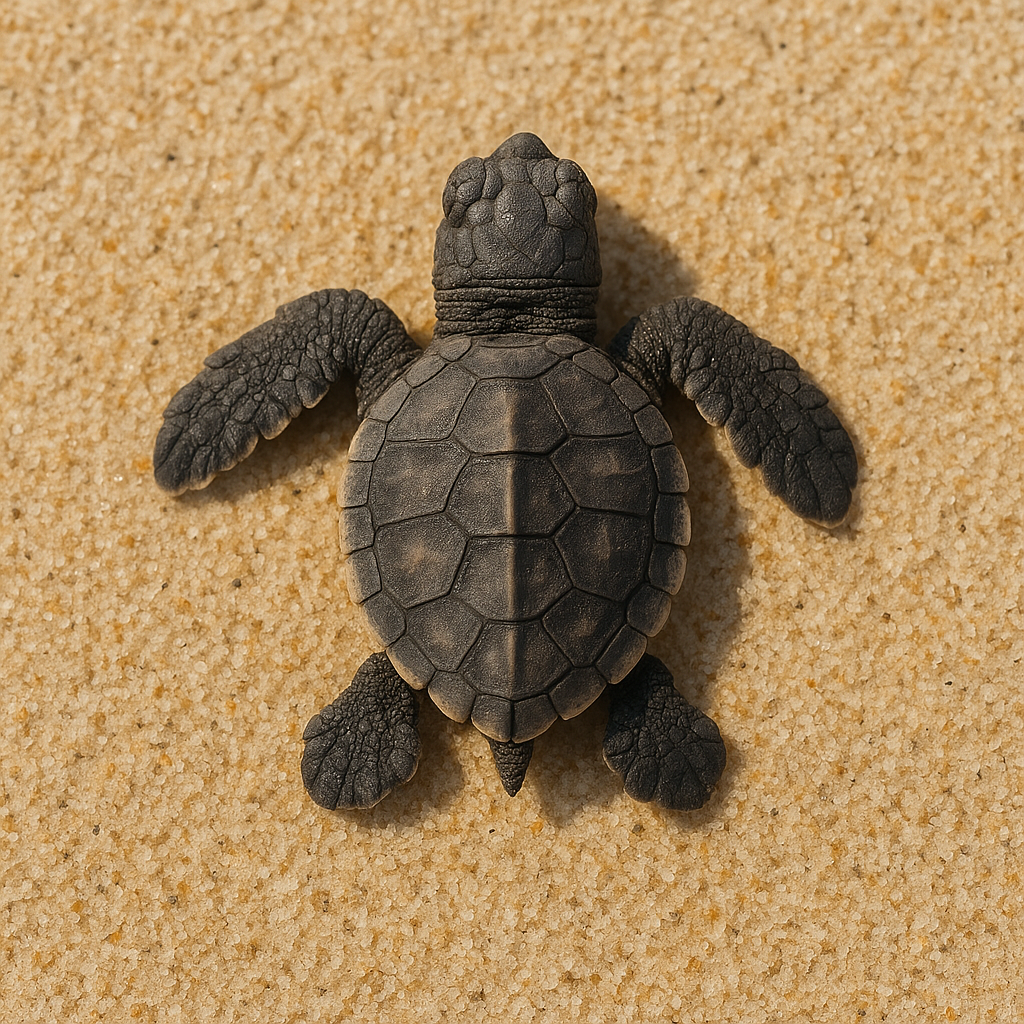
Explore South Africa's Turtle Road Trip, a mobile ICU and classroom saving baby sea turtles from hypothermia and ghost gear.
Imagine a special van, like a doctor's office on wheels, called the "Turtle ER on Wheels"! It's super fast, rushing to save tiny baby sea turtles that get lost and too cold in the ocean. This amazing van also teaches people how to help turtles and keep our oceans clean from plastic. So, it's not just an ambulance; it's a mobile classroom, making sure these little survivors have a chance to grow big and strong!
What is the "Turtle ER on Wheels"?
The "Turtle ER on Wheels" is a mobile veterinary clinic, disguised as a Ford Transit, equipped with temperature-controlled incubators and medical supplies to rescue cold-stunned sea turtle hatchlings. It also functions as a mobile classroom to educate communities on turtle conservation, collecting stranded turtles, and combating ocean plastic pollution.
Get Cape Town news in your inbox
Stay updated with the latest stories from the Mother City.
1. When the Agulhas Current Spits Out Its Babies
Every January the Indian Ocean whispers an ancient cue: the sun climbs back, the current contracts, and a 24 °C filament of water clings to the shelf south-east of Durban. Female loggerheads and leatherbacks - some first flipper-tagged on the Tongaland dunes in the late 1960s - haul ashore to lay under the spring tide. Sixty nights later, thumbnail-sized hatchlings erupt like popcorn and bolt for the moonlit surf. Most vanish into the open sea forever - unless a cut-off low, the Cape’s notorious “black south-easter”, yanks the current seaward. Caught in that gyre, the babies are catapulted into 14 °C upwellings where their hearts slow, internal compasses spin, and the long, silent journey toward the Strandveld begins.
That drift is a lottery few win. Once water temperature drops below 16 °C the animals slip into a cold-stupor; they float as living confetti, easy prey for gulls or the next on-shore breeze. The first 24 h out of water decide everything: each lost gram pushes them closer to organ shutdown, and every extra hour on the sand strips another layer of hope. What follows is less a rescue than a relay race between weather fronts, refrigerated lunch-boxes and grandmothers in hatchbacks.
2. The Strand – From Sand Dune to ICU in Six Hours
A hypothermic hatchling does not cry; it simply switches off. Flippers fold like tissue paper, the shell - still soft as a human nail - fades from russet to ash. In this suspended state a single droplet of fresh water can fatally disturb salt balance, and a careless thumb can fracture a plastron. The Two Oceans Aquarium Foundation therefore treats every find like a neonatal emergency: warm no faster than 0.5 °C each hour until 22 °C, start a 2 % dextrose drip under the skin, clip a micro heart-monitor the size of a coin to the belly.
The recipe works only if the turtle clocks in within six hours of discovery; after that kidneys haemorrhage and fungal blooms explode in the lungs. That deadline spins the Western Cape’s 1 200 km of yacht havens, fishing hamlets and holiday resorts into a manic racetrack each autumn. Beach walkers become paramedics, petrol-station parking lots become hand-over hubs, and surf shops double as dispatch centres. Everyone speaks the same shorthand - “pinks for loggers, oranges for leathers” - and nobody laughs at a grandmother jogging across the sand with a shoe-box ventilated by tooth-pick holes.
3. The Rolling Clinic – Ambulance, Classroom and Soap-Box in One
Parked at the curb, the Ford Transit looks like a food truck until you notice the mural of a hatchling wearing a stethoscope. Inside, six 30-litre wine-coolers hum at precisely 26 °C, their lids stickered “Human milk, keep upright”. A 1 kW lithium-battery bank powers the fridges, a Starlink dish and a tiny projector that can throw an X-ray of a balloon-filled gut onto a school wall. On the dash sits a glittery lunchbox no bigger than a novel; it holds 0.2 ml PIT-tags, the same injectable chips used for prize poodles.
Between vet checks the crew stage pop-up science fairs. Kids crowd in, take turns listening to a loggerhead heartbeat pip through a Bluetooth speaker, then line up to guess how many micro-plastics fit inside a matchbox. Before leaving town the team top up “turtle fridges” - bar-sized baridges donated by Spar, painted emerald and bolted outside liquor stores. A laminated sign in Afrikaans, isiXhosa and English instructs: “Damp towel, ventilated box, no direct sun, WhatsApp this code.” The QR bot, built by bored Stellenbosch coders, pings the nearest driver faster than you can order pizza.
4. Ghost Gear – The Invisible Slaughter That Keeps on Fishing
On 4 February 2026 a caller reported a lifeless loggerhead at Kruismansbaai. Its left flipper had grown over a squid-jig’s monofilament like bark over barbed wire; the swivel still carried a Taiwanese factory code last logged in Cape Town in 2024. Abandoned gear - ghost nets, ghost lines, ghost pots - now drifts the Benguela gyre, killing without witness. One 50-metre gill net can fish 4 000 km and murder 200 creatures every year, turtles included.
During the 2025 Road Trip volunteers yanked 312 kg of ghost nylon off three beaches; knotted together the rope would bridge Table Mountain to Robben Island. Each piece is weighed, photographed and uploaded to a global map that predicts where the next entanglement will happen. The data feed brands, insurers and, increasingly, prosecutors: Taiwan’s fisheries agency has already paid one fine based purely on serial numbers pulled from a South African beach.
5. How to Become Part of the Safety Net – Grandma to Deck-Hand
Tracy Whitehead’s master list holds 2 047 names. Some are shark-cage deck-hands, others retired librarians like 78-year-old Babs Cloete who once ferried a hatchling 140 km in a Hyundai Getz, radio humming Vivaldi. Each new recruit gets a fridge key, a micro-chip applicator, or simply a spot on the WhatsApp group; the only entry requirement is the willingness to answer a 2 a.m. call and drive with a shoe-box on the passenger seat.
Stories travel faster than memos. A viral clip of a fisherman rinsing saltwater off a turtle - exactly what you’re not supposed to do - spurred a correction video shot by Grade-6 pupils that clocked 90 000 views. The network thrives because it is ego-light and data-heavy: every find is logged, weighed, photographed and, months later, released with a goodbye hug measured to the second.
6. From Shoe-Box to Surf – The Long Road Back to Blue
Once a turtle lands at the Two Oceans Aquarium it enters quarantine kept at 25 °C and 80 % humidity. A pink dot of nail polish on the shell shouts “loggerhead”, orange means “leatherback”, green flags the rare hawksbill. Treatment sheets mirror human neonatal care: hourly fluids, glucose checks, squid slurry via catheter until the first poop proves the gut is awake.
Average stay is nine months; target weight is 20 cm shell length and blood glucose above 5 mmol/L. If the numbers pass, the animal graduates to a recovery pool where it must dive, fetch squid and avoid bumping into bigger tank-mates. Release day is short, sweet and scientific: a 42-second blessing - one second for every 100 km the youngster must swim to reach the warm recruiting grounds off Kosi Bay. A final photo is snapped, the PIT-tag scanned, and the hatchling vanishes into the blue. Trackers show 64 % are still alive a year later, down from 78 % in 2019, proof that rehab can only do so much against a warming, trash-filled sea.
7. Your Move – Pocket Science and the Year Ahead
Even if you never cradle a hatchling you can still help. Pick up a free “Mini-Manta” postcard, photograph every scrap of plastic inside the printed 6 × 6 cm square, and upload. The collage feeds an algorithm that forecasts ghost-gear drift and guides beach-clean crews to the next hotspot; 48 000 images from 14 countries have already redrawn pollution maps.
Plans for 2027 are ambitious: thirty more drop-off fridges, a solar “heat beacon” that warms a comatose turtle at 3 °C an hour without mains power, and NFC tags embedded in every new fishing net sold in Cape Town harbours so lost gear can phone home. A Danish micro-hatchery container will dock at Ngqura as overflow ICU if strandings top 200 animals at once.
For now the convoy is back in Cape Town, tyres salted white, incubators stacked like Tetris. Out beyond the breakers the next wave of hatchlings is already swimming east, oblivious to the inland army - lifeguards, bakers, librarians, coders - refreshing weather apps and packing shoe-boxes, ready to sprint the instant a walnut-sized flipper washes ashore.
[{"question": "What is the \"Turtle ER on Wheels\"?", "answer": "The \"Turtle ER on Wheels\" is a specialized mobile veterinary clinic, often a Ford Transit van, equipped with temperature-controlled incubators and medical supplies. Its primary mission is to rescue cold-stunned sea turtle hatchlings that get lost and too cold in the ocean. Beyond its ambulance function, it also serves as a mobile classroom to educate communities on sea turtle conservation, how to assist stranded turtles, and the critical importance of combating ocean plastic pollution."}, {"question": "Why do baby sea turtles need rescuing from cold temperatures?", "answer": "Baby sea turtles, particularly loggerheads and leatherbacks, are born in warmer waters. However, due to phenomena like cut-off low systems, they can be swept into colder upwellings (below 16 °C). When their body temperature drops, they enter a state of cold-stupor, becoming hypothermic. This condition slows their hearts, disorients their internal compasses, and makes them vulnerable to predators and organ damage. The \"Turtle ER on Wheels\" intervenes to rewarm them safely and provide critical medical care."}, {"question": "How are stranded turtles cared for once discovered?", "answer": "Once a hypothermic hatchling is found, time is critical. The Two Oceans Aquarium Foundation treats these finds as neonatal emergencies. They are warmed very slowly, no faster than 0.5 °C per hour, until they reach 22 °C. They receive a 2% dextrose drip under the skin and have a micro heart-monitor attached. This specialized care is most effective if the turtle is found and brought in within six hours of discovery, as delays can lead to kidney hemorrhages and fungal lung infections."}, {"question": "What is \"ghost gear\" and how does it affect sea turtles?", "answer": "\"Ghost gear\" refers to abandoned, lost, or otherwise discarded fishing equipment, such as nets, lines, and pots. This gear continues to \"fish\" indiscriminately, entangling and killing marine life, including sea turtles, without human intervention. The \"Turtle ER on Wheels\" initiative actively removes ghost gear from beaches, weighs and photographs it, and uploads the data to global maps to predict future entanglement hotspots and hold polluters accountable."}, {"question": "How can individuals become part of the sea turtle safety net?", "answer": "A vast network of volunteers, from shark-cage deck-hands to retired librarians, contributes to the sea turtle safety net. Individuals can get involved by being willing to respond to calls, often at odd hours, to transport stranded hatchlings in ventilated shoeboxes. They can also assist with the \"turtle fridges\" (bar-sized fridges for drop-offs), report sightings, and participate in community education efforts. The network thrives on collective action and data sharing, logging every find and its details."}, {"question": "What is the long-term rehabilitation process for rescued turtles?", "answer": "After initial stabilization, turtles are moved to quarantine at the Two Oceans Aquarium, kept at 25 °C and 80% humidity. They receive hourly fluids, glucose checks, and specialized feeding (like squid slurry) until their digestive system is functioning. An average stay is nine months, aiming for a shell length of 20 cm and healthy blood glucose levels. Once rehabilitated, they move to recovery pools to practice diving and foraging before being released back into the ocean, often with a PIT-tag for identification and tracking."}, {"question": "How does the \"Turtle ER on Wheels\" use technology for conservation?", "answer": "The \"Turtle ER on Wheels\" is equipped with advanced technology. It has a 1 kW lithium-battery bank to power incubators and a Starlink dish for connectivity. A tiny projector can display X-rays for educational purposes. It carries 0.2 ml PIT-tags for microchipping turtles and utilizes a QR code system linked to a bot that pings the nearest driver for quick turtle pick-ups. The project also uses a \"Mini-Manta\" postcard system where people photograph plastic waste, feeding an algorithm to track and predict ghost-gear drift, guiding beach clean-up efforts globally."}]

Lerato Mokena is a Cape Town-based journalist who covers the city’s vibrant arts and culture scene with a focus on emerging voices from Khayelitsha to the Bo-Kaap. Born and raised at the foot of Table Mountain, she brings an insider’s eye to how creativity shapes—and is shaped by—South Africa’s complex social landscape. When she’s not chasing stories, Lerato can be found surfing Muizenberg’s gentle waves or debating politics over rooibos in her grandmother’s Gugulethu kitchen.
View all articles →