
WHEN A CLOSE ENCOUNTER GOES TOO FAR
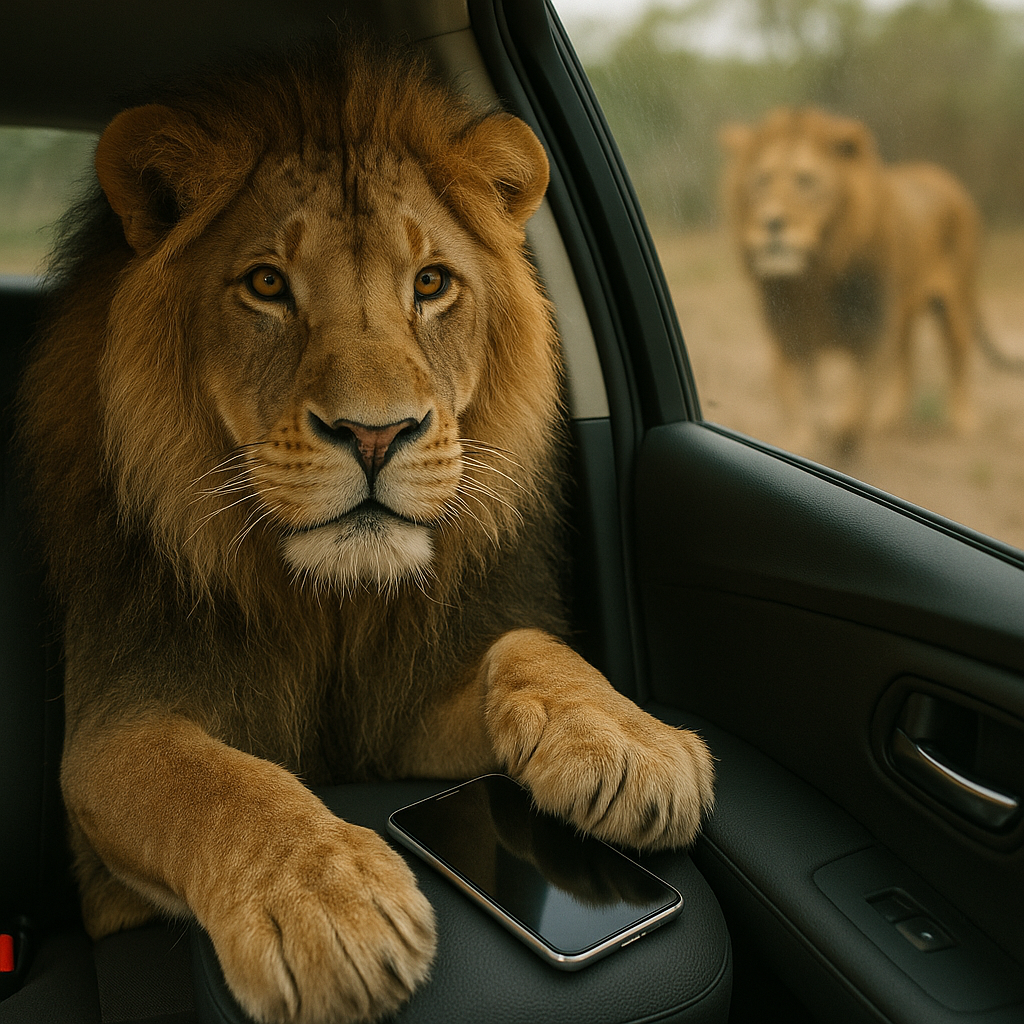
A Kruger drama unfolds as a tourist's dangerous selfie with a lion goes viral, sparking debate on human-wildlife interaction and park rules.
Don't get out of your car in Kruger Park! It's super dangerous and against the rules. Wild animals see cars as harmless, but people walking around look like tasty snacks. One guy learned this the hard way when he got out for a selfie, almost got into trouble with a lion, and ended up with a big fine and a bad reputation online. Stay in your car and enjoy the amazing wildlife safely!
Why shouldn't you get out of your car in Kruger National Park?
Exiting your vehicle in Kruger National Park, except in designated areas, is extremely dangerous and illegal. It breaks a truce between humans and wildlife, as animals see cars as non-threatening but people outside cars as potential prey. This can lead to serious injury, death, and severe penalties including fines and bans.
Get Cape Town news in your inbox
Stay updated with the latest stories from the Mother City.
Dawn on the Sabie Plains: The Stage Is Set
The first light had barely silvered the buffalo-thorn bushes when the pride roused itself on the open ridge south of Lower Sabie. A battle-scarred male, stomach still drum-tight from last night’s zebra feast, pricked his ears at the crunch of gravel. Two sanctioned safari trucks sat motionless twenty metres away, engines purring in neutral, camera shutters clicking like polite cicadas. The scene looked postcard-perfect - nothing hinted that the next half-minute would sprint across the internet faster than any lion ever could.
A Gauteng-plated white hatchback wiggled between the guides’ vehicles. Its driver - khaki shorts, reflective aviators, feet bare - killed the gearbox but left the motor running while he hopped out and thrust a phone overhead for the widescreen selfie he’d probably caption “# WildAndFree.” The clip filmed from the car behind captures the communal gasp, the swallowed “Don’t - ” and the sibilant “Get! Back! In!” The man answers with a one-finger salute, eyes still glued to his screen. The big male rises - not charging, only curious, head dipped, tail ticking like a countdown clock. Thirty red metres separate apex predator and weekday warrior. The footage stops when the hatchback door bangs shut and the little car fishtails away in a puff of dust. By the time the pride reclines, the meme has already conquered three continents.
SANParks rangers intercepted the hatchback at Crocodile Bridge before lunch. They served the driver a Section 56 notice - the on-the-spot ticket available under the Protected Areas Act. Price: R2 500, about what a couple would spend on fuel and a Skukuza bungalow for one night. He swiped his card, shrugged “It was two seconds, guys,” and pointed his bonnet toward the nearest KFC in Komatipoort. While he munched fries, cyberspace feasted on him. A Botswana guide froze the video frame-by-frame, annotating ear angle and tail tuft. A Kruger old-hand overlaid the man’s Instagram archive: here he is, 2020, fondling a doped cheetah, hashtag #BigCatWhisperer. Within twenty-four hours his surname, passport digits and LinkedIn job title circulated on ranger WhatsApps like a most-unwanted poster.
1. A Short, Bloody Lesson: Why Soft Skin Doesn’t Belong on Soft Sand
Kruger’s maiden warden James Stevenson-Hamilton reached the Lowveld in 1902, when the veld still reeked of rinderpest and gunpowder. His rangers toted .303 Lee-Enfields and interred, on average, two poachers each month - men who stalked impala on foot and never made the walk home. The 1912 logbook mentions “a partly devoured youth clutching an assegai near present-day Skukuza.” Message received: sans metal shell, people rank high on the edible list. When paid tourism arrived by automobile in 1927, the arithmetic stayed identical. The first visitor fatality came six years later - a Durban dentist changing a tyre near Satara. One pride, one spring-bolt, zero survivors. Regulation 17(3) was typed the same afternoon: “No person shall exit a motor vehicle except in a designated area.” Ninety years on, not a comma has shifted, yet the real protected species in that sentence turned out to be Panthera leo. Habituated cats treat a motorised rectangle as neither threat nor takeaway. Step beyond the steel outline and you shred the truce written in oil and metal.
2. The Invisible Bubble: Twenty Metres of Mathematics
Wildlife biologists call it flight-initiation distance. During Kruger’s long-term lion telemetry study, 128 collared cats revealed a clear pattern: at fifteen metres tail-twitches rise, at ten heart rates spike, at five they stand - flight or fight queued. The park’s twenty-five-metre statute is therefore no polite suggestion; it is a mammalian firewall written in beats per minute. A 2020 article in the African Journal of Ecology showed that repeated close approaches jack up cortisol, cut kill frequency and push displaced lions toward village cattle. Translation: your impatient selfie can birth the “problem animal” that returns three months later to be shot as a stock-killer. Zoom glass compresses perspective, not stress hormones.
3. Penalties, Databases and the Digital Pillory
R2 500 is the ceiling a field ranger may levy without dragging you to court. Aggravate the offence - say, crawl toward a leopard den - and you face a magistrate who can dish out R50 000 or a year in jail. Since 2019 Kruger also shares facial-recognition snapshots with eighteen Greater Kruger lodges; show up at Sabi Sabi waving your last-ban citation and the welcome desk will politely refuse you. A Phalaborwa start-up scrapes metadata so efficiently that, within a day of the Crocodile Bridge embarrassment, the offender’s cellphone number pinged on every guide group. SANParks’ own data say public shaming beats fines: rule-break events fell 37 % once the red-list went viral. Dollars and shame are languages every tourist dialect understands.
4. Reputation by the Million-View: Economics of a Single Blunder
Kruger’s gates welcome 1.8 million paying souls who pump R2.4 billion straight into park coffers. Foreign visitors part with R8 400 each; locals drop about R1 900. One frightening clip, however, can incinerate marketing millions: after the 2018 elephant-chase video, German operators logged a 9 % cancellation bump. SANParks estimates one million YouTube hits equals roughly six hundred thousand rand in vanished future bookings. The R2 500 spot fine therefore recovers 0.04 % of possible damage - loose change in a very expensive reputational toll booth.
How to Watch Lions Like You’ve Earned It
Old-hand guide Juan Pinto chuckles at the request for hacks. “Visitors want Dolby-surround roars; the trick is doing nothing.” His formula: arrive, kill the engine, crack the window a hand-width, rest a beanbag, wait. Lions sleep twenty hours - out-sit them and you’ll earn grooming rituals, greeting head-rubs, maybe even a hunt. Step beyond the doorframe and the movie ends on the cutting-room floor.
Photographers quote the “300 mm rule.” Full-frame? 300 mm gives portrait-level scale at twenty-five metres; crop bodies need 200 mm; tiny-sensor bridge cameras want 400 mm. Translation: affordable gear works, patience is the costly part. Rangers add three lesser-known tweaks: ignition to accessory so start-up growl never happens; LCD taped black to avoid night-glow; beanbag on the sill so you never lean out.
Parents score peace via the park’s “Kids in Kruger” card - children stamp “All arms inside” boxes and trade completed cards for ranger stickers. Behavioural scientists label it positive peer modelling; moms call it back-seat bliss.
Leaving the Steel Cage - Legally
The reserve lists twenty-two picnic enclaves, eleven demarcated cycle lanes, six Wilderness Trail camps where walking is the entire point. Engineers hide knee-high, lion-proof concrete rings under packed earth around sites like Tshokwane; you stretch legs without entering the food chain. Trailists begin with the metallic cha-chunk of a ranger’s .375 being chambered while a scout explains spoor in powdery sand. Moral: you may exit the car - just do it where someone with a rifle and a satellite phone invites you.
Ledger of the Wild: Karma Written in Claw Marks
A fortnight after the April circus, the same collared male was found limp beneath a sickle-leaf acacia two kilometres off the tourist trace. Necropsy blamed a split canine and septic cauldron inside his jaw - legacy of a zebra’s kick. His pride now numbers six, not seven. Countless rule-abiding visitors will photograph the survivors and never realise they frame the orphans of the lion that Twitter loved to hate. In the bush, timelines overlap, debts collect interest, and the balance sheet is tallied not in rand but in the hush between one dusk and the next dawn.
Why shouldn't you get out of your car in Kruger National Park?
Exiting your vehicle in Kruger National Park, except in designated areas, is extremely dangerous and illegal. It breaks a truce between humans and wildlife, as animals see cars as non-threatening but people outside cars as potential prey. This can lead to serious injury, death, and severe penalties including fines and bans.
What are the consequences of getting out of your car in Kruger National Park?
Consequences can range from immediate danger from wildlife, such as the lion encounter described, to severe legal and financial penalties. These include on-the-spot fines (up to R2 500), potential court appearances leading to larger fines (up to R50 000) or even a year in jail. Additionally, offenders can face public shaming through online platforms, be banned from Kruger and other Greater Kruger lodges, and contribute to a negative reputation that impacts park tourism.
How does wildlife perceive cars versus people in Kruger National Park?
Wild animals, particularly predators like lions, are habituated to cars and generally perceive them as harmless, non-threatening entities. However, when a person steps out of a vehicle, they immediately become recognizable as a potential prey item. This shift in perception can trigger natural predatory instincts, as seen in the described incident where a lion became curious and began to rise when the individual exited their car.
What is the

Sizwe Dlamini is a Cape Town-based journalist who chronicles the city’s evolving food scene, from boeka picnics in the Bo-Kaap to seafood braais in Khayelitsha. Raised on the slopes of Table Mountain, he still starts every morning with a walk to the kramat in Constantia before heading out to discover whose grandmother is dishing up the best smoorsnoek that day.
View all articles →